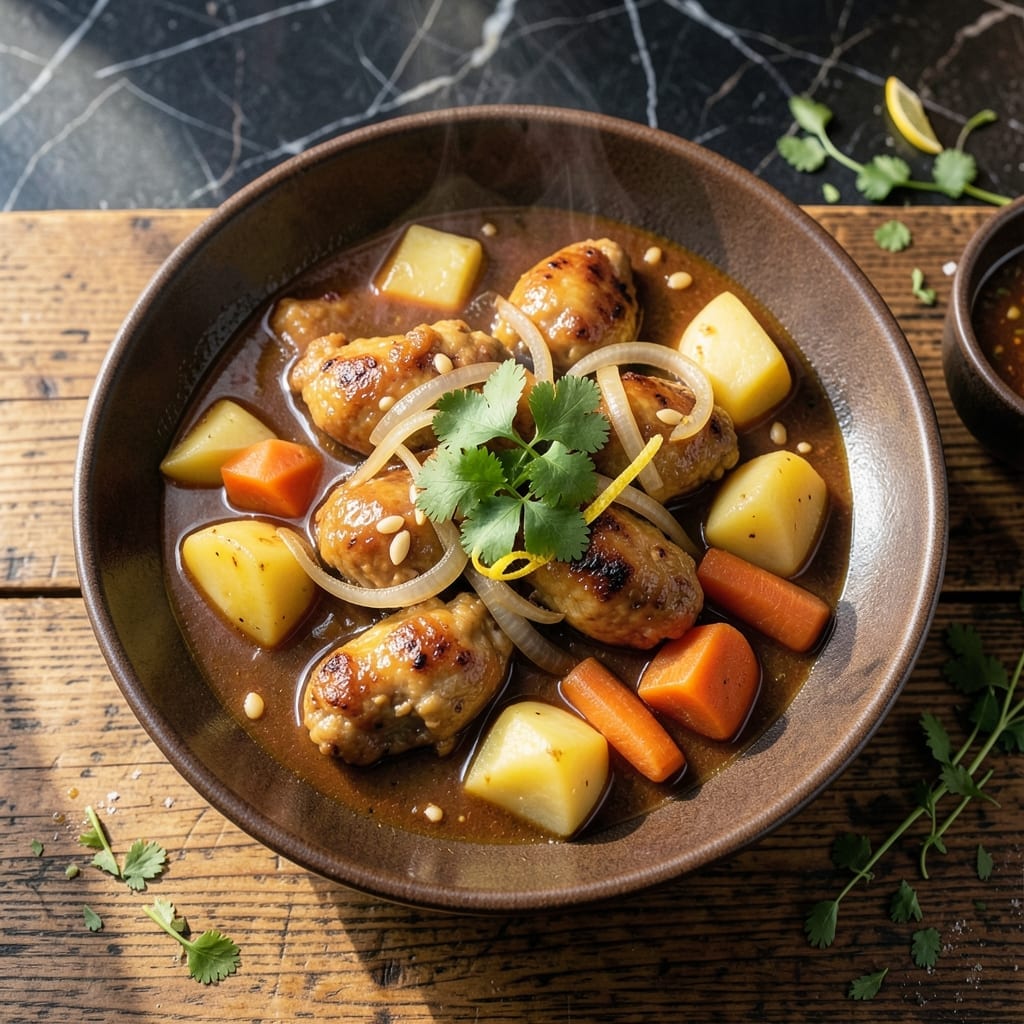
Creating Korean curry from scratch transforms your kitchen into an aromatic haven of rich, layered flavors. I developed this recipe after years of testing spice blends to achieve that authentic depth.
This homemade version uses a carefully balanced mix of traditional Korean ingredients, ensuring every bite delivers complex, satisfying warmth. The process is straightforward but yields results far superior to store-bought mixes.
The final dish offers a velvety sauce that clings to rice and proteins, with a perfect balance of sweetness and heat. It’s the kind of meal that feels special yet remains approachable for any home cook.
Serve with steamed rice and vegetables for a complete, comforting experience. Here’s how to make it.
Ingredients for Korean Curry Recipe from Scratch
A carefully curated selection of traditional Korean ingredients plus pantry staples to build authentic depth from scratch.
| Ingredient | Amount | Notes |
|---|---|---|
| Chicken Thighs 🍗 | 1 ½ lb | Boneless, skinless, cut into bite-sized pieces |
| Potatoes 🥔 | 2 whole | Peeled and cubed into 1-inch pieces |
| Carrots 🥕 | 2 whole | Peeled and sliced into rounds |
| Onion 🧅 | 1 whole | Yellow or white, finely diced |
| Garlic Cloves 🧄 | 4 cloves | Minced for depth of flavor |
| Ginger Root 🌿 | 1 whole | Fresh, grated or minced |
| Curry Powder 🌶️ | 3 tbsp | Korean or Japanese style preferred |
| Gochujang 🌶️ | 2 tbsp | Korean red pepper paste, essential for heat |
| Soy Sauce 🫒 | 2 tbsp | Low-sodium for controlled seasoning |
| Honey 🍯 | 2 tbsp | Balances heat with sweetness |
| Apple 🍎 | 1 whole | Peeled, cored, and grated for natural sweetness |
| Olive Oil 🫒 | 2 tbsp | For sautéing vegetables and proteins |
| Flour 🌾 | 2 tbsp | All-purpose for thickening sauce |
| Chicken Stock 🥣 | 2 cups | Low-sodium for controlled seasoning |
| Salt 🧂 | 1 tsp | Adjust to taste at the end |
[recipe_ingredient_scaler]
The curry powder and gochujang are non-negotiable for authentic flavor. Korean grocery stores or well-stocked Asian markets like H Mart carry both. Look for gochujang labeled with a moderate heat level—too hot and it will overpower the balance. Fresh ginger and garlic are essential (the jarred versions lack the bright, sharp notes). For the chicken, thighs provide richer flavor than breasts, and their higher fat content keeps the meat tender during cooking.
No gochujang? Sriracha mixed with a bit of miso paste can substitute in a pinch, though the flavor profile won’t be identical. Out of honey? Brown sugar dissolved in warm water mimics the sweetness and thickness. The apple adds natural sweetness and acidity—pear works equally well. If you’re avoiding gluten, swap soy sauce for tamari and use cornstarch instead of flour to thicken the sauce.
The curry sauce thickens as it cools and reheats beautifully. Store leftovers in an airtight container in the fridge for up to 4 days. For longer storage, freeze for 3 months—portion into individual servings for easy reheating (it’s worth the extra minute).
Why You’ll Love This Recipe
- One Pot Meal: I just throw the chicken, potatoes, and carrots in and let the curry simmer while I set the table.
- Rich and Aromatic: The garlic and onions caramelize into this deep, savory base that makes the whole house smell incredible.
- Feeds Everyone: Honestly, it’s my go-to for family dinners—even the picky eaters clean their plates.
- Leftovers for Days: The flavors actually taste better the next day, so I always make extra for lunch.
Step-by-Step Instructions for Korean Curry From Scratch
This method ensures rich, complex flavors with a perfectly balanced sauce every time.
Step 1: Sauté Aromatics to Build Flavor Foundation
Heat the 2 tbsp olive oil in a large pot over medium heat. Add the diced onion and cook for 4-5 minutes until translucent and soft. This creates the base for your curry’s depth of flavor.
Stir in the minced garlic cloves and grated ginger root, cooking for 1 minute until fragrant. Be careful not to burn them—burnt aromatics will make the dish bitter. The scent should be vibrant and inviting.
Step 2: Brown Chicken and Incorporate Spices
Add the bite-sized 1.5 lb chicken thighs to the pot, increasing heat to medium-high. Sear for 5-6 minutes until the pieces are lightly browned on all sides. Browning develops the Maillard reaction, adding layers of savory complexity.
Sprinkle the 3 tbsp curry powder over the chicken, stirring to coat evenly. Cook for 30 seconds to toast the spices, which deepens their flavor. Immediately add the 2 tbsp gochujang, 2 tbsp soy sauce, and 2 tbsp honey, stirring to combine.
Step 3: Build the Sauce with Vegetables and Liquid
Incorporate the cubed 2 whole potatoes, sliced 2 whole carrots, and grated apple. Stir to coat everything in the spiced mixture. The apple adds natural sweetness that balances the heat from the gochujang.
Sprinkle the 2 tbsp flour over the ingredients, stirring for 1 minute to cook off the raw taste. Slowly pour in the 2 cups chicken stock, whisking constantly to prevent lumps. Add the 1 tsp salt and bring to a gentle simmer.
Step 4: Simmer to Perfection
Reduce heat to low, cover, and let the curry simmer for 25-30 minutes, stirring occasionally. The potatoes should be tender when pierced with a fork, and the sauce should thicken to a velvety consistency.
If the sauce becomes too thick before the potatoes are done, add a splash of water or stock. Taste and adjust seasoning if needed—this is your chance to fine-tune the balance of sweet, spicy, and savory notes.
Remove from heat and let it rest for 5 minutes before serving. This allows the flavors to meld together fully, ensuring every bite is rich and harmonious.
Pro Tips For Making Korean Curry Recipe From Scratch
- Parboil the Potatoes: Cut potatoes into 1.5-inch chunks and boil for 4-5 minutes before adding to the curry—I learned this the hard way after too many undercooked bites in my first attempts.
- Brown the Chicken Well: Give the chicken thighs a solid sear in oil until deeply golden, about 4-5 minutes per side. It adds a depth of flavor that raw-to-sauce chicken just can’t match.
- Skip the Pre-Cut Carrots: Whole carrots stay firmer in the long simmer. Roll-cut them into 1-inch pieces yourself—sounds tedious, but it actually changes the outcome.
- Use a Roux Slurry: Mix 2 tablespoons of curry powder with 2 tablespoons of oil and cook for 1-2 minutes before adding liquid. It guarantees a richer, more integrated flavor base than just dumping it in.
Flavor Customization for This korean curry recipe from scratch
Spice Level Adjustments
For milder heat, reduce the gochujang to 1 tbsp and add 1 extra tbsp honey. This balances the dish beautifully without losing depth. I often do this when cooking for friends with sensitive palates.
Vegetarian Swap
Replace chicken with 1 lb tofu or chickpeas—press and drain tofu first for better texture. Add 1 cup mushrooms for umami richness. The curry sauce works perfectly with these plant-based proteins.
Extra Sweetness
Add 1 extra tbsp honey or swap in brown sugar for deeper caramel notes. I love how this enhances the natural sweetness from the grated apple. Stir in at the same time as the other sweeteners. 💛
Creamy Texture
Stir in ½ cup coconut milk at the end for a luxurious finish. This adds richness without overpowering the traditional flavors. Simmer for 5 minutes after adding to let the flavors meld.
Umami Boost
Enhance depth with 1 tbsp fish sauce or 1 tsp MSG. These amplify the savory notes from the soy sauce and chicken. I learned this trick testing recipes in my tiny Boston kitchen.
Spice Blend Tweaks
For a brighter profile, add 1 tsp turmeric or ½ tsp cinnamon to the curry powder. These warm spices complement the Korean flavors beautifully. Toast them with the curry powder for best results.
Nutrition Facts
Frequently Asked Questions
Can I make this with beef instead of chicken?
Use 1.5 lb beef chuck cut into cubes. Sear it first for 8-10 minutes to develop flavor, then simmer for 45 minutes until tender.
Why does the recipe use grated apple?
The apple adds natural sweetness and acidity, balancing the heat from gochujang. It also helps thicken the sauce slightly as it cooks down.
How do I fix a curry that’s too thick?
Thin it with ½ cup warm water or stock, stirring until smooth. Simmer for 5 minutes to blend flavors. Avoid adding cold liquid directly.
Can I skip the flour for thickening?
Yes! Use 1 tbsp cornstarch mixed with 2 tbsp water instead. Stir it in at the end and simmer for 2 minutes.

Trained in classic French technique but raised on slow-cooked ribs and spicy rubs, she blends culinary skill with smoke and soul.
- Recipe For Oven Baked Haddock: Buttery Crumbs With Zesty Lemon Topping - October 3, 2026
- Recipe For Fried Salmon Patties With Flour: Crispy Golden Crust With Flaky Centers - October 3, 2026
- Meat and Potato Recipe Ideas: Savory Pairings for Hearty Meals - October 3, 2026