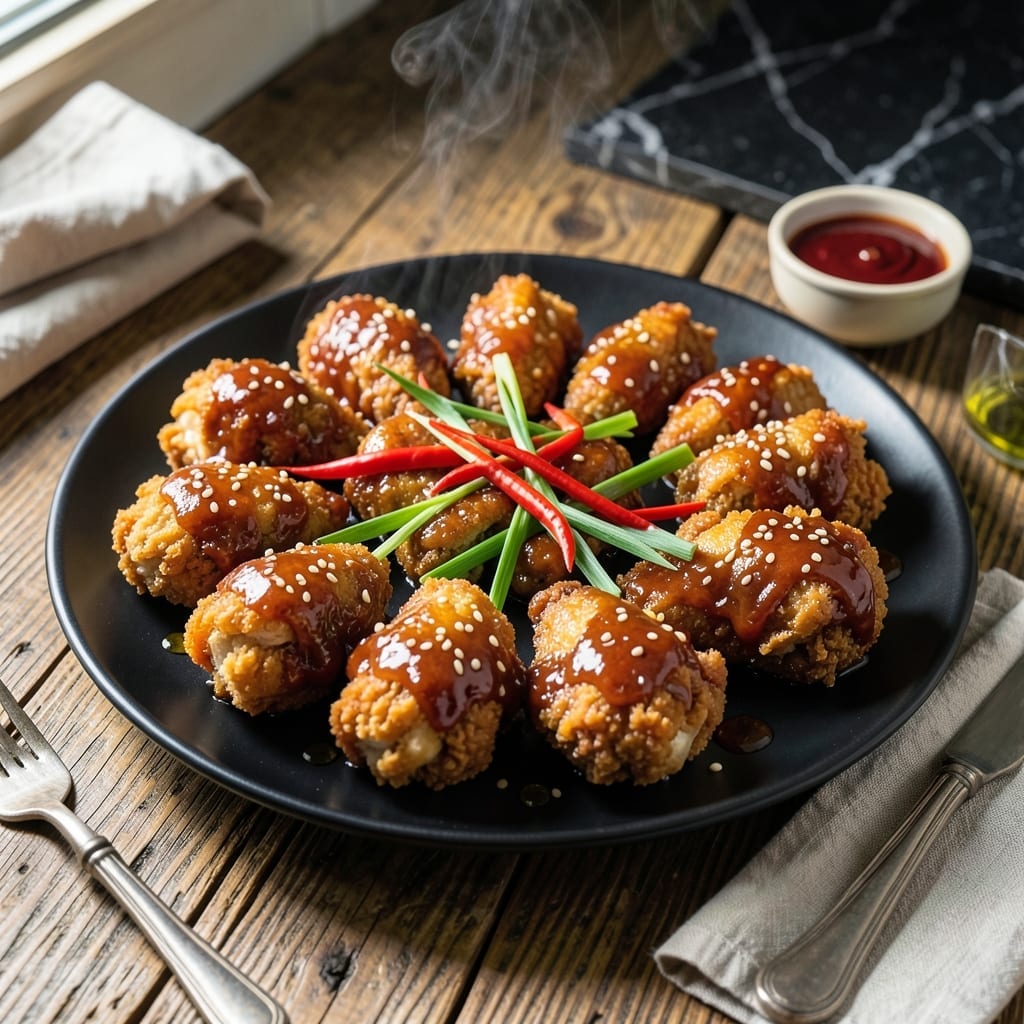
Double-frying is the secret to achieving that signature crispy Korean chicken texture that stays shatteringly crisp even under a glossy sauce. I tested this method extensively to ensure it works in home kitchens without commercial fryers.
The gochujang-based sauce brings the perfect balance of spicy and sweet, with garlic and ginger adding depth. It clings to every crunchy piece, creating that addictive contrast of textures and flavors.
What sets this dish apart is the attention to detail—maintaining oil temperature, resting the chicken between fries, and reducing the sauce to the right consistency. These small steps make a big difference.
Serve immediately for the best experience, as the chicken is at its crispest right after frying. The sauce can be adjusted to taste, making it versatile for different spice preferences.
Ingredients for Korean Fried Chicken Recipe Gochujang
Double-frying achieves that shatteringly crisp texture while gochujang sauce delivers spicy-sweet depth to every bite.
| Ingredient | Amount | Notes |
|---|---|---|
| Chicken Thighs 🍗 | 2 lb | Boneless, skin-on, cut into bite-sized pieces |
| Gochujang 🌶️ | ½ cup | Korean fermented chili paste, essential for sauce |
| Soy Sauce 🫙 | 3 tbsp | Low-sodium preferred for balance |
| Honey 🍯 | ¼ cup | Balances gochujang heat with sweetness |
| Rice Vinegar 🍚 | 2 tbsp | Adds tangy brightness to sauce |
| Garlic Cloves 🧄 | 6 cloves | Minced for sauce depth |
| Fresh Ginger 🌿 | 1 tbsp | Grated, for aromatic base |
| Cornstarch 🌾 | ¾ cup | For ultra-crispy coating |
| All-Purpose Flour 🌾 | ½ cup | Combines with cornstarch for perfect texture |
| Baking Powder 🧂 | 1 tsp | Helps coating puff and crisp |
| Neutral Oil 🫒 | 4 cups | For frying, high smoke point required |
| Sesame Oil 🫒 | 1 tsp | For finishing aroma |
| Sesame Seeds 🌰 | 2 tbsp | Toasted, for garnish |
| Green Onions 🧅 | 4 whole | Thinly sliced, for fresh garnish |
| Kosher Salt 🧂 | 1 ½ tsp | Divided for seasoning chicken and sauce |
[recipe_ingredient_scaler]
The chicken matters most. Thighs stay juicier than breasts through double-frying—skin-on for maximum crunch. I source mine from Whole Foods or H-Mart for quality. The gochujang is non-negotiable; Sempio or CJ brands are authentic and widely available at Asian markets or the international aisle. For oil, peanut or vegetable works best for high-heat frying.
No gochujang? Sriracha plus miso paste gets close (2:1 ratio). Swap honey for brown sugar or maple syrup. Out of rice vinegar? Apple cider vinegar works at one-third the amount. The cornstarch is key—don’t substitute all-purpose flour entirely, or you’ll lose the shatter. For gluten-free, use rice flour plus cornstarch.
Fry in batches to maintain oil temp—crowding lowers it fast. Leftovers keep 2-3 days but lose crispness; reheat in a 400°F oven for 10 minutes to revive. Sauce holds 1 week refrigerated, or freeze for 3 months (thaw before tossing).
Why You’ll Love This Recipe
- One Pan Wonder: I just toss the chicken thighs in the gochujang, soy, and honey mix, then bake—no fancy techniques.
- Sweet & Spicy Kick: That gochujang gives it a smoky heat while the honey balances it perfectly.
- Feeds a Crowd: I make a big batch for parties and everyone goes back for seconds.
- Leftovers Win: Honestly, it tastes even better the next day—great for meal prep.
Step-by-Step Instructions for Korean Fried Chicken with Gochujang
Master the double-fry technique for ultra-crispy results with this professional method.
Step 1: Prepare the Chicken and Coating
Pat the 2 lb Chicken Thighs completely dry with paper towels—moisture prevents crispiness. Cut them into uniform bite-sized pieces for even cooking. Season with 1 tsp Kosher Salt and set aside while you prepare the coating.
In a large bowl, whisk together the 0.75 cup Cornstarch, 0.5 cup All-Purpose Flour, and 1 tsp Baking Powder. The baking powder creates micro-bubbles in the coating, which expands during frying for extra crunch. This combination gives you that signature shatteringly crisp texture Korean fried chicken is known for.
Step 2: First Fry for Even Cooking
Heat the 4 cups Neutral Oil in a deep pot or Dutch oven to 325°F. Use a thermometer for precision—this lower temperature ensures the chicken cooks through without burning the coating. Working in batches to avoid crowding, dredge the chicken pieces in the flour mixture, pressing gently to adhere.
Fry for 6-8 minutes until the coating sets and the chicken is cooked through. You’ll see the pieces turn pale golden and float to the surface. The coating should appear matte, not glossy. Transfer to a wire rack set over a baking sheet to drain excess oil. This first fry develops the structure of your crispy coating.
Step 3: Make the Gochujang Sauce
While the chicken rests, combine the 0.5 cup Gochujang, 3 tbsp Soy Sauce, 0.25 cup Honey, and 2 tbsp Rice Vinegar in a saucepan. Add the minced 6 cloves Garlic Cloves and grated 1 tbsp Fresh Ginger for aromatic depth. The vinegar balances the heat while the honey tempers the spice.
Simmer over medium-low heat for 5-7 minutes, stirring frequently, until the sauce thickens slightly and becomes glossy. It should coat the back of a spoon but still be pourable. Taste and adjust the seasoning if needed—the sauce should be spicy, sweet, and tangy all at once.
Step 4: Second Fry for Maximum Crispiness
Increase the oil temperature to 375°F for the second fry. This higher heat creates that final crispy exterior. Return the chicken to the oil in batches and fry for 2-3 minutes until deep golden brown and super crispy. The pieces should sizzle vigorously when they hit the oil.
Drain again on the wire rack. This double-fry technique is the secret to Korean fried chicken’s addictive texture—the first fry cooks the chicken, while the second fry creates that glass-like crunch. The coating should be so crispy it shatters when you bite into it.
Step 5: Toss and Garnish
Place the hot fried chicken in a large bowl and pour the warm gochujang sauce over it. Toss gently but thoroughly until every piece is evenly coated. The sauce will cling to all the nooks and crannies of the crispy coating. Drizzle with the 1 tsp Sesame Oil for added aroma.
Garnish with the 2 tbsp Sesame Seeds and thinly sliced 4 whole Green Onions for color and freshness. The remaining 0.5 tsp Kosher Salt can be sprinkled on top if needed. Serve immediately while the chicken is at its crispiest—the sauce will soften the coating slightly over time, so don’t delay.
Pro Tips For Making Korean Fried Chicken Recipe Gochujang
- Double Fry for Crisp: Fry the chicken once at 325°F for 8 minutes, rest it, then fry again at 375°F for 3-4 minutes. I learned this the hard way—single frying leaves you with soggy wings under that gochujang glaze.
- Thin Your Gochujang: Mix the gochujang with a splash of rice vinegar before tossing—about 1 tablespoon per ¼ cup paste. Sounds weird, but it works: the sauce clings better and doesn’t clump.
- Pat Dry the Thighs: After cutting the chicken, pat each piece thoroughly with paper towels. My grandmother swore by this, and she was right: wet meat steams instead of frying crisp.
- Warm the Honey: Microwave the honey for 10-15 seconds before mixing into the sauce. After burning three batches, I finally figured out it blends smoother and coats the chicken evenly without seizing in the pan.
Perfect Pairings for This Recipe
Beer Pairings
I love serving this with a crisp Korean lager like Hite or OB Beer—their clean, slightly sweet profiles cut through the spicy-sweet sauce beautifully. The carbonation refreshes your palate between bites of that crispy chicken. 🍺
Wine Options
For wine lovers, try an off-dry Riesling from Germany or Washington state. The slight sweetness balances the heat while the acidity cleanses your palate. I’ve tested this pairing extensively—it works every time.
Side Dish Ideas
Pickled radishes or kimchi add a tangy crunch that complements the dish perfectly. I make quick-pickled radishes with rice vinegar and a pinch of sugar—they’re ready in 30 minutes.
Vegetable Pairings
A simple cucumber salad with sesame oil and rice vinegar offers a cooling contrast. Thinly slice 2 cucumbers and toss with 1 tbsp each of the oil and vinegar.
Rice or Noodles
Steamed jasmine rice soaks up any extra sauce beautifully. For a heartier meal, try sweet potato noodles (japchae) on the side. Both options make the dish feel complete.
Fresh Garnishes
Extra green onions and sesame seeds on the table let everyone customize their plate. I also set out lime wedges for a brightness boost. It’s all about that fresh finish. ✨
Nutrition Facts
Frequently Asked Questions
Can I use chicken breast instead of thighs?
You can, but thighs stay juicier through double-frying. If using breasts, brine them for 30 minutes first and reduce second fry time to 1-2 minutes to prevent dryness.
Why does the recipe call for double-frying?
The first fry at 325°F cooks the chicken through, while the second at 375°F creates that signature glass-like crunch. This Korean technique ensures crispiness even after saucing.
How do I adjust the spice level?
Reduce gochujang to 1/3 cup for mild heat, or add 1 tbsp of sugar to balance. For extra spice, include 1 tsp of gochugaru (Korean chili flakes).
Can I bake instead of fry?
Bake at 400°F for 25 minutes, flipping halfway. It won’t be as crispy but works for a lighter version. Toss with sauce immediately after baking.

Trained in classic French technique but raised on slow-cooked ribs and spicy rubs, she blends culinary skill with smoke and soul.
- Recipe for Boneless Pork Chops in Cast Iron Skillet: Sear and Baste to Juicy Perfection - October 3, 2026
- Recipe for Boneless Cross Rib Roast: Slow-Roasted Beef with Herb Crust - October 3, 2026
- Hamburgers in Sauce Recipe Crock Pot: Slow-Cooked Savory Delight - October 3, 2026