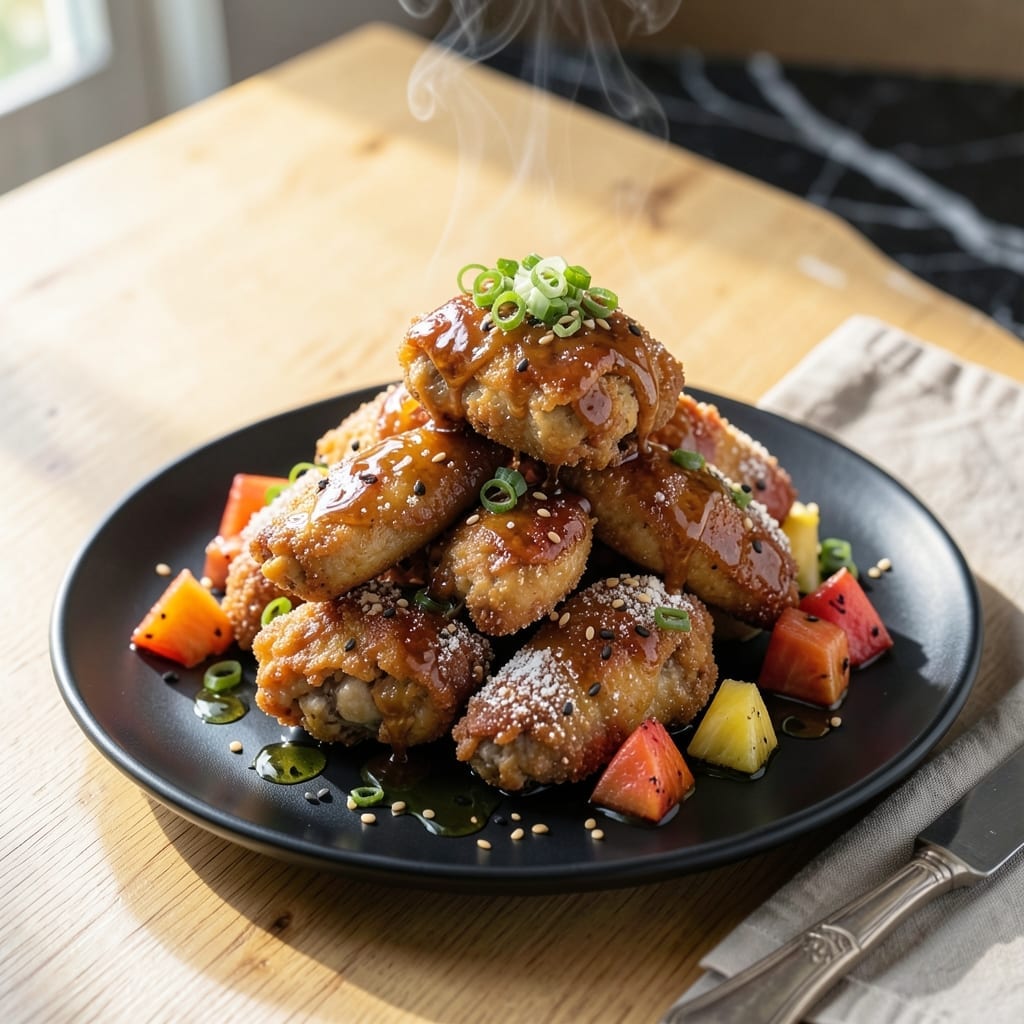
Double-frying is the secret to achieving that signature shatteringly crisp coating that defines Korean fried chicken. This method creates layers of texture that stay crunchy even after being tossed in sauce.
I’ve adapted the classic technique with a Hawaiian twist, balancing the heat of gochujang with local honey and a touch of pineapple. The result is a dish that’s sweet, spicy, and undeniably addictive.
Each bite delivers a contrast of crispy exterior and tender meat, all coated in a glossy, sticky glaze. The double-fry ensures the chicken stays juicy inside while remaining extra crunchy outside.
Serve with pickled vegetables to cut through the richness. This is comfort food with a bold, island-inspired kick.
Ingredients for Korean Fried Chicken Recipe Hawaii
Quality ingredients create that perfect balance of crispy texture and sweet-spicy Hawaiian-Korean fusion.
| Ingredient | Amount | Notes |
|---|---|---|
| Chicken Thighs 🍗 | 2 lb | Boneless, skin-on, cut into bite-sized pieces |
| Potato Starch 🥔 | 1 cup | For ultra-crispy coating |
| All-Purpose Flour 🌾 | ½ cup | For initial dredging |
| Baking Powder 🧂 | 2 tsp | Creates airy texture |
| Salt 🧂 | 1 ½ tsp | Diamond Crystal kosher preferred |
| Black Pepper 🌶️ | ½ tsp | Freshly ground for best flavor |
| Gochujang 🌶️ | ⅓ cup | Korean chili paste, essential |
| Local Honey 🍯 | ¼ cup | Hawaiian variety preferred |
| Pineapple Juice 🍍 | ¼ cup | Freshly squeezed for brightness |
| Soy Sauce 🫒 | 2 tbsp | Low-sodium for balance |
| Rice Vinegar 🍚 | 1 tbsp | For tangy contrast |
| Garlic Cloves 🧄 | 4 cloves | Minced for sauce depth |
| Fresh Ginger 🌿 | 1 tbsp | Grated for aromatic kick |
| Vegetable Oil 🫒 | 4 cups | For deep-frying, high smoke point |
| Sesame Seeds 🌿 | 2 tbsp | Toasted for garnish |
[recipe_ingredient_scaler]
The chicken is critical here. Skin-on thighs deliver maximum crisp and juiciness—avoid breasts as they dry out. For authentic texture, potato starch is non-negotiable; find it at Asian markets or the international aisle. Baking powder might seem unusual, but it’s the professional trick for that shatteringly crisp coating. Look for gochujang with a deep red color and smooth texture for best results.
No gochujang? Sriracha plus miso paste approximates the flavor. Swap honey for maple syrup if avoiding bee products. For a lighter version, bake at 425°F instead of frying (though the double-fry is ideal). The pineapple juice can be swapped for orange juice in a pinch. Low-sodium soy sauce keeps the glaze from becoming too salty—essential for balancing the sweet and spicy elements.
The cooked chicken stays crisp for 1-2 hours at room temperature, but it’s best served immediately. Leftovers keep in the fridge for 3-4 days—reheat in an oven or air fryer to revive the crunch. The sauce can be made ahead and stored separately for up to 1 week.
Why You’ll Love This Recipe
- One Bowl Wonder: I just dump the potato starch, flour, and baking powder in one bowl—no fancy prep, no mess.
- Crispy Perfection: That potato starch coating gives it an insane crunch you can’t get with regular flour.
- Feeds the Crew: Chicken thighs stretch further than wings, so it’s my go-to for parties or hungry teens.
- Leftovers Vanish: Honestly, it reheats surprisingly well—still crispy the next day if you air-fry it.
Step-by-Step Instructions for Korean Fried Chicken Hawaii
Precision and patience create the signature double-crisp texture and island-inspired glaze.
Step 1: Prepare and Dredge the Chicken
Pat the 2 lb Chicken Thighs completely dry with paper towels. This step is non-negotiable—any moisture prevents the coating from adhering properly and compromises crispiness. Cut the chicken into 1-inch pieces for even cooking and maximum surface area for the coating.
In a large bowl, whisk together the 0.5 cup All-Purpose Flour, 2 tsp Baking Powder, 1.5 tsp Salt, and 0.5 tsp Black Pepper. The baking powder creates micro-bubbles in the coating, contributing to that coveted crunch. Dredge each piece of chicken thoroughly in the flour mixture, pressing gently to ensure full coverage.
Step 2: Apply the Potato Starch Coating
Transfer the floured chicken to a second bowl containing the 1 cup Potato Starch. Toss each piece until fully coated—the starch creates an ultra-crispy shell that’s lighter than traditional flour coatings. Shake off any excess starch; you want a thin, even layer that fries up airy and delicate.
Place the coated chicken on a wire rack set over a baking sheet. This setup allows air to circulate around each piece, preventing the coating from becoming soggy as it rests. Let the chicken rest for 10 minutes while you heat the oil.
Step 3: First Fry for Even Cooking
In a heavy-bottomed pot or Dutch oven, heat the 4 cups Vegetable Oil to 325°F. Use a deep-fry thermometer for accuracy—temperature control is critical. Carefully lower half the chicken pieces into the hot oil, avoiding overcrowding which lowers the oil temperature and results in greasy chicken.
Fry for 6-7 minutes until the chicken is cooked through but not yet deeply browned. The internal temperature should reach 165°F. Remove with a slotted spoon and drain on a wire rack. Repeat with the remaining chicken. This first fry ensures the chicken is fully cooked while building a base for the final crisp.
Step 4: Second Fry for Maximum Crisp
Increase the oil temperature to 375°F. Return all the chicken to the pot and fry again for 3-4 minutes until deep golden brown and ultra-crispy. This double-fry technique is the secret to Korean fried chicken’s signature texture—the exterior becomes shatteringly crisp while the interior stays juicy.
Drain on a fresh wire rack. Avoid stacking the pieces, as trapped steam will soften the coating. The chicken should be light and airy, with an audible crunch when bitten.
Step 5: Toss in the Island-Inspired Glaze
In a saucepan, combine the 0.33 cup Gochujang, 0.25 cup Local Honey, 0.25 cup Pineapple Juice, 2 tbsp Soy Sauce, 1 tbsp Rice Vinegar, minced 4 cloves Garlic Cloves, and grated 1 tbsp Fresh Ginger. Simmer over medium heat for 3-4 minutes, stirring until thickened and glossy.
Toss the hot chicken in the sauce until every piece is evenly coated. The glaze should cling to the crispy exterior, creating a perfect balance of sweet, spicy, and tangy flavors. Garnish with 2 tbsp Sesame Seeds and serve immediately while the coating remains at its peak crispness.
Pro Tips For Making Korean Fried Chicken Recipe Hawaii
- Double Fry for Crisp: Fry the chicken once at 325°F for 8-10 minutes, rest 5 minutes, then fry again at 375°F for 3-4 minutes. I learned this the hard way—single frying leaves the crust soggy under the sauce.
- Dry the Thighs: Pat the chicken thighs completely dry with paper towels before dredging. After my first few batches turned out gummy, I realized even a little moisture ruins the potato starch coating.
- Skip the Overcrowding: Fry in small batches—no more than 4-5 thighs at a time in a standard pot. Steer clear of cramming them in, or the oil temp drops and you’ll get greasy, sad chicken.
- Boost with Baking Powder: Add 1 teaspoon baking powder to your flour-starch mix. Sounds weird, but it works: the alkaline helps the coating crisp up like the best Korean spots in Hawaii.
Common Mistakes When Making korean fried chicken recipe hawaii
Skipping the Double Fry
I know it’s tempting to rush, but skipping the second fry means you’ll lose that signature shatteringly crisp texture. The first fry cooks the chicken through, while the second at 375°F creates the golden, airy crust. This is what makes Korean fried chicken so special.
Overcrowding the Pot
Adding too much chicken at once drops the oil temperature, resulting in greasy, soggy pieces. Fry in batches with at least 1 inch of space between pieces. I use my Dutch oven to maintain steady heat. 🌡️
Wet Chicken Coating
Pat the 2 lb Chicken Thighs completely dry before dredging. Any moisture creates a barrier between the meat and coating, preventing proper adhesion. I use 3-4 paper towels to ensure every piece is bone-dry.
Using Cold Oil
Always preheat your 4 cups Vegetable Oil to 325°F before adding chicken. Cold oil absorbs into the coating, making it heavy and greasy. A deep-fry thermometer is worth the investment for accuracy.
Sauce Too Thick
If your glaze reduces too much, it’ll be difficult to coat the chicken evenly. Aim for a syrup-like consistency. If it thickens too early, add 1-2 tbsp water and stir well. The sauce should cling but still drip slightly.
Neglecting the Rest
Let the coated chicken rest for 10 minutes before frying. This allows the starch to fully adhere. Skipping this step often leads to coating separation during cooking. I sing the alphabet song while waiting—old habit from my grandma’s kitchen.
Nutrition Facts
Frequently Asked Questions
Why use potato starch instead of flour?
Potato starch creates an ultra-crispy, lighter coating that stays crunchy longer. It’s the secret to authentic texture, especially with the double-fry method.
Can I bake instead of frying?
Yes, but the texture won’t be the same. Bake at 425°F for 25-30 minutes, flipping halfway. The coating will be crisp but less shatteringly crunchy.
How do I adjust the spice level?
Reduce or omit gochujang for milder heat, or add 1 tsp sugar to balance spice. For extra kick, include 1/2 tsp cayenne in the sauce.
What’s the best way to reheat leftovers?
Use an oven or air fryer at 375°F for 5-7 minutes to revive crispiness. Microwaving will make the coating soggy.

Trained in classic French technique but raised on slow-cooked ribs and spicy rubs, she blends culinary skill with smoke and soul.
- Recipe for Curried Tofu: Aromatic Spices With Crispy Edges - October 3, 2026
- Recipe for Dumplings in Crock Pot: Fluffy Pillows with Minimal Effort - October 3, 2026
- Recipe For Diced Pork In Slow Cooker: Melt-In-Your-Mouth Tenderness All Day - October 3, 2026