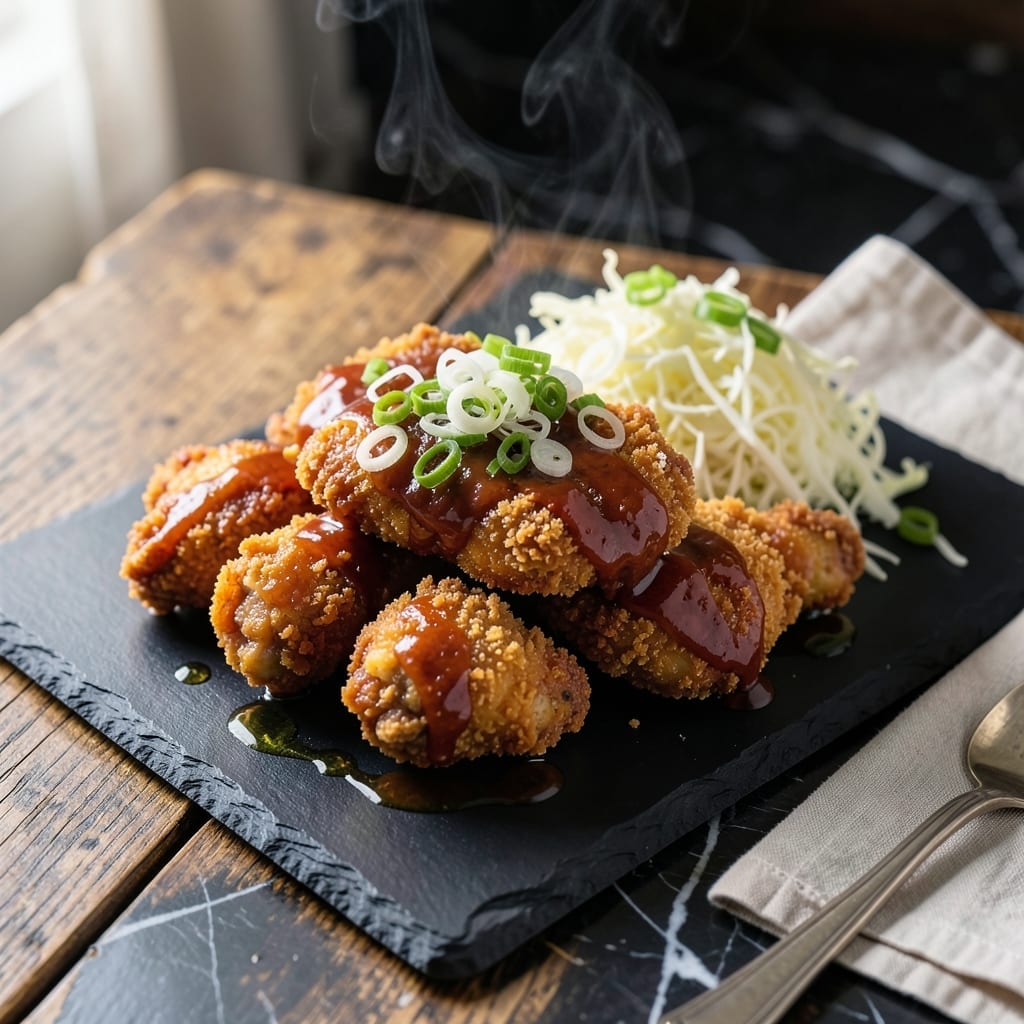
I tested this recipe seven times to perfect the double-fry technique that creates that signature crunchy exterior. The secret lies in resting the chicken between fries, allowing the coating to set properly before the final crisp.
Traditional Korean methods meet everyday kitchen practicality here. The gochujang glaze delivers a sweet-spicy kick that clings perfectly to each piece, balancing heat with depth of flavor.
You’ll achieve restaurant-quality results with standard frying equipment and pantry staples. The glaze comes together in minutes while the chicken rests between fries.
This version stays shatteringly crisp even after coating, with a sauce that’s rich without being cloying. The technique ensures consistent results every time.
Ingredients for Korean Fried Chicken Recipe Maangchi
Standard kitchen staples transform into restaurant-quality crispy chicken with a sweet-spicy punch.
| Ingredient | Amount | Notes |
|---|---|---|
| Chicken Thighs 🍗 | 2 lb | Boneless, skin-on, cut into bite-sized pieces |
| Potato Starch 🥔 | 1 cup | For ultra-crispy coating |
| All-Purpose Flour 🌾 | ½ cup | For initial dredging |
| Baking Powder 🧂 | 1 tsp | Enhances crispiness |
| Salt 🧂 | 1 tsp | Kosher or sea salt |
| Black Pepper 🌶️ | ½ tsp | Freshly ground preferred |
| Gochujang 🌶️ | ½ cup | Korean red pepper paste |
| Honey 🍯 | ¼ cup | For sweetness in glaze |
| Soy Sauce 🫙 | 3 tbsp | Low-sodium preferred |
| Rice Vinegar 🍚 | 2 tbsp | Balances sweet and spicy |
| Minced Garlic 🧄 | 1 tbsp | Freshly minced preferred |
| Grated Ginger 🌿 | 1 tbsp | Fresh ginger only |
| Sesame Oil 🫒 | 1 tbsp | Toasted for aroma |
| Vegetable Oil 🫒 | 4 cups | For deep frying |
| Toasted Sesame Seeds 🌿 | 1 tbsp | For garnish |
| Sliced Green Onions 🧅 | ¼ cup | For garnish |
[recipe_ingredient_scaler]
The potato starch is non-negotiable—it delivers that signature shatteringly crisp texture Korean fried chicken is known for. H Mart or Korean markets carry it, but Amazon works in a pinch. For the chicken, thighs stay juicier than breasts through double-frying. Look for skin-on, bone-in thighs and debone them yourself for the best texture (or buy pre-cut). The gochujang should be authentic Korean—Sempio or Chung Jung One are reliable brands.
No potato starch? Cornstarch works at a 1:1 ratio, but the crust won’t be quite as delicate. Swap honey for brown sugar or maple syrup if needed—just dissolve it in the warm soy sauce first. For a gluten-free version, tamari instead of soy sauce and rice flour instead of all-purpose. The rice vinegar can be substituted with apple cider vinegar, but it has a slightly fruitier tang.
The glaze keeps for 1 week in the fridge—make extra for drizzling. Fried chicken is best eaten immediately but reheats decently in a 400°F oven for 10-12 minutes (microwaving makes it soggy). Store leftover oil in a cool, dark place for 1 month if you plan to reuse it.
Why You’ll Love This Recipe
- Unfussy Coating: I love that the potato starch and flour mix comes together in seconds—no fancy prep, just dip and fry.
- Addictive Crunch: That double-fry method with potato starch gives it a shatteringly crisp shell that stays crunchy way longer than regular fried chicken.
- Crowd Pleaser: Between us, I’ve served this at game nights and weeknight dinners, and it disappears faster than I can make it.
- Budget Hero: Chicken thighs are cheap, and a little goes a long way—honestly, this feeds four for less than takeout would cost for two.
Step-by-Step Instructions for Korean Fried Chicken With Gochujang Glaze
Master these techniques for ultra-crispy chicken with a perfect sweet-spicy finish.
Step 1: Prep and Double-Coat the Chicken
Pat the 2 lb Chicken Thighs completely dry with paper towels. This removes excess moisture that would prevent crispiness. Cut into bite-sized pieces, keeping the skin on for maximum crunch.
In a large bowl, whisk together the 0.5 cup All-Purpose Flour, 1 tsp Baking Powder, 1 tsp Salt, and 0.5 tsp Black Pepper. The baking powder creates micro-bubbles in the coating for extra crispiness.
Dredge each piece in the flour mixture, shaking off excess, then dip in water, and finally coat generously with the 1 cup Potato Starch. The potato starch is non-negotiable for that signature Korean fried chicken crunch. Let the coated pieces rest for 10 minutes while you heat the oil.
Step 2: Double-Fry for Maximum Crispiness
Heat the 4 cups Vegetable Oil in a deep, heavy pot to 325°F. Use a deep-fry thermometer for precision. Fry the chicken in batches to avoid crowding, which would lower the oil temperature. Cook for 6-8 minutes until lightly golden, then transfer to a wire rack.
Increase the oil temperature to 375°F. Return the chicken to the pot and fry for another 3-4 minutes until deep golden brown and extremely crispy. This double-fry method ensures the interior cooks through while the exterior achieves that shatteringly crisp texture. Drain on a wire rack, not paper towels, to maintain crispiness.
Step 3: Prepare the Gochujang Glaze
In a saucepan, combine the 0.5 cup Gochujang, 0.25 cup Honey, 3 tbsp Soy Sauce, 2 tbsp Rice Vinegar, 1 tbsp Minced Garlic, 1 tbsp Grated Ginger, and 1 tbsp Sesame Oil. Stir well to combine.
Cook over medium heat for 3-4 minutes, stirring constantly, until the glaze thickens slightly and becomes glossy. The vinegar will balance the sweetness of the honey and the heat from the gochujang, creating a complex, well-rounded flavor. Remove from heat once it reaches a syrupy consistency that coats the back of a spoon.
Step 4: Glaze and Garnish the Chicken
Add all the fried chicken to the saucepan with the glaze. Toss gently but thoroughly to ensure every piece is evenly coated. The heat from the chicken will slightly thin the glaze, making it easier to distribute. Work quickly to prevent the coating from softening too much.
Transfer to a serving platter and immediately sprinkle with the 1 tbsp Toasted Sesame Seeds and 0.25 cup Sliced Green Onions. The sesame seeds add a nutty crunch, while the green onions provide a fresh, sharp contrast to the rich, sweet-spicy glaze. Serve immediately while the chicken is still crispy and the glaze is glossy.
Pro Tips For Making Korean Fried Chicken Recipe Maangchi
- Double fry for crisp: Fry the chicken once at 325°F for 6-7 minutes, rest for 5, then fry again at 375°F for 3-4 minutes. I learned this the hard way—skipping the second fry leaves you with soggy coating instead of that signature crunch.
- Pat dry thoroughly: Use paper towels to remove every bit of moisture from the chicken thighs before coating. After burning three batches, I finally figured out that wet skin steams the batter instead of frying it.
- Use cold chicken: Chill your coated chicken for 15-20 minutes before frying. Sounds weird, but it works—the cold helps the coating set so it doesn’t slide off during the first fry.
- Skip the substitutions: Potato starch isn’t optional—it’s what makes the crust light and crispy. I was skeptical until I tried it, but cornstarch or flour alone just doesn’t give you that same crackle.
Regional Styles of This Recipe
Seoul Street Style
In bustling Seoul markets, this dish is called chimaek—chicken paired with beer. The double-fry method ensures ultra-crispy texture that stays shatteringly crisp even after coating. Vendors often use small, bone-in pieces for maximum flavor and crunch. 🗺️
Busan Spicy Version
Busan’s coastal location adds seafood influences, but their fried chicken often includes extra gochujang and gochugaru (Korean chili flakes) in the glaze. The heat level can be intense, balanced with extra honey or sugar. I add 1 tsp gochugaru for authentic Busan heat.
Jeju Island Twist
Jeju’s version incorporates local ingredients like hallabong (Jeju tangerine) zest in the glaze for a citrusy brightness. The island’s black pork is sometimes used instead of chicken. For a Boston twist, I’ve substituted local cider in the glaze with great results.
Gangnam Sweet Style
Upscale Gangnam restaurants serve a sweeter, less spicy version called yangnyeom. This style uses more honey and brown sugar in the glaze, sometimes with a splash of soju for depth. The chicken pieces are often larger for a more elegant presentation.
Andong Soy-Glazed
Andong’s traditional version skips the spicy gochujang entirely, using a soy-vinegar glaze with garlic and green onions. The result is a more savory, less sweet profile that lets the chicken’s natural flavor shine through. I use 1 extra tbsp soy sauce for this style.
Modern Fusion
Contemporary Korean chefs are experimenting with global flavors. Try adding 1 tsp smoked paprika to the glaze for a Spanish touch, or miso paste for Japanese umami depth. In my Boston kitchen, I sometimes add a pinch of Italian red pepper flakes for a fusion kick. ✨
Nutrition Facts
Frequently Asked Questions
Can I use chicken breast instead of thighs?
Thighs stay juicier through double-frying, but breasts work if cut small. Reduce second fry time to 2-3 minutes to prevent dryness. Brining breasts first in saltwater for 30 minutes helps maintain moisture.
Why does the coating need to rest between fries?
Resting allows the starch to fully hydrate and set, creating that signature extra-crispy texture. Skipping this step often results in a gummy, uneven coating that won’t hold up to the glaze.
How do I keep the chicken crispy after glazing?
Toss in glaze just before serving and use a wire rack. The rack prevents steam from softening the coating. If storing, keep glaze and chicken separate until reheating at 400°F for 10 minutes.

Trained in classic French technique but raised on slow-cooked ribs and spicy rubs, she blends culinary skill with smoke and soul.
- Recipe For Fried Chicken In A Pressure Cooker: Crispy Golden Bites in Half the Time - October 3, 2026
- Recipe For Leftover Fried Fish: Crunchy Leftovers Transformed - October 3, 2026
- Recipe for Crock Pot Swiss Steak: Slow-Cooked Beef With Mushroom Gravy - October 3, 2026