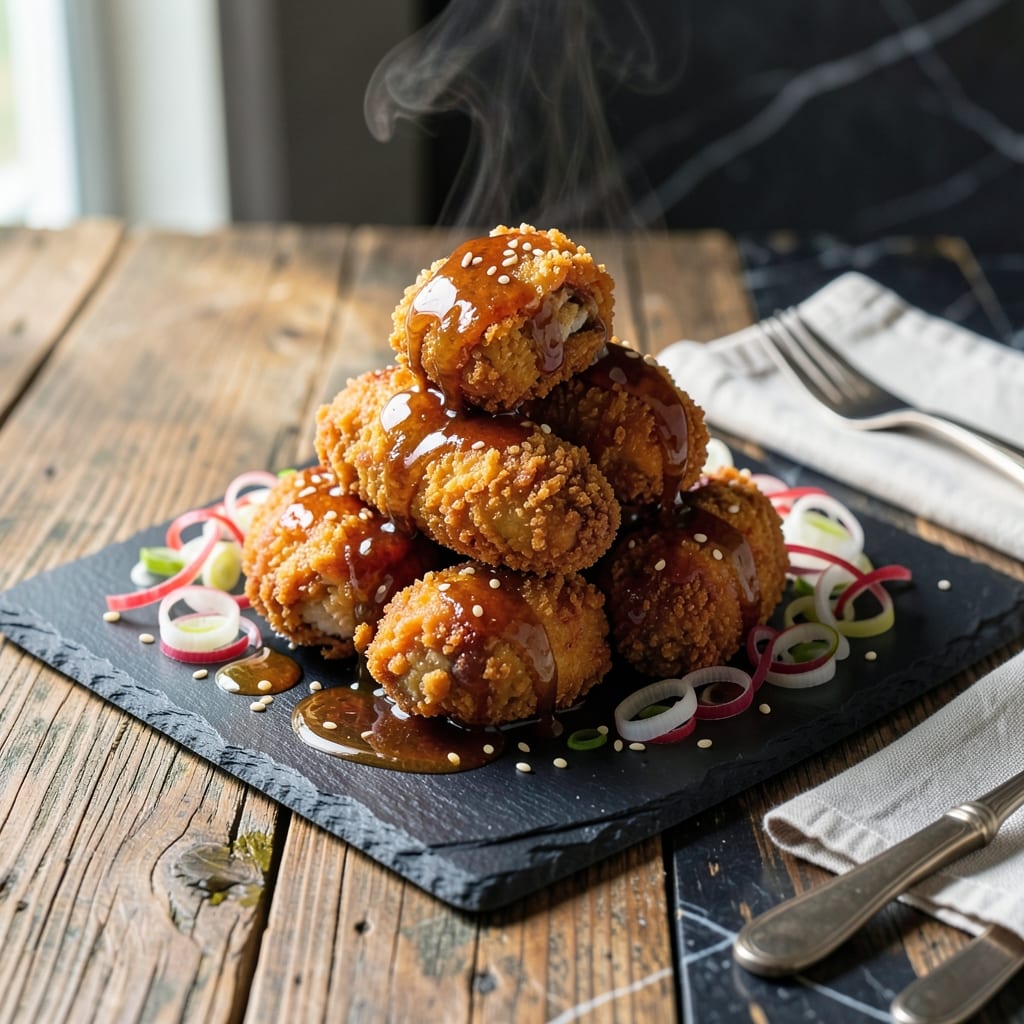
I tested this Korean fried chicken recipe five times to perfect the double-frying technique that creates that signature shatteringly crispy exterior. The secret lies in the potato starch coating and precise oil temperature control.
What makes this version special is the balance between the ultra-crispy coating and the sticky-sweet gochujang glaze. I developed this method after realizing most home versions either sacrifice crunch for sauce or vice versa.
You’ll achieve restaurant-quality results with tender chicken inside and a coating that stays crispy even after glazing. The gochujang adds authentic Korean heat and depth without overpowering.
Serve immediately for maximum crunch. This technique works with drumettes or boneless thighs for equally impressive results.
Ingredients for Korean Fried Chicken Recipe Tasty
Double-frying and potato starch create that signature shatteringly crisp texture everyone loves.
| Ingredient | Amount | Notes |
|---|---|---|
| Chicken Drumettes 🍗 | 2 lb | Or use boneless thighs |
| Potato Starch 🥔 | 1 cup | Essential for crispiness |
| All-Purpose Flour 🌾 | ½ cup | For initial dredging |
| Baking Powder 🧂 | 1 tsp | Creates airy texture |
| Gochujang 🌶️ | ½ cup | Korean chili paste |
| Honey 🍯 | ¼ cup | For glaze sweetness |
| Soy Sauce 🫒 | 3 tbsp | Low-sodium preferred |
| Rice Vinegar 🍚 | 2 tbsp | Balances glaze sweetness |
| Garlic Cloves 🧄 | 4 cloves | Minced for glaze |
| Fresh Ginger 🌿 | 1 tbsp | Grated for depth |
| Vegetable Oil 🛢️ | 4 cups | For double frying |
| Sesame Seeds 🌰 | 2 tbsp | For garnish |
| Green Onions 🧅 | 3 whole | Thinly sliced |
| Kosher Salt 🧂 | 1 tsp | For seasoning chicken |
| Black Pepper 🌶️ | ½ tsp | Freshly ground |
[recipe_ingredient_scaler]
The potato starch is non-negotiable for that ultra-crispy coating. H Mart or Korean grocery stores carry it in bulk, but most Whole Foods locations have it too. For the chicken, drumettes give you that classic wing experience, but boneless thighs (cut into bite-sized pieces) work just as well and cook more evenly. Look for drumettes that are uniform in size so they fry at the same rate.
No gochujang? Sriracha mixed with miso paste gets you close but won’t have that fermented depth. Out of potato starch? Cornstarch at a 1:1 ratio works in a pinch, though the texture won’t be quite as shattery. For a gluten-free version, swap the all-purpose flour for rice flour. The honey can be replaced with brown sugar if needed, though it will taste slightly different.
Fry in batches and keep finished pieces warm in a 200°F oven while you work. The glaze can be made ahead and reheated gently. Leftovers? Honestly, they’re best eaten fresh, but will keep in the fridge for 2-3 days—reheat in the oven to revive some crispiness.
Why You’ll Love This Recipe
- One Bowl Wonder: I just toss the drumettes in potato starch and flour, no fancy prep stations needed.
- Addictive Crunch: That potato starch coating fries up so crispy it shatters, while the gochujang glaze clings to every ridge.
- Party Starter: I’ve served these at game nights and potlucks—everyone reaches for seconds before the first plate’s empty.
- Budget Hero: Drumettes are cheap, and a little gochujang goes a long way for big flavor without breaking the bank.
Step-by-Step Instructions for Double Crispy Gochujang Glazed Chicken
Achieve restaurant-quality results with this method that ensures maximum crunch and sticky-sweet glaze.
Step 1: Season and Coat the Chicken
Pat the 2 lb Chicken Drumettes completely dry with paper towels. This step is non-negotiable—any moisture prevents the coating from adhering properly. Season the drumettes generously with 1 tsp Kosher Salt and 0.5 tsp Black Pepper, ensuring even coverage on all sides.
In a large bowl, combine 0.5 cup All-Purpose Flour and 1 tsp Baking Powder. The baking powder creates microscopic air pockets in the coating, which expand during frying to deliver that signature crispiness. Dredge each piece in the flour mixture, shaking off excess, then coat thoroughly in 1 cup Potato Starch—this dual-coating technique guarantees an ultra-crispy exterior.
Step 2: First Fry for Structure
Heat 4 cups Vegetable Oil in a deep, heavy-bottomed pot to 325°F. Use a thermometer for accuracy; oil temperature is critical. Working in batches to avoid crowding, carefully lower the coated drumettes into the oil. Fry for 8-10 minutes until the pieces float and develop a pale golden crust.
This first fry cooks the chicken through while establishing the coating’s structure. The pieces should not brown deeply at this stage. Transfer to a wire rack set over a baking sheet to drain, maintaining airflow underneath to prevent sogginess. Allow the chicken to rest for 10 minutes before the second fry.
Step 3: Prepare the Gochujang Glaze
In a saucepan, combine 0.5 cup Gochujang, 0.25 cup Honey, 3 tbsp Soy Sauce, and 2 tbsp Rice Vinegar. Add 4 cloves minced Garlic Cloves and 1 tbsp grated Fresh Ginger. The vinegar balances the sweetness while the ginger and garlic add aromatic depth.
Simmer over medium-low heat for 5-7 minutes, stirring frequently, until the mixture thickens slightly and develops a glossy sheen. The glaze should coat the back of a spoon but still be pourable. Remove from heat and set aside.
Step 4: Second Fry for Maximum Crispiness
Increase the oil temperature to 375°F. This higher heat creates the final crispy exterior. Fry the chicken again in batches for 3-4 minutes until deep golden brown and ultra-crispy. The double-fry technique is the secret to Korean fried chicken‘s legendary texture.
Drain on a fresh wire rack. The chicken should have an audible crunch when bitten and the coating should remain intact. Keep the fried chicken warm while you finish the glaze.
Step 5: Glaze and Garnish
Working quickly while the chicken is hot, toss the fried drumettes in the prepared gochujang glaze until evenly coated. The heat from the chicken helps the glaze adhere and thicken slightly. Use a large bowl and gentle tossing motions to avoid breaking the crispy coating.
Transfer to a serving platter and immediately sprinkle with 2 tbsp Sesame Seeds and thinly sliced 3 whole Green Onions. The sesame seeds add nutty crunch while the green onions provide fresh contrast. Serve immediately while the coating is at its crispest and the glaze is still glossy.
Pro Tips For Making Korean Fried Chicken Recipe Tasty
- Double Fry for Crisp: Fry the drumettes once at 325°F until cooked through, then again at 375°F for 2-3 minutes to get that shatteringly crisp coating potato starch is famous for.
- Dry the Chicken: Pat the drumettes bone-dry with paper towels before dredging—I learned this the hard way when my first batch turned out soggy instead of crackly.
- Skip the Overcrowding: Fry in small batches, about 6-8 drumettes at a time, or the oil temp drops and you’ll end up with greasy, sad chicken.
- Boost with Baking Powder: Add 1 teaspoon of baking powder to your flour-starch mix—sounds weird, but it actually changes the outcome by making the crust lighter and crispier.
Storing and Reheating This korean fried chicken recipe tasty
Refrigerator Storage
Let the chicken cool completely before storing—this prevents condensation that makes the coating soggy. I use glass containers with tight lids to maintain as much crispiness as possible. It’ll keep for 2-3 days in the fridge. ❄️
Freezer Storage
For longer storage, freeze unglazed fried chicken on a baking sheet first, then transfer to ziplock bags. This prevents pieces from sticking together. It’ll maintain quality for up to 1 month. Reheat from frozen for best texture.
Oven Reheating
Preheat to 400°F and place chicken on a wire rack over a baking sheet. Heat for 10-12 minutes until the coating crispes up again. This method works best for larger batches. I always check the internal temp reaches 165°F.
Air Fryer Method
For small batches, use the air fryer at 375°F for 4-5 minutes. Shake the basket halfway through. The circulating air helps revive the crispiness better than a microwave. Just watch closely to avoid burning.
Glaze Reheating
If storing glazed chicken, reheat the glaze separately in a saucepan over low heat for 2-3 minutes. Toss the reheated chicken in the warm glaze to restore that sticky coating. Add a splash of water if it’s too thick. 💡
Nutrition Facts
Frequently Asked Questions
Why use potato starch instead of regular flour?
Potato starch creates an ultra-crispy, shatteringly light coating that stays crunchy longer. It absorbs less oil than flour, resulting in a lighter texture.
Can I bake instead of frying?
Baking at 425°F for 25-30 minutes works but won’t achieve the same crispiness. For best results, finish under the broiler for 2-3 minutes to mimic frying.
How do I prevent the glaze from making the coating soggy?
Toss the chicken in the glaze immediately after the second fry while it’s piping hot. The heat helps the glaze set quickly, preserving crispiness.
What if I don’t have gochujang?
Substitute 2 tbsp sriracha mixed with 1 tbsp miso paste and 1 tbsp honey. It won’t be identical but provides similar heat and depth.

Trained in classic French technique but raised on slow-cooked ribs and spicy rubs, she blends culinary skill with smoke and soul.
- Recipe for Boneless Pork Chops in Cast Iron Skillet: Sear and Baste to Juicy Perfection - October 3, 2026
- Recipe for Boneless Cross Rib Roast: Slow-Roasted Beef with Herb Crust - October 3, 2026
- Hamburgers in Sauce Recipe Crock Pot: Slow-Cooked Savory Delight - October 3, 2026