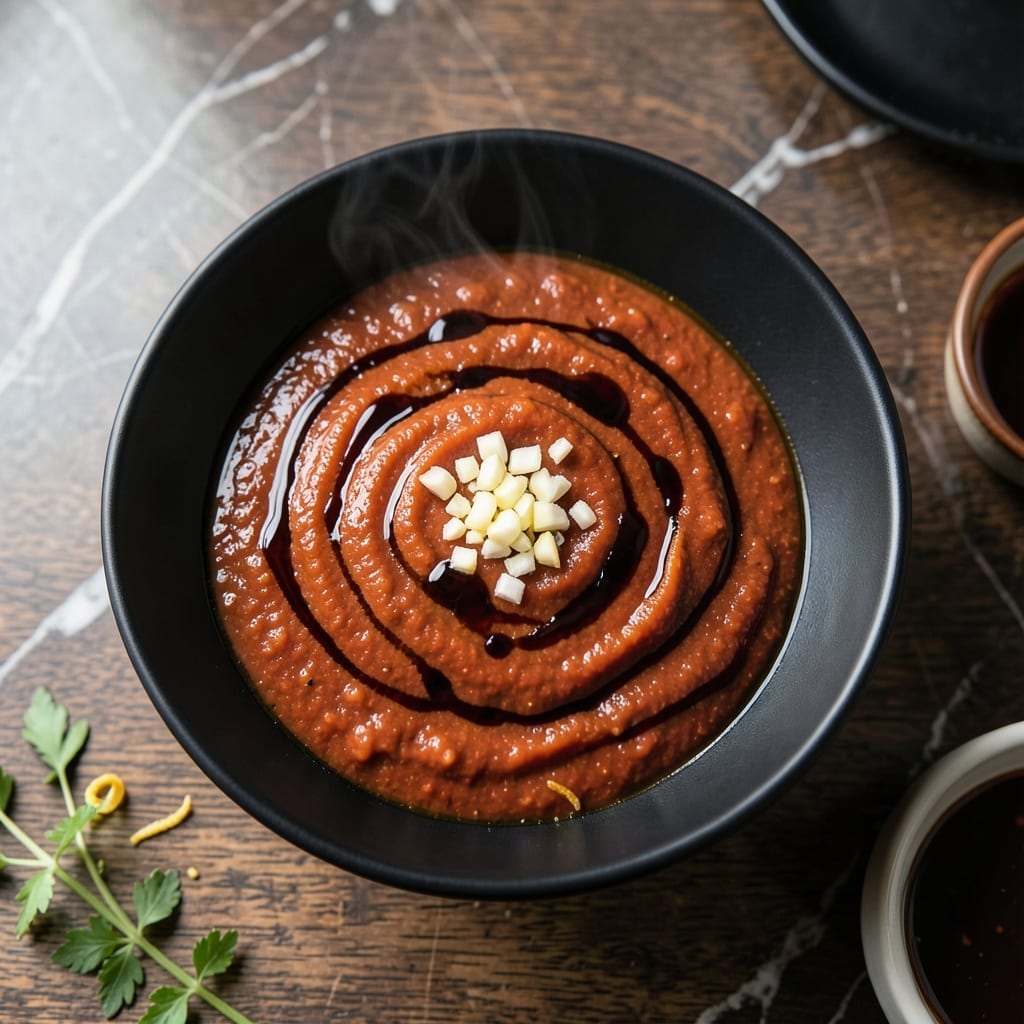
This sauce delivers the deep, complex flavors of Korean cuisine with just a few ingredients. I developed this blend to capture the perfect balance of spicy, sweet, and umami that defines authentic gochujang.
The foundation is quality gochujang paste, which brings fermented heat and richness. Combined with soy sauce, rice vinegar, and a touch of honey, it creates a versatile sauce that works as a marinade, dip, or finishing touch.
What you get is a thick, glossy condiment with layers of flavor—spicy from the chili, tangy from the vinegar, and slightly sweet with a lingering umami depth. It keeps for weeks in the fridge and only improves as the flavors meld.
Use it on grilled meats, stir-fries, or as a bold dipping sauce. This is the kind of recipe that becomes a kitchen staple.
Ingredients for Korean Gochujang Sauce
Eight ingredients transform into a bold, umami-packed sauce that defines Korean flavor.
| Ingredient | Amount | Notes |
|---|---|---|
| Gochujang Paste 🌶️ | ½ cup | Fermented Korean chili paste |
| Soy Sauce 🥢 | 3 tbsp | Low-sodium or tamari preferred |
| Rice Vinegar 🍚 | 2 tbsp | Unseasoned for clean flavor |
| Maple Syrup 🍁 | 2 tbsp | Vegan substitute for honey |
| Sesame Oil 🫒 | 1 tbsp | Toasted for depth of flavor |
| Garlic Cloves 🧄 | 3 cloves | Minced for even distribution |
| Fresh Ginger 🌿 | 1 tbsp | Grated for smooth texture |
| Sesame Seeds 🌰 | 1 tsp | Toasted for garnish optional |
[recipe_ingredient_scaler]
The gochujang paste is non-negotiable here. Look for Mother-in-Law’s or Sempio brand at H Mart or Korean markets—avoid versions with added sugar or preservatives. The paste should be thick, dark red, and smell deeply fermented. Soy sauce matters too: Kikkoman low-sodium or tamari (for gluten-free) keep the flavor clean without overpowering saltiness.
No maple syrup? Agave nectar or date syrup work at a 1:1 ratio. Missing rice vinegar? Apple cider vinegar at half the amount gets you close, but the flavor profile shifts slightly. The sesame oil can be swapped with perilla oil for a more authentic Korean touch (find it at Asian grocery stores). Fresh ginger is ideal, but ground ginger at one-quarter the amount works in a pinch.
This sauce actually improves with age. Store in an airtight container in the fridge for up to 3 weeks. The flavors meld and deepen over time. For longer storage, freeze in ice cube trays—good for 6 months (thaw before using).
Why You’ll Love This Recipe
- Five Minute Mix: I just whisk the gochujang, soy sauce, and a splash of rice vinegar—no cooking, no fuss.
- Sweet Heat Balance: The maple syrup tames the gochujang’s spice while sesame oil adds a nutty depth that’s ridculously good.
- Drizzle on Everything: Honestly, it’s my secret weapon for noodles, grilled meats, even roasted veggies.
- Keeps for Weeks: I make a double batch and it stays fresh in the fridge, ready to save dinner on busy nights.
Step-by-Step Instructions for Korean Gochujang Sauce
This straightforward method ensures a perfectly balanced sauce with deep umami and controlled heat.
Step 1: Prepare Aromatics for Smooth Integration
Start by finely mincing the 3 cloves garlic cloves until it forms a near-paste consistency. This prevents any harsh, chunky bits in the finished sauce. Use the flat side of your knife to crush the cloves first—this makes mincing easier.
Next, grate the 1 tbsp fresh ginger using a microplane or fine grater. The ginger should be smooth, without any fibrous strings. I like to peel the ginger first with a spoon, scraping off just the tough outer skin while preserving as much of the flavorful flesh as possible.
Step 2: Combine Wet Ingredients for Flavor Base
In a medium bowl, whisk together the 0.5 cup gochujang paste and 3 tbsp soy sauce until completely smooth. The gochujang is thick and sticky, so you’ll need to press it against the bowl with the whisk to break up any clumps.
Add the 2 tbsp rice vinegar and 2 tbsp maple syrup, then whisk again for 30 seconds until the mixture is glossy and homogeneous. The vinegar will thin the sauce slightly, while the syrup balances the heat with natural sweetness.
Step 3: Incorporate Aromatics and Oil
Stir in the minced garlic and grated ginger you prepared earlier. Mix thoroughly to distribute these flavor powerhouses evenly throughout the sauce. The raw garlic and ginger will mellow as they sit in the sauce, so don’t worry about their sharpness initially.
Drizzle in the 1 tbsp sesame oil while stirring constantly. This ensures the oil emulsifies into the sauce rather than sitting on top. The sesame oil adds a nutty depth that complements the fermented gochujang perfectly.
Step 4: Rest and Adjust for Optimal Flavor
Let the sauce rest at room temperature for at least 10-15 minutes. This allows the flavors to meld and the garlic and ginger to infuse the mixture fully. You’ll notice the sauce thickens slightly as the gochujang absorbs some of the liquids.
Taste and adjust the seasoning if needed. If it’s too thick, add a teaspoon of warm water and stir well. If you prefer more acidity, a splash of additional rice vinegar can brighten the flavors. The sauce should coat the back of a spoon but still be pourable.
Step 5: Finish and Store for Future Use
Stir in the 1 tsp sesame seeds just before using or serving. If you’re preparing the sauce ahead, wait to add the sesame seeds until right before serving to maintain their crunch. The seeds add a subtle nutty flavor and visual appeal.
Transfer the sauce to an airtight container. It will keep in the refrigerator for up to 2 weeks. Before each use, give it a good stir as the ingredients may separate slightly over time. This sauce works beautifully as a marinade, glaze, or dipping sauce.
Pro Tips For Making Korean Gochujang Sauce
- Bloom the Gochujang: Heat the gochujang paste in a dry pan for 1-2 minutes before adding liquids—this deepens its flavor and removes the raw edge. I learned this the hard way after wondering why my sauce tasted flat.
- Balance the Sweetness: Use real maple syrup, not pancake syrup, and start with half the amount you think you need. You can always add more, but you can’t take it out once it’s in.
- Skip the Boiling: Never let the sauce reach a rolling boil or the rice vinegar will turn harsh. Keep it at a gentle simmer—just enough to meld the flavors without breaking them.
- Finish with Sesame Oil: Stir in the sesame oil at the very end, off the heat. Adding it early makes the sauce bitter, but finishing with it gives that rich, nutty aroma that makes the dish sing.
Essential Equipment for This Recipe
Mixing Bowls
A medium stainless steel bowl is my go-to for whisking the gochujang paste with other ingredients. The smooth surface makes it easy to break up clumps. I prefer Winco’s 3-quart mixing bowl—it’s durable and the perfect size for this recipe.
Whisk Selection
Use a balloon whisk for the best results when blending the thick gochujang. The rounded shape helps incorporate air while breaking up the sticky paste. Ateco’s 10-inch whisk is my kitchen workhorse for sauces like this.
Measuring Tools
Precise measurements matter for balanced flavors. I use OXO Good Grips measuring spoons and cups for accuracy. The magnetic set stays organized in my drawer. For the sesame oil, a small glass measuring cup prevents waste.
Ginger Grater
A microplane grater is essential for getting smooth ginger without fibrous bits. I keep a Microplane 40020 dedicated for ginger and garlic. It creates a fine paste that blends seamlessly into the sauce. 💪
Storage Containers
Transfer your finished sauce to glass jars with airtight lids. I love Ball Mason jars in 8-ounce size—perfect for this batch. They’re easy to clean and let you see the beautiful deep red color of the sauce.
Optional Tools
For extra smooth texture, use an immersion blender to puree the sauce after whisking. A fine-mesh strainer can remove any persistent ginger fibers. Both are optional but helpful for restaurant-quality results. 🔥
Nutrition Facts
Frequently Asked Questions
Can I make this sauce less spicy?
Yes! Reduce the gochujang to 1/4 cup and add 2 tbsp of miso paste for depth without heat. This keeps the umami while taming the fire.
What’s the best way to use this sauce?
It shines as a marinade for tofu or chicken, a glaze for roasted veggies, or a dipping sauce for dumplings. Thin with 1 tsp water for brushing on grilled items.
Why did my sauce separate after storage?
This is normal! The oil rises to the top. Just stir vigorously before each use. For smoother results, store in a glass jar and shake well.
Can I use honey instead of maple syrup?
Substitute 2 tbsp honey at a 1:1 ratio. The flavor profile stays balanced, though honey adds a floral note that some prefer.

Trained in classic French technique but raised on slow-cooked ribs and spicy rubs, she blends culinary skill with smoke and soul.
- Recipe for Boneless Pork Chops in Cast Iron Skillet: Sear and Baste to Juicy Perfection - October 3, 2026
- Recipe for Boneless Cross Rib Roast: Slow-Roasted Beef with Herb Crust - October 3, 2026
- Hamburgers in Sauce Recipe Crock Pot: Slow-Cooked Savory Delight - October 3, 2026