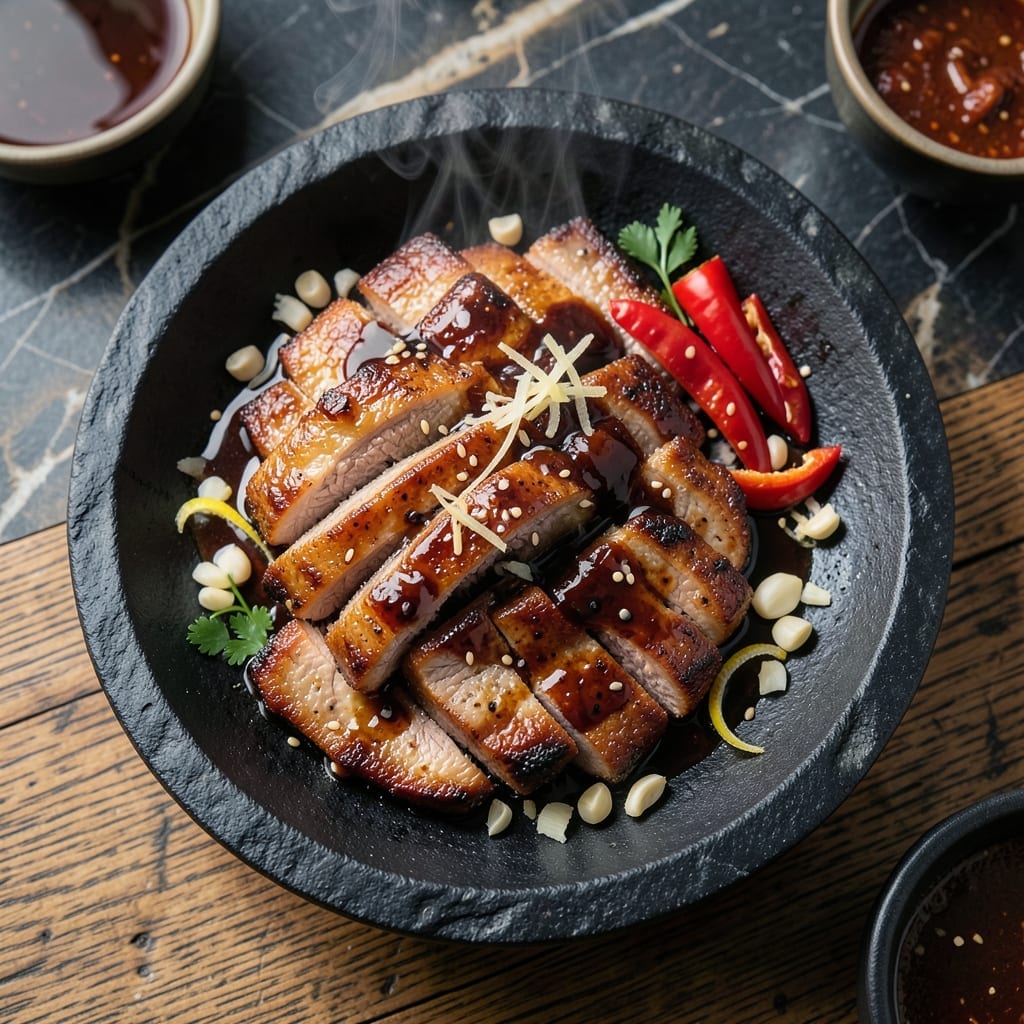
This recipe transforms pork belly into a masterpiece with smoky char and sweet soy glaze, using traditional Korean grilling techniques.
I’ve perfected the balance of marinade, heat, and timing to deliver tender meat with crisp edges. The glaze caramelizes beautifully, creating an irresistible finish.
Ingredients for Korean Grill Pork Belly
Transform pork belly with these traditional Korean ingredients for smoky, caramelized perfection every time.
| Ingredient | Amount | Notes |
|---|---|---|
| Pork Belly 🥓 | 2 lb | Skin-on, sliced 1/2-inch thick |
| Soy Sauce 🫒 | ½ cup | Use low-sodium for balance |
| Brown Sugar 🍚 | ¼ cup | Packed, for glaze caramelization |
| Garlic Cloves 🧄 | 6 cloves | Minced, for marinade depth |
| Fresh Ginger 🌿 | 1 whole | 2-inch piece, grated fine |
| Sesame Oil 🫒 | 2 tbsp | Toasted variety preferred |
| Rice Vinegar 🍋 | 2 tbsp | Balances sweetness in glaze |
| Gochujang 🌶️ | 2 tbsp | Korean red pepper paste |
| Green Onions 🧅 | 4 whole | Thinly sliced, for garnish |
| Toasted Sesame Seeds 🌾 | 2 tbsp | For finishing garnish |
| Black Pepper 🌶️ | 1 tsp | Freshly ground for heat |
| Korean Pear 🍐 | ½ whole | Puréed, tenderizes meat |
| Vegetable Oil 🫒 | 1 tbsp | For grilling prevention sticking |
[recipe_ingredient_scaler]
The pork belly is everything here. Look for skin-on cuts with even fat marbling at Korean markets or specialty butchers—avoid pre-sliced if possible, as it dries out faster. The gochujang is non-negotiable; Sempio or CJ brands offer authentic flavor. For the pear, Bosc or Anjou varieties work best (they’re firmer and less sweet). If your market doesn’t carry Korean pear, Asian pear is an acceptable substitute.
No gochujang? Miso paste mixed with a pinch of cayenne can work in a pinch, though the flavor won’t be identical. Honey or maple syrup can replace brown sugar at a 1:1 ratio. For a gluten-free version, swap soy sauce for coconut aminos. The sesame oil must be toasted—Kadoya or Ottogi are reliable brands. Skip the pear if you must, but expect slightly chewier meat.
Marinate the pork belly for at least 4 hours (overnight is ideal). Leftovers keep 3-4 days in the fridge, though it’s best served fresh off the grill. The glaze can be made ahead and stored separately for up to 1 week—just reheat gently before using.
Why You’ll Love This Recipe
- I’ll be real: cleanup is a breeze with just a grill pan and a mixing bowl to wash.
- Minimal Chopping Required: I just slice the pork belly and mince the garlic and ginger—no fancy prep here.
- Sweet-Savory Magic: The brown sugar caramelizes with the soy sauce, creating this sticky, finger-licking glaze on the pork.
- Feeds a Hungry Table: Honestly, it’s my go-to for weekend gatherings or when I need to stretch a meal for leftovers.
Step-by-Step Instructions for Korean Grill Pork Belly
Master the technique for achieving perfect char and caramelization with every bite.
Step 1: Prepare the Marinade Base
In a large bowl, combine the 0.5 cup soy sauce, 0.25 cup brown sugar, 2 tbsp sesame oil, 2 tbsp rice vinegar, 2 tbsp gochujang, minced 6 cloves garlic cloves, and grated 1 whole fresh ginger. Whisk vigorously until the brown sugar fully dissolves into a smooth, glossy mixture.
The gochujang will create a rich, slightly viscous base. I always taste the marinade at this stage—it should balance sweet, salty, and spicy notes. If the mixture seems too thick, the rice vinegar will help loosen it as you continue whisking.
Step 2: Tenderize and Marinate the Pork Belly
Add the 2 lb pork belly (sliced 1/2-inch thick with skin on) to the marinade. Pour the purée of 0.5 whole Korean pear over the meat. The pear enzymes will begin breaking down the proteins immediately, so work quickly.
Massage the marinade into every slice, ensuring full coverage. I press each piece gently to help the flavors penetrate. Sprinkle 1 tsp black pepper evenly over the meat. Cover and refrigerate for at least 4 hours, though 12-24 hours yields the most tender results with deeper flavor infusion.
Step 3: Grill to Achieve Smoky Char
Preheat your grill to medium-high heat. Brush the grates with 1 tbsp vegetable oil to prevent sticking. Remove the pork belly from the marinade (reserve the marinade) and grill for 4-5 minutes per side until you see deep char marks and the edges begin to caramelize.
Watch for flare-ups from the fat rendering. I move the slices to a cooler part of the grill briefly if flames get too high. The meat should develop a glossy, slightly sticky exterior from the sugar in the marinade.
Step 4: Glaze and Finish
Bring the reserved marinade to a boil in a small saucepan, then reduce heat to medium and simmer for 5-7 minutes until it thickens into a syrupy glaze. The glaze should coat the back of a spoon and have a deep, caramelized aroma.
Brush this glaze liberally over the grilled pork belly during the last 2 minutes of cooking. Transfer to a serving platter and immediately sprinkle with thinly sliced 4 whole green onions and 2 tbsp toasted sesame seeds.
Pro Tips For Making Korean Grill Pork Belly
- Score the Fat: Cut shallow slits in the pork belly fat cap—about 1/4 inch deep and 1 inch apart. I learned this the hard way after my first few batches stayed rubbery instead of crispy.
- Marinate Overnight: Let the pork belly sit in the soy sauce, brown sugar, garlic, and ginger mix for at least 6 hours, but 12 is better. After rushing it once, I finally figured out why the flavor was so shallow.
- Skip the Overcrowding: Leave space between pieces on the grill or pan—otherwise, they steam instead of caramelizing. Sounds weird, but it works: you’ll get that sticky, charred edge every time.
- Rest Before Slicing: Give the cooked pork belly 5-10 minutes to rest under foil before slicing. My grandmother swore by this, and she was right: it keeps all the juices from running out.
Common Mistakes When Making Great korean grill pork belly
Over-Marinating Woes
Don’t let pork belly sit in the marinade beyond 24 hours. The pear enzymes and acidic ingredients start breaking down the meat’s texture, turning it mushy. I learned this the hard way at a BBQ competition—my slices fell apart on the grill. 💡
Skipping the Grill Prep
Always preheat your grill to medium-high heat and oil the grates with vegetable oil. Cold grates cause sticking, and pork belly’s high fat content makes it especially prone to this. I brush the grates right before adding the meat.
Flare-Up Fears
Fat rendering can cause intense flare-ups. Don’t panic—move slices to a cooler part of the grill temporarily. Avoid spraying water, as it can create steam burns and wash away your glaze. Keep a spray bottle nearby just in case.
Glaze Gone Wrong
Simmer the reserved marinade for at least 5 minutes to thicken it properly. A thin glaze won’t cling to the meat, and raw marinade can harbor bacteria. I test the consistency by coating the back of a spoon—it should be syrupy. 🔥
Slicing Too Soon
Let the pork belly rest for 5-10 minutes after grilling. Slicing immediately causes juices to escape, leaving the meat dry. This rest time also allows the glaze to set, creating that perfect sticky finish.
Nutrition Facts
Frequently Asked Questions
What’s the best cut of pork belly for grilling?
Use skin-on pork belly with even fat marbling. Slices should be 1/2-inch thick to prevent drying out. Korean markets often carry pre-cut options perfect for this dish.
Can I use a different fruit instead of Korean pear?
Yes, Asian pear or Bosc pear work well. The enzymes tenderize the meat. Avoid overly ripe pears as they’ll make the marinade too sweet.
How do I prevent flare-ups while grilling?
Move slices to a cooler part of the grill if flames get too high. Never spray water—it can cause steam burns. Keep a spray bottle of water nearby for emergencies.
How long should I marinate the pork belly?
Marinate for at least 4 hours, but 12-24 hours yields the best flavor and tenderness. Don’t exceed 24 hours or the meat may become mushy.

Trained in classic French technique but raised on slow-cooked ribs and spicy rubs, she blends culinary skill with smoke and soul.
- Recipe for Boneless Pork Chops in Cast Iron Skillet: Sear and Baste to Juicy Perfection - October 3, 2026
- Recipe for Boneless Cross Rib Roast: Slow-Roasted Beef with Herb Crust - October 3, 2026
- Hamburgers in Sauce Recipe Crock Pot: Slow-Cooked Savory Delight - October 3, 2026