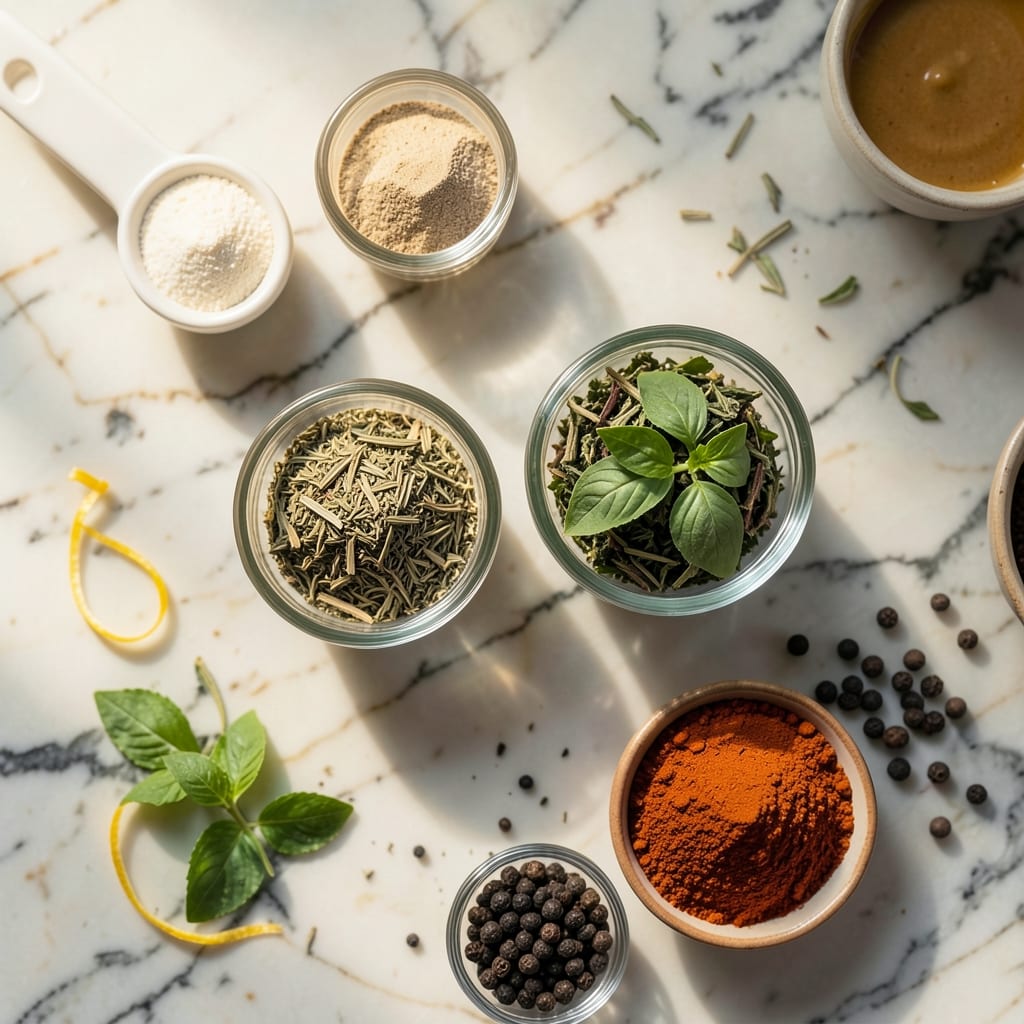
This recipe brings bold Korean flavors to your grill with a sweet and spicy gochujang glaze. The marinade tenderizes the chicken while building layers of umami and heat.
You’ll achieve perfectly charred meat with a sticky, caramelized exterior. The balance of sweet, spicy, and savory makes this dish a standout at any cookout.
Ingredients for Korean Grilled Chicken
Pantry staples meet bold Korean flavors for this showstopper dish. Simple ingredients, big taste.
| Ingredient | Amount | Notes |
|---|---|---|
| Boneless Chicken Thighs 🍗 | 2 lb | Skin-on for extra crispiness |
| Gochujang 🌶️ | ½ cup | Korean chili paste, essential |
| Soy Sauce 🥢 | ¼ cup | Low-sodium preferred for balance |
| Honey 🍯 | 3 tbsp | Balances heat with sweetness |
| Rice Vinegar 🍚 | 2 tbsp | Adds tangy brightness |
| Minced Garlic 🧄 | 4 cloves | Freshly minced for best flavor |
| Fresh Ginger 🌿 | 1 tbsp | Grated or finely minced |
| Sesame Oil 🫒 | 1 tbsp | Toasted for depth |
| Brown Sugar 🍚 | 2 tbsp | Packed, for caramelization |
| Green Onions 🧅 | 4 whole | Thinly sliced for garnish |
| Sesame Seeds 🌰 | 1 tbsp | Toasted for garnish |
| Vegetable Oil 🫒 | 1 tbsp | For grilling prevention |
| Black Pepper 🌶️ | ½ tsp | Freshly ground preferred |
[recipeingredientscaler]
The gochujang is non-negotiable here—look for Sempio or Koon brands at H Mart or Korean markets (the good stuff, not the watered-down versions). Chicken thighs stay juicier than breasts on the grill, and skin-on gives you that crispy, charred exterior. If your grocery store doesn’t carry gochujang, Amazon or a specialty Asian grocer will. Fresh ginger and garlic make a huge difference, so skip the jarred stuff.
No gochujang? Sriracha mixed with miso paste gets you close, but the flavor won’t be as deep. Honey can be swapped for brown sugar or maple syrup (use the same amount). Out of rice vinegar? Apple cider vinegar at half the quantity works in a pinch. For extra heat, add a pinch of gochugaru (Korean chili flakes) to the marinade.
Marinate the chicken for at least 4 hours—overnight is even better. Leftover chicken keeps 3-4 days in the fridge, but it’s best fresh off the grill. The glaze thickens as it cools, so reheat gently with a splash of water if needed.
Why You’ll Love This Recipe
- One Pan Wonder: I just toss the chicken thighs with the gochujang, soy sauce, honey and vinegar in a bowl, then grill—no fancy prep.
- Flavor Bomb: That sweet-spicy kick from the gochujang and honey? I crave it all week long.
- Meal Prep Hero: I make a double batch on Sunday and it reheats beautifully for lunches.
- Budget Friendly: Boneless thighs stay juicy and cost half what breasts do—my wallet notices.
Step-by-Step Instructions for Korean Grilled Chicken
Here’s the method I use to get that perfect char and sticky glaze every time.
Step 1: Make the Gochujang Marinade
In a large bowl, whisk together the 0.5 cup Gochujang, 0.25 cup Soy Sauce, 3 tbsp Honey, 2 tbsp Rice Vinegar, 4 cloves Minced Garlic, 1 tbsp Fresh Ginger, 1 tbsp Sesame Oil, 2 tbsp Brown Sugar, and 0.5 tsp Black Pepper until smooth. This thick, fragrant paste should be glossy and vibrant red.
The brown sugar might clump initially, so press it against the bowl with the back of a spoon. This marinade balances sweet, spicy, tangy, and umami all at once—the foundation of that signature Korean flavor profile.
Step 2: Marinate the Chicken
Add the 2 lb Boneless Chicken Thighs to the marinade, turning to coat every piece thoroughly. I like to get my hands in there to ensure the marinade clings to every nook. Cover and refrigerate for at least 2 hours (overnight is even better).
The longer you marinate, the deeper the flavor penetration. The gochujang will actually tenderize the chicken while infusing it with that complex, spicy-sweet character. Don’t skip this step—it’s what makes this dish exceptional.
Step 3: Grill to Perfection
Preheat your grill to medium-high heat and oil the grates with 1 tbsp Vegetable Oil to prevent sticking. Remove the chicken from the marinade (let excess drip off) and grill for 6-7 minutes per side until the internal temperature reaches 165°F.
You’ll know it’s ready when the chicken develops charred edges and the glaze starts to caramelize. Resist the urge to move the pieces too soon—they should release easily when properly seared. Baste with leftover marinade during the last 2 minutes of cooking for extra shine.
Step 4: Rest and Garnish
Transfer the chicken to a platter and let it rest for 5 minutes. This allows the juices to redistribute so every bite stays moist. While it rests, thinly slice the 4 whole Green Onions and toast the 1 tbsp Sesame Seeds in a dry pan until fragrant.
Sprinkle the green onions and sesame seeds over the chicken just before serving. The contrast of the cool, crisp garnish against the hot, sticky chicken is what takes this dish to the next level.
Pro Tips For Making Korean Grilled Chicken
- Score the Thighs: Cut shallow slits into the chicken thighs before marinating—this lets the gochujang and soy sauce penetrate deeper and gives you more crispy edges when grilled.
- Balance the Marinade: Gochujang can overpower, so add honey and rice vinegar in a 1:1:1 ratio with the soy sauce to keep the sweet, tangy, and spicy flavors in check.
- Don’t Rush the Grill: I learned this the hard way—cook the chicken over medium heat, not high, to prevent the honey from burning before the thighs are done.
- Rest Before Serving: Give the chicken a solid 5 minutes off the heat under foil so the juices redistribute—skip this and you’ll lose half the flavor to the cutting board.
Regional Styles of korean grilled chicken
Seoul Street Food Style
In bustling Korean markets, this chicken is often grilled on skewers over charcoal for that authentic smoky flavor. I like to cut the thighs into 1-inch chunks and thread them onto soaked wooden skewers before grilling. The smaller pieces cook faster and get more char. 🗺️
Royal Court Cuisine
Historically, Korean royalty enjoyed a more refined version with thinly pounded thighs for elegance. They’d use pine nuts and dried jujubes in the marinade for extra richness. I’ve tried this at home—it’s surprisingly approachable.
Busan Spicy Version
Coastal Busan amps up the heat with extra gochugaru in the marinade. Add 1 tbsp Korean chili flakes to the mix for that fiery kick. The seaside version often includes a seafood-based dipping sauce on the side.
Jeju Island Citrus
Jeju’s famous for its citrus, so they incorporate mandarin orange zest into the glaze. The bright citrus notes cut through the richness beautifully. I add 1 tsp zest to my marinade when I want that island flair.
Modern Fusion
Korean-American restaurants often serve this with a side of mac and cheese or on a brioche bun for sandwiches. I’ll admit, the first time I tried it as a slider, I was skeptical—but now it’s a regular at my cookouts.
Nutrition Facts

Trained in classic French technique but raised on slow-cooked ribs and spicy rubs, she blends culinary skill with smoke and soul.
- Recipe for Boneless Pork Chops in Cast Iron Skillet: Sear and Baste to Juicy Perfection - October 3, 2026
- Recipe for Boneless Cross Rib Roast: Slow-Roasted Beef with Herb Crust - October 3, 2026
- Hamburgers in Sauce Recipe Crock Pot: Slow-Cooked Savory Delight - October 3, 2026