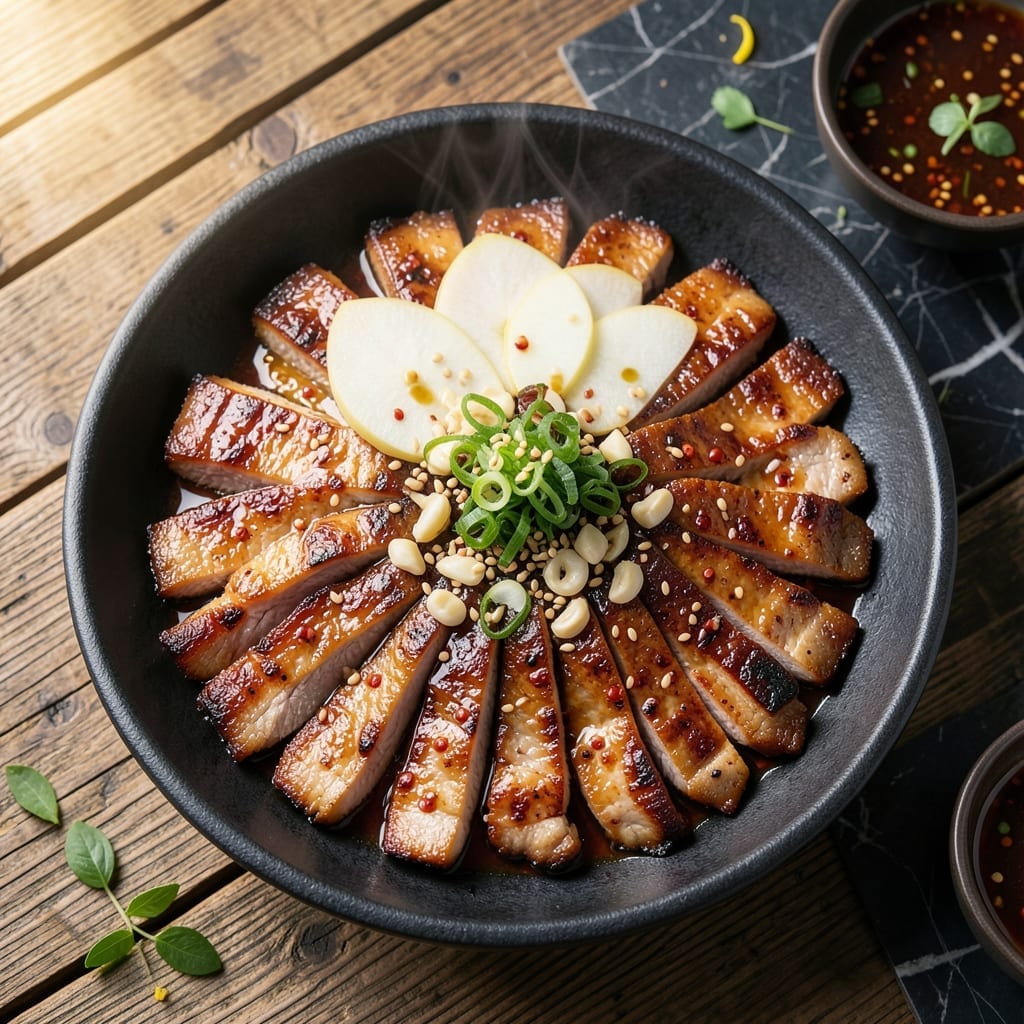
This recipe transforms pork belly into tender, caramelized perfection with traditional Korean flavors. I developed this method to achieve authentic samgyeopsal results at home.
Thin slices of pork belly marinate in a sweet-savory blend of soy sauce, brown sugar, garlic, and sesame oil. The key is letting the flavors penetrate for at least 2 hours before grilling.
On the grill, the pork develops a crispy edge while staying juicy inside. Each bite delivers smoky, sweet, and umami notes that define Korean barbecue.
Serve wrapped in lettuce with garlic, kimchi, and ssamjang for the full experience. This dish brings restaurant-quality results to your backyard.
Ingredients for Korean Grilled Pork Belly
Authentic Korean flavors start with quality pork belly and a well-balanced marinade of traditional ingredients.
| Ingredient | Amount | Notes |
|---|---|---|
| Pork Belly 🥓 | 2 lb | Skin-on, sliced 1/4-inch thick |
| Soy Sauce 🫒 | ½ cup | Low-sodium preferred for balance |
| Brown Sugar 🍚 | ½ cup | Light or dark variety works |
| Garlic Cloves 🧄 | 8 cloves | Minced for even distribution |
| Sesame Oil 🫒 | 2 tbsp | Toasted for authentic flavor |
| Asian Pear 🍐 | ½ whole | Grated, adds natural sweetness |
| Green Onions 🧅 | 4 whole | Thinly sliced for garnish |
| Fresh Ginger 🌿 | 1 tbsp | Grated for marinade depth |
| Gochujang 🌶️ | 2 tbsp | Korean chili paste for heat |
| Rice Vinegar 🍯 | 2 tbsp | Balances sweetness with acidity |
| Sesame Seeds 🌾 | 2 tbsp | Toasted for garnish crunch |
| Black Pepper 🌶️ | 1 tsp | Freshly ground for boldness |
| Butter Lettuce 🥬 | 1 whole | For wrapping cooked pork |
| Kimchi 🥬 | 1 cup | Store-bought or homemade |
| Ssamjang 🥜 | ½ cup | Korean dipping sauce essential |
[recipe_ingredient_scaler]
The pork belly is non-negotiable—look for skin-on slabs at Korean markets or specialty butchers. Costco sometimes carries pre-sliced packs that work well (just trim any excess fat). For the soy sauce, Kikkoman low-sodium is a reliable choice, but any Korean brand like Sempio adds authentic depth. The Asian pear tenderizes the meat naturally, so don’t skip it. If you can’t find it, a Bosc pear works in a pinch (but the texture won’t be quite as silky).
No gochujang? Sriracha mixed with a bit of miso paste gets you close to that sweet-spicy complexity. Out of sesame oil? Toasted peanut oil adds a different but still nutty note. Brown sugar can be swapped for coconut sugar at a 1:1 ratio. For the ssamjang, many H Mart locations sell it pre-made—look for the red and black container. The marinade needs at least 2 hours to work its magic, but overnight is even better.
Marinated pork belly keeps 3-4 days in the fridge, but it’s best grilled fresh. Cooked portions reheat well in a skillet—store in the freezer for up to 2 months. The lettuce wraps are best assembled right before serving to keep them crisp. Extra ssamjang? It’ll keep in the fridge for 1 week in an airtight container.
Why You’ll Love This Recipe
- 5-Minute Marinade: I toss pork belly with soy sauce, brown sugar, and crushed garlic—no fancy steps, just mix and let it soak up flavor.
- Sweet-Savory Magic: The brown sugar caramelizes on the grill while soy sauce and sesame oil give it that deep, umami richness I crave.
- Weekend or Weeknight: Honestly, it’s just as good for a quick family dinner as it is for impressing guests at a summer cookout.
- Stretches Far: One batch makes enough for dinner tonight and leftovers that taste even better in fried rice tomorrow.
Step-by-Step Instructions for Korean Grilled Pork Belly
Master this technique for perfectly caramelized pork belly with balanced sweet-spicy flavors.
Step 1: Create the Marinade Base
In a large bowl, combine the 0.5 cup soy sauce, 0.5 cup brown sugar, minced 8 cloves garlic cloves, 2 tbsp sesame oil, grated 0.5 whole Asian pear, grated 1 tbsp fresh ginger, 2 tbsp gochujang, 2 tbsp rice vinegar, and 1 tsp black pepper.
Whisk vigorously until the brown sugar fully dissolves and the mixture becomes smooth and glossy. The Asian pear adds natural enzymes that help tenderize the pork belly while contributing subtle sweetness to complement the savory soy and spicy gochujang.
I always let this marinade sit for 5 minutes before using to allow the flavors to meld and the gochujang to fully incorporate into the liquid.
Step 2: Marinate the Pork Belly
Add the 2 lb pork belly slices to the marinade, ensuring each piece is fully coated. I use my hands for this step—it’s the most effective way to work the marinade into every crevice of the pork belly slices.
Cover the bowl with plastic wrap and refrigerate for at least 4 hours, though overnight marination yields the most intense flavor penetration. The pork belly will absorb the complex blend of sweet, salty, and spicy notes that define authentic Korean samgyeopsal.
Halfway through the marination, I give the bowl a gentle shake to redistribute the marinade and ensure even flavor development across all slices.
Step 3: Grill to Caramelized Perfection
Preheat your grill to medium-high heat. Remove the pork belly from the marinade, shaking off excess liquid, and place the slices directly on the grill grates. Cook for 4-5 minutes per side until the edges develop a deep caramel color and the fat begins to render.
The sugars in the marinade will create beautiful char marks while the pork belly becomes tender and juicy. Watch carefully during the final minute—this is when the marinade caramelizes most intensely. You’ll see the edges turn deep mahogany with slight charring.
Transfer the cooked pork belly to a serving platter and let it rest for 2-3 minutes to allow the juices to redistribute.
Step 4: Assemble for Serving
While the pork belly rests, toast the 2 tbsp sesame seeds in a dry pan over medium heat for 1-2 minutes until fragrant and golden. Thinly slice the 4 whole green onions on a diagonal cut for visual appeal.
Arrange the pork belly slices on a platter and sprinkle with the toasted sesame seeds and sliced green onions. Serve with the 1 whole butter lettuce leaves for wrapping, 1 cup kimchi for tangy contrast, and 0.5 cup ssamjang for dipping.
The combination of crisp lettuce, spicy kimchi, and rich pork belly with its sweet-savory crust creates the authentic Korean dining experience that makes this dish so beloved.
Pro Tips For Making Korean Grilled Pork Belly
- Score the Fat: Cut shallow slits in the pork belly fat cap every half-inch—this renders the fat evenly and prevents curling on the grill. I learned this the hard way after my first few batches looked like sad, warped pancakes.
- Marinate Overnight: Let the pork belly soak in the soy sauce, brown sugar, and garlic mix for at least 12 hours. Sounds like a pain, but the flavors actually penetrate the meat instead of just sitting on the surface.
- Skip the High Heat: Start on medium-low to cook the fat through without burning the sugar in the marinade. After burning two batches, I finally realized patience beats charred edges every time.
- Brush with Sesame Oil: Lightly brush the pork with sesame oil right before grilling for that nutty aroma. It’s a small step, but it makes the dish taste like it came from a Seoul street vendor.
Pro Cooking Tips for Great korean grilled pork belly
Marinade Timing Secrets
For maximum flavor penetration, marinate your pork belly for at least 4 hours, but overnight is even better. I’ve found the Asian pear enzymes work magic during this time, breaking down proteins for that melt-in-your-mouth texture. 💡
Grill Temperature Control
Preheat your grill to medium-high heat—about 400°F. Use a two-zone fire if possible: sear over direct heat, then finish on the cooler side to prevent burning the sugar in the marinade.
Prevent Flare-Ups
Pork belly renders a lot of fat, so keep a spray bottle of water nearby. When flare-ups occur, mist the flames immediately to avoid charring the outside before the inside cooks through.
Resting is Key
After grilling, let the pork belly rest for 2-3 minutes under a loose foil tent. This allows the juices to redistribute, ensuring every bite stays succulent. Skipping this step means dry meat.
Slice Thickness Matters
Cut your pork belly into ¼-inch thick slices before marinating. This thickness ensures even cooking and maximum surface area for caramelization. My local butcher does this for me if I ask nicely.
Charcoal Choice
For authentic flavor, use hardwood lump charcoal—I prefer Jealous Devil for its clean burn and high heat. It imparts a subtle smokiness that complements the Korean marinade beautifully. 🔥
Nutrition Facts
Frequently Asked Questions
What can I use instead of Asian pear?
A Bosc pear or ripe kiwi works as a substitute. These also contain tenderizing enzymes. Avoid using apples as they lack the needed enzymes.
How do I prevent the pork from burning on the grill?
Use medium-high heat and a two-zone fire. Sear over direct heat, then move to the cooler side. Keep a spray bottle handy for flare-ups.
Can I cook this in the oven instead of grilling?
Yes! Broil on high for 5-6 minutes per side on a wire rack over a baking sheet. Watch closely to avoid burning the marinade.
What if I don’t have gochujang?
Mix 1 tbsp sriracha with 1 tsp miso paste for a similar sweet-spicy profile. The flavor won’t be identical but still delicious.

Trained in classic French technique but raised on slow-cooked ribs and spicy rubs, she blends culinary skill with smoke and soul.
- Recipe for Boneless Pork Chops in Cast Iron Skillet: Sear and Baste to Juicy Perfection - October 3, 2026
- Recipe for Boneless Cross Rib Roast: Slow-Roasted Beef with Herb Crust - October 3, 2026
- Hamburgers in Sauce Recipe Crock Pot: Slow-Cooked Savory Delight - October 3, 2026