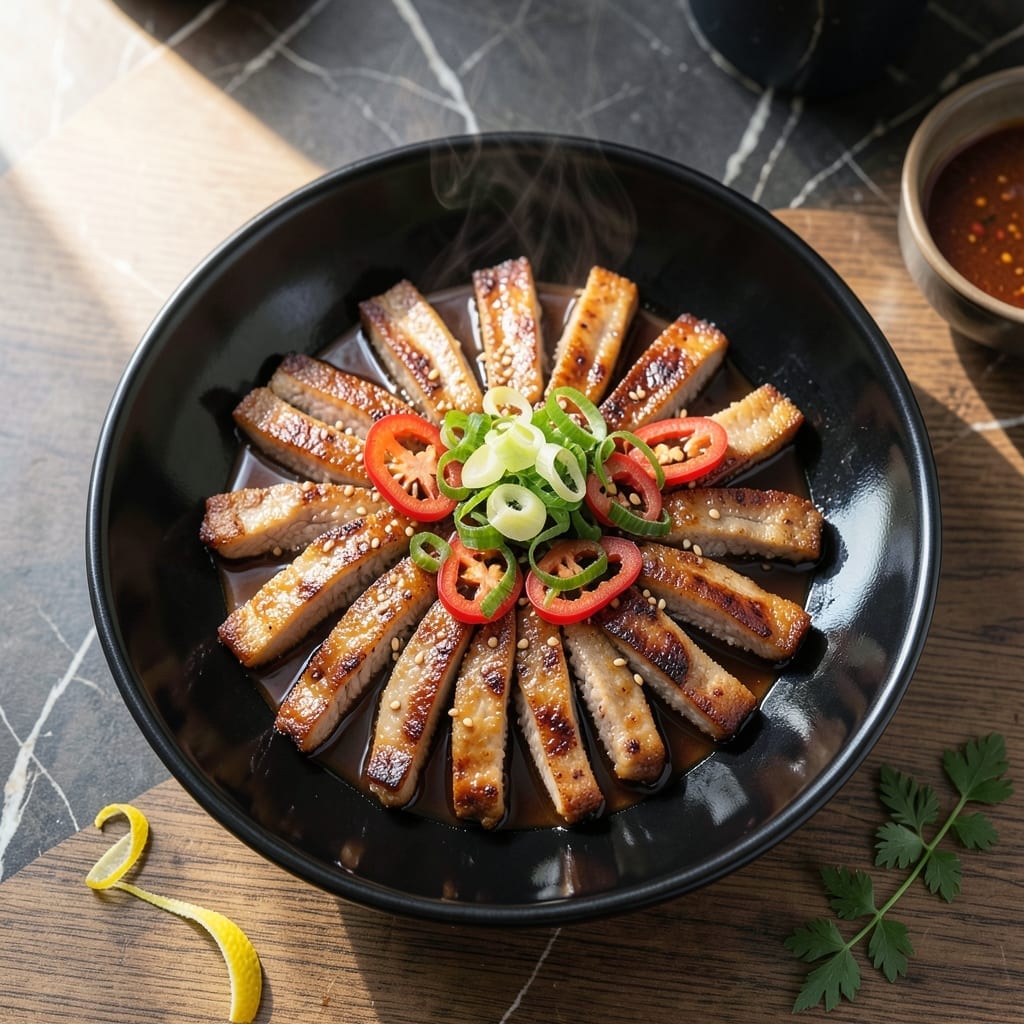
This recipe transforms ordinary pork into a sweet and smoky masterpiece inspired by Korean tabletop grilling traditions.
I developed this method by blending my pitmaster skills with authentic Korean flavors, creating a dish that’s both approachable and deeply satisfying. The marinade balances sweet, savory, and smoky notes perfectly.
You’ll achieve tender, caramelized pork with charred edges that pair beautifully with traditional sides like kimchi and ssamjang. The aroma alone will transport you to a bustling Korean barbecue.
Ready in 30 minutes plus marinating time, this dish delivers restaurant-quality results at home.
Ingredients for Korean Grilled Pork
Thinly sliced pork plus a bold marinade create this tabletop stunner with authentic Korean flair.
| Ingredient | Amount | Notes |
|---|---|---|
| Pork Shoulder 🥩 | 2 lb | Thinly sliced for quick cooking |
| Soy Sauce 💧 | ½ cup | Low-sodium preferred for balance |
| Brown Sugar 🍚 | ⅓ cup | Packed, for sweetness |
| Gochujang 🌶️ | 3 tbsp | Korean chili paste, essential |
| Garlic Cloves 🧄 | 6 cloves | Minced for depth of flavor |
| Fresh Ginger 🌿 | 1 tbsp | Grated, adds zing |
| Sesame Oil 🫒 | 2 tbsp | Toasted variety for aroma |
| Rice Vinegar 🍯 | 2 tbsp | Balances sweetness and heat |
| Asian Pear 🍐 | ½ whole | Grated, natural tenderizer |
| Green Onions 🧅 | 4 whole | Thinly sliced for garnish |
| Toasted Sesame Seeds 🌾 | 2 tbsp | For garnish and crunch |
| Black Pepper 🌶️ | 1 tsp | Freshly ground for best flavor |
| Vegetable Oil 🫒 | 1 tbsp | For grilling, neutral flavor |
[recipe_ingredient_scaler]
The pork is everything here. Pork shoulder (sometimes called Boston butt) gives you the perfect fat-to-meat ratio for tenderness and caramelization. Ask your butcher to slice it thinly—about 1/4-inch thick—or freeze it for 30 minutes and slice it yourself at home. H-Mart or Korean markets often carry pre-sliced pork for bulgogi, which saves time and ensures even cooking.
No gochujang? Sriracha mixed with a little miso paste gets you close, but the flavor won’t be as deep. The Asian pear is a game-changer for tenderizing, but grated apple or kiwi works in a pinch. For the soy sauce, Kikkoman or Pearl River Bridge are reliable brands. If you’re gluten-free, tamari is a solid swap. The brown sugar can be swapped for coconut sugar, but the caramelization might be slightly different.
Marinated pork keeps in the fridge for up to 3 days—actually gets better as it sits. Freeze uncooked marinated pork for up to 3 months (thaw before grilling). Leftovers? Slice thin and reheat in a pan with a splash of water to keep it juicy.
Why You’ll Love This Recipe
- Marinate in Minutes: I toss the pork shoulder with soy sauce, brown sugar, and gochujang in the morning and let the fridge do the work.
- Sweet Heat Perfection: The gochujang and brown sugar create that sticky, spicy-sweet glaze that makes me sneak bites straight off the grill.
- Feeds My Crew: Pork shoulder stretches far—great for weeknight dinners or when the neighbors pop over unannounced.
- Leftovers? Yes Please: Honestly, it tastes even better the next day in fried rice or stuffed in lettuce wraps.
Step-by-Step Instructions for Korean Grilled Pork
This method delivers tender pork with a sweet-smoky crust that’s impossible to resist.
Step 1: Prepare the Marinade with Asian Pear
In a large bowl, whisk together the 0.5 cup soy sauce, 0.33 cup brown sugar, 3 tbsp gochujang, 2 tbsp sesame oil, and 2 tbsp rice vinegar until the sugar dissolves. I always start with this base to ensure the flavors meld completely.
Add the 6 cloves minced garlic, 1 tbsp grated fresh ginger, and 0.5 grated Asian pear to the mixture. The pear is key—it contains enzymes that break down proteins, guaranteeing the 2 lb pork shoulder stays tender. Stir well and let the marinade sit for 5 minutes to allow the flavors to develop.
Step 2: Marinate the Pork Thoroughly
Slice the 2 lb pork shoulder into thin strips, about ¼-inch thick, so it cooks quickly and absorbs maximum flavor. Place the slices in the marinade, ensuring each piece is fully coated. I like to use my hands for this—it’s the best way to make sure every surface gets exposed to the mixture.
Cover the bowl and refrigerate for at least 2 hours, or ideally overnight. The longer it marinates, the deeper the flavor penetration. Give it a stir every hour if you’re marinating for a shorter period to redistribute the liquid.
Step 3: Grill the Pork to Perfection
Heat a grill or grill pan over medium-high heat and brush it lightly with the 1 tbsp vegetable oil. Remove the pork from the marinade, letting any excess drip off, and arrange the slices on the grill in a single layer. Crowding the pan will steam the pork instead of searing it, so work in batches if needed.
Cook for 3-4 minutes per side until the edges are caramelized and the pork reaches an internal temperature of 145°F. The sugars in the marinade will create a beautiful char, so watch closely to prevent burning. I press down lightly with tongs to ensure full contact with the grill grates.
Step 4: Rest and Garnish for Serving
Transfer the grilled pork to a serving platter and let it rest for 5 minutes. This allows the juices to redistribute, keeping the meat moist. While it rests, thinly slice the 4 green onions and scatter them over the top along with the 2 tbsp toasted sesame seeds.
Sprinkle with 1 tsp freshly ground black pepper for a subtle kick. Serve immediately with steamed rice or lettuce wraps—the smoky-sweet aroma will have everyone gathering around the table before you even finish plating.
Pro Tips For Making Korean Grilled Pork
- Score the Fat: Cut shallow slits in the pork shoulder fat cap before marinating—this lets the soy-garlic-gochujang mix penetrate deeper and crisp up better on the grill.
- Bloom the Gochujang: Heat the gochujang with a splash of oil in a pan for 30 seconds before adding it to the marinade; it mellows the heat and blends smoother with the brown sugar.
- Skip the Overcrowding: I learned this the hard way—grill the pork in a single layer with space between pieces, or it’ll steam instead of caramelize, and you’ll lose that sticky, charred crust.
- Rest Before Slicing: Give the cooked pork a solid 5-10 minutes under foil to redistribute the juices—sounds weird, but it actually changes the outcome, keeping every bite tender instead of dry.
Regional Styles of These Flavors
Seoul-Style Bulgogi
This version stays truest to Korean roots with thin-sliced pork marinated in a sweet-savory blend. I learned this technique from a Seoul street vendor who swore by 24-hour marination for maximum flavor penetration. The key is using Korean pear for natural tenderizing. 🗺️
Busan Spicy Pork
In the southern port city, they amp up the heat with extra gochujang and a touch of gochugaru (Korean chili flakes). I add 1 tbsp gochugaru to the marinade and serve with ssamjang for dipping. The spice level builds as you eat, creating layers of flavor.
Jeju Island Twist
Jeju’s version incorporates local black pork and adds 1 tbsp honey to the marinade. The pork’s natural richness pairs beautifully with the island’s wild hallabong tangerine zest. I source black pork from specialty butchers when I can find it.
Royal Court Style
Historically served to Korean royalty, this version uses pork loin instead of shoulder for a more refined texture. The marinade includes 1 tbsp pine nuts and 2 tbsp sesame oil for a nuttier profile. It’s less smoky but incredibly elegant.
Modern Fusion
My pitmaster twist adds 1 tsp smoked paprika and 1 tbsp bourbon to the marinade. This creates a deeper smokiness that reminds me of my BBQ roots while keeping the Korean essence. The bourbon adds a subtle oak note that’s surprisingly complementary.
Nutrition Facts
Frequently Asked Questions
What can I substitute for gochujang?
Use 2 tbsp sriracha mixed with 1 tsp miso paste for similar heat and depth. While not identical, it maintains the spicy-savory balance. Avoid hot sauce alone—it lacks the fermented complexity.
Can I use a different cut of pork?
Pork loin works but is leaner. For best results, stick with shoulder or belly for fat marbling. Slice against the grain for maximum tenderness regardless of cut.
How do I prevent burning on the grill?
Pat the pork dry before grilling and use medium-high heat. Cook in batches to avoid crowding. The sugars caramelize quickly—stay attentive!
What sides pair best with this dish?
Serve with steamed rice, kimchi, and lettuce for wraps. Ssamjang (spicy dipping sauce) and quick-pickled radishes add authentic Korean flavors.

Trained in classic French technique but raised on slow-cooked ribs and spicy rubs, she blends culinary skill with smoke and soul.
- Recipe for Boneless Pork Chops in Cast Iron Skillet: Sear and Baste to Juicy Perfection - October 3, 2026
- Recipe for Boneless Cross Rib Roast: Slow-Roasted Beef with Herb Crust - October 3, 2026
- Hamburgers in Sauce Recipe Crock Pot: Slow-Cooked Savory Delight - October 3, 2026