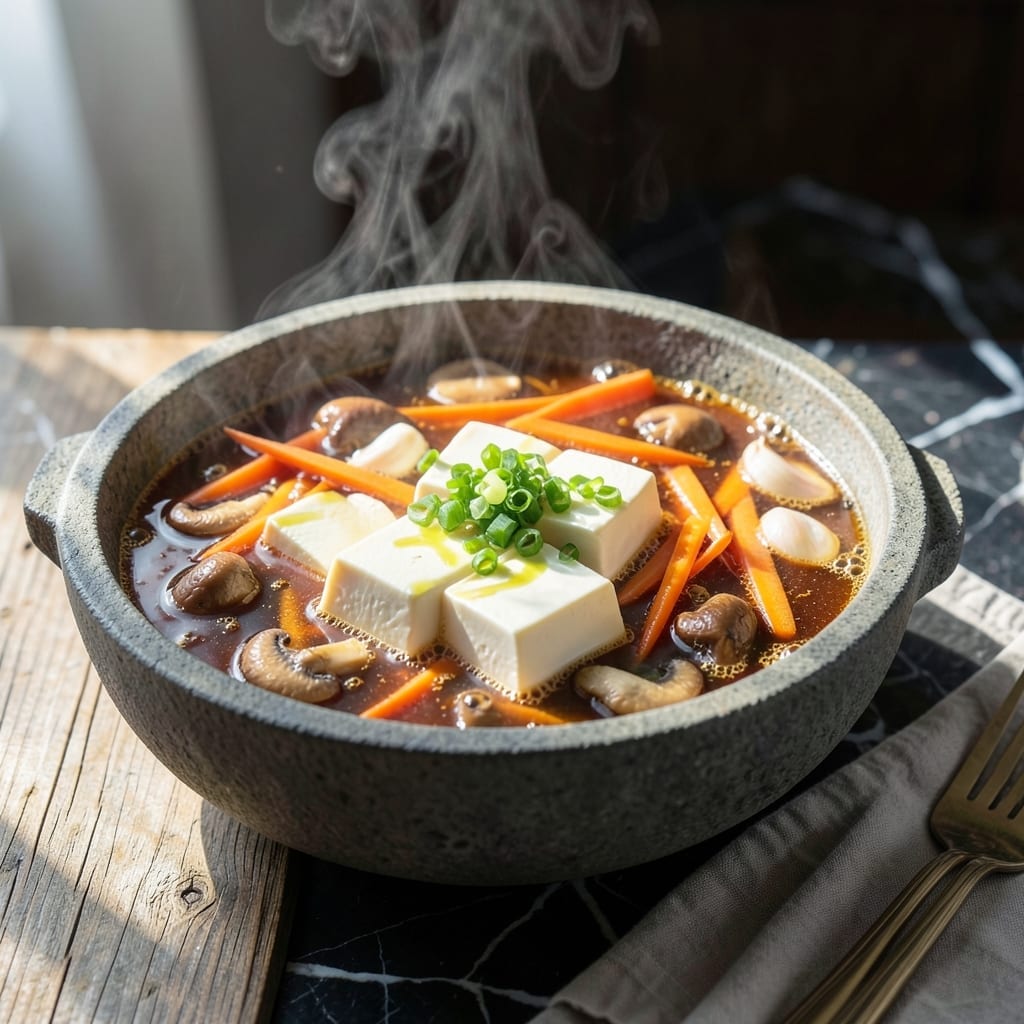
I’ve perfected this vegetarian Korean hot pot to deliver bold, authentic flavors without meat. The spicy broth combines gochujang and soy for depth, while tofu and fresh vegetables soak up every savory bite.
This one-pot dish comes together in 30 minutes with simple ingredients. The key is layering the broth’s heat with natural sweetness from carrots and mushrooms.
You’ll end up with a bubbling, aromatic pot of tender tofu, crisp veggies, and a broth that’s rich yet balanced. It’s comforting, satisfying, and packed with plant-based protein.
Serve family-style for a shared meal that’s as fun to eat as it is delicious. Here’s how to make it.
Ingredients for Korean Hot Pot Recipe Vegetarian
Bold Korean flavors come alive with tofu, veggies, and a spicy, savory broth base.
| Ingredient | Amount | Notes |
|---|---|---|
| Firm Tofu 🧈 | 14 oz | Pressed and cubed for texture |
| Gochujang 🌶️ | 3 tbsp | Korean red pepper paste essential |
| Soy Sauce 🥢 | ¼ cup | Low-sodium preferred for balance |
| Vegetable Broth 🍲 | 4 cups | Low-sodium for flavor control |
| Garlic Cloves 🧄 | 4 cloves | Minced for aromatic base |
| Fresh Ginger 🌿 | 1 tbsp | Grated for depth of flavor |
| Carrots 🥕 | 2 whole | Thinly sliced for sweetness |
| Shiitake Mushrooms 🍄 | 8 oz | Fresh or rehydrated dried |
| Napa Cabbage 🥬 | 4 cups | Chopped into bite-sized pieces |
| Green Onions 🧅 | 4 whole | Sliced, white and green parts |
| Sesame Oil 🫒 | 1 tbsp | Toasted for finishing touch |
| Rice Vinegar 💧 | 1 tbsp | For acidity and brightness |
| Brown Sugar 🍚 | 1 tbsp | To balance spicy heat |
| Sesame Seeds 🌾 | 1 tsp | Toasted for garnish |
[recipe_ingredient_scaler]
The gochujang is non-negotiable here. Look for it in the Asian aisle at major supermarkets or at H Mart for the real deal. I prefer Sempio or Kochukaru brands—they’ve got that perfect fermented depth. The tofu should be firm or extra-firm (silken will fall apart). For mushrooms, fresh shiitake are ideal, but cremini or baby bella work in a pinch (just slice them thin).
No gochujang? Miso paste plus sriracha gets you 80% there, but it won’t be the same. Skip the soy sauce? Tamari or coconut aminos work at a 1:1 ratio. The broth can be homemade if you’ve got veggie scraps, but Better Than Bouillon No Chicken Base is my go-to for store-bought. The brown sugar can be swapped for maple syrup (use one-third less since it’s sweeter).
Broth keeps 3-4 days in the fridge, but the veggies are best fresh. Freeze the broth alone for up to 3 months. I like to prep all the veggies ahead (store in water to keep crisp) so dinner’s just assembly. Leftovers reheat beautifully—the flavors just get deeper.
Why You’ll Love This Recipe
- One Pot Meal: I just dump everything in and let the broth do the work—firm tofu soaks up that gochujang and garlic like a flavor sponge.
- Spicy Umami Bomb: The combo of gochujang, soy sauce, and garlic hits that sweet spot between fiery and deeply savory. Honestly, I double the garlic because why not?
- Weeknight Lifesaver: Between us, this is my Tuesday night go-to—ready before the delivery guy could even get to my door.
- Budget Stretcher: Firm tofu and veggie broth keep it cheap, and leftovers taste even better the next day. I’ll be real: I’ve eaten this for three meals straight.
Step-by-Step Instructions for Korean Hot Pot Vegetarian
Here’s the method I use to build layers of bold, spicy flavor in this comforting dish.
Step 1: Create the Spicy Broth Base
In a large pot over medium heat, combine the 4 cups Vegetable Broth, 3 tbsp Gochujang, 0.25 cup Soy Sauce, 1 tbsp Brown Sugar, and 1 tbsp Rice Vinegar. Whisk vigorously until the gochujang fully dissolves into the liquid.
Add the 4 cloves Garlic Cloves (minced) and 1 tbsp Fresh Ginger (grated). Simmer for 8-10 minutes until the broth develops a deep red color and the aromatics infuse their essence. Taste and adjust seasoning—I often add a pinch more brown sugar to balance the heat.
Step 2: Prepare and Add the Vegetables
While the broth simmers, thinly slice the 2 whole Carrots and chop the 8 oz Shiitake Mushrooms into bite-sized pieces. Add these to the pot first, as they need more time to soften. Simmer for 5 minutes until the carrots begin to tenderize.
Next, add the 4 cups Napa Cabbage (chopped) and 4 whole Green Onions (sliced). These cook quickly, so we add them later to preserve their texture. The broth should now be filled with vibrant vegetables and a rich, spicy aroma.
Step 3: Add Tofu and Finish
Press the 14 oz Firm Tofu to remove excess water, then cube it into 1-inch pieces. Gently add the tofu to the simmering broth. Cook for 3-4 minutes until the tofu absorbs some of the spicy flavor and heats through completely. Avoid stirring too vigorously to keep the tofu intact.
You’ll know it’s ready when the tofu floats slightly and the vegetables are tender-crisp. The broth should coat the back of a spoon with a glossy, slightly thick consistency from the gochujang.
Step 4: Garnish and Serve
Remove from heat and stir in the 1 tbsp Sesame Oil, which adds a nutty depth to the dish. Taste one final time—I often find it needs a touch more rice vinegar for brightness at this stage.
Ladle into bowls and garnish with 1 tsp Sesame Seeds. Serve immediately while piping hot, with extra green onions on the side if desired. The ideal serving temperature is steaming, with all components submerged in the flavorful broth.
Pro Tips For Making Korean Hot Pot Recipe Vegetarian
- Press Your Tofu: I learned this the hard way—skipping this step leaves your tofu spongy and it won’t soak up the gochujang broth. Wrap it in a clean towel, place a heavy pan on top, and let it drain for 15 minutes.
- Bloom the Gochujang: Cook the gochujang with minced garlic in a little oil for 2-3 minutes before adding broth. Sounds weird, but it works: it deepens the flavor and removes the raw edge.
- Simmer, Don’t Boil: Keep the hot pot at a gentle simmer—boiling makes the tofu break apart and the broth too thin. I used to rush this part and wondered why my tofu always crumbled.
- Use Fresh Garlic: After burning three batches with old garlic, I finally figured out it loses its punch and can turn bitter. Crush 4-5 fresh cloves right before cooking for the best aroma.
Best Sauces and Condiments for This korean hot pot recipe vegetarian
Spicy Dipping Sauce
I love mixing 2 tbsp gochujang with 1 tbsp soy sauce, 1 tsp rice vinegar, and 1 tsp sesame oil for an extra kick. This thick, chunky sauce adds depth to every bite. Adjust the heat by adding a touch of brown sugar to balance. 🌶️
Sesame Garlic Sauce
Combine 3 tbsp soy sauce, 1 tbsp sesame oil, and 2 minced garlic cloves for a nutty, aromatic dip. I often add a sprinkle of toasted sesame seeds for texture. This pairs perfectly with the tofu and mushrooms.
Cool and Creamy
A simple blend of ¼ cup mayonnaise and 1 tbsp sriracha creates a cooling contrast to the spicy broth. I like to thin it slightly with 1 tsp rice vinegar for tang. This is my go-to for balancing the heat.
Herb-Infused Oil
Heat ¼ cup neutral oil with 2 tbsp chopped green onions and 1 tsp red pepper flakes until fragrant. Drizzle this over your bowl just before eating. The aroma is incredible and enhances all the flavors.
Citrus Ponzu
Mix 3 tbsp soy sauce, 2 tbsp rice vinegar, and 1 tbsp orange juice for a bright, citrusy dip. I add a pinch of brown sugar to round out the acidity. This adds a refreshing contrast to the rich broth. ✨
Nutrition Facts
Frequently Asked Questions
Can I make this less spicy?
Reduce the gochujang to 1-2 tbsp and add a pinch of brown sugar to balance. You can also stir in ½ cup coconut milk at the end for creaminess.
What’s the best tofu for hot pot?
Use extra-firm tofu for the best texture—it holds up to simmering without falling apart. Press it for 15-20 minutes first to maximize flavor absorption.
Can I add noodles?
Yes! Add 8 oz rice noodles or udon during the last 5 minutes of cooking. They’ll soak up the spicy broth beautifully.
How do I store leftovers?
Store broth and veggies separately in an airtight container for up to 3 days. Reheat gently on the stove—microwaving can make tofu rubbery.

Trained in classic French technique but raised on slow-cooked ribs and spicy rubs, she blends culinary skill with smoke and soul.
- Recipe for Boneless Pork Chops in Cast Iron Skillet: Sear and Baste to Juicy Perfection - October 3, 2026
- Recipe for Boneless Cross Rib Roast: Slow-Roasted Beef with Herb Crust - October 3, 2026
- Hamburgers in Sauce Recipe Crock Pot: Slow-Cooked Savory Delight - October 3, 2026