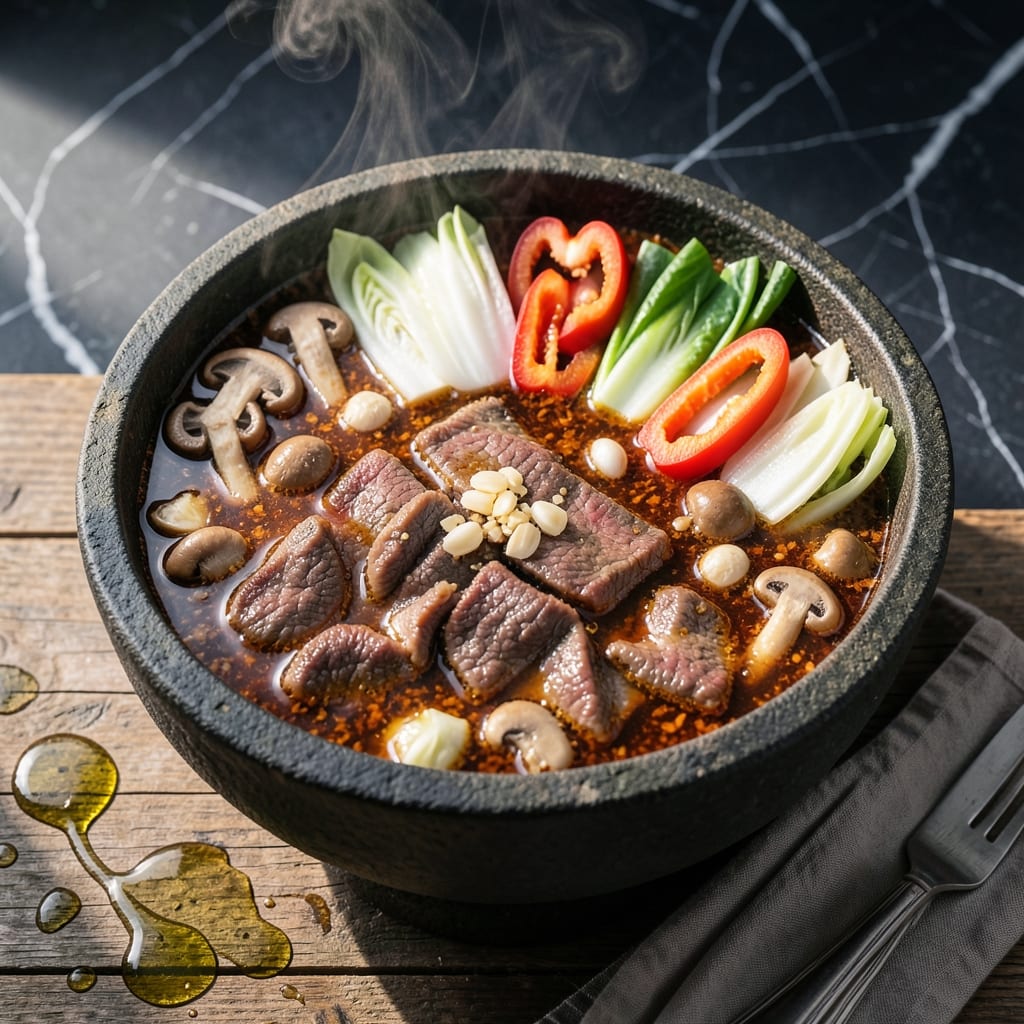
This Korean hot pot brings the interactive dining experience to your home table with a rich, spicy broth and an array of fresh ingredients.
I developed this recipe after exploring traditional jeongol-style cooking, focusing on a foolproof broth that balances heat with depth of flavor. The foundation uses gochugaru for authentic spice, complemented by garlic, ginger, and fermented bean paste for complexity.
You’ll prepare the broth on the stovetop, then transfer everything to a portable burner at the table. This allows everyone to cook their preferred proteins and vegetables to perfect doneness.
The result is a communal meal that’s as enjoyable to make as it is to eat, with restaurant-quality results every time.
Ingredients for Korean Hot Pot
Rich broth base meets fresh proteins and crisp vegetables for an interactive tabletop feast.
| Ingredient | Amount | Notes |
|---|---|---|
| Gochugaru 🌶️ | ¼ cup | Korean red pepper flakes, adjust for heat |
| Fermented Soybean Paste 🫘 | 2 tbsp | Doenjang for depth of flavor |
| Garlic Cloves 🧄 | 6 cloves | Minced for broth base |
| Fresh Ginger 🌿 | 1 whole | Peeled, thinly sliced |
| Low-Sodium Soy Sauce 🫒 | ½ cup | For umami richness |
| Sesame Oil 🫒 | 1 tbsp | Toasted variety for aroma |
| Chicken Broth 🍲 | 4 cups | Or substitute vegetable broth |
| Thinly Sliced Beef 🥩 | ½ lb | Ribeye or sirloin recommended |
| Shrimp 🦐 | ½ lb | Peeled, deveined, optional |
| Firm Tofu 🧈 | 8 oz | Pressed, cubed for cooking |
| Napa Cabbage 🥬 | 2 cups | Thinly sliced for quick cooking |
| Shiitake Mushrooms 🍄 | 4 whole | Fresh or rehydrated dried |
| Green Onions 🧅 | 4 whole | Cut into 2-inch pieces |
| Carrots 🥕 | 1 whole | Julienned for even cooking |
| Rice Noodles 🍜 | 4 oz | Or udon noodles as alternative |
| Brown Sugar 🍚 | 1 tbsp | Balances spice in broth |
[recipe_ingredient_scaler]
The gochugaru and doenjang are non-negotiable for authentic flavor. Korean markets will have the best selection, but H-Mart or larger Asian grocery stores usually carry both. Look for coarse, vibrant red gochugaru—fine powder loses texture. Fresh ginger and garlic should be firm and aromatic; avoid any with soft spots or sprouting. The broth base relies on these for complexity, so don’t skimp on quality here.
No gochugaru? Substitute cayenne plus smoked paprika at half the amount for heat and depth. Swap beef for thinly sliced pork or additional tofu. The shrimp can be omitted or replaced with scallops. For a vegetarian version, use mushroom or kelp broth instead of chicken. The noodles are flexible—rice sticks, udon, or even ramen noodles work (just skip the seasoning packet).
Prep all ingredients before heating the broth—hot pot cooks fast at the table. Store raw proteins separately in the fridge for up to 2 days. The broth can be made a day ahead and reheated. Leftovers keep for 3-4 days (though best fresh).
Why You’ll Love This Recipe
- One Pot Wonder: I just dump everything in—gochugaru, soybean paste, garlic, ginger—and let it simmer while I set the table.
- Umami Bomb: The fermented soybean paste and low-sodium soy sauce create this deep, savory richness that hits differently.
- Feeds a Crowd: I made this for my book club last week and everyone went back for seconds. Honestly, it’s my new party trick.
- Tastes Better Tomorrow: The flavors actually deepen overnight, so I always make extra for next-day lunches.
Step-by-Step Instructions for Korean Hot Pot
Master this technique for a deeply flavored broth that transforms simple ingredients into an exceptional meal.
Step 1: Build the Spiced Broth Base
In a large pot over medium heat, toast the 0.25 cup Gochugaru for 1-2 minutes until fragrant but not smoking. This awakens the pepper flakes’ aromatic compounds and prevents a raw, bitter flavor in the finished broth.
Immediately add the 2 tbsp Fermented Soybean Paste, minced 6 cloves Garlic Cloves, and thinly sliced 1 whole Fresh Ginger. Stir constantly for 2 minutes to combine the ingredients and prevent sticking. The paste should begin to darken slightly at the edges.
Step 2: Develop the Umami-Rich Broth
Pour in the 4 cups Chicken Broth, 0.5 cup Low-Sodium Soy Sauce, 1 tbsp Sesame Oil, and 1 tbsp Brown Sugar. Increase heat to high and bring to a boil, then reduce to a gentle simmer.
Simmer for 10-12 minutes until the broth deepens to a rich amber color and the surface develops a slight sheen from the sesame oil. Taste and adjust seasoning—the broth should be bold and balanced, with a noticeable but not overwhelming heat from the gochugaru.
Step 3: Add the Hearty Ingredients
Begin with the ingredients that require the longest cooking time. Add the 4 whole Shiitake Mushrooms, julienned 1 whole Carrots, and 8 oz Firm Tofu cubes. Simmer for 5 minutes to allow the mushrooms to soften and the tofu to absorb the broth’s flavors.
The carrots should become slightly tender but retain a slight bite. The tofu will plump as it absorbs the liquid, transforming from plain cubes into flavorful sponges of the aromatic broth.
Step 4: Incorporate Quick-Cooking Elements
Add the 0.5 lb Thinly Sliced Beef, 0.5 lb Shrimp, 2 cups Napa Cabbage, and 4 oz Rice Noodles. The thinly sliced beef will cook in 2-3 minutes—it’s done when it changes from red to opaque pink.
The shrimp will turn from translucent to opaque white in 3-4 minutes, curling into a C-shape as they cook. Stir the noodles occasionally to prevent sticking, cooking for 2-3 minutes until they’re tender but still chewy. The napa cabbage will wilt significantly but maintain some texture.
Step 5: Finish with Fresh Aromatics
Just before serving, add the 4 whole Green Onions cut into 2-inch pieces. They only need 1-2 minutes in the hot broth to soften slightly while retaining their bright, fresh flavor and vibrant green color.
At this point, the broth should be deeply aromatic with visible red pepper flakes suspended throughout. The green onions provide a final fresh note that balances the richness of the long-simmered broth. Serve immediately in the pot at the table for the full hot pot experience.
Pro Tips For Making Korean Hot Pot
- Bloom the Pastes: Cook the gochugaru and fermented soybean paste in oil for 2-3 minutes until fragrant—I learned this the hard way after my first batch tasted raw and grainy.
- Grate the Ginger: Use a microplane for the fresh ginger instead of mincing; it releases more juice and blends seamlessly into the broth.
- Skip the Boiling: Keep the heat at a gentle simmer once the broth is in; I ruined a pot by letting it boil hard, and the flavors turned bitter.
- Use Low-Sodium Soy: Fermented soybean paste is already salty, so low-sodium soy sauce lets you adjust the seasoning without overdoing it.
Pro Cooking Tips for korean hot pot
Broth Toasting Technique
Always toast the 0.25 cup Gochugaru in dry heat for 1-2 minutes before adding liquids—this unlocks its aromatic oils. I learned this trick from Korean chefs at my local H-Mart, and it makes a noticeable difference in depth of flavor. 🌡️
Layered Ingredient Timing
Add ingredients in order of cooking time: start with Shiitake Mushrooms and Carrots, then Thinly Sliced Beef and Shrimp together, finishing with Napa Cabbage and Rice Noodles. This prevents overcooking and ensures everything finishes simultaneously.
Broth Consistency Check
Your broth should develop a slight sheen from the 1 tbsp Sesame Oil after 10-12 minutes of simmering. If it looks greasy, skim the surface with a fine mesh spoon. The ideal texture coats the back of a spoon without being syrupy. 💡
Tabletop Cooking Setup
Use a portable butane burner (Iwatani is my trusted brand) for authentic tabletop cooking. Place the pot on a heatproof mat and keep the flame at medium-low to maintain a gentle simmer. This lets guests cook their ingredients to preference.
Flavor Balancing Act
The 1 tbsp Brown Sugar is crucial—it tempers the heat from the gochugaru without making the broth sweet. Taste as you go and adjust with a pinch more sugar if needed. I find this balance makes the dish accessible to all palates.
Freshness Preservation
Add the 4 whole Green Onions last—they only need 1-2 minutes to soften while keeping their bright color and crisp texture. This final touch brings freshness that cuts through the richness of the long-simmered broth.
Nutrition Facts
Frequently Asked Questions
Can I use a different type of meat?
Thinly sliced pork or chicken works beautifully. For a seafood focus, try adding scallops or mussels. Just ensure all pieces are thinly sliced for even cooking at the table.
How do I adjust the spice level?
Reduce the gochugaru to 2 tablespoons for mild heat, or increase to 1/3 cup for extra spice. You can also serve additional gochugaru on the side for guests to add as desired.
What’s the best way to prep ingredients ahead?
Slice all proteins and vegetables, then store in separate containers in the fridge for up to 2 days. The broth can be made a day ahead and reheated. This makes tabletop cooking much smoother.

Trained in classic French technique but raised on slow-cooked ribs and spicy rubs, she blends culinary skill with smoke and soul.
- Recipe for Boneless Pork Chops in Cast Iron Skillet: Sear and Baste to Juicy Perfection - October 3, 2026
- Recipe for Boneless Cross Rib Roast: Slow-Roasted Beef with Herb Crust - October 3, 2026
- Hamburgers in Sauce Recipe Crock Pot: Slow-Cooked Savory Delight - October 3, 2026