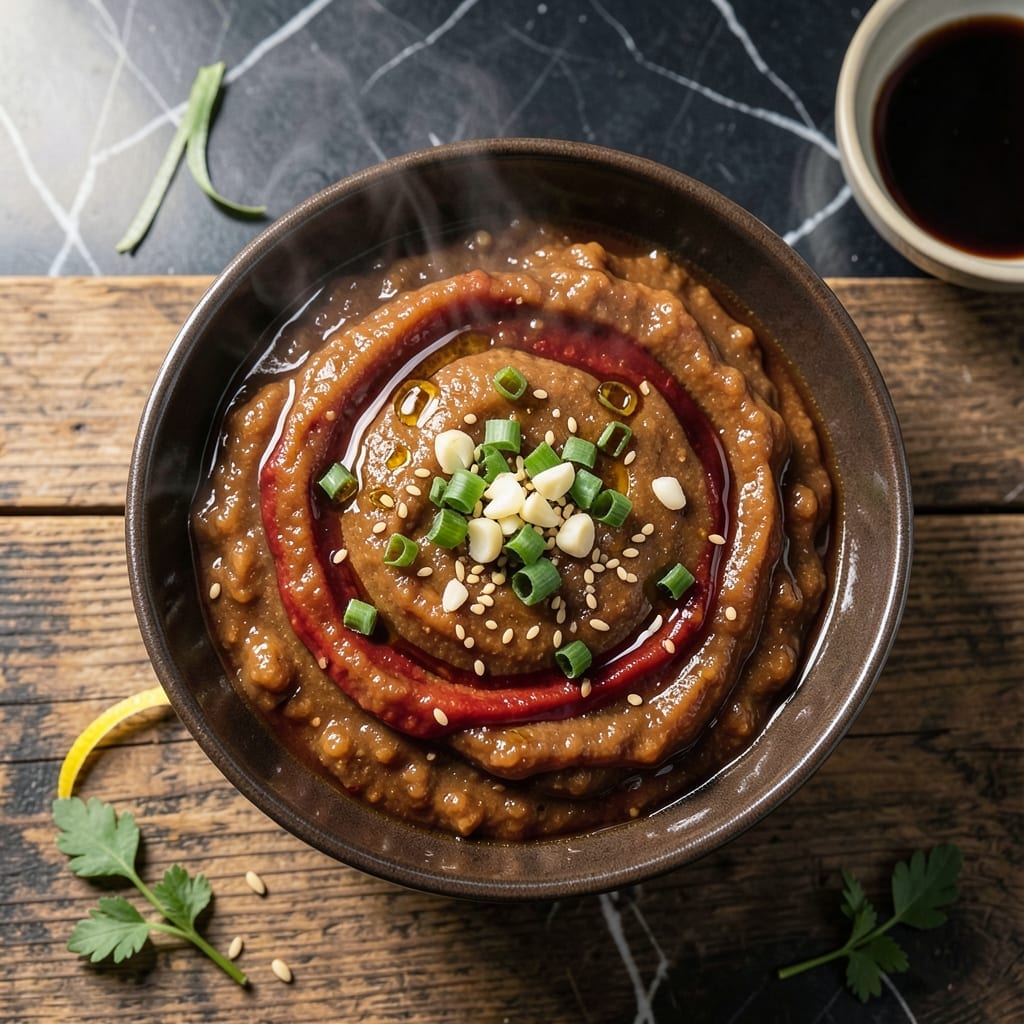
This marinade transforms ordinary pork into a restaurant-quality dish with its perfect balance of sweet and savory flavors. I developed this recipe after years of experimenting with Korean BBQ techniques.
With just 10 minutes of prep, you’ll create a versatile glaze that works for grilling, roasting, or broiling. The blend of soy sauce, garlic, and sugar creates a caramelized finish that’s impossible to resist.
Ingredients for Korean Pork Barbecue Marinade
Nine ingredients for a restaurant-quality Korean BBQ marinade with that perfect sweet-savory punch.
| Ingredient | Amount | Notes |
|---|---|---|
| Soy Sauce 🥢 | ½ cup | Low-sodium preferred for balance |
| Brown Sugar 🍚 | ⅓ cup | Packed, for deep caramelization |
| Garlic Cloves 🧄 | 6 cloves | Minced for maximum flavor infusion |
| Gochujang 🌶️ | 2 tbsp | Korean chili paste, essential for heat |
| Sesame Oil 🫒 | 1 tbsp | Toasted variety for nutty aroma |
| Rice Vinegar 🍶 | 2 tbsp | Balances sweetness with tang |
| Fresh Ginger 🌿 | 1 tbsp | Grated, for zesty brightness |
| Asian Pear 🍐 | ¼ cup | Pureed, natural tenderizer |
| Green Onions 🧅 | 4 whole | Thinly sliced, for fresh finish |
[recipe_ingredient_scaler]
The soy sauce is your base, so splurge on a good brand like Kikkoman or San-J—they’re at every grocery store but taste worlds better than generic. Gochujang is non-negotiable (find it at H Mart or the Asian aisle), and don’t skip the Asian pear—it’s the secret to that melt-in-your-mouth texture. Fresh ginger matters too; the jarred stuff just doesn’t have the same zing (worth the extra 2 minutes to grate).
No gochujang? Sriracha plus 1 tsp miso paste gets you close. Out of Asian pear? Kiwi or pineapple puree works as a tenderizer. Brown sugar can be swapped for honey (1:1), but the flavor shifts slightly. The sesame oil is toasted, not regular—Kadoya is my go-to. Green onions can be subbed with chives if that’s what’s in your garden.
This marinade keeps 5 days in the fridge, but honestly it’s best used within 48 hours. Freeze extras in ice cube trays for up to 3 months—just thaw overnight before using. Always marinate pork at least 4 hours for maximum flavor (overnight is even better).
Why You’ll Love This Recipe
- Minimal Effort: I just dump the soy sauce, brown sugar, and gochujang in a bowl—no fancy tools, no fuss.
- Sweet Heat: The brown sugar caramelizes with the gochujang for that sticky, spicy-sweet glaze I can’t resist.
- Meal Prep Hero: I marinate a big batch on Sunday and grill all week—dinner’s halfway done before I start.
- Budget Stretch: Honestly, a pound of pork plus these pantry staples feeds my family for two meals.
Step-by-Step Instructions for Korean Pork Barbecue Marinade
This method ensures maximum flavor penetration and the perfect balance of sweet, savory, and spicy.
Step 1: Puree the Asian Pear Base
Start by peeling and coring the 0.25 cup Asian Pear, then puree it in a blender or food processor until completely smooth. The natural enzymes in the pear act as a tenderizer, breaking down proteins in the pork for melt-in-your-mouth texture.
I’ve found that a fine puree incorporates better into the marinade than chunks, creating a silky consistency that clings to every piece of meat. This step is non-negotiable for authentic Korean flavor.
Step 2: Combine Wet and Dry Components
In a medium bowl, whisk together the 0.5 cup Soy Sauce, 0.33 cup Brown Sugar, 2 tbsp Gochujang, 1 tbsp Sesame Oil, and 2 tbsp Rice Vinegar until the brown sugar fully dissolves. The mixture should look glossy with no graininess.
Here’s the thing—the soy sauce provides the umami backbone, while the brown sugar caramelizes during grilling. The gochujang adds depth and heat, so don’t skip it even if you’re sensitive to spice; it balances beautifully with the sweetness.
Step 3: Incorporate Aromatics and Finish
Add the minced 6 cloves Garlic Cloves, grated 1 tbsp Fresh Ginger, and the pureed Asian pear to the bowl. Stir vigorously for 30 seconds to distribute the aromatics evenly. The garlic and ginger should be finely minced to avoid large pieces in the final marinade.
Finally, fold in the thinly sliced 4 whole Green Onions. These add a bright, fresh allium note to cut through the richness. Let the marinade sit for 10 minutes before using to allow the flavors to meld.
Step 4: Marinate the Pork for Optimal Flavor
Transfer the pork to a resealable bag or shallow dish and pour the marinade over it, ensuring every piece is fully coated. Massage the marinade into the meat for 1-2 minutes to help it penetrate.
Refrigerate for at least 4 hours, but overnight is ideal. The longer it marinates, the deeper the flavor and the more tender the meat becomes. For best results, flip the pork halfway through the marinating time to ensure even coverage.
Pro Tips For Making Korean Pork Barbecue Marinade
- Grate the Garlic: I learned this the hard way—minced garlic works, but freshly grated cloves release way more flavor into the marinade and blend seamlessly with the gochujang and soy sauce.
- Bloom the Gochujang: Before mixing it into the marinade, heat the gochujang in a dry pan for 30 seconds to deepen its flavor and cut through the sweetness of the brown sugar.
- Skip the Metal Bowl: Sounds weird, but it works: use a glass or ceramic bowl for marinating—metal can react with the acidic soy sauce and give your pork a tinny taste.
- Marinate Overnight: After burning three batches of under-marinated pork, I finally figured out that 12 hours minimum is non-negotiable for the flavors to fully penetrate the meat.
Wine and Beer Pairings for These Flavors
Korean Beer Pairings
Korean beers like Hite or OB Golden Lager are my top picks—their crisp, clean profiles cut through the marinade’s richness. The light carbonation refreshes your palate between bites of grilled pork. 🍺
Craft Beer Options
A Belgian witbier with citrus notes, such as Hoegaarden, complements the sweet and spicy flavors beautifully. The coriander and orange peel in these beers enhance the marinade’s complexity.
Wine Pairings
For wine lovers, an off-dry Riesling from Germany or Washington State balances the heat and sweetness. The honeyed notes in the wine harmonize with the brown sugar in the marinade.
Sparkling Alternatives
If you prefer bubbles, a dry sparkling sake like Tyku Junmai works wonders. Its effervescence cleanses your palate, making each bite taste as vibrant as the first.
Non-Alcoholic Pairing
A chilled Korean barley tea (boricha) offers a nutty contrast to the marinade’s bold flavors. I love serving it in frosted glasses for a refreshing touch.
Pro Pairing Tip
Serve your drinks slightly colder than usual—around 45-50°F—to enhance the contrast with the warm, caramelized pork straight off the grill. ✨
Nutrition Facts
Frequently Asked Questions
Can I substitute gochujang with another ingredient?
Yes, use 1 tbsp sriracha + 1 tsp miso paste for a similar kick. The miso adds depth while sriracha brings heat.
How long should I marinate the pork?
Minimum 4 hours for good flavor, but overnight is ideal. For maximum tenderness, don’t exceed 24 hours as the acids can start to break down the meat too much.
What’s the best way to store leftover marinade?
Keep in an airtight container in the fridge for up to 5 days. For longer storage, freeze in ice cube trays for up to 3 months.
Can I use this marinade for other meats?
It works great with chicken, beef, or even tofu. Adjust marination time: 2-4 hours for chicken, 6-12 hours for beef.

Trained in classic French technique but raised on slow-cooked ribs and spicy rubs, she blends culinary skill with smoke and soul.
- Recipe for Boneless Pork Chops in Cast Iron Skillet: Sear and Baste to Juicy Perfection - October 3, 2026
- Recipe for Boneless Cross Rib Roast: Slow-Roasted Beef with Herb Crust - October 3, 2026
- Hamburgers in Sauce Recipe Crock Pot: Slow-Cooked Savory Delight - October 3, 2026