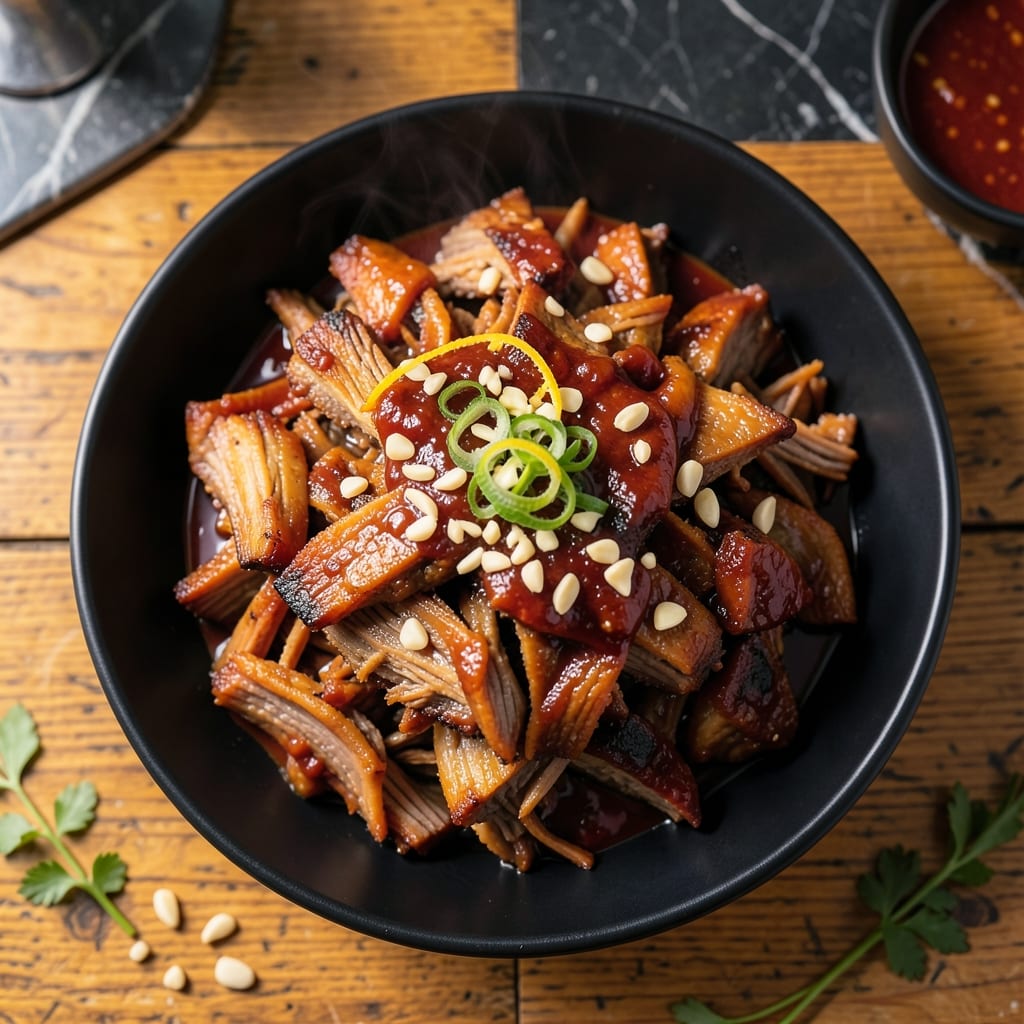
My slow cooker has saved dinner more times than I can count, and this Korean pulled pork is its greatest triumph. The melt-in-your-mouth texture comes from 8 hours on low, letting tough pork shoulder turn tender while soaking up bold flavors.
Gochujang brings the heat and depth, balanced with soy sauce, garlic, and just enough brown sugar to caramelize beautifully. I developed this in my tiny Boston kitchen, testing until the pork shredded perfectly with just a fork.
What you get is fall-apart pork with sticky, spicy-sweet edges that’s impossible to resist. The aroma alone will have everyone hovering near the kitchen, waiting for that first bite.
Pile it on buns, over rice, or straight from the pot—this dish turns weeknight dinner into something special.
Ingredients for Korean Pulled Pork Recipe Slow Cooker
Pantry staples and a pork shoulder transform into something extraordinary here.
| Ingredient | Amount | Notes |
|---|---|---|
| Pork Shoulder 🥩 | 3 lb | Boneless, trimmed of excess fat |
| Gochujang 🌶️ | ½ cup | Korean red pepper paste |
| Soy Sauce 💧 | ½ cup | Low-sodium preferred |
| Brown Sugar 🍚 | ½ cup | Light or dark, packed |
| Garlic Cloves 🧄 | 6 cloves | Minced for maximum flavor |
| Fresh Ginger 🌿 | 1 tbsp | Finely grated |
| Rice Vinegar 🍋 | 2 tbsp | Or apple cider vinegar |
| Sesame Oil 🫒 | 1 tbsp | Toasted for depth |
| Onion 🧅 | 1 whole | Yellow or white, diced |
| Cornstarch 🌾 | 2 tbsp | For thickening at the end |
| Green Onions 🧅 | 4 pieces | Thinly sliced for garnish |
| Sesame Seeds 🌰 | 1 tbsp | Toasted, for garnish |
[recipe_ingredient_scaler]
The pork shoulder is the star—bone-in or boneless, but boneless is easier to shred. Costco has great prices on large cuts, or grab pre-portioned pieces at Whole Foods. Look for good marbling (those white fat streaks). Gochujang is non-negotiable for that authentic Korean kick. H Mart or any Asian market will have it, but Trader Joe’s carries a solid version too.
No gochujang? Miso paste plus sriracha gets you close but not identical. Brown sugar swap—coconut sugar or honey works (though honey changes the flavor slightly). For the soy sauce, tamari is a gluten-free alternative. Out of rice vinegar? Apple cider vinegar does the trick. The pork can be shoulder or butt—both work beautifully.
Leftovers keep 4-5 days in the fridge, and the flavor actually improves. Freeze for up to 3 months—perfect for quick meals later. I like to portion it into sandwich-sized bags so it’s ready for buns or rice whenever.
Why You’ll Love This Recipe
- Set It and Forget: I toss everything in the slow cooker before work and come home to tender, fall-apart pork.
- Sweet Heat Perfection: The gochujang and brown sugar create that sticky, spicy-sweet glaze I can’t resist.
- Meal Prep MVP: I use the leftovers for tacos, rice bowls, and sandwiches all week long.
- Budget Winner: Pork shoulder stays cheap, and this recipe stretches to feed my whole family twice.
Step-by-Step Instructions for Korean Pulled Pork Slow Cooker
Here’s the method that turns tough pork into tender, flavor-packed perfection with almost no effort.
Step 1: Prepare the Pork and Aromatics
Trim the 3 lb pork shoulder of any excess fat, then cut it into 3-4 large chunks so it fits neatly in your slow cooker. This ensures even cooking and better sauce absorption. Place the pieces in the slow cooker insert.
To the same insert, add the diced onion, 6 cloves minced garlic cloves, and 1 tbsp grated fresh ginger. These aromatics form the flavor base that infuses the pork as it cooks low and slow.
Step 2: Whisk Together the Korean-Inspired Sauce
In a medium bowl, combine the 0.5 cup gochujang, 0.5 cup soy sauce, 0.5 cup packed brown sugar, 2 tbsp rice vinegar, and 1 tbsp sesame oil. Whisk vigorously until the mixture is smooth and the brown sugar fully dissolves.
This sauce is the heart of the dish—sweet, spicy, and umami-rich. Pour it evenly over the pork and aromatics, making sure every piece is well coated. The liquid should pool slightly at the bottom, but not submerge the meat completely.
Step 3: Slow Cook Until Fall-Apart Tender
Cover the slow cooker and set it to low heat for 7-8 hours or high heat for 4-5 hours. You’ll know it’s done when the pork shreds effortlessly with a fork and reaches an internal temperature of 195-200°F.
Resist the urge to lift the lid during cooking—every peek releases heat and extends the cooking time. The aromatics will fill your kitchen with an intoxicating blend of garlic, ginger, and caramelized sugar as the pork transforms.
Step 4: Shred and Thicken the Sauce
Carefully transfer the pork to a cutting board and shred it with two forks, discarding any large fat pieces. Meanwhile, pour the cooking liquid from the slow cooker into a saucepan and bring it to a simmer over medium heat.
In a small bowl, mix the 2 tbsp cornstarch with 2 tbsp cold water to create a slurry. Slowly whisk this into the simmering liquid and cook for 2-3 minutes until the sauce thickens into a glossy, spoon-coating consistency.
Step 5: Combine and Garnish for Serving
Return the shredded pork to the slow cooker and pour the thickened sauce over it. Stir gently to ensure every strand is coated. Taste and adjust seasoning if needed, though the sauce should be perfectly balanced from the slow cooking process.
Transfer to a serving dish and garnish with the thinly sliced 4 pieces green onions and 1 tbsp toasted sesame seeds. The contrast of fresh green onion and nutty sesame against the rich, sticky pork is what makes this dish unforgettable. Serve warm on buns, over rice, or in tacos.
Pro Tips For Making Korean Pulled Pork Recipe Slow Cooker
- Trim the Fat: Pork shoulder has a lot of fat—cut off the big chunks before slow cooking, or your sauce will be greasy instead of rich and sticky.
- Bloom the Gochujang: I learned this the hard way—sauté the gochujang, garlic, and brown sugar in a pan for 2-3 minutes before adding to the slow cooker to deepen the flavor.
- Don’t Shred Too Soon: Resist the urge to pull the pork apart as soon as it’s fork-tender; let it rest in the sauce for another 30 minutes to soak up every bit of flavor.
- Use Low Heat: After burning a batch on high, I now swear by 6-8 hours on low—it keeps the pork juicy and gives the gochujang time to mellow into the meat.
Common Mistakes When Making korean pulled pork recipe slow cooker
Overcrowding the Pot
Never exceed your slow cooker’s capacity—I use my 6-quart Crock-Pot for this 3 lb pork shoulder. Overfilling prevents even heat distribution, leading to uneven cooking. The pork needs room to breathe for proper sauce absorption.
Skipping the Sauce Reduction
I learned the hard way that skipping the cornstarch slurry leaves you with watery sauce. That 2 tbsp cornstarch mixed with 2 tbsp cold water transforms thin liquid into a glossy, clingy coating that makes every bite irresistible. 💡
Using Lean Meat
Pork shoulder’s fat content is crucial for that melt-in-your-mouth texture. I once tried this with pork loin and ended up with dry, stringy meat. Stick with well-marbled shoulder—it’s the secret to fork-tender results.
Peeking Too Often
Every time you lift the lid, you lose 20-30 minutes of cooking time. I set a timer and resist the urge to check until at least 4 hours in. Trust the process—your patience will be rewarded with perfect tenderness.
Incorrect Cooking Time
Low heat for 7-8 hours is ideal for fall-apart pork. High heat can work in 4-5 hours, but I find the texture isn’t as consistently tender. In my Boston kitchen, I always start this first thing in the morning.
Skipping the Garnish
Those green onions and sesame seeds aren’t just pretty—they add fresh contrast to the rich pork. I toast the sesame seeds in a dry pan for 2 minutes to enhance their nutty flavor before garnishing. 🌟
Nutrition Facts
Frequently Asked Questions
Can I use a different cut of pork?
Pork shoulder is ideal for its fat content, but pork butt works too. Avoid lean cuts like tenderloin—they’ll dry out during the 7-8 hours of cooking. The marbling is what makes it fork-tender.
How spicy is this dish?
The 0.5 cup gochujang brings moderate heat. For milder flavor, reduce to 1/3 cup and add 1 tbsp honey. For extra kick, include 1 tsp red pepper flakes with the sauce.
Can I make this ahead of time?
The flavors deepen after 1-2 days in the fridge. Store in an airtight container and reheat gently on the stove with a splash of water. Freezes beautifully for up to 3 months.
What if my sauce is too thin?
Simmer the cooking liquid uncovered for 5-10 minutes to reduce. If still thin, mix 1 tbsp cornstarch with 1 tbsp water and stir in. This creates a glossy, clingy sauce.

Trained in classic French technique but raised on slow-cooked ribs and spicy rubs, she blends culinary skill with smoke and soul.
- Recipe for Boneless Pork Chops in Cast Iron Skillet: Sear and Baste to Juicy Perfection - October 3, 2026
- Recipe for Boneless Cross Rib Roast: Slow-Roasted Beef with Herb Crust - October 3, 2026
- Hamburgers in Sauce Recipe Crock Pot: Slow-Cooked Savory Delight - October 3, 2026