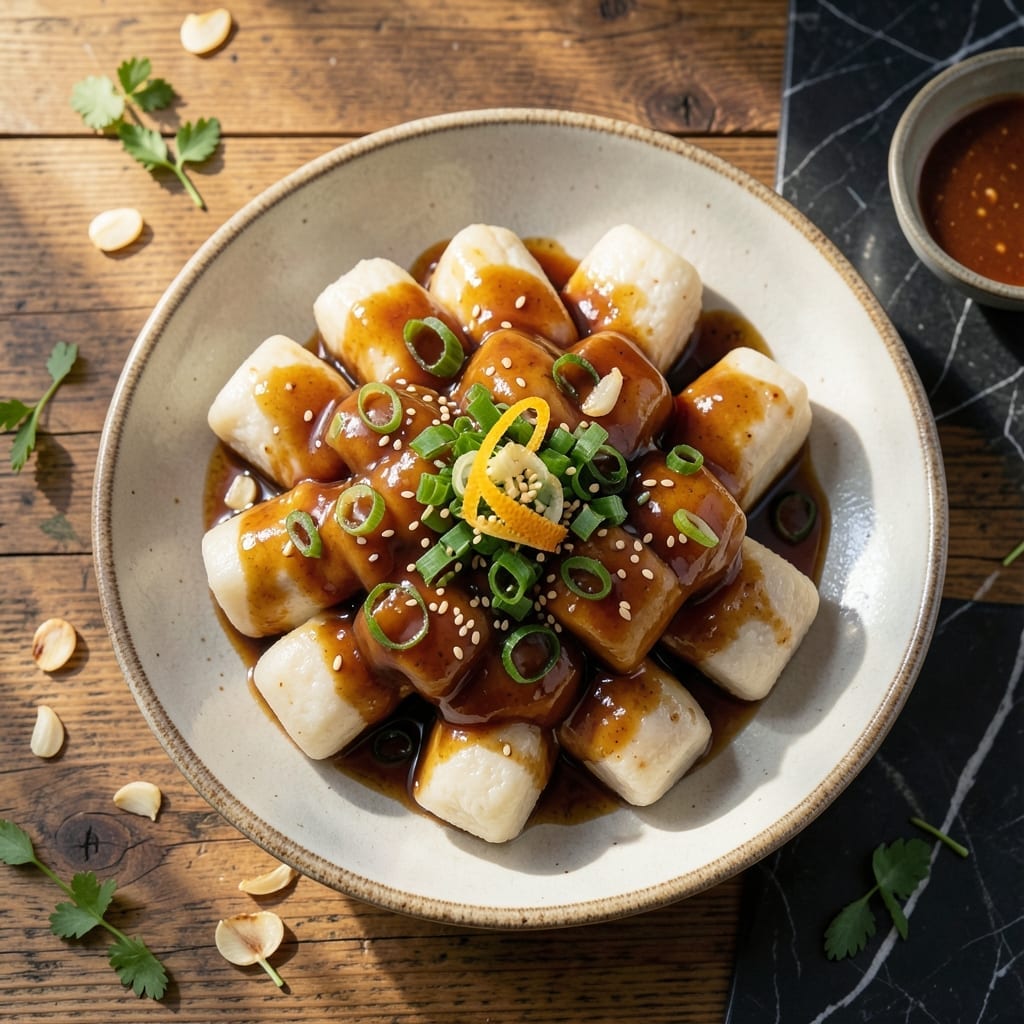
I discovered this mild version of Korean rice cakes while searching for a dish that delivered all the texture without the heat. The chewy pillows soak up a sweet soy glaze that’s rich and deeply satisfying.
What makes this recipe special is its simplicity and accessibility. No special equipment or hard-to-find ingredients are needed—just 15 minutes of active cooking time. The rice cakes transform into tender, slightly springy bites that pair perfectly with the glossy glaze.
The glaze itself is a balanced blend of sweet and savory, with just enough depth to complement the rice cakes without overwhelming them. It coats each piece evenly, creating a dish that’s as visually appealing as it is delicious.
Serve warm as a main course or alongside your favorite proteins. This creation is proof that Korean flavors can be approachable and comforting for everyone.
Ingredients for Korean Rice Cake Recipe Not Spicy
Simple ingredients transform into chewy, glossy rice cakes with a rich sweet soy glaze.
| Ingredient | Amount | Notes |
|---|---|---|
| Korean Rice Cakes 🍙 | 1 lb | Cylindrical or oval, pre-soaked if hard |
| Soy Sauce 🫙 | ½ cup | Low-sodium preferred for balance |
| Brown Sugar 🟤 | ¼ cup | Packed, for sweetness depth |
| Garlic Cloves 🧄 | 4 cloves | Minced finely for even flavor |
| Vegetable Oil 🫒 | 2 tbsp | Neutral flavor, for cooking |
| Sesame Oil 🫒 | 1 tbsp | Toasted, for finishing aroma |
| Green Onions 🧅 | 4 whole | Thinly sliced, for garnish |
| Sesame Seeds 🌰 | 1 tbsp | Toasted, for crunch and visual appeal |
| Water 💧 | ½ cup | For adjusting glaze consistency |
| Corn Syrup 🧈 | 2 tbsp | Optional, for extra gloss |
| Red Pepper Flakes 🌶️ | 0.125 tsp | Optional, minimal heat only |
| Rice Vinegar 🍚 | 1 tbsp | Balances sweetness with tang |
[recipe_ingredient_scaler]
The rice cakes are the star—look for fresh or frozen cylindrical tteok at H Mart or Korean markets (dried ones need soaking). Avoid the pre-sliced sheets; they lack the pillowy texture this dish needs. Kikkoman soy sauce is reliable, but I splurge on San-J tamari for deeper flavor. The brown sugar should be soft and moist (not that hard, rock-like stuff at the back of your cabinet).
Out of brown sugar? White sugar plus a splash of molasses mimics the depth. No rice cakes? Thick udon noodles (fresh, not dried) work in a pinch. Skip the sesame oil if avoiding nuttiness, but add a pinch of toasted sesame seeds to the glaze for complexity. The corn syrup is purely for shine—maple syrup or honey (if not strict vegan) can sub in, though the texture differs slightly.
Leftovers keep 3-4 days in the fridge—reheat with a splash of water to revive the chew. The glaze thickens as it cools, so thin with water if needed. Best served warm, straight from the pan (the edges get delightfully sticky).
Why You’ll Love This Recipe
- Ready in 20: I can have this on the table faster than takeout arrives. Just toss the rice cakes with the sauce and let them soak up that garlicky-sweet goodness.
- Sweet-Savory Balance: The brown sugar and soy sauce create this addictive caramelized coating. Honestly, I could eat the sauce with a spoon.
- Kid-Approved Meal: My picky nephew devours these chewy, mild-flavored rice cakes. No spice, no fuss, just happy eaters.
- Budget Stretcher: One bag of rice cakes makes enough for dinner plus leftovers. Between us, it’s my secret for feeding four on a shoestring.
Step-by-Step Instructions for Korean Rice Cakes With Sweet Soy Glaze
Here’s the method I use for perfectly chewy rice cakes with a glossy, flavorful coating.
Step 1: Prepare the Korean Rice Cakes
If using hard, dry Korean rice cakes, soak them in warm water for 10-15 minutes until they become soft and pliable. Drain well and pat dry with a clean towel. For pre-soaked rice cakes, simply rinse them under cold water to remove any excess starch.
This soaking step is crucial—it prevents the rice cakes from absorbing too much sauce later and ensures they cook evenly without becoming gummy. You’ll notice the rice cakes plump up significantly as they absorb water.
Step 2: Make the Sweet Soy Glaze
In a bowl, combine the 0.5 cup Soy Sauce, 0.25 cup Brown Sugar, minced 4 cloves Garlic Cloves, 2 tbsp Corn Syrup, 1 tbsp Rice Vinegar, and 0.125 tsp Red Pepper Flakes. Whisk until the brown sugar dissolves completely and the mixture becomes smooth.
The glaze should have a balanced sweet-savory flavor with just a hint of tang from the rice vinegar. The corn syrup adds a beautiful gloss to the finished dish, while the minimal red pepper flakes provide depth without noticeable heat.
If the mixture seems too thick, whisk in up to 0.5 cup Water, 1 tablespoon at a time, until it reaches a pourable consistency.
Step 3: Cook the Rice Cakes in the Glaze
Heat the 2 tbsp Vegetable Oil in a large skillet over medium-high heat. Add the prepared Korean rice cakes and cook for 2-3 minutes, stirring occasionally, until they begin to take on a slight golden color at the edges.
Pour the glaze mixture over the rice cakes, stirring to coat them evenly. Reduce the heat to medium-low and continue cooking for 5-7 minutes, stirring frequently, until the rice cakes have absorbed most of the glaze and become tender throughout.
You’ll see the glaze thicken and become glossy as it coats the rice cakes. The rice cakes should be chewy but not hard in the center.
Step 4: Finish and Garnish
Remove the skillet from heat and drizzle the 1 tbsp Sesame Oil over the rice cakes, stirring to incorporate. This adds a nutty aroma that complements the sweet-savory flavors beautifully.
Transfer to a serving dish and garnish with thinly sliced 4 whole Green Onions and 1 tbsp Sesame Seeds. The green onions add a fresh contrast, while the sesame seeds provide a delightful crunch and visual appeal.
Serve immediately while warm—the rice cakes are best enjoyed fresh, when they’re at their chewiest and the glaze is at its glossiest.
Pro Tips For Making Korean Rice Cake Recipe Not Spicy
- Soak the Cakes: Cover rice cakes with warm water for 10-15 minutes if they feel hard—this prevents that gummy, undercooked center. I learned this the hard way after serving a batch that was chewy in all the wrong ways.
- Bloom the Garlic: Cook minced garlic in oil on medium-low until just golden, about 30-40 seconds, before adding sauce. After burning three batches, I finally figured out that bitter garlic ruins the sweet-savory balance.
- Simmer, Don’t Boil: Keep the sauce at a gentle simmer once rice cakes go in—vigorous boiling makes them fall apart. Sounds weird, but it works: turn the heat down right when you see the first bubble.
- Use Fresh Soy Sauce: Skip the old bottle at the back of your fridge; fresh soy sauce has a brighter flavor that actually changes the outcome. My grandmother swore by this, and she was right: the dish tastes flatter with stale sauce.
Health Benefits of This Dish
Easy to Digest
These rice cakes are made from rice flour, which is naturally gentle on the stomach. The simple ingredients mean this dish is free from common allergens like dairy, nuts, and gluten (if using tamari instead of soy sauce). I find it’s a great option when I need something comforting yet light. 💪
Low-Fat Energy
With only 2 tbsp vegetable oil used for cooking, this dish is naturally low in fat. The rice cakes provide complex carbohydrates for sustained energy, making it an excellent choice for a pre-workout meal or a light dinner that won’t weigh you down.
Rich in Antioxidants
The garlic in this recipe isn’t just for flavor—it’s packed with antioxidants that support immune health. Combined with the sesame seeds, which are rich in sesamin, you get a dish that’s as nourishing as it is delicious.
Moderate Protein
While not a high-protein dish, the combination of rice cakes and soy sauce provides a moderate amount of plant-based protein. This makes it a satisfying vegetarian option that pairs well with tofu or tempeh for an extra protein boost.
Blood Sugar Friendly
The brown sugar in the glaze has a lower glycemic index than white sugar, helping to prevent blood sugar spikes. The fiber from the rice cakes and garlic also helps slow glucose absorption, making this a balanced choice. 💛
Hydration Support
The rice cakes absorb water during cooking, contributing to your daily hydration. The dish also includes water in the glaze, which adds to your fluid intake without being noticeable—perfect for those who struggle to drink enough water.
Nutrition Facts
Frequently Asked Questions
Can I make this with fresh rice cakes?
Fresh rice cakes work perfectly and often cook faster. Skip the soaking step and reduce cooking time by 1-2 minutes to prevent them from becoming too soft.
What can I substitute for brown sugar?
White sugar plus 1 tsp molasses per 1/4 cup works well. Alternatively, use maple syrup or honey for a slightly different flavor profile.
How do I store leftovers?
Keep in an airtight container in the fridge for 3-4 days. Reheat with a splash of water in a pan over medium heat to restore chewiness.
Why did my rice cakes turn mushy?
This usually happens from over-soaking or overcooking. Soak hard rice cakes for no more than 15 minutes and cook just until tender, about 5-7 minutes.

Trained in classic French technique but raised on slow-cooked ribs and spicy rubs, she blends culinary skill with smoke and soul.
- Recipe for Boneless Pork Chops in Cast Iron Skillet: Sear and Baste to Juicy Perfection - October 3, 2026
- Recipe for Boneless Cross Rib Roast: Slow-Roasted Beef with Herb Crust - October 3, 2026
- Hamburgers in Sauce Recipe Crock Pot: Slow-Cooked Savory Delight - October 3, 2026