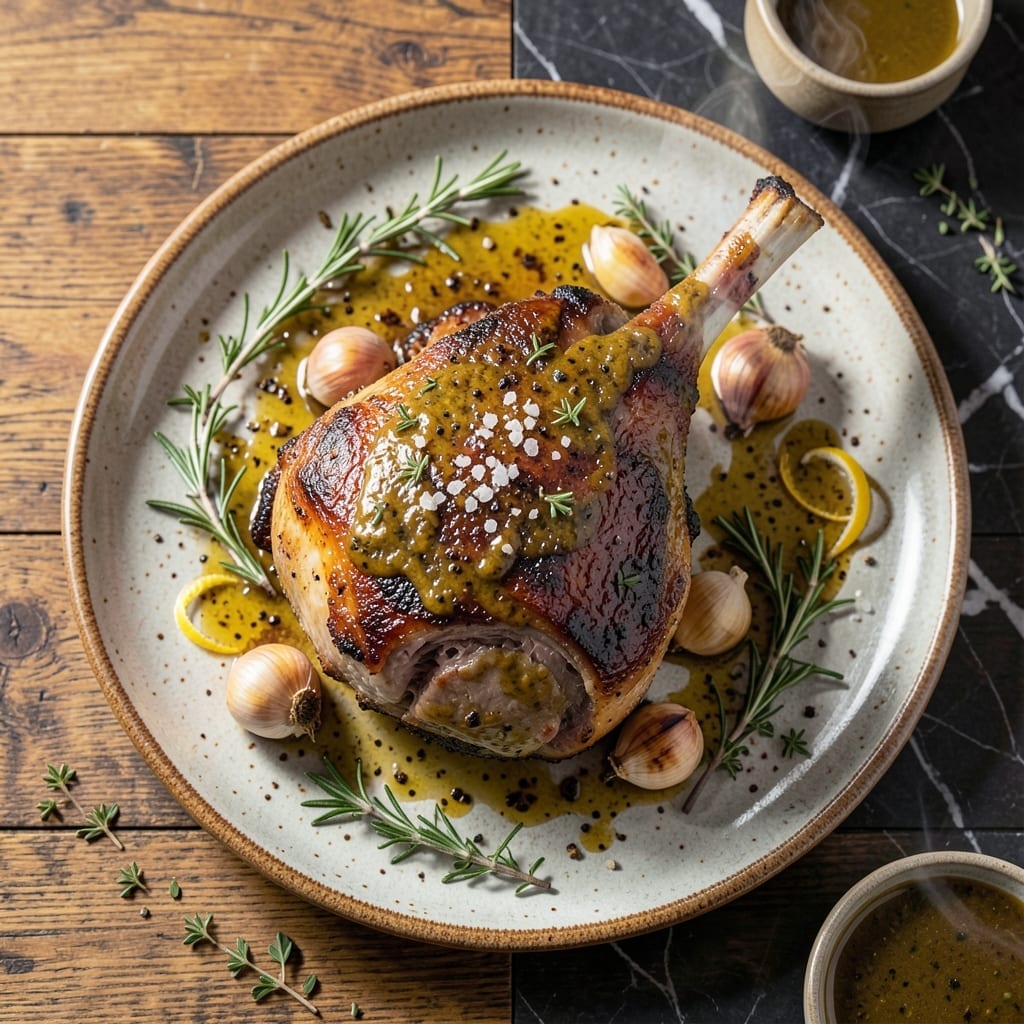
My grandmother never wrote down her lamb recipe, but I’ve decoded her secrets after years of trial and error.
Slow-roasting at 325°F turns tough cuts into melt-in-your-mouth perfection, with herbs infusing every bite. No fancy tools—just time and attention.
This method guarantees tender, juicy meat with crispy edges, all while filling your kitchen with an aroma that draws everyone to the table.
Serve it with roasted potatoes or a simple salad. It’s the kind of dish that feels special but stays grounded in home-kitchen reality.
Ingredients for Lamb Leg Recipe Slow Roast
Pantry staples meet a few fresh herbs and a bold lamb leg. Simple but spectacular.
| Ingredient | Amount | Notes |
|---|---|---|
| Bone-in Lamb Leg 🐑 | 5 lb | Trimmed of excess fat |
| Fresh Rosemary Sprigs 🌿 | 6 whole | Woody stems removed |
| Fresh Thyme Sprigs 🍃 | 8 whole | Leaves stripped from stems |
| Garlic Cloves 🧄 | 8 cloves | Smashed but left whole |
| Extra-Virgin Olive Oil 🫒 | ⅓ cup | Divided for marinade and basting |
| Kosher Salt 🧂 | 2 tbsp | Diamond Crystal preferred |
| Freshly Ground Black Pepper 🌶️ | 1 tbsp | Coarse grind preferred |
| Dijon Mustard 🟡 | 2 tbsp | Whole grain for texture |
| Red Wine 🍷 | 1 cup | Dry, bold variety |
| Lemon Zest 🍋 | 1 tbsp | Finely grated, organic preferred |
| Lemon Juice 🍋 | 2 tbsp | Freshly squeezed |
| Carrots 🥕 | 4 whole | Cut into thick chunks |
| Yellow Onions 🧅 | 2 whole | Quartered, skin on |
| Chicken Stock 🥫 | 1 cup | Low-sodium preferred |
[recipe_ingredient_scaler]
The lamb is the star—bone-in leg of lamb gives you that rich, deep flavor and stays juicy through the long roast. I get mine from Whole Foods or a local butcher if I can swing it. Look for even marbling and a bright pink color (avoid anything with a grayish tint). The rosemary and thyme? Fresh is non-negotiable—dried just won’t give you the same aromatic punch.
No red wine? Beef broth with a splash of balsamic works in a pinch. Out of fresh herbs? Double the garlic and add dried oregano—not ideal, but it’ll still taste great. The Dijon mustard adds a nice tang, but regular yellow mustard (at half the amount) can step in. If you’re skipping the wine entirely, add a little extra stock to keep the pan from drying out.
Lamb keeps beautifully in the fridge for 3-4 days—perfect for leftovers. For longer storage, freeze for up to 3 months (slice before freezing for easy portions). The herbs will lose intensity, so add fresh ones when reheating.
Why You’ll Love This Recipe
- I’ll be real: the meat tastes even better sliced thin for sandwiches or tossed into pasta the next day.
- Hands-Off Cooking: I just rub the lamb with olive oil, garlic, rosemary, and thyme, then let the oven do all the work.
- Fallback Flavor: Honestly, the slow roast turns the garlic and herbs into this melt-in-your-mouth crust that’s ridiculous.
- Feeds a Crowd: One bone-in leg serves eight with zero stress—ideal for Sunday suppers or holiday tables.
Step-by-Step Instructions for Slow Roasted Lamb Leg
This method transforms tough cuts into fork-tender perfection with minimal effort.
Step 1: Create the Herb Marinade
In a bowl, combine the 0.33 cup extra-virgin olive oil, 2 tbsp Dijon mustard, 1 tbsp lemon zest, 2 tbsp lemon juice, 2 tbsp kosher salt, and 1 tbsp freshly ground black pepper. Whisk until fully emulsified—the mixture should look thick and well-blended.
Finely chop the 6 whole fresh rosemary sprigs and 8 whole fresh thyme sprigs (leaves only), then add to the marinade along with the 8 cloves garlic cloves, lightly smashed. Let this sit for 10 minutes to allow the flavors to meld together before applying to the lamb.
Step 2: Coat and Sear the Lamb
Pat the 5 lb bone-in lamb leg dry with paper towels to ensure a good sear. Place it in a large roasting pan and pour the marinade over it, rubbing it into every crevice. Let it sit at room temperature for 30 minutes while your oven preheats.
Preheat the oven to 450°F. Place the lamb in the oven and sear for 20 minutes until the surface develops a deep golden crust. This high-heat start locks in juices and creates a flavorful foundation for the slow roast.
Step 3: Add Aromatics and Slow Roast
Reduce the oven temperature to 325°F. Add the 4 whole carrots and 2 whole yellow onions to the pan around the lamb. Pour the 1 cup red wine and 1 cup chicken stock into the bottom of the pan, which will create steam and prevent drying.
Cover the pan tightly with foil and return it to the oven. Slow roast for 2.5 to 3 hours, basting the lamb with the pan juices every 45 minutes. You’ll know it’s done when the meat pulls away from the bone easily and the internal temperature reaches 195°F.
Step 4: Rest and Serve
Remove the lamb from the oven and transfer it to a cutting board. Tent it loosely with foil and let it rest for 20 minutes—this allows the juices to redistribute, ensuring every slice is succulent and flavorful.
Strain the pan juices into a saucepan and skim off excess fat. Simmer for 5 minutes until slightly reduced, then serve alongside the lamb. Carve the lamb into thick slices and arrange on a platter with the carrots and onions for a stunning presentation.
Pro Tips For Making Lamb Leg Recipe Slow Roast
- Start Low, Finish Hot: I learned this the hard way—begin at 275°F for 3-4 hours until the meat is fall-apart tender, then blast it at 425°F for 15 minutes to crisp the skin. Does it look weird? Yes. Does it work? Every single time.
- Slash the Fat: Make shallow cuts all over the lamb leg, about 1/2 inch deep, and stuff each with a garlic clove and a sprig of rosemary or thyme. This isn’t the prettiest method, but it’s the tastiest.
- Skip the Cold Lamb: Pull the lamb out of the fridge at least 1 hour before cooking—cold meat seizes up and cooks unevenly. I was skeptical until I tried it and saw the difference in tenderness.
- Use a Meat Thermometer: Sounds obvious, but I burned three lamb legs before realizing 145°F for medium-rare is the sweet spot. Guessing leads to dry meat or undercooked disappointment.
Health Benefits of This Dish
Rich in Iron
This dish delivers a powerful iron boost, with a 6-ounce serving providing about 30% of your daily iron needs. Iron from lamb is heme iron, which your body absorbs more efficiently than plant-based sources. I notice I feel more energized when I include lamb in my diet regularly.
High-Quality Protein
You’ll get approximately 40 grams of protein per serving, packed with all nine essential amino acids. This protein supports muscle repair and growth, making lamb an excellent choice for active lifestyles. It keeps me full and satisfied for hours after eating.
Vitamin B12 Source
Lamb is naturally rich in vitamin B12, with one serving providing over 50% of your daily requirement. This vitamin is crucial for nerve function and red blood cell production. My grandmother always said lamb was “brain food” for a reason. 💪
Zinc for Immunity
A single serving contains about 60% of your daily zinc needs, supporting immune function and wound healing. Zinc also plays a key role in taste perception, which makes lamb’s rich flavor even more enjoyable.
Omega-3 Fatty Acids
Grass-fed lamb contains beneficial omega-3 fatty acids, though in smaller amounts than fish. These healthy fats support heart health and reduce inflammation. I prefer grass-fed whenever possible for this reason.
Selenium Content
You’ll find a good amount of selenium in lamb, an antioxidant that protects cells from damage. This mineral works with vitamin E to support thyroid function. It’s one of the many reasons this dish feels so nourishing. ✨
Nutrition Facts
Frequently Asked Questions
What’s the ideal internal temperature for slow-roasted lamb?
Aim for 195°F internally. This ensures the connective tissue breaks down completely, giving you that fall-off-the-bone tenderness. A meat thermometer is your best friend here.
Can I use a boneless leg instead of bone-in?
Yes, but reduce cooking time by about 20%. Bone-in adds flavor and helps retain moisture, but boneless works in a pinch. Just monitor the temperature closely.
How do I prevent the lamb from drying out?
Baste every 45 minutes with pan juices and keep it covered with foil. The red wine and chicken stock in the pan create steam that keeps the meat moist throughout the long cook.
What sides pair best with this dish?
Simple roasted vegetables like carrots and onions work perfectly. For something lighter, try a fresh arugula salad with lemon dressing to cut through the richness.

Trained in classic French technique but raised on slow-cooked ribs and spicy rubs, she blends culinary skill with smoke and soul.
- Recipe for Boneless Pork Chops in Cast Iron Skillet: Sear and Baste to Juicy Perfection - October 3, 2026
- Recipe for Boneless Cross Rib Roast: Slow-Roasted Beef with Herb Crust - October 3, 2026
- Hamburgers in Sauce Recipe Crock Pot: Slow-Cooked Savory Delight - October 3, 2026