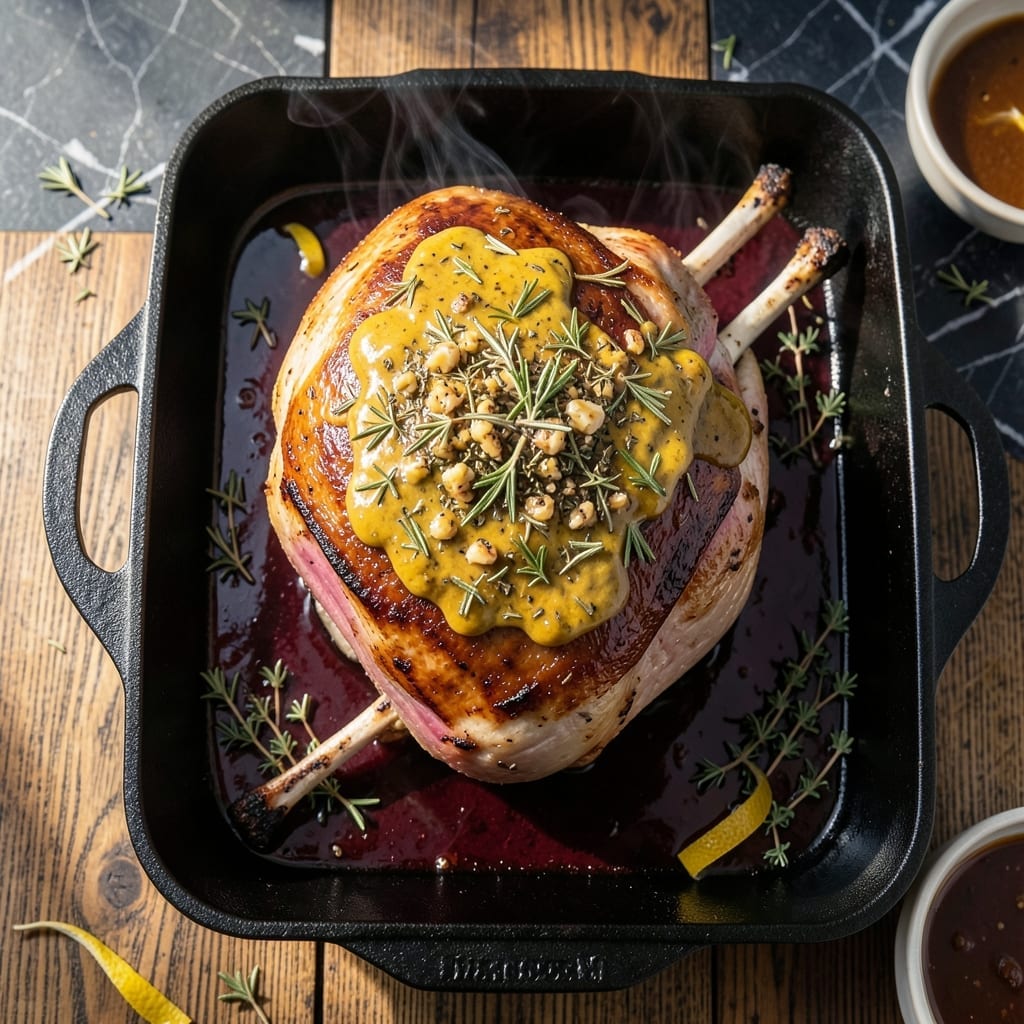
My grandmother’s handwritten cards never specified exact measurements for this dish, but her instinct for herb-crusted perfection was flawless.
This method transforms a simple lamb roast into a centerpiece worthy of your holiday table through careful seasoning and precise oven timing.
You’ll achieve tender, juicy meat with a fragrant crust that fills your kitchen with an irresistible aroma as it cooks.
The result is a dish that balances elegance with approachability, proving that impressive meals don’t require complicated techniques.
Ingredients for Lamb Rib Roast Recipe Oven
A handful of fresh herbs, quality lamb, and pantry staples create this showstopping centerpiece.
| Ingredient | Amount | Notes |
|---|---|---|
| Bone-In Lamb Rib Roast 🐑 | 5 lb | ribs frenched for presentation |
| Fresh Rosemary 🌿 | ¼ cup | finely chopped, stems discarded |
| Fresh Thyme 🍃 | ¼ cup | finely chopped, stems discarded |
| Fresh Garlic Cloves 🧄 | 6 cloves | minced to paste consistency |
| Dijon Mustard 🟡 | 3 tbsp | smooth, not grainy variety |
| Extra-Virgin Olive Oil 🫒 | ¼ cup | divided for crust and roasting |
| Kosher Salt 🧂 | 2 tbsp | Diamond Crystal preferred for even seasoning |
| Freshly Ground Black Pepper 🌶️ | 1 tbsp | coarse grind for texture |
| Dry Red Wine 🍷 | 1 cup | bold variety like Cabernet Sauvignon |
| Low-Sodium Chicken Stock 🥣 | 1 cup | or substitute vegetable stock |
| Unsalted Butter 🧈 | 4 tbsp | softened for herb crust |
| Shallots 🧅 | 2 whole | finely minced for depth |
| Balsamic Vinegar 🍯 | 1 tbsp | aged for richer flavor |
[recipe_ingredient_scaler]
The lamb is the star here—look for a bone-in rib roast with good marbling (ask the butcher to french the bones for a restaurant-worthy presentation). Whole Foods or local butcher shops are your best bet for quality. I always buy a day or two ahead and let it rest uncovered in the fridge to dry the surface—helps that crust form perfectly. The herbs should be vibrant green and fragrant; if they smell like dust, they’ve lost their punch.
No red wine? Beef stock with a splash of vinegar works in a pinch. Out of fresh rosemary? Dried at one-third the amount (but fresh is really better here). If you can’t find shallots, a small sweet onion will do—just mince it fine. The butter can be swapped for olive oil if needed, but don’t skip the Dijon—it’s the glue that holds that herb crust together (worth the extra minute to find it).
The roast needs 1-2 hours at room temperature before cooking—don’t rush this. Leftovers? Carve into slices and freeze for 3 months (or keep in the fridge for 4 days). The herb crust keeps its flavor best if you add it fresh, but pre-mixed paste holds up for 24 hours in the fridge.
Why You’ll Love This Recipe
- Hands-Off Cooking: I rub the lamb with Dijon, rosemary, and thyme, pop it in the oven, and let it do the work—no babysitting required.
- Herb-Crusted Perfection: The garlic and fresh herbs form a crust so aromatic and flavorful, it’s the reason I make this roast every holiday.
- Feeds a Crowd Easily: One bone-in rib roast serves my whole family with leftovers for sandwiches the next day. Honestly, it’s my go-to for gatherings.
- Leftovers Level Up: The sliced lamb reheats beautifully for next-day tacos or salads—between us, it might taste even better.
Step-by-Step Instructions for Lamb Rib Roast
Here’s the method I use for perfectly herbed, juicy roast every time.
Step 1: Prepare the Herb Crust
In a small bowl, combine the 0.25 cup Fresh Rosemary, 0.25 cup Fresh Thyme, 6 cloves Fresh Garlic Cloves, 3 tbsp Dijon Mustard, 2 tbsp Kosher Salt, and 1 tbsp Freshly Ground Black Pepper.
Finely chop the herbs and mince the garlic to a paste consistency. Stir in 2 tablespoons of the 0.25 cup Extra-Virgin Olive Oil to form a thick paste. This creates a flavorful crust that will adhere beautifully to the lamb.
Step 2: Sear and Season the Lamb
Preheat your oven to 450°F. Pat the 5 lb Bone-In Lamb Rib Roast dry with paper towels to ensure a good sear. Rub the herb paste all over the surface of the lamb, pressing it in to adhere.
Heat the remaining 2 tablespoons Extra-Virgin Olive Oil in a large oven-safe pan over high heat. Sear the lamb on all sides until deeply browned, about 2-3 minutes per side. This step builds a rich crust and enhances the flavor.
Step 3: Roast in the Oven
Transfer the seared lamb to the preheated oven. Roast for 20 minutes at 450°F, then reduce the heat to 325°F and continue roasting for about 1 to 1.5 hours, or until the internal temperature reaches 135°F for medium-rare.
Baste the lamb occasionally with the pan juices to keep it moist. The lamb is ready when a meat thermometer inserted into the thickest part reads 135°F and the juices run clear.
Step 4: Prepare the Red Wine Pan Sauce
Remove the lamb from the pan and transfer it to a cutting board to rest. Place the pan on the stovetop over medium heat. Add the 2 whole Shallots and cook until softened, about 2-3 minutes.
Deglaze the pan with 1 cup Dry Red Wine, scraping up any browned bits. Stir in the 1 cup Low-Sodium Chicken Stock and 1 tbsp Balsamic Vinegar. Simmer until the liquid reduces by half, about 8-10 minutes. Whisk in the 4 tbsp Unsalted Butter until the sauce is glossy and slightly thickened.
Step 5: Rest and Serve
Let the lamb rest for 15-20 minutes before carving. This allows the juices to redistribute, ensuring each slice is moist and flavorful. Carve between the ribs into individual chops for serving.
Spoon the red wine pan sauce over the lamb just before serving. The sauce should coat the back of a spoon lightly. Serve immediately with your favorite sides for a holiday-worthy meal.
Pro Tips For Making Lamb Rib Roast Recipe Oven
- Sear First, Roast Later: I learned this the hard way—always sear the lamb rib roast in a screaming hot pan for 2-3 minutes per side before transferring to the oven. It locks in juices and gives that deep, caramelized crust that makes the herbs and Dijon mustard shine.
- Slash the Fat: Before seasoning, make shallow cuts in the fat cap every inch or so. This prevents the roast from curling in the oven and lets the rosemary, thyme, and garlic penetrate deeper.
- Skip Cold Lamb: After burning one too many uneven roasts, I finally started letting the lamb sit at room temperature for 1-2 hours before cooking. Sounds simple, but it actually changes the outcome—no more dry edges and raw centers.
- Rest Under Foil: Pull the roast at 125°F for medium-rare, then tent it loosely with foil for a solid 15 minutes. I was skeptical until I tried it—this lets the juices redistribute, so every slice stays moist and tender.
Troubleshooting This Recipe
Uneven Cooking
If one end of your roast is cooking faster, it’s likely because the bone-in rib roast has uneven thickness. I rotate the pan 180° halfway through cooking. Also, tent the thinner end with aluminum foil to shield it from direct heat.
Dry Crust
When the herb crust isn’t adhering, it usually means the lamb wasn’t dry enough before searing. Pat it very thoroughly with paper towels. Press the herb paste firmly into the meat so it sticks during cooking. 💡
Sauce Too Thin
If your pan sauce isn’t thickening, simmer it longer than the suggested 8-10 minutes. A cornstarch slurry (1 tsp cornstarch + 1 tsp water) whisked in at the end works in a pinch. I avoid this when possible—reduction is the authentic way.
Overcooked Meat
Pull the roast when it hits 130-132°F internal temp—it will rise 5-7°F while resting. Invest in a good instant-read thermometer. My grandmother’s “poke test” never worked for me; I learned that the hard way. 🌡️
Weak Herb Flavor
If the crust lacks punch, use fresh herbs only—dried won’t give the same vibrancy. Double the rosemary and thyme amounts if your herbs are older. I always taste the paste before applying it to the lamb.
Sauce Breaking
If your sauce looks greasy, the butter separated because the liquid was too hot. Remove from heat before whisking in the butter. If it happens, a quick blender pulse can re-emulsify it. Honestly, I still mess this up sometimes.
Nutrition Facts
Frequently Asked Questions
How long should I let the roast rest before carving?
Let it rest for 15-20 minutes after removing from oven. This allows juices to redistribute, ensuring each slice stays moist and flavorful.
Can I use dried herbs instead of fresh?
Fresh herbs are best for vibrant flavor, but dried work in a pinch. Use 1/3 the amount since dried are more concentrated. The crust may be less fragrant.
What internal temperature should I aim for?
Pull the roast at 130-132°F for perfect medium-rare. It will rise to 135°F while resting. Always use a meat thermometer for accuracy.
How do I prevent the herb crust from burning?
Tent the roast with foil if the crust browns too quickly. Start at 450°F for searing, then reduce to 325°F to finish cooking gently.

Trained in classic French technique but raised on slow-cooked ribs and spicy rubs, she blends culinary skill with smoke and soul.
- Recipe for Boneless Pork Chops in Cast Iron Skillet: Sear and Baste to Juicy Perfection - October 3, 2026
- Recipe for Boneless Cross Rib Roast: Slow-Roasted Beef with Herb Crust - October 3, 2026
- Hamburgers in Sauce Recipe Crock Pot: Slow-Cooked Savory Delight - October 3, 2026