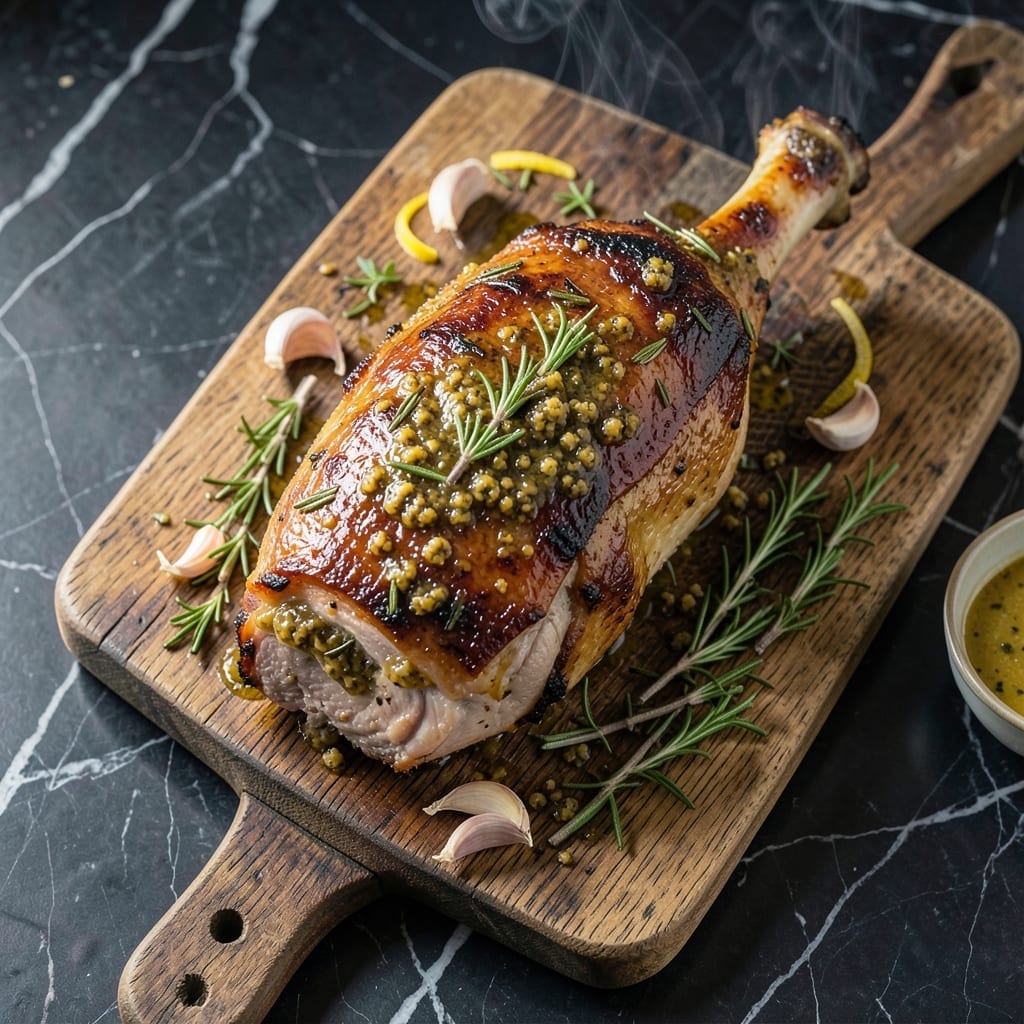
My grandmother never wrote down her lamb recipe, but I’ve decoded her method through years of trial and error.
This herb-crusted roast relies on a simple paste of garlic, rosemary, and olive oil, rubbed generously over the meat before slow roasting. The aroma alone fills the kitchen with warmth and tradition.
At 325°F, the meat cooks evenly, developing a golden crust while staying tender inside. The result is a dish that feels special but requires no heroic effort.
Perfect for Sunday suppers or holiday gatherings. Here’s how to make it happen in your own kitchen.
Ingredients for Lamb Roast Recipe Oven
Lamb leg, garlic, rosemary, and a few pantry staples create this showstopping roast.
| Ingredient | Amount | Notes |
|---|---|---|
| Bone-In Lamb Leg 🐑 | 4 lb | Fat cap left on for flavor |
| Fresh Rosemary Sprigs 🌿 | 4 whole | Stems removed, finely chopped |
| Garlic Cloves 🧄 | 8 cloves | Peeled and minced |
| Extra-Virgin Olive Oil 🫒 | ½ cup | Divided for paste and roasting |
| Dijon Mustard 🟡 | 2 tbsp | For herb paste binding |
| Kosher Salt 🧂 | 2 tsp | Diamond Crystal preferred |
| Freshly Ground Black Pepper 🌶️ | 1 ½ tsp | Coarse grind for texture |
| Fresh Thyme Sprigs 🍃 | 4 whole | Leaves stripped, stems discarded |
| Red Wine 🍷 | 1 cup | Dry variety like Cabernet |
| Chicken Stock 🥣 | 1 cup | Low-sodium preferred |
| Yellow Onion 🧅 | 1 whole | Roughly chopped for pan |
| Carrots 🥕 | 3 whole | Peeled and cut into chunks |
| Celery Stalks 🌿 | 2 whole | Cut into large pieces |
[recipe_ingredient_scaler]
The lamb is the star here. Bone-in leg gives the best flavor and stays juicier than boneless. Look for New Zealand or Australian at Whole Foods or Costco—they’ve got the best marbling. Ask the butcher to trim excess fat if you’re not comfortable doing it yourself (the good stuff, not the pre-shredded kind). The rosemary and thyme should be fresh—dried just won’t give that bright, piney aroma.
No red wine? Beef broth with a splash of balsamic gets you close. Swap fresh herbs for dried at one-third the amount. If you can’t find bone-in leg, bone-in shoulder works too (just adjust cooking time). Dijon mustard can be whole-grain mustard for texture. The chicken stock? Vegetable stock in a pinch, but the depth won’t be quite the same.
The herb paste can be made a day ahead—keeps in the fridge for 24 hours. Roast leftovers? Perfect for sandwiches or tacos. Stores in the fridge for 4-5 days, or freeze for 3 months (slice before freezing for easy portions).
Why You’ll Love This Recipe
- I’ll be real: it feels fancy, but it’s no more effort than roasting a chicken. Perfect for when you want to impress without the stress.
- Set and Forget: Honestly, just rub the lamb with olive oil, Dijon, and crushed garlic, then let the oven do the work.
- That Rosemary Kick: The fresh rosemary and garlic create this deep, earthy aroma that fills the house—it’s the kind of smell that makes everyone linger in the kitchen.
- Feeds a Crowd: One bone-in leg easily serves six with leftovers, and it’s just as good cold in sandwiches the next day.
Step-by-Step Instructions for Lamb Roast Oven
Here’s how I get that perfect herb crust and fall-off-the-bone tenderness every time.
Step 1: Create the Herb Paste for Maximum Flavor
In a small bowl, combine the leaves from 4 whole fresh rosemary sprigs and 4 whole fresh thyme sprigs with 8 cloves minced garlic. Add 2 tbsp Dijon mustard and ¼ cup extra-virgin olive oil from the 0.5 cup total.
Mix until it forms a thick paste. The mustard acts as a binder while the oil helps the herbs adhere to the meat. I’ve found that finely chopping the herbs releases more essential oils, creating a more aromatic crust.
This paste will transform your roast from good to extraordinary with its concentrated herb and garlic flavors.
Step 2: Season and Sear the Lamb Leg
Pat the 4 lb bone-in lamb leg dry with paper towels. The fat cap should remain intact for flavor and moisture. Rub the herb paste all over the lamb, pressing it into the meat. Season generously with 2 tsp kosher salt and 1.5 tsp freshly ground black pepper.
Heat a large Dutch oven over medium-high heat with the remaining ¼ cup extra-virgin olive oil. When the oil shimmers, add the lamb leg and sear on all sides for 3-4 minutes per side until deep golden brown. This creates a flavorful crust that locks in juices.
The searing process develops complex Maillard reactions that form the foundation of your gravy later.
Step 3: Prepare the Aromatic Vegetable Base
Remove the lamb from the Dutch oven and set it aside. Add 1 whole roughly chopped yellow onion, 3 whole peeled and chunked carrots, and 2 whole cut celery stalks to the same pot. The residual oil and lamb drippings will enhance their flavor as they cook.
Sauté the vegetables for 5 minutes until they begin to soften and develop some color. This creates a flavorful base for your braising liquid and adds depth to the final dish.
I always use the same pot to build layers of flavor—every browned bit contributes to the complexity of your roast.
Step 4: Braise to Perfection with Wine and Stock
Return the lamb to the Dutch oven on top of the vegetables. Pour in 1 cup red wine and 1 cup chicken stock. The liquid should come about halfway up the lamb. Bring to a gentle simmer over medium heat.
Cover the pot and transfer it to a preheated 325°F oven. Braise for 2.5 to 3 hours, turning the lamb every 45 minutes. The meat is done when it reaches 195°F internally and pulls away from the bone easily.
This low and slow cooking method breaks down the connective tissues, resulting in incredibly tender meat that falls off the bone.
Step 5: Rest and Serve with Pan Juices
Carefully remove the lamb from the pot and transfer it to a cutting board. Tent it loosely with foil and let it rest for 20 minutes. This allows the juices to redistribute throughout the meat.
Skimming the fat from the braising liquid leaves you with a rich, flavorful sauce. I like to strain the vegetables out for a smoother consistency, but you can leave them in for a rustic presentation. Carve the lamb against the grain and serve with the pan juices spooned over the top.
The resting period is non-negotiable—it ensures every slice is moist and packed with the herb and wine flavors you’ve built throughout the cooking process.
Pro Tips For Making Lamb Roast Recipe Oven
- Start Hot, Finish Low: Sear the lamb at 450°F for 20 minutes to get a deep crust, then drop to 325°F for even cooking—I learned this the hard way after pulling out dry roasts that never browned properly.
- Slash the Fat: Make shallow cuts in the fat cap before roasting so the rosemary and garlic can sink in deeper, and the fat renders down evenly.
- Rest Under Foil: Give it a solid 15-20 minutes under loose foil before carving, or all those juices will end up on the cutting board instead of in the meat.
- Mustard Rub First: Coat the lamb with Dijon mustard before the herbs and oil—sounds weird, but it works: the mustard helps the rosemary and garlic stick and adds a subtle tang that balances the richness.
Wine and Beer Pairings for This Dish
Red Wine Pairings
A bold Cabernet Sauvignon from Napa Valley complements the rosemary and garlic beautifully—its dark fruit notes and firm tannins cut through the richness. For a budget-friendly option, try Josh Cellars Cabernet at $15-20. 🍷
Syrah/Shiraz Options
An Australian Shiraz with its peppery notes enhances the herb crust wonderfully. I love Penfolds Bin 28 for $30-40, but Yellow Tail Shiraz at $10 works in a pinch. The spice in the wine mirrors the dish’s aromatic complexity.
White Wine Surprise
Don’t overlook a full-bodied Chardonnay—its buttery texture and oak notes pair surprisingly well. A Kendall-Jackson Vintner’s Reserve at $15 offers consistent quality. The wine’s acidity balances the lamb’s richness.
Beer Pairings
For beer lovers, a malty Scottish Ale like Belhaven brings caramel notes that complement the roast. A dry stout such as Guinness also works, with its coffee undertones cutting through the fat. Serve slightly chilled. 🍺
Non-Alcoholic Option
A robust black cherry sparkling water with a lime wedge offers a refreshing contrast. The tartness cleanses your palate between bites, while the cherry notes echo the meat’s depth. I keep LaCroix on hand for this purpose.
Nutrition Facts
Frequently Asked Questions
How do I know when the roast is done?
Use a meat thermometer—it’s done at 195°F internally. The meat will pull away from the bone and feel tender when pierced with a fork.
Can I use boneless lamb instead?
Yes, but reduce cooking time by 30 minutes. Boneless cooks faster and may be less forgiving if overcooked. Keep an eye on the temperature.
What if I don’t have a Dutch oven?
A heavy roasting pan with a tight lid works. Sear in a skillet first, then transfer to the pan with liquid and vegetables.
Should I cover it while roasting?
Yes, keep it covered for the first 2 hours, then uncover for the last 30-60 minutes to let the crust develop.

Trained in classic French technique but raised on slow-cooked ribs and spicy rubs, she blends culinary skill with smoke and soul.
- Recipe for Boneless Pork Chops in Cast Iron Skillet: Sear and Baste to Juicy Perfection - October 3, 2026
- Recipe for Boneless Cross Rib Roast: Slow-Roasted Beef with Herb Crust - October 3, 2026
- Hamburgers in Sauce Recipe Crock Pot: Slow-Cooked Savory Delight - October 3, 2026