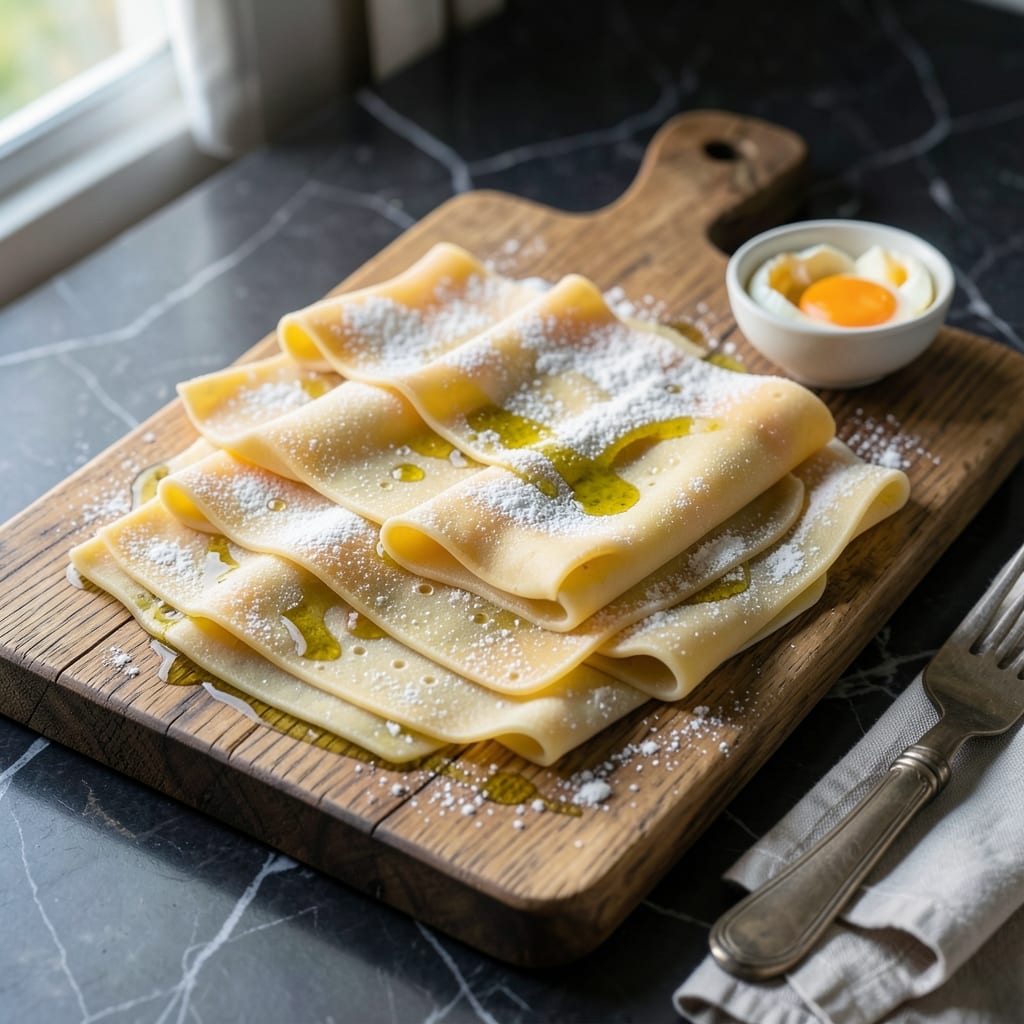
Homemade lasagna noodles without a pasta machine are absolutely achievable with just a rolling pin and some patience. This method delivers tender, paper-thin sheets that rival any machine-made version.
I developed this technique in my tiny Boston kitchen, proving you don’t need special equipment for professional results. The key is rolling the dough progressively thinner and letting it rest between rolls to relax the gluten.
What you’ll get are delicate, silky noodles that cook evenly and hold up beautifully in layers. They’re far superior to store-bought versions, with a texture that melts in your mouth.
Perfect for traditional lasagna or any dish calling for fresh pasta. Here’s how to make them.
Ingredients for Lasagna Noodle Recipe Without Pasta Machine
Pantry staples plus a rolling pin. That is all you need for this.
| Ingredient | Amount | Notes |
|---|---|---|
| All-Purpose Flour 🌾 | 2 cups | Plus extra for dusting |
| Large Eggs 🥚 | 3 whole | Room temperature preferred |
| Olive Oil 🫒 | 1 tbsp | Extra-virgin for richness |
| Salt 🧂 | ½ tsp | Fine sea salt preferred |
| Semolina Flour 🌾 | ½ cup | For texture and dusting |
| Water 💧 | 1 tbsp | As needed for dough consistency |
| Cornmeal 🌽 | 2 tbsp | For rolling and drying sheets |
[recipe_ingredient_scaler]
The flour is the foundation here—King Arthur all-purpose is my go-to for reliable results. Semolina adds that perfect bite (find it in the baking aisle at most supermarkets). Eggs at room temp blend better into the dough. I always grab organic eggs from Market Basket in Boston, but any fresh eggs work. Don’t skip the salt—it enhances all the flavors beautifully (and you can’t taste it in the final noodles).
No semolina? Bread flour at half the amount works in a pinch. Out of olive oil? Melted butter or vegetable oil will do—just don’t overdo it. For a vegan version, swap eggs for 1/2 cup warm water plus 1 tbsp flaxseed meal. The dough might feel stiff at first, but it relaxes as it rests. If it’s too dry, add water 1 tsp at a time.
Fresh pasta dough keeps wrapped tightly in plastic for 1 day in the fridge. The rolled sheets dry out fast, so cook them within 2 hours or freeze between parchment. Frozen noodles last 1 month—no need to thaw before boiling.
Why You’ll Love This Recipe
- No Fancy Equipment: I roll these noodles out with just a rolling pin—no bulky machine cluttering my counter.
- Rich, Eggy Flavor: The eggs and semolina give them that authentic, hearty taste you expect from fresh pasta.
- Meal Prep Magic: I make a double batch on Sunday and freeze half for lazy weeknight lasagnas.
- Pantry Staples Only: All-purpose flour, eggs, olive oil—nothing special to buy, and it still tastes incredible.
Step-by-Step Instructions for Lasagna Noodles Without a Pasta Machine
This method delivers perfectly tender, hand-rolled sheets without any special equipment.
Step 1: Create the Dough Base
On a clean work surface, mound the 2 cups All-Purpose Flour and make a well in the center. I create a wide, shallow well to prevent spills. Add the 3 whole Large Eggs, 1 tbsp Olive Oil, and 0.5 tsp Salt into this well.
Using a fork, gradually incorporate the flour into the wet ingredients from the center outward. The mixture will start shaggy and dry—that’s normal. Keep mixing until it forms a rough dough ball, adding the 1 tbsp Water only if the dough seems too dry to come together.
Step 2: Knead Until Silky Smooth
Lightly dust your surface with extra all-purpose flour from your supply. Turn out the dough and begin kneading. I press the heel of my hand firmly into the dough, then fold and turn, repeating this for 8-10 minutes.
You’ll notice the dough transforms from rough and crumbly to smooth and elastic. If it feels too sticky, add small amounts of flour, but be sparing—too much makes the noodles tough. The finished dough should spring back when pressed lightly with your finger.
Step 3: Rest the Dough for Optimal Texture
Wrap the dough in plastic wrap and let it rest at room temperature for 30 minutes. This relaxation period allows the gluten to settle, making the dough much easier to roll thin without shrinking back.
While waiting, prepare your rolling surface by dusting it generously with the 0.5 cup Semolina Flour. The semolina’s coarse texture prevents sticking better than all-purpose flour and adds a subtle texture to the finished noodles.
Step 4: Roll the Dough Paper-Thin
Divide the rested dough into four equal portions. Working with one piece at a time (keep the others covered), flatten it slightly with your hands. Using a rolling pin, roll the dough in one direction until it’s ⅛-inch thick, dusting with semolina as needed.
Then rotate the dough 90 degrees and roll again, repeating this process until the sheet is nearly translucent. Sprinkle 2 tbsp Cornmeal over the rolled sheets to prevent sticking as you work. The cornmeal also helps dry the noodles slightly, making them easier to handle.
Step 5: Cut and Dry the Noodles
Using a sharp knife or pasta cutter, trim the edges of each sheet to create rectangles approximately 3-4 inches wide and 8-10 inches long. These dimensions work perfectly for standard lasagna pans.
Lay the cut noodles on a floured surface or hang them over a dowel to dry for 15-20 minutes. They should be pliable but not sticky when ready to use. Cook immediately in boiling salted water for 2-3 minutes until they float to the surface and are al dente—they’ll finish cooking in the lasagna.
Pro Tips For Making Lasagna Noodle Recipe Without Pasta Machine
- Rest the Dough: After kneading, let the dough sit covered for at least 30 minutes—this relaxes the gluten so you can roll it thin without it springing back.
- Use Semolina: Dust your work surface with semolina instead of flour; it adds texture and prevents sticking better than all-purpose when rolling by hand.
- Roll Evenly: Start from the center and roll outward in all directions, rotating the dough 90 degrees every few passes to keep the thickness consistent.
- Cut Clean Edges: Use a sharp knife or pizza cutter to trim the noodles—ragged edges can make the lasagna layers uneven and hard to stack neatly.
Troubleshooting Great lasagna noodle recipe without pasta machine
Dough Too Sticky
If your dough sticks to your hands or surface, resist adding too much flour. Lightly dust with semolina flour instead—its coarse texture prevents sticking better. I tested this in my tiny Boston kitchen and found 1 tsp at a time works best. 💡
Dough Tears When Rolling
This usually means the gluten needs more rest. Wrap the dough and let it sit for an additional 15-20 minutes. If it still tears, your dough might be too dry—add 1 tsp water at a time until it comes together smoothly.
Sheets Shrink Back
When your sheets keep springing back, the gluten hasn’t relaxed enough. Let the dough rest longer—up to 45 minutes works wonders. Roll to ⅛-inch thickness first, then rest again before going thinner.
Noodles Stick Together
After cutting, dust each sheet generously with cornmeal or semolina. I learned this the hard way after my first batch turned into a pasta brick. Space them out on a floured surface or hang over a dowel to dry for 15-20 minutes.
Uneven Thickness
Rotate your dough 90 degrees between each rolling pass. This ensures even thickness. Use a ruler to check—1/16-inch is ideal for lasagna. My French rolling pin (no handles) gives me the best control.
Cooking Too Fast
Fresh noodles cook in 2-3 minutes in boiling water. Watch closely—they’ll float when done. For lasagna, undercook slightly (1-2 minutes) since they’ll finish in the oven. Test one first to gauge timing. 🔥
Nutrition Facts
Frequently Asked Questions
What’s the best flour for hand-rolled noodles?
All-purpose flour works perfectly, but adding semolina flour gives better texture. I use a 4:1 ratio of all-purpose to semolina for the ideal bite. It’s what my Nonna always used in our Boston kitchen.
How thin should I roll the dough?
Aim for 1/16-inch thickness for lasagna sheets. Rotate the dough 90 degrees between rolls to ensure even thinness. Use a ruler to check if needed.
Can I make these ahead of time?
Yes! Cut noodles can dry on a floured surface for 15-20 minutes before cooking. For longer storage, freeze between parchment for up to 1 month. No need to thaw before boiling.

Trained in classic French technique but raised on slow-cooked ribs and spicy rubs, she blends culinary skill with smoke and soul.
- Recipe for Boneless Pork Chops in Cast Iron Skillet: Sear and Baste to Juicy Perfection - October 3, 2026
- Recipe for Boneless Cross Rib Roast: Slow-Roasted Beef with Herb Crust - October 3, 2026
- Hamburgers in Sauce Recipe Crock Pot: Slow-Cooked Savory Delight - October 3, 2026