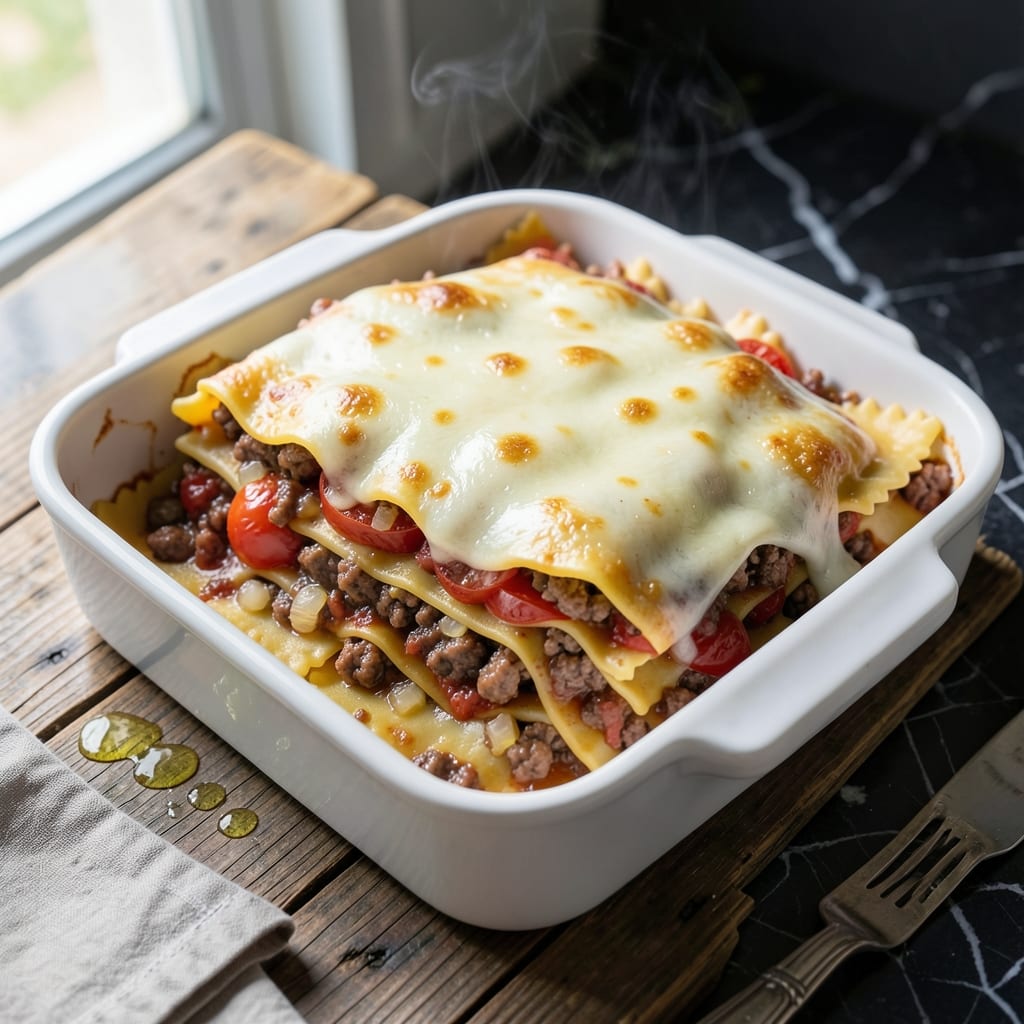
This lasagna recipe transforms the classic dish with fresh pasta, creating layers of silky richness that store-bought sheets simply can’t match.
I developed this method after years of testing, and the difference is undeniable. Fresh pasta absorbs the sauce beautifully while maintaining a delicate texture that melts in your mouth.
The assembly process is straightforward: alternate layers of pasta with a rich meat sauce and creamy béchamel. The result is a dish that’s both elegant and comforting.
Baking until golden and bubbling ensures every bite delivers that perfect balance of flavors and textures. The fresh pasta truly elevates this to something special.
Ingredients for Lasagna Recipe Using Fresh Pasta
Fresh pasta sheets and rich layers make this dish extraordinary. Quality ingredients elevate every bite.
| Ingredient | Amount | Notes |
|---|---|---|
| Fresh Pasta Sheets 🍝 | 1 ½ lb | Rolled thin, about 1/16 inch |
| Ground Beef 🥩 | 1 ½ lb | 80/20 lean-to-fat ratio preferred |
| Italian Sausage 🌭 | ½ lb | Sweet or spicy, casings removed |
| Yellow Onion 🧅 | 1 whole | Finely diced for sauce |
| Garlic Cloves 🧄 | 5 cloves | Minced for depth of flavor |
| San Marzano Tomatoes 🍅 | 2 cans | 28 oz each, crushed by hand |
| Tomato Paste 🍅 | 3 tbsp | For concentrated tomato flavor |
| Dry Red Wine 🍷 | ½ cup | Cabernet Sauvignon or Chianti |
| Whole Milk 🥛 | 3 cups | For creamy béchamel base |
| All-Purpose Flour 🌾 | ⅓ cup | For roux in béchamel |
| Unsalted Butter 🧈 | ½ cup | For rich, smooth béchamel |
| Parmesan Cheese 🧀 | 1 ½ cups | Freshly grated, aged 24 months |
| Whole-Milk Ricotta 🧀 | 2 cups | Drained overnight for thickness |
| Mozzarella Cheese 🧀 | 1 lb | Low-moisture, shredded by hand |
| Fresh Basil Leaves 🌿 | ½ cup | Loosely packed, for garnish |
[recipe_ingredient_scaler]
The fresh pasta sheets are non-negotiable for achieving that silky texture. Source from a local Italian market or specialty grocer like Eataly—look for sheets rolled thin (about 1/16 inch) and free of preservatives. The ground beef should be 80/20 lean-to-fat ratio for optimal flavor and moisture. For the San Marzano tomatoes, DOP-certified cans from Italy ensure the sweetest, most authentic base for your sauce.
No fresh pasta? High-quality dried lasagna sheets can work, but parboil them first to soften. Substitute ground turkey or pork for the beef if preferred. For a vegetarian option, use a mix of mushrooms and lentils instead of meat. The red wine is essential for depth, but beef stock with a splash of balsamic vinegar can stand in. Always use whole-milk ricotta—low-fat versions lack the necessary richness.
Assemble the lasagna up to a day ahead and refrigerate before baking. Leftovers keep for 4 days in the fridge or freeze for 3 months. Reheat covered with foil to prevent the top from drying out. Fresh pasta sheets can be made ahead and stored in the refrigerator for 2 days if dusted with flour.
Why You’ll Love This Recipe
- No-Boil Shortcut: Fresh pasta sheets skip the pre-cooking step—just layer and bake while the sauce does the work for me.
- Meat Lovers’ Dream: The combo of beef and Italian sausage with garlic and onion gives it that rich, savory depth I crave.
- Feeds a Hungry Table: I’ve served this for Sunday dinner and potlucks alike—it’s the kind of dish that disappears fast.
- Leftovers for Days: Honestly, it tastes even better the next day, and the portions stretch far enough for lunches all week.
Step-by-Step Instructions for Lasagna Using Fresh Pasta
Master these layers with precision and you’ll achieve restaurant-quality results every time.
Step 1: Prepare the Rich Meat Sauce
Heat a large Dutch oven over medium heat. Add the ground beef and italian sausage (casings removed) and cook for 8-10 minutes, breaking it up with a wooden spoon, until deeply browned and crumbly. This develops the meat’s flavor through caramelization.
Add the finely diced yellow onion and cook for 3-4 minutes until translucent. Stir in the minced garlic cloves and cook for 30 seconds until fragrant. Add the tomato paste and cook for 2 minutes to deepen its flavor.
Pour in the dry red wine and simmer for 3-4 minutes until reduced by half. Add the San Marzano Tomatoes (crushed by hand) and simmer the sauce for 20-25 minutes until thickened. Season with salt to taste.
Step 2: Create the Creamy Béchamel
In a medium saucepan, melt the unsalted butter over medium heat. Whisk in the all-purpose flour and cook for 1-2 minutes until the mixture turns light golden and smells nutty. This roux is the foundation of your béchamel.
Gradually whisk in the whole milk, ½ cup at a time, ensuring each addition is fully incorporated before adding more. Cook for 5-7 minutes, stirring constantly, until the sauce thickens enough to coat the back of a spoon. Remove from heat and stir in 1 cup of the Parmesan cheese until melted and smooth.
Step 3: Layer the Lasagna with Fresh Pasta
Preheat your oven to 375°F. In a 9×13-inch baking dish, spread a thin layer of meat sauce on the bottom. Add a layer of fresh pasta sheets, followed by a portion of the whole-milk ricotta, mozzarella cheese, and remaining Parmesan cheese. Repeat the layers, ending with sauce and a generous sprinkle of mozzarella cheese and Parmesan cheese.
Cover the dish with foil and bake for 25 minutes. Then, remove the foil and bake for another 15-20 minutes until the top is golden brown and bubbling. The fresh pasta sheets will cook perfectly in this time, absorbing the flavors of the sauce.
Step 4: Rest and Garnish Before Serving
Let the lasagna rest for 15 minutes after removing it from the oven. This allows the layers to set and makes it easier to slice. The fresh pasta sheets will firm up slightly, ensuring clean cuts.
Garnish with torn fresh basil leaves just before serving. This resting period is crucial—it lets the flavors meld together and prevents the lasagna from falling apart when served. The result should be tender, flavorful layers with a rich, creamy texture throughout.
Pro Tips For Making Lasagna Recipe Using Fresh Pasta
- Pre-Cook Fresh Pasta: Boil the fresh pasta sheets for just 30-45 seconds before layering—I learned this the hard way after my first lasagna turned out gummy and undercooked.
- Brown Meat Thoroughly: Cook the ground beef and Italian sausage until deeply browned, not just gray, to build rich flavor that carries through every layer.
- Drain Excess Fat: After browning the meat, spoon out most of the rendered fat—leaving too much makes the lasagna greasy and weighs down the fresh pasta.
- Rest Before Serving: Let the lasagna sit for at least 15-20 minutes after baking so the layers set and don’t slide apart when you cut into it—yes, even if you’re starving.
Make-Ahead Tips for This Dish
Prep Fresh Pasta
Fresh pasta sheets can be made 1-2 days ahead and stored in the fridge. Dust them with semolina flour, layer between parchment, and seal in an airtight container. This prevents sticking while maintaining that delicate texture. 💡
Assemble in Advance
Build the entire lasagna up to 24 hours before baking. Cover tightly with plastic wrap and foil, then refrigerate. The flavors meld beautifully overnight, and the fresh pasta sheets won’t dry out.
Freeze Before Baking
For longer storage, assemble the lasagna in a freezer-safe dish and freeze unbaked for up to 3 months. Wrap tightly with foil and plastic wrap to prevent freezer burn. Thaw in the fridge for 24 hours before baking.
Baking from Cold
If baking from refrigerated, add 10-15 minutes to the covered baking time. For frozen, bake covered at 375°F for 1 hour, then uncover and bake 20-25 minutes until golden and bubbling. ❄️
Make-Ahead Sauces
The meat sauce and béchamel can be made 3 days ahead and refrigerated. Reheat the meat sauce before assembling, and warm the béchamel slightly to loosen before using. This saves time on assembly day.
Store Leftovers
Leftover lasagna keeps in the fridge for 4 days or freezes for 3 months. Reheat covered with foil at 350°F for 20-25 minutes until warmed through. Add a splash of milk to the béchamel layer if it seems dry.
Nutrition Facts
Frequently Asked Questions
Do I need to pre-cook fresh pasta sheets?
No, fresh pasta sheets cook perfectly in the oven as the lasagna bakes. The moisture from the sauces softens them while maintaining that delicate texture. Just ensure they’re thinly rolled, about 1/16 inch thick.
Can I use no-boil lasagna noodles instead?
Yes, but they won’t deliver the same silky texture as fresh pasta. If substituting, add 5 minutes to the covered baking time and ensure plenty of sauce between layers. Fresh pasta is still the best choice.
How do I prevent a soggy bottom layer?
Start with a thin layer of meat sauce on the bottom of the dish before adding the first pasta sheet. This creates a barrier that prevents the fresh pasta from sticking and absorbing too much moisture.
Why rest lasagna before serving?
Resting for 15 minutes lets the layers set, making it easier to slice. It also allows the flavors to meld and the fresh pasta to firm up slightly, ensuring clean portions.

Trained in classic French technique but raised on slow-cooked ribs and spicy rubs, she blends culinary skill with smoke and soul.
- Recipe for French Pork Spread Gorton: Savory Gallic Flavors in a Spreadable Delight - October 3, 2026
- Recipe for Pan Fried: Golden Crust with Savory Depth - October 3, 2026
- Recipe For Fried Chicken In A Pressure Cooker: Crispy Golden Bites in Half the Time - October 3, 2026