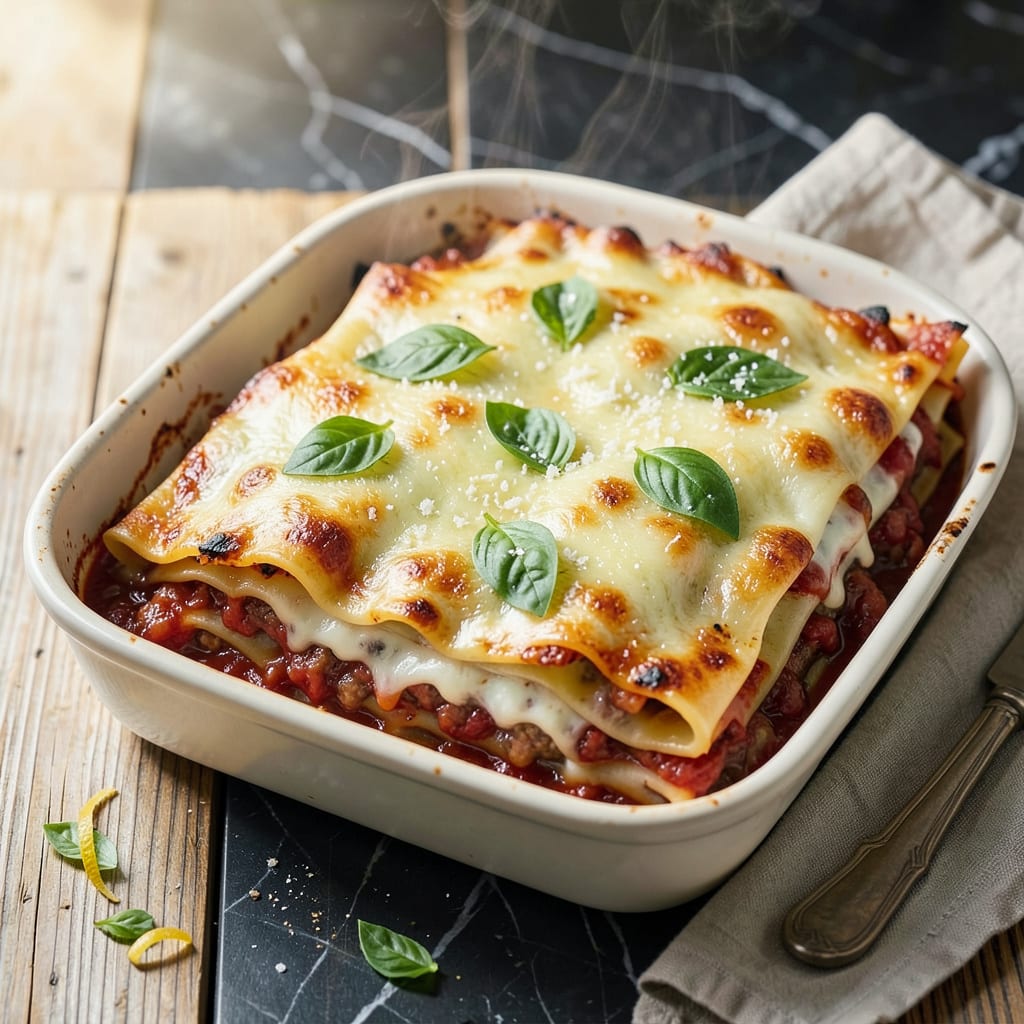
Lasagna falls apart when it’s undercooked, over-sauced, or lacks proper layer structure. Too much moisture, insufficient resting time, or thin noodles can also cause slices to crumble instead of holding their shape.
I’ve seen countless lasagnas go from perfect pans to messy plates because of one critical oversight: the balance between moisture and structure. 🔥 When layers don’t have enough time to set—whether from rushing the bake or skipping the resting period—the starches in noodles and proteins in cheese can’t fully bind. Even the type of noodle matters: no-boil sheets absorb liquid differently than pre-cooked ones, and that small difference can make or break your slice integrity.
What’s less obvious is how sauce consistency plays a role. A watery marinara might seem harmless in the pot, but once layered, it turns into a slippery enemy that weakens the entire dish. I always recommend reducing sauces slightly before assembly—it’s the secret to clean cuts and that satisfying “hold” when you lift a piece onto your plate. ✨
💡 In This Article
- Key Structural Mistakes That Ruin Lasagna Layers
- Step-by-Step Fixes for Perfect Lasagna Slices
Key Structural Mistakes That Ruin Lasagna Layers
At the heart of lasagna’s structure lies a delicate balance between starch and protein. Noodles—whether no-boil or pre-cooked—rely on absorbing moisture to soften and bind layers.
No-boil varieties contain 20-30% more starch on their surface, which gelatinizes during baking to create a natural “glue.” Pre-cooked noodles, however, need precise timing: undercooked, they stay rigid and crack; overcooked, they turn mushy and lose integrity. The ideal texture comes when starch granules swell just enough to interlock with cheese proteins.
Cheese plays an equally critical role through protein coagulation. Ricotta and mozzarella contain casein proteins that unfold and link together when heated above 140°F. This creates a flexible matrix that should hold layers together—unless there’s too much liquid.
Excess moisture from watery sauces or un-drained vegetables dilutes this protein network, turning your lasagna into a soupy mess. I once ruined a batch by using fresh spinach straight from the bag; the released water turned my layers into a green-tinged slide.
The baking temperature determines how these elements interact. At 375°F, starches absorb liquid gradually while proteins coagulate evenly. Crank it to 425°F, and you’ll get a crispy top but potentially dry edges where proteins over-coagulate and squeeze out moisture.
Too low (below 350°F), and the starches never fully gelatinize, leaving you with a gummy, unstable structure. The sweet spot allows starches to absorb just enough liquid to create cohesion without turning to paste.
Layer ratios matter more than most realize. The classic 3:1:1 ratio (sauce:cheese:noodle) by volume creates optimal stability. Deviate too far—like my early attempts with double the sauce for “extra flavor”—and you create slip planes between layers. Thin noodles (1/16-inch) need less sauce than standard (1/8-inch), while thick homemade sheets can handle more.
The math changes with ingredient density: a meat-heavy filling requires 20% more sauce to prevent dryness, but that extra liquid must be balanced with additional binding agents like eggs in the ricotta.
What most home cooks miss is the resting period’s physics. Straight from the oven, lasagna layers are like a stack of hot, slippery plates. During those critical 15-30 minutes of resting, three things happen: 1) Starches retrogradate (re-crystallize) to firm up, 2) Proteins finish setting into a stable matrix, and 3) moisture redistributes evenly.
Cut too soon, and you’re essentially performing surgery on a half-set Jell-O mold. The difference between a clean slice and a plate of rubble often comes down to this simple act of patience.
Even your pan choice affects structure. Glass conducts heat differently than metal, leading to faster moisture evaporation at the edges. Dark pans absorb more heat, potentially overcooking the bottom layer while the top remains underbound. My go-to 9×13-inch stainless steel pan with a light oil coating gives the most even heat distribution and clean release.
The right pan won’t compensate for poor technique, but it eliminates one more variable in your quest for perfect layers.
Remember that lasagna is essentially a savory casserole architecture project. Each ingredient has a structural role beyond flavor. The noodles are your beams, cheese is the mortar, and sauce is the controlled moisture system. When one element fails—whether it’s undercooked noodles that haven’t absorbed enough liquid or cheese that hasn’t properly coagulated—the entire structure compromises.
Mastering this balance means thinking like both a chef and an engineer, where every layer’s thickness and composition contributes to the final edible structure.

Trained in classic French technique but raised on slow-cooked ribs and spicy rubs, she blends culinary skill with smoke and soul.
- Recipe for Boneless Pork Chops in Cast Iron Skillet: Sear and Baste to Juicy Perfection - October 3, 2026
- Recipe for Boneless Cross Rib Roast: Slow-Roasted Beef with Herb Crust - October 3, 2026
- Hamburgers in Sauce Recipe Crock Pot: Slow-Cooked Savory Delight - October 3, 2026