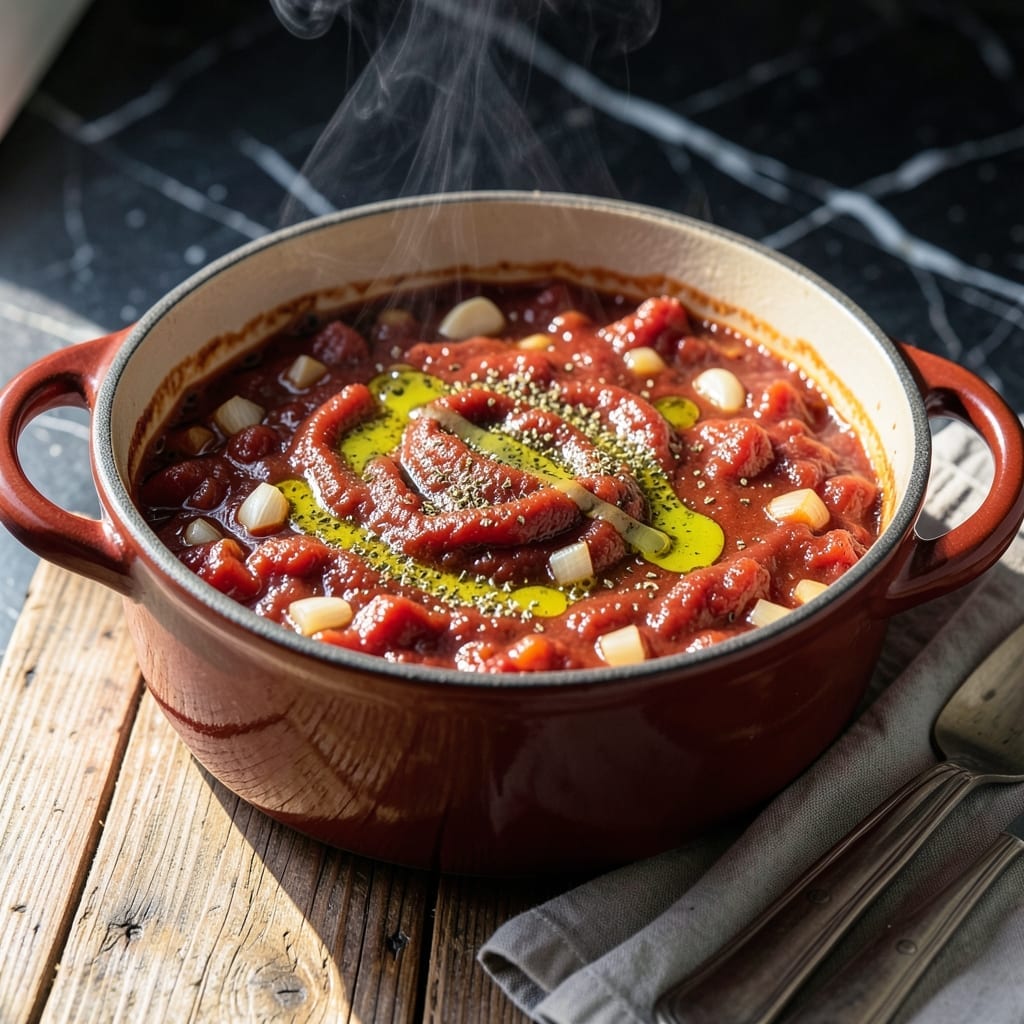
This sauce transforms lasagna from good to extraordinary with its deep tomato flavor and aromatic herbs. I developed this recipe to capture the rich, slow-simpered taste of Italian nonna-style cooking.
With a 30-minute cook time, it builds layers of flavor through caramelized onions, garlic, and a blend of dried herbs. The result is a smooth, velvety sauce that clings perfectly to pasta sheets.
Ingredients for Lasagna Sauce Recipe from Scratch
Twelve ingredients build this rich, velvety sauce with nonna-style depth and herb complexity.
| Ingredient | Amount | Notes |
|---|---|---|
| San Marzano Canned Tomatoes 🍅 | 28 oz | Whole, peeled, crushed by hand |
| Extra-Virgin Olive Oil 🫒 | ¼ cup | High quality, fruity notes |
| Yellow Onion 🧅 | 1 whole | Finely diced for caramelization |
| Garlic Cloves 🧄 | 6 cloves | Minced for aromatic depth |
| Tomato Paste 🍅 | 3 tbsp | Double-concentrated preferred |
| Dried Oregano 🍃 | 1 tbsp | Mediterranean variety preferred |
| Dried Basil 🌿 | 1 tbsp | Crushed between fingers |
| Red Pepper Flakes 🌶️ | ½ tsp | Adjust for heat preference |
| Sea Salt 🧂 | 1 ½ tsp | Fine grain for even seasoning |
| Black Pepper 🌶️ | ½ tsp | Freshly cracked preferred |
| Dry Red Wine 🍷 | ½ cup | Bold and dry variety |
| Vegetable Stock 🥫 | ½ cup | Low-sodium for control |
[recipe_ingredient_scaler]
The tomatoes are non-negotiable here. San Marzano from Italy—look for the DOP certification on the can. Their low acidity and sweetness create that authentic base. Eataly or Whole Foods carry them, but most supermarkets have a decent option. The olive oil should be something you’d happily drizzle on bread—California Olive Ranch is a reliable choice.
No wine? Substitute with additional vegetable stock plus 1 tbsp balsamic vinegar for acidity. Fresh herbs can replace dried at a 3:1 ratio, but dried work perfectly for the slow simmer. If San Marzano tomatoes are unavailable, Muir Glen organic are a solid backup. The tomato paste intensifies flavor—don’t skip it, even if it seems small.
Sauce keeps 5 days refrigerated in an airtight container. For longer storage, freeze in portions for up to 3 months. The flavors deepen overnight, making it perfect for meal prep. Always taste before using—acidity balances best after resting.
Why You’ll Love This Recipe
- One Pot Wonder: I just dump the San Marzano tomatoes, onion, garlic, and paste in a pot and let it simmer—no fancy steps.
- Rich and Deep: The slow-cooked garlic and tomato paste give it this velvety, restaurant-quality taste.
- Freezer Friendly: I double the batch and freeze half for lazy nights. Honestly, it reheats like a dream.
- Budget Stretcher: San Marzano cans are affordable, and this makes enough sauce for two lasagnas.
Step-by-Step Instructions for Lasagna Sauce From Scratch
Master the foundation of great lasagna with this time-tested tomato sauce method.
Step 1: Sauté Aromatic Base
Heat the 0.25 cup Extra-Virgin Olive Oil in a heavy-bottomed pot over medium heat. Add the finely diced Yellow Onion and cook for 8-10 minutes, stirring occasionally, until translucent and just beginning to caramelize at the edges.
This slow cooking process develops the onion’s natural sweetness, creating depth for the sauce. The oil should shimmer but not smoke—if it does, reduce the heat slightly. Watch for the onions to turn a pale golden color; this visual cue indicates they’re ready for the next addition.
Step 2: Build Flavor with Garlic and Tomato Paste
Add the 6 cloves minced Garlic Cloves to the pot and cook for 1 minute, stirring constantly to prevent burning. The garlic should become fragrant but not take on any color. Immediately add the 3 tbsp Tomato Paste and cook for an additional 2 minutes.
This step intensifies the tomato paste’s natural sweetness while mellowing its acidity. The paste will darken slightly and begin to stick to the bottom of the pot—this is the fond that will add incredible depth to your sauce. Stir frequently to prevent burning.
Step 3: Deglaze and Incorporate Liquids
Pour in the 0.5 cup Dry Red Wine and scrape up any browned bits from the bottom of the pot with a wooden spoon. Let the wine reduce by half, about 3-4 minutes, until the alcohol smell has mostly dissipated.
Add the 28 oz San Marzano Canned Tomatoes (crushed by hand), 0.5 cup Vegetable Stock, 1 tbsp Dried Oregano, 1 tbsp Dried Basil, 0.5 tsp Red Pepper Flakes, 1.5 tsp Sea Salt, and 0.5 tsp Black Pepper. Stir well to combine all ingredients thoroughly.
Step 4: Simmer to Perfection
Bring the mixture to a gentle boil, then reduce heat to low and let it simmer uncovered for 45-60 minutes. Stir occasionally to prevent sticking, especially during the first 20 minutes of simmering.
You’ll know the sauce is ready when it has thickened significantly and the oil has separated slightly at the surface. The tomatoes will have broken down completely, and the sauce should have a rich, deep red color. Taste and adjust seasoning if needed, though the flavors will continue to develop as it cools.
The long simmering time allows the flavors to meld together beautifully. The sauce should coat the back of a spoon but still be pourable. If it becomes too thick, add a splash of water to reach your desired consistency.
Pro Tips For Making Lasagna Sauce Recipe From Scratch
- Sauté Onions Slow: Cook the yellow onions over medium-low heat for at least 10 minutes until soft and translucent—I learned this the hard way when my sauce tasted harsh from undercooked onions.
- Crush Tomatoes by Hand: Break up the San Marzano tomatoes with your hands as you add them to the pot; it sounds messy, but it gives the sauce a better texture than blending.
- Bloom Tomato Paste: Cook the tomato paste in the olive oil for 1-2 minutes before adding other ingredients—it deepens the flavor and removes the raw taste.
- Simmer Uncovered: Let the sauce reduce uncovered for 30-45 minutes, stirring occasionally, to thicken it properly without watering down the taste.
Essential Equipment for This Dish
Must-Have Tools
To craft the perfect lasagna sauce from scratch, start with a sturdy large saucepan or Dutch oven—like the Le Creuset Round Dutch Oven—to simmer your sauce evenly. A wooden spoon is essential for stirring without scratching your cookware. 🍳
You’ll also need a sharp chef’s knife (try Wüsthof Classic) and a cutting board for prepping onions, garlic, and herbs. These basics ensure smooth, efficient prep work.
Nice-to-Have
For extra convenience, an immersion blender (such as KitchenAid’s models) helps achieve a silky-smooth texture. A fine-mesh strainer is great for removing seeds or skins if you prefer a ultra-refined sauce. 🎯
A slow cooker can also deepen flavors over time, but it’s not required for this recipe.
Budget Alternatives
If you’re working with limited tools, a standard stockpot works just as well as a Dutch oven. Swap the chef’s knife for a paring knife if that’s what you have. A hand masher or fork can replace an immersion blender for breaking down tomatoes. ✨
Even a regular spoon can stir your sauce—just avoid metal on non-stick surfaces to preserve your cookware.
Nutrition Facts

Trained in classic French technique but raised on slow-cooked ribs and spicy rubs, she blends culinary skill with smoke and soul.
- Recipe for Boneless Pork Chops in Cast Iron Skillet: Sear and Baste to Juicy Perfection - October 3, 2026
- Recipe for Boneless Cross Rib Roast: Slow-Roasted Beef with Herb Crust - October 3, 2026
- Hamburgers in Sauce Recipe Crock Pot: Slow-Cooked Savory Delight - October 3, 2026