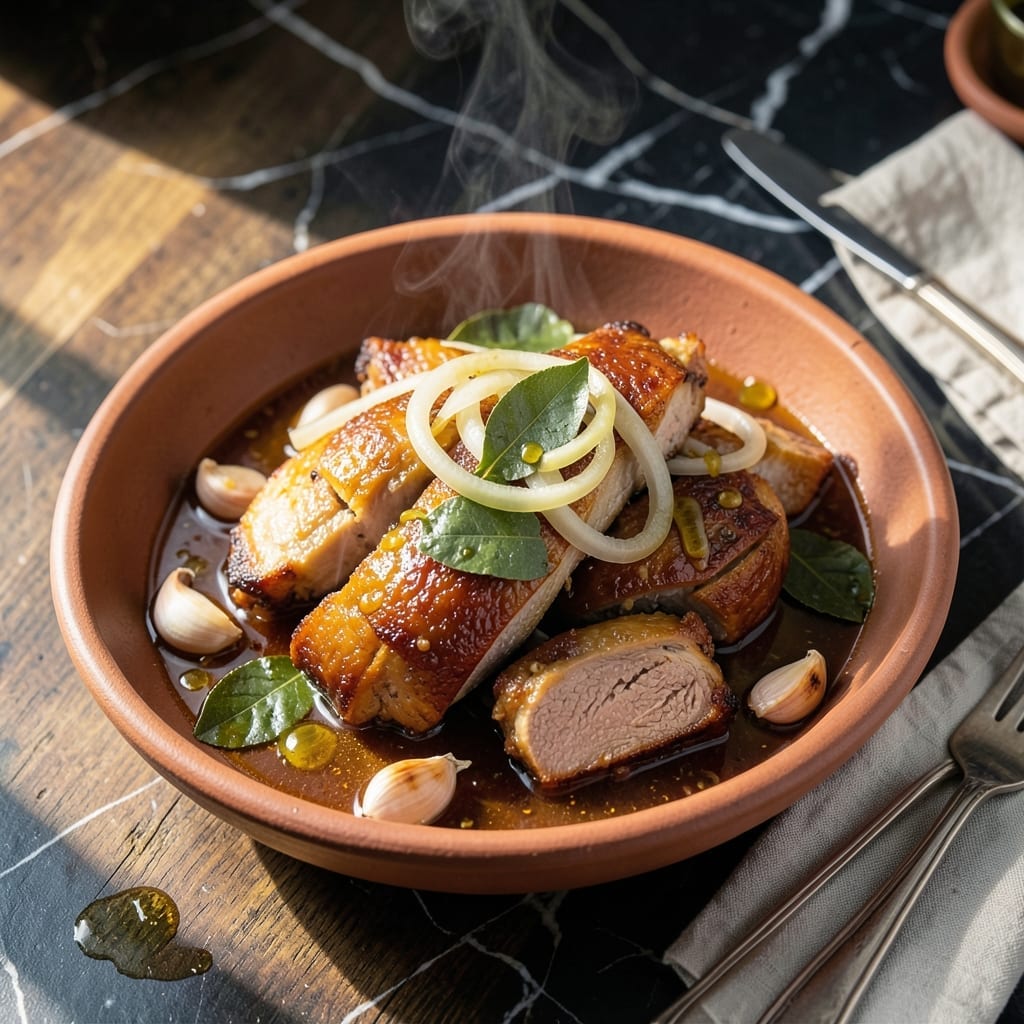
This Filipino classic transforms leftover lechon into a tangy, savory masterpiece with minimal effort. The vinegar-based braise cuts through the richness of the pork while keeping the skin crispy.
I developed this method after trying countless versions that turned the pork soggy. The key is briefly searing the lechon pieces before simmering them in the vinegar-soy sauce mixture, which preserves texture.
The result is tender meat with a perfect balance of acidity and umami, all topped with shatteringly crispy skin. It’s the ideal way to give new life to roast pork leftovers.
Serve this with steamed rice to soak up every drop of the flavorful sauce. The dish comes together quickly but tastes like it simmered for hours.
Ingredients for Lechon Paksiw Recipe Pork
Transform leftovers into this tangy, savory dish with just a few pantry staples.
| Ingredient | Amount | Notes |
|---|---|---|
| Leftover Lechon Pork 🍖 | 2 lb | With skin on, cut into large pieces |
| White Vinegar 💧 | 1 ½ cups | Cane vinegar preferred for authentic flavor |
| Soy Sauce 🫙 | ½ cup | Regular or light variety |
| Garlic Cloves 🧄 | 8 cloves | Peeled and crushed |
| Yellow Onion 🧅 | 1 whole | Sliced into rings |
| Bay Leaves 🍃 | 3 pieces | Dried or fresh |
| Black Peppercorns 🌶️ | 1 tsp | Whole, lightly crushed |
| Brown Sugar 🍚 | 2 tbsp | Optional for balancing acidity |
| Water 💧 | 1 cup | For adjusting sauce consistency |
| Vegetable Oil 🫒 | 2 tbsp | For searing pork pieces |
| Salt 🧂 | 1 tsp | Adjust to taste |
[recipe_ingredient_scaler]
The lechon quality matters most here. Use leftover roast pork with crispy skin—this dish can’t save poorly cooked meat. Most Filipino markets sell pre-cooked lechon if you don’t have leftovers. The vinegar is key: Datu Puti or Mama Sita’s cane vinegar gives authentic flavor. For soy sauce, Silver Swan or Knorr are reliable brands available at Asian grocers.
No lechon? Roast pork loin with crispy skin works as substitute. Out of cane vinegar? White vinegar plus 1 tbsp sugar per cup mimics the flavor. Fresh garlic is non-negotiable—pre-minced from jars lacks the punch. The bay leaves can be omitted, but they add depth. For extra richness, replace 1/4 cup vinegar with liver spread (a classic Filipino addition).
This keeps 3-4 days refrigerated in its sauce. Reheat gently to preserve the skin’s crispness. Freezing isn’t recommended—the texture changes. Serve with extra sauce on the side for dipping. Always make rice fresh to soak up that tangy braising liquid.
Why You’ll Love This Recipe
- I’ll be real: nothing beats stretching expensive lechon into another satisfying dish with ingredients I already have.
- One Pot Wonder: I just dump leftover lechon, vinegar, soy sauce, garlic, and onions in a pot—no fancy steps, no mess.
- Tangy Garlic Punch: The vinegar cuts through the rich pork while garlic and onions build layers of savory depth. Honestly, it’s the balance that hooks me every time.
- Feeds the Family: Between us, it’s my go-to for turning holiday leftovers into a whole new meal that even picky eaters devour.
Step-by-Step Instructions for Lechon Paksiw
Here’s the method. Straightforward, tested, works every time.
Step 1: Sear the Leftover Lechon Pork
Heat 2 tbsp vegetable oil in a large pot over medium-high heat. Add the 2 lb leftover lechon pork pieces, skin-side down first. I press down gently with a spatula to ensure the skin crisps evenly.
Sear for 3-4 minutes per side until the skin turns deep golden brown and crispy. This step revives the lechon’s texture and renders out extra fat for flavor. Transfer the pork to a plate and set aside, leaving the rendered fat in the pot.
Step 2: Sauté Aromatics and Build the Base
In the same pot, reduce heat to medium. Add the 1 whole yellow onion (sliced into rings) and cook for 2-3 minutes until softened and translucent. Then add the 8 cloves garlic cloves (peeled and crushed) and cook for 30 seconds until fragrant.
Stir in 1 tsp black peppercorns (lightly crushed), 3 pieces bay leaves, 1.5 cups white vinegar, 0.5 cup soy sauce, and 1 cup water. Bring to a gentle simmer, which helps meld all the bold flavors together.
Step 3: Braise the Pork Until Tender
Return the seared pork to the pot, ensuring the pieces are mostly submerged in the liquid. Add 2 tbsp brown sugar and 1 tsp salt, then stir gently. Cover and simmer over low heat for 25-30 minutes.
The pork is done when it’s fork-tender and the sauce has thickened slightly. I check the consistency by tilting the pot—the sauce should coat the back of a spoon but still have a tangy, pourable quality.
Step 4: Adjust and Serve
Remove the pork from the sauce and arrange it on a serving platter. Skim any excess fat from the surface of the sauce if desired, though I often leave it for extra richness. Taste the sauce and adjust the seasoning—add a pinch more salt if needed, or a splash of water if it’s too sharp.
Spoon the sauce generously over the pork, ensuring every piece is coated. Let it rest for 5 minutes before serving to allow the flavors to settle. The skin should remain crispy while the meat inside stays juicy and infused with the tangy vinegar braise.
Pro Tips For Making Lechon Paksiw Recipe Pork
- Simmer, Don’t Boil: Keep the heat at a gentle simmer—boiling vinegar makes the pork tough and the sauce too harsh. I learned this the hard way after my first batch came out chewy.
- Shred the Pork: Tear the leftover lechon into bite-sized pieces before adding it to the pot. This lets the paksiw sauce soak in better and shortens cooking time by 5-10 minutes.
- Balance the Sour: Taste before adding all the vinegar—some leftover lechon is saltier than others, and you might need less soy sauce or a splash of water to mellow the tang.
- Use the Fat: Skim off a tablespoon of lechon fat from the sauce at the end and drizzle it back over the finished dish. Sounds weird, but it adds a richness that plain oil can’t match.
Troubleshooting This Dish
Sauce Too Sour
If your braising liquid tastes harsh, balance the acidity with 1-2 tbsp brown sugar or a pinch of salt. I often add a splash of soy sauce to round out the flavors. Taste as you go—Filipino cooking is all about adjustment. 💡
Pork Turns Soggy
This usually happens when you skip searing or overcrowd the pot. Sear the leftover lechon pork first in 2 tbsp vegetable oil until skin crisps, then braise in a single layer. Keep the heat at a gentle simmer, not a rolling boil.
Sauce Too Thin
Uncover the pot and simmer for an additional 5-10 minutes to reduce the liquid. If it’s still too thin, mix 1 tsp cornstarch with 1 tbsp water and stir into the sauce at the end.
Sauce Too Thick
Thin it with ¼ cup water or reserved pork stock, adding 1 tbsp at a time until you reach the desired consistency. The sauce should coat the back of a spoon but still be pourable.
Skin Loses Crispiness
To revive soggy skin, transfer pork pieces to a baking sheet and broil on high for 2-3 minutes, watching closely. Alternatively, pat dry with paper towels and pan-fry in 1 tbsp oil until crisp. 🔥
Overpowering Vinegar
If the vinegar flavor dominates, simmer the sauce uncovered for 10-15 minutes before adding pork. This allows the sharpness to mellow. Adding 1 tbsp brown sugar also helps balance the acidity.
Nutrition Facts
Frequently Asked Questions
Can I use fresh pork instead of leftovers?
Yes, but roast 2 lb pork belly first until skin is crispy. This mimics lechon texture. Then follow the braising steps as written.
Why sear the pork before braising?
Searing revives crispy skin and renders fat for flavor. Skip this and your pork may turn soggy in the vinegar sauce.
How do I fix too-sour sauce?
Balance with 1-2 tbsp brown sugar or a pinch of salt. Simmering uncovered for 10-15 minutes also mellows the acidity.
What vinegar works best?
Cane vinegar gives authentic Filipino flavor. Substitute with white vinegar plus 1 tbsp sugar per cup if needed.

Trained in classic French technique but raised on slow-cooked ribs and spicy rubs, she blends culinary skill with smoke and soul.
- Recipe for Boneless Pork Chops in Cast Iron Skillet: Sear and Baste to Juicy Perfection - October 3, 2026
- Recipe for Boneless Cross Rib Roast: Slow-Roasted Beef with Herb Crust - October 3, 2026
- Hamburgers in Sauce Recipe Crock Pot: Slow-Cooked Savory Delight - October 3, 2026