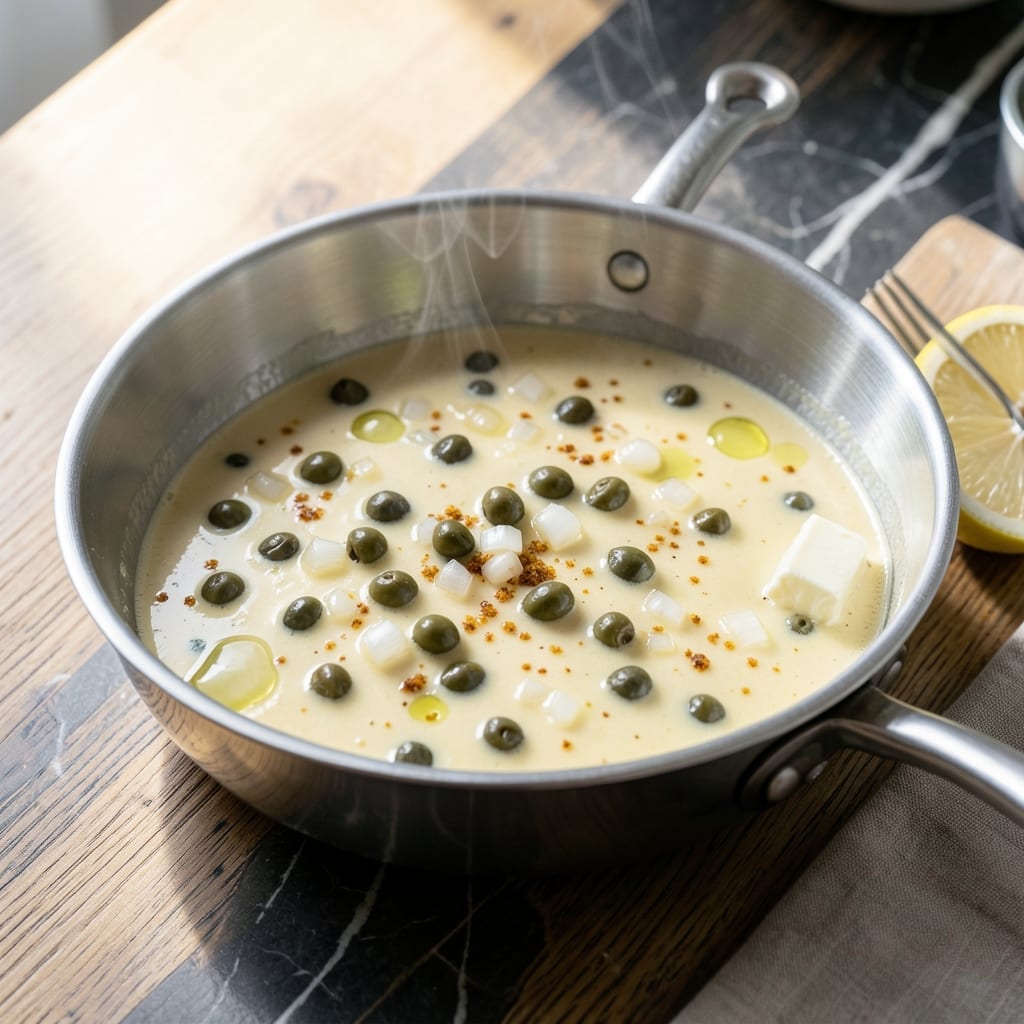
This sauce transforms simple dishes into restaurant-quality creations with minimal effort. A bright, zesty finish that elevates everything from fish to chicken to vegetables.
I developed this method after years of perfecting my French technique—balancing rich butter with tangy lemon and briny capers. The result is a velvety sauce that clings beautifully to proteins and vegetables alike.
The secret lies in emulsifying the butter properly to create a smooth, luxurious texture. One taste and you’ll understand why this has become my go-to finishing touch for countless meals.
Ready in 10 minutes with pantry staples, it keeps well for up to a week. Here’s how to master this versatile sauce.
Ingredients for Lemon Butter Caper Sauce
Nine ingredients transform into a velvety, bright finish for any dish.
| Ingredient | Amount | Notes |
|---|---|---|
| Unsalted Butter 🧈 | ½ cup | Cold, cubed for emulsification |
| Fresh Lemon Juice 🍋 | ¼ cup | About 2-3 large lemons |
| Capers 🌿 | 2 tbsp | Drained and rinsed |
| Shallots 🧅 | 2 tbsp | Finely minced |
| White Wine 🍷 | ¼ cup | Dry variety preferred |
| Dijon Mustard 🟡 | 1 tsp | Smooth, not whole grain |
| Heavy Cream 🥛 | 2 tbsp | Optional for extra richness |
| Kosher Salt 🧂 | ½ tsp | Diamond Crystal preferred |
| Freshly Ground White Pepper 🌶️ | ¼ tsp | For subtle heat |
[recipe_ingredient_scaler]
The butter is non-negotiable here—European-style unsalted has the fat content you need for proper emulsification. Plugrá or Kerrygold are my go-tos, but any high-fat butter works. Capers? Look for the non-pasteurized ones in brine (not vinegar) at Whole Foods or a good Italian market. They’ve got that punchy, briny pop that makes this sauce sing. Shallots add a gentle sweetness—don’t sub in regular onions, they’re too harsh.
No white wine? Dry vermouth is a perfect substitute—it’s basically wine that won’t go bad. Out of capers? Chopped green olives at half the amount get you close. Dijon mustard not in the fridge? Whole grain works too (just strain it if you want it smooth). The cream is optional but adds this silky depth—skip it for a lighter version, or use a splash of the pasta water if you’re tossing this with noodles.
This keeps for up to 1 week in the fridge, but it’s best the day you make it. The emulsion might separate—just whisk it back together. Freezing? Not ideal, but if you must, do it without the butter and add that fresh when you reheat. Always bring it to room temp before using.
Why You’ll Love This Recipe
- 5-Minute Magic: I can have this sauce ready before the pasta finishes boiling—just melt, stir, and done.
- Bright & Zesty: That first hit of tangy lemon and briny capers with the rich butter? It’s the flavor I crave every time.
- Dinner Saver: I drizzle it over fish, chicken, or even roasted veggies—same sauce, totally different meals.
- Pantry Hero: Between us, I always have the ingredients on hand, and it feels fancy without the price tag.
Step-by-Step Instructions for Lemon Butter Caper Sauce
Here’s the method I use to create that restaurant-quality sauce with perfect emulsification every time.
Step 1: Sauté Shallots Until Translucent
Heat a medium saucepan over medium heat and add 2 tbsp Shallots. Cook for 2-3 minutes, stirring frequently, until they become translucent and just begin to soften. You don’t want them to brown—just to lose their raw edge.
This gentle start builds the flavor foundation without overpowering the delicate lemon and caper notes. Watch closely; shallots can go from perfect to burnt in seconds. The moment they turn glassy, they’re ready for the next step.
Step 2: Deglaze with White Wine and Reduce
Pour in 0.25 cup White Wine and scrape up any browned bits from the bottom of the pan with a wooden spoon. Let the mixture simmer for 3-4 minutes until it reduces by about half. You’ll see the liquid go from pale to slightly syrupy.
This reduction concentrates the wine’s acidity and creates depth. The alcohol needs to cook off completely, so don’t rush this step—your sauce should smell aromatic but not boozy. The reduced wine will mingle beautifully with the upcoming lemon juice.
Step 3: Emulsify with Cold Butter
Reduce heat to low and whisk in 1 tsp Dijon Mustard until fully incorporated. Then, add 0.5 cup Unsalted Butter one cube at a time, whisking constantly until each piece melts and the sauce begins to thicken and look silky.
Here’s the thing—the butter must be cold for proper emulsification. If it’s too warm, the sauce will break. Keep the heat gentle and don’t add the next cube until the previous one is fully incorporated. You’re aiming for a glossy, velvety texture that coats the back of a spoon.
Step 4: Finish with Lemon and Seasonings
Remove the pan from heat and stir in 0.25 cup Fresh Lemon Juice, 2 tbsp Capers, 0.5 tsp Kosher Salt, and 0.25 tsp Freshly Ground White Pepper. The sauce will tighten slightly as the cold lemon hits the warm emulsion.
Taste and adjust the seasoning if needed, then stir in 2 tbsp Heavy Cream for a richer finish. The capers should be evenly distributed, and the sauce should have a bright, tangy flavor with a subtle creamy undertone. If it’s too thick, whisk in a splash of warm water to reach your desired consistency.
Pro Tips For Making Lemon Butter Caper Sauce
- Lower the Heat: After burning my first two batches, I learned to keep the sauce at a gentle simmer—high heat turns butter bitter and breaks the emulsion.
- Rinse the Capers: Sounds tedious, but rinsing capers under cold water removes excess salt that can overpower the lemon and shallots.
- Deglaze First: Pour the white wine into the pan while it’s still hot to lift all those browned shallot bits—this adds depth you can’t get otherwise.
- Finish with Cold Butter: I was skeptical until I tried it: whisking in cold butter at the end makes the sauce silkier and helps it cling to fish or chicken.
Best Sauces and Condiments for This Recipe
Classic Pairings
This sauce sings over delicate pan-seared halibut or grilled salmon. The bright acidity cuts through the richness of the fish, while the capers add a briny depth that complements ocean flavors perfectly. I serve it with roasted asparagus on the side. 💫
Poultry Perfection
Drizzle over poached chicken breasts or roasted turkey cutlets for an instant upgrade. The lemon brightens the meat, and the butter creates a luxurious coating. For a complete meal, pair with wild rice pilaf or steamed green beans.
Vegetable Elevation
Toss with steamed broccoli, sautéed spinach, or roasted Brussels sprouts. The sauce transforms simple veggies into restaurant-worthy sides. I particularly love it with spring peas and carrots for a fresh, vibrant dish.
Pasta Possibilities
Use as a light sauce for linguine or fettuccine. Add 1-2 tbsp pasta water to loosen the emulsion, then toss with fresh herbs like parsley or chives. A sprinkle of Parmesan cheese finishes it beautifully.
Breakfast Upgrade
Spoon over scrambled eggs or avocado toast for a brunch treat. The tangy capers wake up the flavors, and the butter adds richness. I also love it drizzled on smoked salmon bagels instead of cream cheese. ✨
Dipping Sauce
Serve as a dip for crudités, grilled bread, or steamed artichokes. The bold flavors make it an excellent companion to mild vegetables or crusty bread. Thin with a splash of white wine if needed for dipping consistency.
Nutrition Facts
Frequently Asked Questions
Can I make this sauce ahead of time?
Yes, but it’s best fresh. Store in an airtight container in the fridge for up to 1 week. Reheat gently over low heat, whisking constantly to re-emulsify.
What can I use instead of capers?
Try chopped green olives or cornichons for similar briny flavor. Use half the amount as they can be saltier. The texture will differ slightly but the tangy kick remains.
How do I fix a broken sauce?
If it separates, place the pan in an ice bath and whisk vigorously. Alternatively, blend in 1 tsp cold water or extra lemon juice to bring it back together.
Is this sauce suitable for vegetarians?
All ingredients are vegetarian-friendly. Just ensure your white wine uses vegetarian fining agents if that’s a concern.

Trained in classic French technique but raised on slow-cooked ribs and spicy rubs, she blends culinary skill with smoke and soul.
- Recipe for Boneless Pork Chops in Cast Iron Skillet: Sear and Baste to Juicy Perfection - October 3, 2026
- Recipe for Boneless Cross Rib Roast: Slow-Roasted Beef with Herb Crust - October 3, 2026
- Hamburgers in Sauce Recipe Crock Pot: Slow-Cooked Savory Delight - October 3, 2026