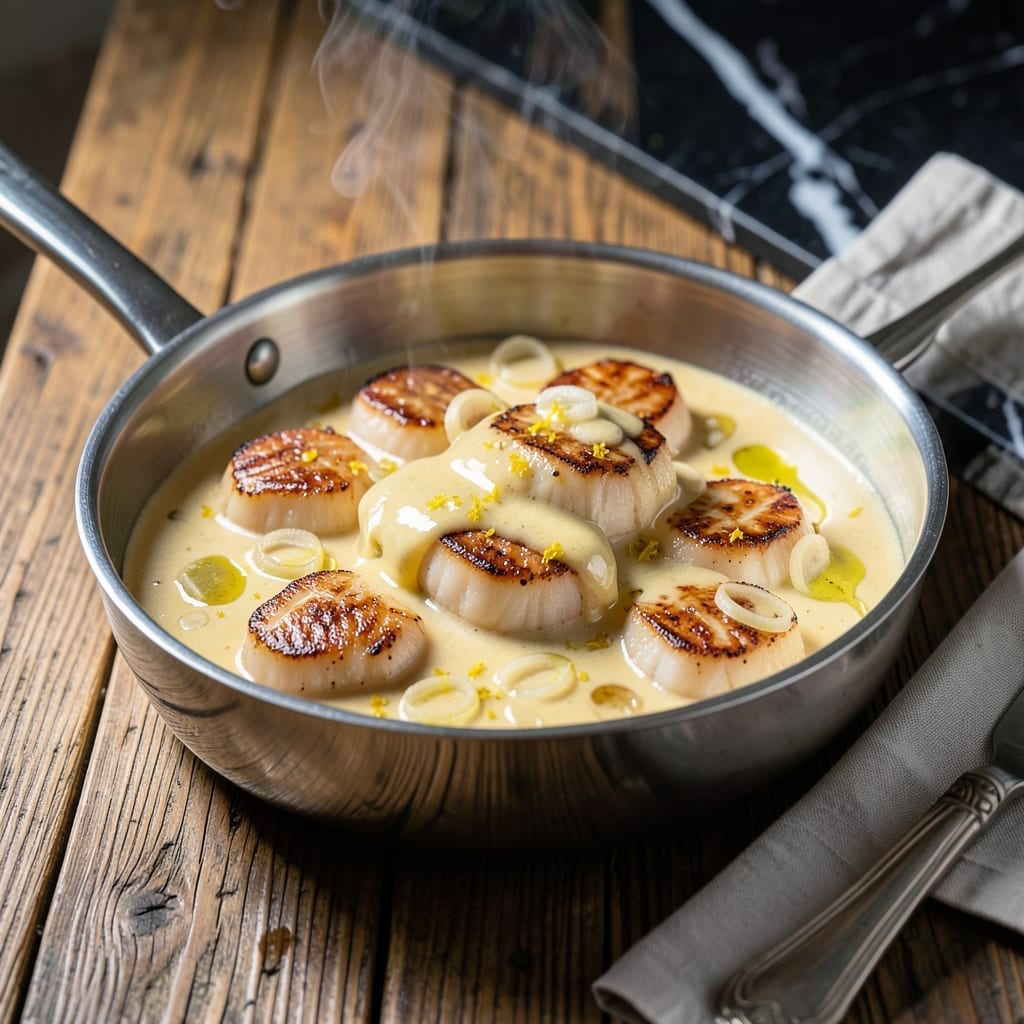
This silky sauce transforms ordinary dishes into restaurant-quality creations with minimal effort. A perfect balance of bright citrus, rich wine, and velvety butter creates an emulsion that clings beautifully to seafood, chicken, or vegetables.
The secret lies in reducing the Chardonnay first to concentrate its flavor before whisking in cold butter. This technique ensures a stable, creamy sauce that won’t separate, even when reheated gently.
You’ll achieve a luxurious texture that coats the back of a spoon, with layers of tangy lemon and buttery richness. The wine adds depth without overpowering, making it versatile for countless dishes.
Ready in 15 minutes, this sauce elevates everything from grilled fish to roasted asparagus. Store in the fridge for up to three days.
Ingredients for Lemon Chardonnay Butter Sauce
Nine ingredients create this silky, wine-infused sauce that elevates any dish instantly.
| Ingredient | Amount | Notes |
|---|---|---|
| Chardonnay Wine 🍷 | 1 cup | Dry white wine preferred |
| Unsalted Butter 🧈 | ¾ cup | Cold, cut into cubes |
| Fresh Lemon Juice 🍋 | ¼ cup | About 2-3 lemons |
| Lemon Zest 🍋 | 1 tbsp | Finely grated from 1 lemon |
| Shallots 🧅 | 2 whole | Finely minced |
| Garlic Cloves 🧄 | 2 cloves | Minced or pressed |
| Heavy Cream 🥛 | ¼ cup | Optional for extra richness |
| Kosher Salt 🧂 | ½ tsp | Adjust to taste |
| White Pepper 🌶️ | ¼ tsp | Freshly ground preferred |
| Fresh Parsley 🌿 | 1 tbsp | Finely chopped for garnish |
[recipe_ingredient_scaler]
The wine is non-negotiable here. Dry Chardonnay from California or Burgundy works best—avoid anything too oaky or sweet. Trader Joe’s Charles Shaw is a budget-friendly pick that doesn’t skimp on quality. For the butter, Plugrá or Kerrygold give that perfect creamy base. Shallots add a subtle sweetness without overpowering (skip the onions—they’re too sharp). Always zest the lemon before juicing it.
No Chardonnay? Sauvignon Blanc or Pinot Grigio will work in a pinch. For a non-alcoholic version, white grape juice reduced with a splash of white wine vinegar mimics the acidity. Heavy cream is optional but adds body and stability. If you’re out of shallots, yellow onion at half the amount works. Fresh parsley can be swapped for chives or tarragon for a different herbal note.
This sauce keeps in the fridge for up to 3 days—store in an airtight container. Reheat gently over low heat, whisking constantly to prevent separation. For longer storage, freeze for up to 1 month (though the texture may change slightly upon thawing).
Why You’ll Love This Recipe
- I’ll be real: this sauce makes weeknight chicken feel like a restaurant meal, but I’ve also served it at fancy dinners.
- Five Ingredient Magic: Honestly, I just dump Chardonnay, butter, lemon, zest, and shallots in a pan—no fuss, no fancy steps.
- Bright & Zesty: That first hit of lemon with the buttery Chardonnay reduction? Ridiculously good on everything from fish to pasta.
- Dinner Party Hero: I’ll be real: this sauce makes weeknight chicken feel like a restaurant meal, but I’ve also served it at fancy dinners.
Step-by-Step Instructions for Lemon Chardonnay Butter Sauce
Master this emulsion technique and you’ll create a luxurious, velvety sauce that elevates any dish.
Step 1: Sauté Aromatics for Flavor Foundation
Heat a medium saucepan over medium heat. Add 2 whole Shallots and cook for 3-4 minutes until translucent and fragrant. I find that minced shallots release their sweetness more effectively than whole pieces, creating a subtle depth that anchors the sauce.
Add 2 cloves Garlic Cloves and cook for an additional 30 seconds, stirring constantly to prevent burning. The garlic should become aromatic but not brown—this preserves its delicate flavor without introducing bitterness that could overpower the sauce.
Step 2: Reduce Wine for Concentrated Flavor
Pour in the 1 cup Chardonnay Wine and increase heat to medium-high. Simmer for 8-10 minutes until the liquid reduces by half and develops a rich, syrupy consistency. The alcohol will cook off, leaving behind a concentrated flavor base that complements the butter.
Watch for visual cues: the wine will go from a pale straw color to a deeper amber as it reduces. You’ll know it’s ready when small bubbles form at the edges and the aroma shifts from sharp to mellow and slightly sweet.
Step 3: Emulsify Butter and Cream for Velvety Texture
Reduce heat to low and add the 0.75 cup Unsalted Butter one cube at a time, whisking constantly until each piece melts completely before adding the next. This gradual incorporation creates a stable emulsion that won’t separate.
Once all butter is incorporated, pour in the 0.25 cup Heavy Cream while continuing to whisk. The sauce will thicken slightly and take on a glossy appearance. I maintain the low heat throughout this process to prevent the sauce from breaking or becoming greasy.
Step 4: Incorporate Citrus and Seasonings
Add the 0.25 cup Fresh Lemon Juice, 1 tbsp Lemon Zest, 0.5 tsp Kosher Salt, and 0.25 tsp White Pepper. Whisk vigorously for 30 seconds to fully integrate these elements. The lemon juice will brighten the sauce, while the zest adds a subtle floral note.
The sauce should now have a balanced flavor profile: rich from the butter, tangy from the lemon, and slightly sweet from the reduced wine. Taste and adjust seasoning if needed, though I find the specified amounts create the perfect harmony.
Step 5: Finish and Serve with Fresh Herbs
Remove the sauce from heat and stir in the 1 tbsp Fresh Parsley. The residual heat will gently wilt the parsley, releasing its fresh, green notes without cooking it completely. This final touch adds both color and a clean, herbal contrast to the rich sauce.
Serve immediately while the sauce is hot and at its most fluid. The emulsion is most stable when fresh, so I recommend using it right away. If you must hold it, keep it in a thermos or over a double boiler on very low heat, stirring occasionally to maintain the emulsion.
Pro Tips For Making Lemon Chardonnay Butter Sauce
- Reduce the Wine First: Simmer the Chardonnay until it’s reduced by half before adding butter—this burns off the alcohol and concentrates the flavor so it doesn’t taste raw or thin.
- Use Cold Butter: Add ice-cold, cubed unsalted butter off the heat, whisking constantly. I learned this the hard way—hot pan + cold butter creates a silky emulsion instead of a greasy split.
- Zest Before Juicing: Always zest the lemon before cutting it for juice. Sounds obvious, but after ruining a few lemons by juicing first, I finally got into this habit.
- Fine Dice the Shallots: Chop shallots into tiny, even pieces so they melt into the sauce. Big chunks don’t soften in time and leave an awkward texture—ask me how I know.
Best Sauces and Condiments for These Flavors
Seafood Pairings
This sauce shines brightest with delicate white fish like halibut or cod. The citrus cuts through the richness while the butter complements the flaky texture. I drizzle 2 tbsp per fillet just before serving. 💡
Poultry Matches
For chicken, it transforms simple grilled breasts into a gourmet experience. Brush ¼ cup over 4 chicken breasts during the last 5 minutes of cooking. The sauce caramelizes slightly, creating a beautiful glaze.
Vegetable Enhancements
Steamed or roasted asparagus becomes extraordinary with this sauce. Toss 1 lb asparagus with 3 tbsp while still hot—the heat helps the sauce cling perfectly. Add toasted almonds for crunch.
Pasta Applications
Toss with 12 oz fettuccine and ½ cup sauce for a quick, creamy pasta dish. The wine-infused butter coats each strand beautifully. Add grated Parmesan at the table for extra depth.
Egg Dishes
Elevate your brunch by spooning 1 tbsp over poached eggs or a veggie omelet. The sauce’s acidity balances the richness of the eggs. I love it with sourdough toast for dipping. ✨
Sandwich Boost
Use as a spread for grilled cheese or seafood sandwiches. The sauce adds moisture and complexity. For a lobster roll, mix 2 tbsp into the lobster meat before assembling.
Nutrition Facts
Frequently Asked Questions
Can I use a different white wine?
Yes, a dry Sauvignon Blanc or Pinot Grigio works well as a substitute. The key is choosing a crisp, unoaked wine to maintain the bright flavor profile. Avoid sweet varieties as they’ll throw off the balance.
Why did my sauce separate?
This usually happens if the heat was too high or the butter was added too quickly. To fix, remove from heat and whisk vigorously while adding a splash of cold water to re-emulsify. Keep heat at low next time.
How do I make it ahead?
Prepare the sauce up to 3 days in advance. Store in an airtight container in the fridge. Reheat gently over low heat, whisking constantly to maintain the smooth texture.

Trained in classic French technique but raised on slow-cooked ribs and spicy rubs, she blends culinary skill with smoke and soul.
- Recipe for Boneless Pork Chops in Cast Iron Skillet: Sear and Baste to Juicy Perfection - October 3, 2026
- Recipe for Boneless Cross Rib Roast: Slow-Roasted Beef with Herb Crust - October 3, 2026
- Hamburgers in Sauce Recipe Crock Pot: Slow-Cooked Savory Delight - October 3, 2026