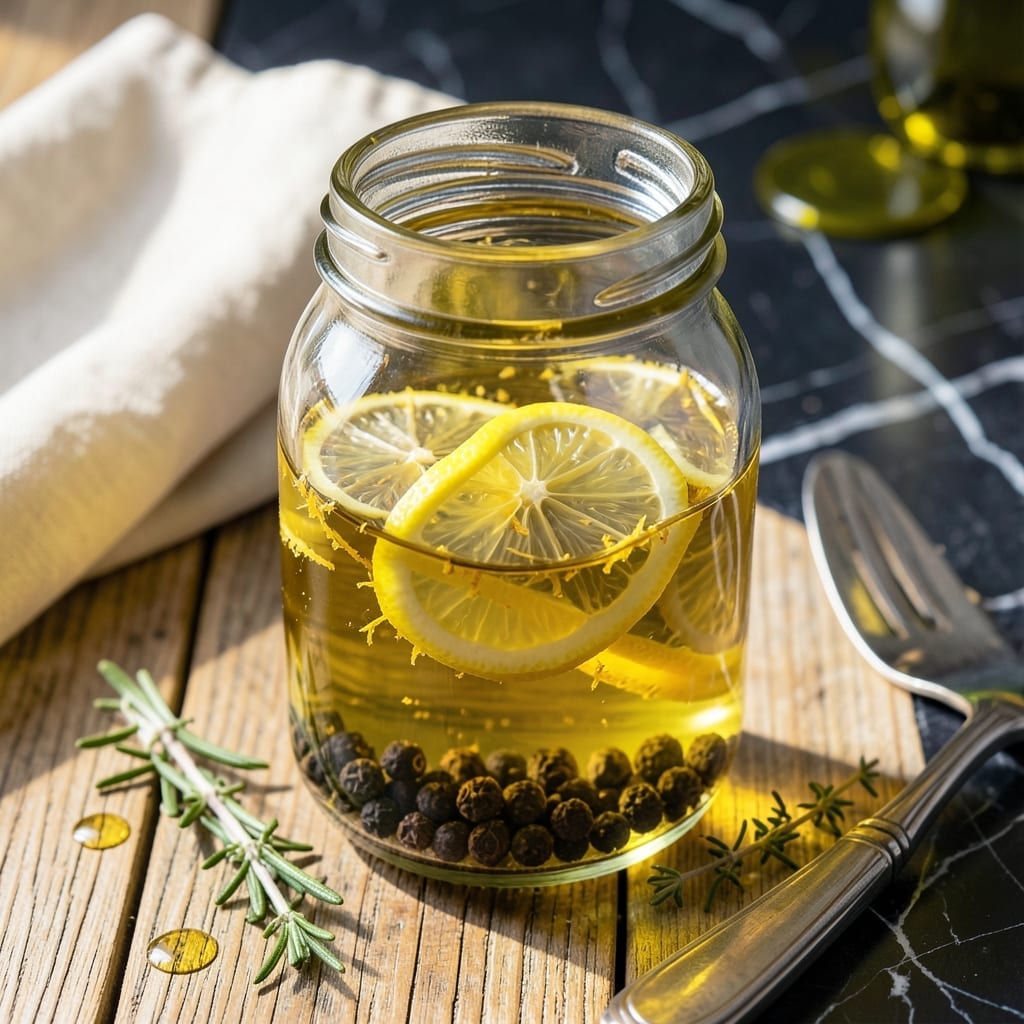
This lemon oil delivers a bright, citrusy punch to elevate any dish. I’ve perfected this simple infusion method to capture pure lemon essence without bitterness.
With just two ingredients and 10 minutes of active time, you’ll have a versatile condiment that transforms salads, seafood, and vegetables into restaurant-quality creations.
Ingredients for Lemon Oil Recipe for Food
Six simple ingredients create this vibrant citrus oil for gourmet dishes.
| Ingredient | Amount | Notes |
|---|---|---|
| Extra-Virgin Olive Oil 🫒 | 1 cup | High quality, cold-pressed preferred |
| Lemon Zest 🍋 | ¼ cup | Finely grated, organic lemons ideal |
| Fresh Lemon Juice 🍋 | 2 tbsp | Newly squeezed for brightness |
| Dried Rosemary 🌿 | 1 tsp | Crushed to release oils |
| Dried Thyme 🍃 | 1 tsp | Optional for depth |
| Black Peppercorns 🌶️ | ½ tsp | Lightly crushed |
[recipe_ingredient_scaler]
The olive oil base is critical here. California Olive Ranch or Colavita offer excellent cold-pressed options at most supermarkets. For the lemons, organic is worth the splurge—conventional often has wax that resists zesting. Look for bright yellow fruit with slightly textured skin, a sign of high oil content. I source mine from Whole Foods when local citrus isn’t in season.
No fresh lemons? Bottled lemon juice at half the amount works in a pinch (though zest is non-negotiable for true lemon oil). Swap rosemary for dried oregano or basil if you prefer a different herb profile. The peppercorns can be omitted, but they add a subtle warmth. For a stronger citrus punch, add orange or lime zest alongside the lemon.
Store in a dark glass bottle at room temperature. Keeps its vibrant flavor for 2-3 weeks. For longer storage, refrigerate for up to 3 months—the oil may solidify slightly but will return to liquid at room temperature.
Why You’ll Love This Recipe
- 5-Minute Magic: I just stir olive oil with lemon zest and herbs—no cooking, no fuss.
- Bright & Zesty: That fresh lemon juice and rosemary combo hits every dish with a sunny punch.
- Drizzle on Everything: I use it on salads, fish, even bread. Honestly, it’s my kitchen multitasker.
- Stays Fresh: A jar lasts weeks in the fridge, so I always have flavor ready.
Step-by-Step Instructions for Lemon Oil for Food
This method ensures maximum flavor infusion while preserving the oil’s delicate qualities.
Step 1: Prepare and Crush the Aromatics
Lightly crush the 0.5 tsp black peppercorns using a mortar and pestle or the flat side of a chef’s knife. You want to break the outer shell without pulverizing them—this releases their essential oils without creating a bitter powder.
In the same mortar, add the 1 tsp dried rosemary and 1 tsp dried thyme, crushing gently to bruise the herbs and activate their aromatic compounds. These crushed aromatics will infuse the oil more effectively than whole spices.
Step 2: Combine All Ingredients in a Clean Jar
Transfer the crushed spices to a clean, dry 16-ounce glass jar with a tight-fitting lid. Add the 0.25 cup lemon zest—ensure it’s finely grated and free of any bitter white pith. The bright yellow zest contains the most concentrated citrus oils.
Pour in the 1 cup extra-virgin olive oil, followed by the 2 tbsp fresh lemon juice. The juice adds a subtle acidity that brightens the infusion, while the oil acts as the carrier for all the flavors. Stir gently with a clean spoon to combine.
Step 3: Infuse in a Warm Environment
Place the jar in a warm, sunny windowsill or on a counter near (but not on) a gentle heat source. The ideal temperature for infusion is between 70-80°F. Avoid direct high heat, as it can degrade the oil’s quality and create off-flavors.
Let the mixture infuse for 48 hours, stirring or shaking the jar gently once daily. You’ll notice the oil gradually taking on a pale golden hue as the lemon and herbs release their essence. The zest will begin to lose its vibrancy, signaling the flavors are transferring.
Step 4: Strain and Store Properly
After 48 hours, line a fine-mesh strainer with cheesecloth and place it over a clean glass bottle or jar. Pour the infused oil through the strainer to remove all solids. Press the zest and herbs gently with a spoon to extract any remaining oil, but avoid squeezing too hard, as it can introduce bitterness.
Seal the strained lemon oil in an airtight container and store it in a cool, dark place. For maximum freshness, use within 1 month. The oil should have a bright, citrusy aroma with herbal undertones and a clean, golden appearance.
Pro Tips For Making Lemon Oil Recipe For Food
- Warm the Oil: Gently heat the olive oil for 1-2 minutes before adding herbs—just until shimmering, not smoking. I learned this the hard way after burning rosemary in too-hot oil.
- Zest Before Juicing: Always zest the lemon first, then juice it. Sounds obvious, but I’ve ruined a few lemons by juicing them first and ending up with a slippery zesting mess.
- Skip the Fresh Herbs: Dried rosemary and thyme actually work better here—they infuse the oil more consistently and won’t introduce excess moisture like fresh herbs can.
- Strain and Store: After infusing, strain out the zest and herbs within an hour to prevent bitterness. Store in a dark bottle—it’ll keep for 2 weeks in the fridge.
Flavor Customization for lemon oil recipe for food
🔥 Make it Spicier
For a fiery kick, add 2 tsp of cayenne pepper or 1 tsp of red pepper flakes to your lemon oil. This adjustment amplifies the heat while balancing the citrusy brightness, perfect for spicy marinades or drizzling over grilled meats. The warmth of the spices complements the zesty lemon, creating a bold flavor profile.
🍯 Add Sweetness
Balance the tartness with 1 tbsp of honey or 1 tsp of maple syrup. This subtle sweetness rounds out the acidity, making the oil ideal for salad dressings or glazes. The natural sugars enhance the lemon’s vibrancy without overpowering it, adding depth to both savory and sweet dishes.
🍋 Tangy Twist
Double down on the citrus by mixing in 1 tsp of lime or orange zest. This boosts the tangy notes, giving the oil a more complex, layered citrus flavor. It works wonderfully in seafood dishes or as a finishing touch for roasted vegetables, adding a refreshing pop.
🌫️ Extra Smoky
Infuse a smoky depth with ½ tsp of smoked paprika or a dash of liquid smoke. This addition pairs beautifully with grilled or barbecued foods, as the smokiness contrasts the lemon’s brightness. It’s a great way to add a rustic, charred flavor to your dishes.
🧂 Umami Boost
For a savory richness, stir in 1 tsp of soy sauce or ½ tsp of miso paste. These umami-packed ingredients deepen the flavor, making the oil perfect for stir-fries, noodles, or as a marinade for tofu and meats. The saltiness enhances the lemon’s acidity, creating a well-rounded taste.
Nutrition Facts

Trained in classic French technique but raised on slow-cooked ribs and spicy rubs, she blends culinary skill with smoke and soul.
- Recipe for Boneless Pork Chops in Cast Iron Skillet: Sear and Baste to Juicy Perfection - October 3, 2026
- Recipe for Boneless Cross Rib Roast: Slow-Roasted Beef with Herb Crust - October 3, 2026
- Hamburgers in Sauce Recipe Crock Pot: Slow-Cooked Savory Delight - October 3, 2026