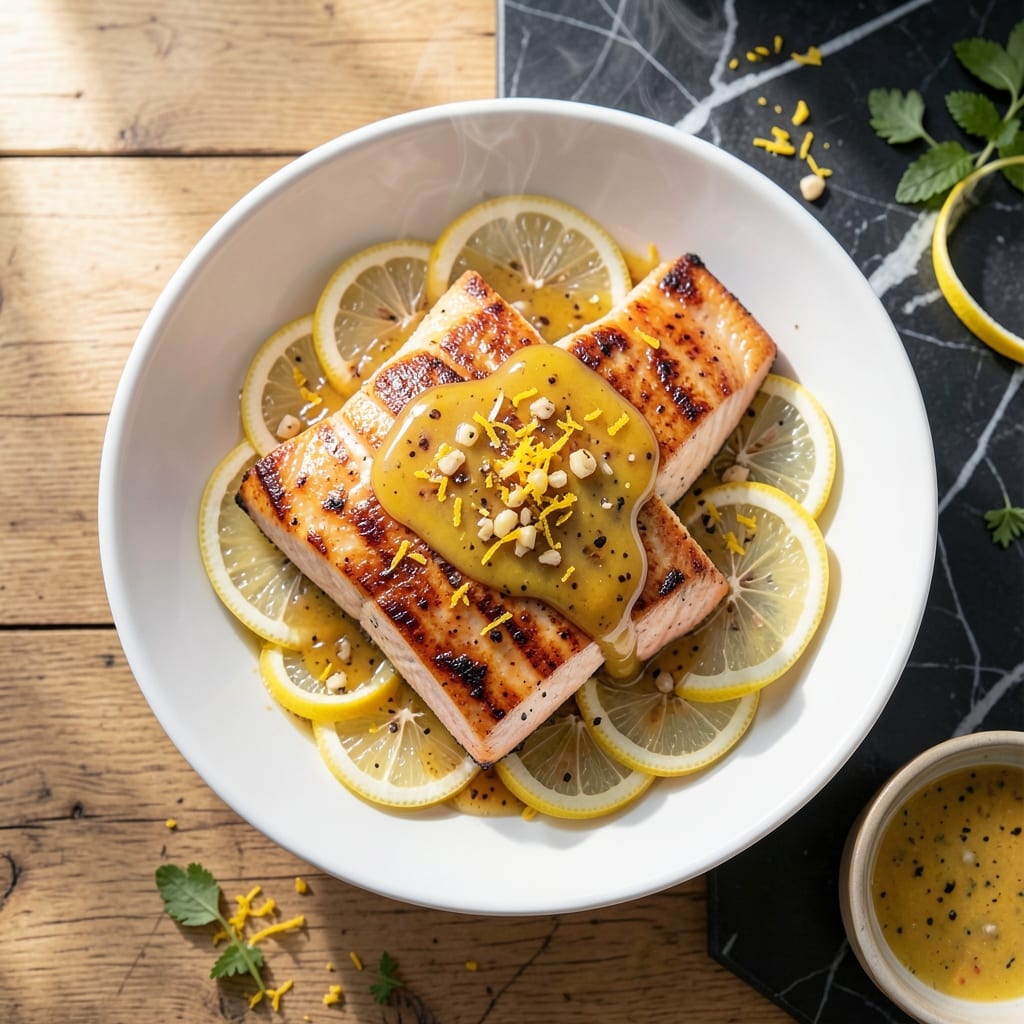
This oven-baked salmon delivers flaky, tender perfection with minimal effort. The secret lies in a bright citrus glaze that enhances the fish’s natural richness without overpowering it.
I developed this method after years of testing, focusing on precise timing and temperature to ensure the salmon cooks evenly. The lemon glaze caramelizes slightly in the oven, creating a delicate crust that seals in moisture.
The result is a dish that looks impressive but requires no advanced techniques. Each bite offers the ideal balance of zesty citrus and buttery salmon, with that coveted flaky texture that falls apart at the touch of a fork.
Perfect for weeknight dinners or elegant entertaining, this recipe proves that restaurant-quality seafood can be achieved in any home kitchen.
Ingredients for Lemon Salmon Recipe Oven
Fresh salmon and bright citrus come together for this effortless oven-baked dish with restaurant-quality results.
| Ingredient | Amount | Notes |
|---|---|---|
| Salmon Fillets 🐟 | 1 ½ lb | Skin-on or skinless, center-cut |
| Lemon Juice 🍋 | ¼ cup | Freshly squeezed preferred |
| Lemon Zest 🍋 | 1 tbsp | Finely grated from fresh lemons |
| Honey 🍯 | 2 tbsp | Or maple syrup for vegan option |
| Dijon Mustard 🟡 | 1 tbsp | Smooth, not whole grain |
| Garlic Cloves 🧄 | 3 cloves | Minced finely for even distribution |
| Olive Oil 🫒 | 2 tbsp | Extra-virgin for best flavor |
| Salt 🧂 | ¾ tsp | Kosher or sea salt preferred |
| Black Pepper 🌶️ | ½ tsp | Freshly ground for best taste |
| Fresh Dill 🌿 | 2 tbsp | Chopped, or sub dried dill |
| Fresh Parsley 🌿 | 2 tbsp | Chopped for garnish |
| Shallot 🧅 | 1 whole | Finely minced for depth |
[recipe_ingredient_scaler]
The salmon quality is non-negotiable. Wild-caught sockeye or coho from Whole Foods or Trader Joe’s deliver the best texture and flavor. Look for fillets with vibrant color and no fishy odor (a sign of freshness). Center-cut pieces ensure even cooking—avoid the tail end, which tapers and dries out. If buying frozen, thaw overnight in the fridge for optimal results.
No honey? Maple syrup or agave work perfectly. Fresh dill not available? Dried dill at one-third the amount or substitute fresh tarragon. The mustard can be yellow in a pinch, but Dijon’s sharpness balances the sweetness better. For extra brightness, add a pinch of red pepper flakes (one-eighth teaspoon does the trick).
This keeps in the fridge for 2-3 days. Store in an airtight container—reheat gently to preserve the flaky texture. For make-ahead, prep the glaze separately and brush it on just before baking. Freezing cooked salmon isn’t recommended (it loses texture).
Why You’ll Love This Recipe
- One Pan Wonder: I just toss the salmon in honey, Dijon, and lemon zest, pop it in the oven, and that’s it. One pan, minimal mess.
- Sweet-Tangy Magic: The honey and lemon juice balance the Dijon’s kick—bright, rich, and just a little sticky.
- Meal Prep Hero: I make a double batch on Sunday and it tastes just as good reheated for lunches. Honestly, it’s my workweek lifesaver.
- Budget-Friendly Luxe: Salmon feels fancy, but this recipe stretches a few fillets into a satisfying dinner. Between us, it’s my go-to for impressing guests without breaking the bank.
Step-by-Step Instructions for Lemon Salmon Oven
This method ensures perfectly flaky salmon with a bright, glossy citrus glaze every time.
Step 1: Prepare the Lemon-Herb Glaze
In a small bowl, whisk together the 0.25 cup lemon juice, 1 tbsp lemon zest, 2 tbsp honey, 1 tbsp Dijon mustard, minced 3 cloves garlic cloves, and minced 1 whole shallot until smooth. The honey and mustard will create a thick base that clings beautifully to the salmon.
Taste the mixture—you should detect a bright citrus tang balanced by sweetness. If it’s too sharp, add a touch more honey. This glaze will transform into a sticky, caramelized coating as it bakes.
Step 2: Season and Coat the Salmon
Pat the 1.5 lb salmon fillets dry with paper towels to ensure the skin (if on) crisps properly. Season both sides evenly with 0.75 tsp salt and 0.5 tsp black pepper. Place the fillets skin-side down on a parchment-lined baking sheet.
Drizzle 2 tbsp olive oil over the salmon, then brush the glaze generously on top. Sprinkle the 2 tbsp fresh dill evenly over the fillets, pressing lightly so it adheres. This layering ensures every bite is infused with flavor.
Step 3: Bake Until Flaky and Glazed
Preheat the oven to 400°F. Bake the salmon on the middle rack for 12-15 minutes, depending on thickness. You’re aiming for an internal temperature of 145°F in the thickest part, but the best test is visual: the flesh should flake easily with a fork and appear opaque.
The glaze will bubble and darken slightly at the edges—this caramelization is what gives it that restaurant-quality finish. Avoid overbaking; residual heat will continue cooking the salmon after it’s removed from the oven.
Step 4: Rest and Garnish
Let the salmon rest for 5 minutes on the baking sheet. This allows the juices to redistribute, keeping the fillets moist and tender. The glaze will thicken slightly as it cools, creating a glossy, spoon-coating consistency.
Sprinkle with the 2 tbsp fresh parsley just before serving for a pop of color and freshness. Serve immediately while the salmon is still warm for the best texture and flavor.
Pro Tips For Making Lemon Salmon Recipe Oven
- Preheat the Oven: I learned this the hard way—start with a 400°F oven to get that perfect balance of crispy edges and tender inside. Anything lower and the salmon steams instead of caramelizing.
- Pat Dry the Salmon: Sounds obvious, but skipping this step leaves you with soggy skin. A quick pat with paper towels guarantees that golden crust when it hits the oven.
- Watch the Glaze: Honey burns fast, so brush on the lemon-honey-mustard mix only in the last 5-7 minutes of baking. I ruined two batches before figuring this out.
- Use Fresh Lemons: Bottled juice works in a pinch, but fresh zest and juice make a real difference in brightness. My grandmother swore by this, and she was right.
Pro Cooking Tips for lemon salmon recipe oven
Oven Temperature Precision
I always preheat my oven for 15 minutes at 400°F to ensure consistent heat. This high temperature creates that perfect caramelization on the glaze while cooking the salmon through evenly. A Thermoworks Dot thermometer helps me verify the actual temperature. 🌡️
Timing by Thickness
For 1-inch thick fillets, 12-15 minutes is ideal. Thinner pieces may need just 10-12 minutes. I use the fork test: when the salmon flakes easily, it’s done. Remember, it continues cooking for 1-2 minutes after removal from the oven.
Glaze Application Tip
Brush the glaze generously but don’t let it pool around the edges. I use a silicone pastry brush for even coverage. For extra shine, I brush on additional glaze halfway through baking. This builds layers of flavor and visual appeal.
Skin Crisis Prevention
If using skin-on fillets, place them on a parchment-lined baking sheet to prevent sticking. I also drizzle a bit of olive oil under the skin. The result is crispy, not chewy, skin every time. No more lost salmon to the pan! 💡
Resting Importance
Let your salmon rest for 5 minutes before serving. This allows the muscle fibers to relax and reabsorb juices. I tent mine loosely with foil to keep it warm. The glaze will set slightly during this time, creating that perfect glossy finish.
Doneness Visual Cues
The salmon should change from translucent to opaque and flake easily. The internal temperature should reach 145°F at the thickest part. I use an instant-read thermometer for precision. Overcooked salmon loses that coveted flaky texture we all love.
Nutrition Facts
Frequently Asked Questions
What oven temperature works best?
Preheat to 400°F for ideal results. This high heat caramelizes the glaze while cooking the salmon through evenly without drying it out.
How do I know when it’s done?
Use the fork test: the flesh should flake easily and reach 145°F internally. For 1-inch thick fillets, this takes about 12-15 minutes.
Can I use frozen salmon?
Yes, but thaw it overnight in the fridge first. Pat it very dry before seasoning to ensure the glaze adheres and the skin crisps properly.
What if I don’t have fresh dill?
Use 1 tsp dried dill or substitute fresh tarragon. The flavor will differ slightly but still complement the lemon beautifully.

Trained in classic French technique but raised on slow-cooked ribs and spicy rubs, she blends culinary skill with smoke and soul.
- Recipe for Curried Lamb Chops: Spice-Rubbed and Pan-Seared to Succulence - October 3, 2026
- Recipe for Boneless Leg of Lamb Roast in the Oven: Herb-Crusted and Rosy Pink Inside - October 3, 2026
- Meat Loaf Recipe With Beef And Pork: Homestyle Blend With Rich Gravy - October 3, 2026