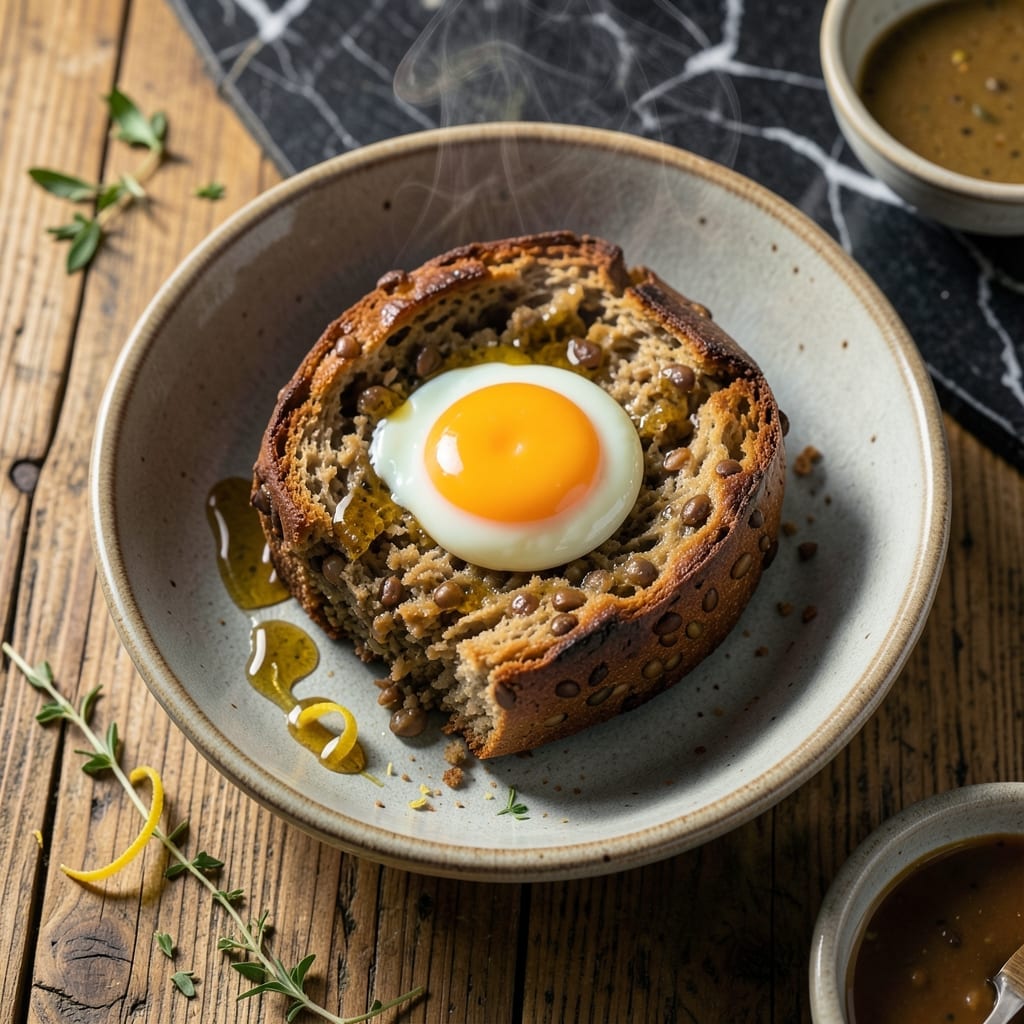
This nutrient-packed loaf redefines what bread can be, combining protein-rich lentils and eggs for a satisfying, wholesome bake. I developed this recipe to prove that healthy can also mean deliciously hearty.
The process is straightforward yet yields impressive results. Cooked lentils blend seamlessly into the dough, while eggs provide structure and richness. The texture is surprisingly light, with a tender crumb that belies its nutritional punch.
What emerges from the oven is a golden loaf with a subtle earthy flavor and a satisfying density. It toasts beautifully and holds up well for sandwiches or as a side to soups and stews.
This bread proves that nourishing ingredients can create something truly crave-worthy. The method is simple, but the outcome feels special.
Ingredients for Lentil Bread Recipe with Egg
Simple ingredients transform into a hearty, protein-rich loaf that’s as nourishing as it is delicious.
| Ingredient | Amount | Notes |
|---|---|---|
| Brown Lentils 🌱 | 1 cup | Dry, rinsed and picked over |
| Large Eggs 🥚 | 2 whole | Room temperature for best rise |
| All-Purpose Flour 🌾 | 3 cups | Unbleached preferred for texture |
| Instant Yeast 🍞 | 2 ¼ tsp | Or one 0.25 oz package |
| Honey 🍯 | 2 tbsp | Or maple syrup for vegan option |
| Olive Oil 🫒 | ¼ cup | Extra-virgin for depth of flavor |
| Fine Sea Salt 🧂 | 1 ½ tsp | Divided for dough and topping |
| Warm Water 💧 | 1 ¼ cups | About 110°F for yeast activation |
| Unsalted Butter 🧈 | 2 tbsp | Melted for brushing finished loaf |
| Dried Oregano 🌿 | 1 tsp | Optional for flavor enhancement |
| Garlic Powder 🧄 | ½ tsp | Optional for subtle savory note |
[recipe_ingredient_scaler]
The lentils are non-negotiable for texture and protein. Green or brown lentils work best—avoid red as they turn mushy. Bob’s Red Mill is a reliable brand for consistency. Cook them until just tender (not falling apart) for optimal structure. Eggs provide lift and binding, so fresh, high-quality eggs from a trusted source make a noticeable difference in the final crumb.
No all-purpose flour? Bread flour at a 1:1 ratio adds chew, while whole wheat at half the amount (replacing some all-purpose) boosts nutrition. Out of honey? Agave or pure maple syrup works identically. The olive oil can be swapped for avocado oil if that’s your preference. For a dairy-free version, use coconut oil instead of butter for brushing.
The dough rises best in a warm, draft-free spot. Baked loaves keep at room temperature for 2-3 days or freeze for up to 3 months. Slice before freezing for easy toasting later. This bread actually improves overnight as the flavors meld (worth the wait).
Why You’ll Love This Recipe
- No Fuss Mixing: I just blend the cooked lentils with eggs and honey, then stir in flour and yeast—no fancy techniques.
- Nutty Sweetness: The brown lentils add a deep, earthy flavor that pairs perfectly with the subtle sweetness from the honey.
- Weeknight Hero: I make a double batch on Sunday and we’re set for sandwiches and toast all week. (Yes, even on a Tuesday night)
- Budget Stretch: A bag of lentils and a few pantry staples feed my family for days without breaking the bank.
Step-by-Step Instructions for Lentil Bread With Egg
Master this technique for a protein-rich loaf with perfect texture and rise every time.
Step 1: Prepare the Lentil Puree Base
Rinse and pick over the 1 cup Brown Lentils, then combine them with 1.25 cups Warm Water in a saucepan. Bring to a boil, then reduce heat to maintain a gentle simmer for 15-20 minutes until the lentils are very soft and most of the water is absorbed.
Drain any remaining water, then blend the cooked lentils with the 0.25 cup Olive Oil and 2 tbsp Honey until completely smooth. The mixture should resemble a thick batter. Let it cool to 110°F or below—this prevents the yeast from being killed by heat in the next step.
Step 2: Activate the Yeast and Combine Wet Ingredients
In a large mixing bowl, whisk the 2.25 tsp Instant Yeast into the cooled lentil puree. Add the 2 whole Large Eggs and 1 tsp Fine Sea Salt, mixing until fully incorporated. The eggs should be at room temperature to ensure even distribution throughout the dough.
The yeast will begin to activate immediately in the warm, sugary environment of the lentil mixture. You should notice small bubbles forming within 5 minutes, indicating the yeast is alive and working. This fermentation base gives the bread its lift and structure.
Step 3: Incorporate Dry Ingredients and Knead
Gradually add the 3 cups All-Purpose Flour to the wet mixture, about 1 cup at a time, stirring with a wooden spoon until a shaggy dough forms. The dough will be slightly sticky but should pull away from the sides of the bowl as you add the final cup of flour.
Turn the dough onto a lightly floured surface and knead for 8-10 minutes until smooth and elastic. The dough should spring back slowly when pressed with a finger. If using the optional flavorings, work in the 1 tsp Dried Oregano and 0.5 tsp Garlic Powder during the last 2 minutes of kneading.
Step 4: First Rise and Shape the Loaf
Place the dough in a lightly oiled bowl, cover with a damp towel, and let rise in a warm, draft-free place for 1 to 1.5 hours or until doubled in volume. The ideal rising temperature is 75-80°F—any cooler and the rise will take significantly longer.
Once risen, gently punch down the dough to release air. Shape it into a loaf and place it in a greased 9×5-inch loaf pan. Cover and let rise again for 45-60 minutes until the dough domes about 1 inch above the rim of the pan.
Step 5: Bake and Finish
Preheat oven to 375°F. Bake the loaf for 30-35 minutes until the top is deep golden brown and the internal temperature reaches 190-200°F. The bread should sound hollow when tapped on the bottom.
Remove from the pan and brush the top with 2 tbsp Unsalted Butter melted. Sprinkle with the remaining 0.5 tsp Fine Sea Salt for a finishing touch. Let cool on a wire rack for at least 20 minutes before slicing to allow the crumb to set properly.
Pro Tips For Making Lentil Bread Recipe With Egg
- Soak Lentils Overnight: I learned this the hard way—dry lentils straight into the mix make dense bread. Soak them 8-12 hours first for a lighter, more even texture.
- Warm the Honey: Cold honey seizes up the yeast. Microwave it for 10-15 seconds to loosen before mixing—your dough will rise like it means it.
- Check Egg Freshness: Old eggs won’t bind as well in this recipe. Test them in water first—if they sink, they’re good to go. Floaters go in the trash.
- Bake at 375°F: Higher heat dries it out, lower takes forever. 375°F for 30-35 minutes hits the sweet spot for a golden crust without a gummy center.
Make-Ahead Tips for This lentil bread recipe with egg
Prep Ahead Strategy
Cook and blend the 1 cup Brown Lentils up to 2 days ahead. Store the puree in an airtight container in your fridge. This saves 20 minutes on baking day and lets flavors meld. I often prep this while making dinner the night before. 💡
Overnight Rise
After kneading, place dough in a greased bowl, cover tightly, and refrigerate for 8-12 hours. The cold slows fermentation, developing deeper flavor. In the morning, let it warm on the counter for 30 minutes, then shape and proceed with the second rise.
Freeze the Dough
Shape the dough into a loaf, wrap tightly in plastic, and freeze for up to 1 month. To bake, thaw overnight in the fridge, then let rise at room temperature for 1-2 hours until doubled. Bake as usual—no one will know it was frozen! ❄️
Par-Baked Loaves
Bake the loaf for 20 minutes at 375°F, then cool completely and freeze. To serve, wrap in foil and reheat at 350°F for 15-20 minutes. Brush with melted 2 tbsp Unsalted Butter after warming.
Pre-Slice for Convenience
Once completely cooled, slice the loaf and freeze individual slices in a ziplock bag with parchment between pieces. Toast directly from frozen for 2-3 minutes in a toaster. Perfect for quick breakfasts or lunches.
Room Temperature Storage
Keep baked bread in a paper bag at room temperature for up to 3 days. The crust stays crisper than in plastic. For longer storage, wrap in foil then plastic and refrigerate for up to 1 week. 🔥
Nutrition Facts
Frequently Asked Questions
Can I use canned lentils instead of dry?
Yes, but drain and rinse them well first. Use 2.5 cups canned lentils to replace 1 cup dry. They’re softer, so blend carefully to avoid a mushy texture.
Why does the dough need to cool before adding yeast?
Yeast dies at temperatures above 120°F. Cooling the lentil puree to 110°F or below ensures the yeast stays active for a proper rise. Patience here prevents a dense loaf.
Can I make this without a loaf pan?
Shape the dough into a free-form boule or batard. Bake on a parchment-lined tray at 375°F for 25-30 minutes. The shape will be rustic but just as delicious.
How do I fix a loaf that didn’t rise properly?
Check your yeast first—it may be expired. Also, ensure your kitchen isn’t too cold; try placing the dough in a turned-off oven with a bowl of hot water for warmth. Next time, verify the 110°F temperature of the lentil puree.

Trained in classic French technique but raised on slow-cooked ribs and spicy rubs, she blends culinary skill with smoke and soul.
- Recipe for Boneless Pork Chops in Cast Iron Skillet: Sear and Baste to Juicy Perfection - October 3, 2026
- Recipe for Boneless Cross Rib Roast: Slow-Roasted Beef with Herb Crust - October 3, 2026
- Hamburgers in Sauce Recipe Crock Pot: Slow-Cooked Savory Delight - October 3, 2026