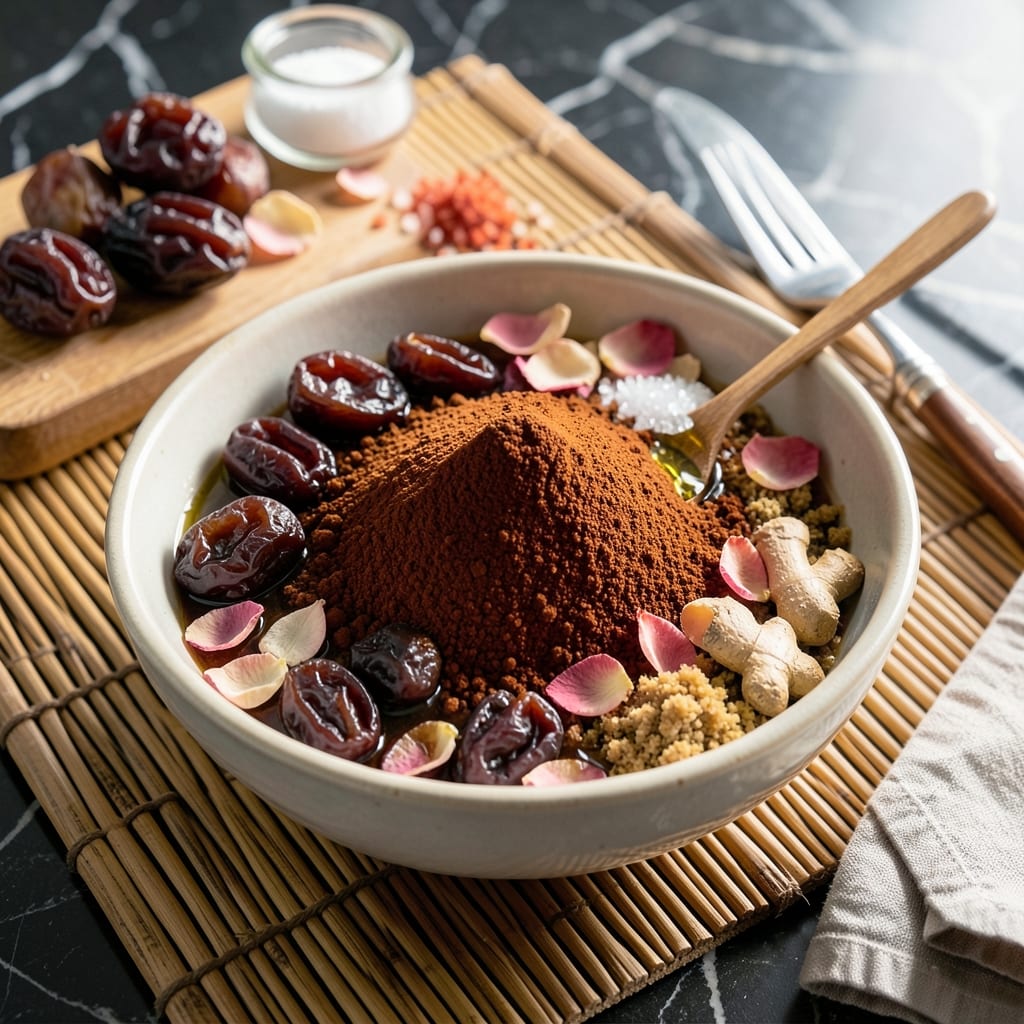
This Hawaiian condiment transforms simple snacks into something extraordinary with its signature salty-sweet flavor. I first discovered its magic during a trip to Honolulu, where it was sprinkled on everything from fresh fruit to shave ice.
The preparation is surprisingly straightforward, using dried plums as the base. A few key ingredients and a simple process create a powder that delivers complex flavor in every pinch. The balance of sweet, salty, and slightly tangy is unlike anything else.
Use it to rim cocktail glasses, dust over fresh pineapple, or mix into dips for an instant flavor boost. The versatility makes it a kitchen staple worth keeping on hand.
Once you try this, you’ll find countless ways to incorporate it into your cooking and snacking routines.
Ingredients for Li Hing Mui
Seven ingredients transform into this vibrant, tangy-sweet Hawaiian powder for endless snack upgrades.
| Ingredient | Amount | Notes |
|---|---|---|
| Dried Plums 🟣 | 1 cup | Pitted, chop before drying |
| Granulated Sugar 🍚 | ½ cup | Fine grain for even texture |
| Red Salt 🧂 | 1 tbsp | Hawaiian alaea salt preferred |
| Citric Acid 🍋 | 1 tsp | Food-grade for tang |
| Dried Rose Petals 🌹 | 2 tsp | Culinary grade, optional |
| Ground Ginger 🌿 | ½ tsp | Freshly ground for potency |
| Licorice Root Powder 🌱 | ½ tsp | Essential for authentic flavor |
[recipe_ingredient_scaler]
Dried plums are the soul here—look for unsweetened prunes at Whole Foods or Asian markets. Hawaiian alaea salt (that pink stuff) is traditional, but any flaky sea salt works if you can’t find it. The citric acid might seem niche, but it’s what gives that signature tang. Amazon or baking supply stores usually carry it. Don’t skip the licorice root powder (find it in bulk at natural food stores).
No citric acid? Lemon zest at double the amount adds brightness. Skip the rose petals if you’re not into florals. For a coarser texture, pulse everything in a food processor instead of grinding to powder. The sugar helps balance the salt and sour—coconut sugar works too, though it’ll darken the color. Want more depth? Add a pinch of five-spice powder.
Store in an airtight jar away from light. Keeps for 6-12 months if fully dried. The flavor deepens over time, so make a big batch. Use within 1 week once opened for peak freshness (it’ll clump if humid).
Why You’ll Love This Recipe
- Five Ingredients: I just dump dried plums, sugar, red salt, citric acid, and rose petals in a bowl—no fancy steps.
- Tangy Sweet Kick: That first hit of salty-sour with the floral hint from the rose petals? Ridiculously good.
- Snack or Gift: I keep a jar for movie nights and wrap extras in cellophane for friends who beg for it.
- Pantry Staple: One batch lasts me weeks, and the plums only get better the longer they sit.
Step-by-Step Instructions for Li Hing Mui
Here’s the method I’ve perfected for this iconic Hawaiian seasoning blend.
Step 1: Prepare and Dry the Plums
Begin by pitting the 1 cup Dried Plums and chopping them into small, uniform pieces. This ensures even drying and a consistent texture in your final powder. Spread the chopped plums on a parchment-lined baking sheet, making sure they’re in a single layer without overlapping.
Place them in an oven preheated to 170°F and dry for 6-8 hours, or until they’re completely dehydrated and brittle to the touch. You want them to snap cleanly when broken—any moisture left will cause clumping in your finished seasoning. This low and slow method preserves all the natural sweetness and tang.
Step 2: Blend the Dehydrated Plums with Sugar
Once cooled completely, transfer the dried plums to a high-powered blender or spice grinder. Add the 0.5 cup Granulated Sugar and pulse in short bursts until you achieve a fine powder. The sugar helps absorb any residual moisture and creates that signature balance between sweet and salty.
Stop and scrape down the sides of the blender periodically. You’ll know it’s ready when the mixture looks like coarse sand and no large pieces remain. I recommend sifting the blend at this stage to catch any stubborn bits that need another round in the blender.
Step 3: Incorporate the Aromatic and Tangy Elements
Add the 1 tbsp Red Salt, 1 tsp Citric Acid, 0.5 tsp Ground Ginger, and 0.5 tsp Licorice Root Powder to the plum-sugar mixture. The citric acid provides that characteristic puckering tang, while the ginger and licorice root add depth and complexity to the flavor profile.
Pulse again until everything is thoroughly combined and you can’t see any individual spices. The 2 tsp Dried Rose Petals go in last—just a few quick pulses to incorporate them without turning them to dust. You want to preserve some of their delicate floral essence in the final blend.
Step 4: Test and Adjust the Flavor Balance
Taste a small pinch of the mixture. It should hit you with sweetness first, followed by a wave of saltiness, then that distinctive tang from the citric acid, with floral and earthy notes lingering. If it needs more sweetness, add a bit more Granulated Sugar. For more tang, a pinch more Citric Acid will do the trick.
Remember that flavors will intensify slightly as the blend sits, so err on the side of caution with adjustments. The blend should be fine enough to cling to fruit or rim a glass, but not so fine that it becomes powdery and hard to control.
Step 5: Store and Use Your Li Hing Mui
Transfer the finished blend to an airtight container. I prefer a small glass jar with a tight-sealing lid. Store it in a cool, dark place where it will keep for up to 6 months. The flavors will meld and mellow over time, becoming even more complex.
To use, sprinkle lightly over fresh fruit like pineapple or mango, rim cocktail glasses, or dust over shave ice. A little goes a long way—this is a potent seasoning. The blend should have a vibrant pinkish-brown color and a complex aroma that hints at all the flavors within.
Pro Tips For Making Li Hing Mui
- Soak the Plums: Cover dried plums with warm water for 1-2 hours to soften before mixing with other ingredients—this ensures even flavor distribution and prevents hard bits in the final powder.
- Balance the Citric Acid: Start with 1/4 teaspoon of citric acid, taste, then adjust; too much makes it sour fast, and you can’t take it back once mixed.
- Grind in Batches: Pulse sugar and plums separately first, then combine with other ingredients—this prevents clumping and gives a finer, more consistent texture.
- Skip the Stem: Remove any remaining pits or stems from the dried plums before grinding; they don’t soften and can ruin the smoothness of your li hing mui.
Pro Cooking Tips for li hing mui
Oven Drying Precision
I learned the hard way that oven temperature is critical for this. Set your oven to its lowest setting—170°F is ideal. Any higher and you risk caramelizing the sugar in the plums before they’re fully dry. I use an oven thermometer to verify, as many home ovens run hot.
Blending Technique
Use a high-powered blender for the smoothest texture. Pulse in 5-second bursts rather than continuous blending to prevent overheating. I recommend a Vitamix or Ninja for best results. Stop and shake the container between pulses to ensure even grinding.
Spice Layering
Add the citric acid last when combining spices. This prevents it from activating too early and creating clumps. The licorice root powder should be fresh—old powder loses its potency. I source mine from a local Boston spice shop.
Texture Control
For a finer powder, sift the mixture after the initial blend. Any large pieces can go back for another pulse. The dried rose petals should be added last to preserve their delicate structure. A fine mesh sieve works perfectly for this step.
Flavor Testing
Let the blend sit for 10 minutes before tasting. This allows the flavors to meld slightly. The balance should be sweet first, then salty, with a tangy finish. If it’s too sharp, add a pinch more sugar. 💪
Storage Hack
Store in a glass jar with a silica gel packet to absorb any residual moisture. This extends shelf life significantly. I keep mine in the pantry away from direct light, and it stays fresh for the full 6 months. ✨
Nutrition Facts
Frequently Asked Questions
Can I use regular salt instead of Hawaiian?
Yes, but Hawaiian alaea salt gives the authentic pink color and mild flavor. Regular sea salt works in a pinch, though the taste may differ slightly. Avoid iodized table salt as it can add a metallic note.
How fine should the powder be?
Aim for a texture between sand and powder. Too coarse and it won’t stick to fruit; too fine and it may clump. Sift after blending for consistency.
What’s the best way to use this?
Sprinkle lightly on fresh fruit like pineapple or mango, rim cocktail glasses, or dust over shave ice. Start with 1/4 tsp and adjust to taste—it’s potent!
Why does my blend taste bitter?
This usually means the dried plums weren’t fully dehydrated or the citric acid wasn’t measured correctly. Ensure plums snap when bent and use a kitchen scale for accuracy.

Trained in classic French technique but raised on slow-cooked ribs and spicy rubs, she blends culinary skill with smoke and soul.
- Recipe for Boneless Pork Chops in Cast Iron Skillet: Sear and Baste to Juicy Perfection - October 3, 2026
- Recipe for Boneless Cross Rib Roast: Slow-Roasted Beef with Herb Crust - October 3, 2026
- Hamburgers in Sauce Recipe Crock Pot: Slow-Cooked Savory Delight - October 3, 2026