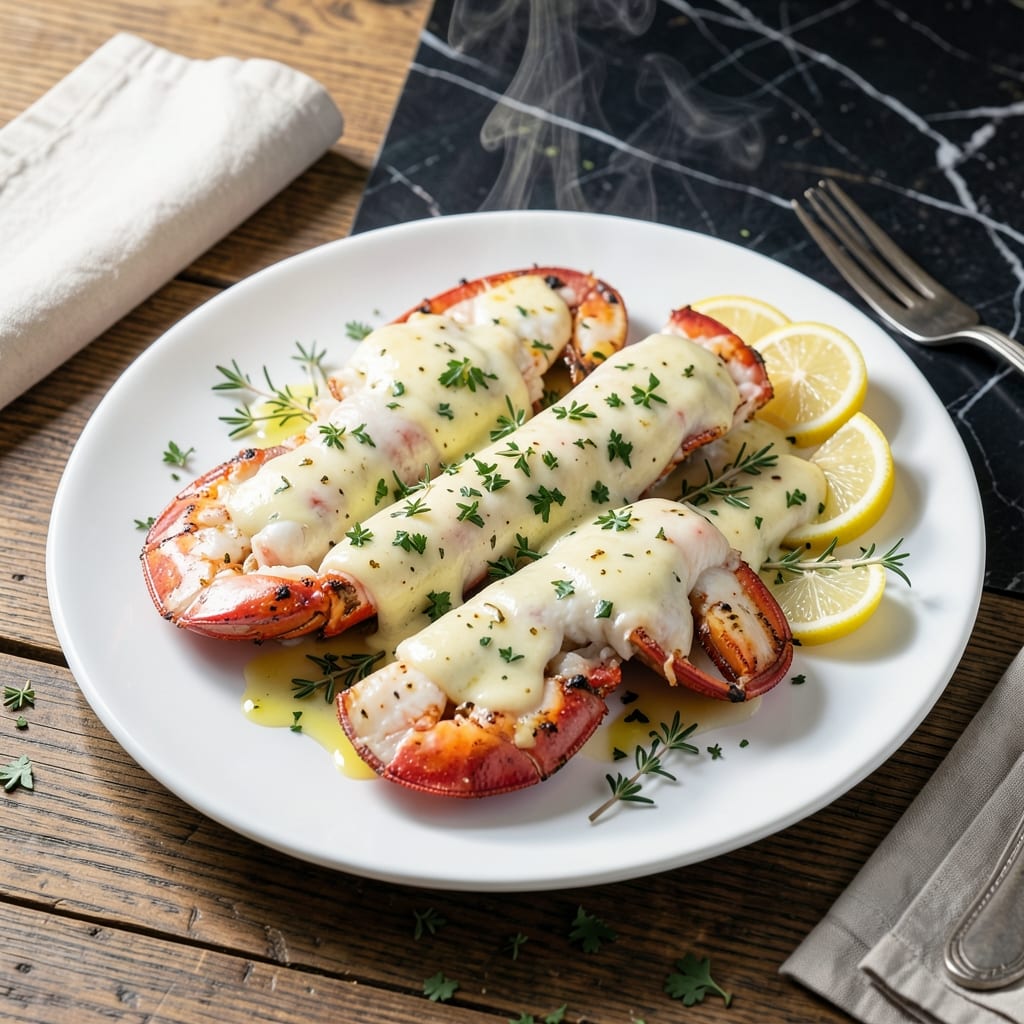
This method transforms lobster tail into a restaurant-quality dish with minimal effort. The oven does most of the work while you focus on the details that count: fresh ingredients and precise timing.
I developed this approach after years of trial and error, learning that high heat and proper preparation make all the difference. The garlic herb crust adds depth without overpowering the natural sweetness of the lobster.
You’ll achieve tender, succulent meat with a golden crust that cracks perfectly under a fork. The butter basting ensures every bite is rich and flavorful, just like your favorite seafood restaurant.
Serve with lemon wedges and drawn butter for the full experience. The process is straightforward, but the results are anything but ordinary.
Ingredients for Lobster Tail Recipe Oven
Fresh seafood, bold herbs, and rich butter make this dish shine with minimal effort.
| Ingredient | Amount | Notes |
|---|---|---|
| Lobster Tails 🦞 | 4 whole | Fresh or thawed, 6-8 oz each |
| Unsalted Butter 🧈 | ½ cup | Melted for basting and crust |
| Garlic Cloves 🧄 | 4 cloves | Minced for herb crust |
| Fresh Parsley 🌿 | ¼ cup | Finely chopped for garnish |
| Fresh Thyme Sprigs 🍃 | 2 tbsps | Leaves stripped, chopped |
| Lemon 🍋 | 1 whole | Zested and juiced for brightness |
| Dijon Mustard 🟡 | 1 tbsp | For crust binding and tang |
| Panko Breadcrumbs 🍞 | ½ cup | For golden crispy topping |
| Sea Salt 🧂 | 1 tsp | Flaky variety preferred |
| Freshly Ground Black Pepper 🌶️ | ½ tsp | Coarse grind for texture |
| Olive Oil 🫒 | 1 tbsp | For brushing tails |
| Dry White Wine 🍷 | ¼ cup | Optional for steaming pan |
[recipe_ingredient_scaler]
The lobster tails are the star—fresh is ideal, but high-quality frozen works if thawed properly (overnight in the fridge). Look for tails that feel heavy for their size, a sign of good meat content. Whole Foods or a trusted fishmonger will have the best selection. For the crust, fresh herbs are non-negotiable; dried just won’t give that vibrant pop of flavor.
No white wine? Chicken or vegetable broth works fine for the pan—just skip the salt if it’s already seasoned. Out of Dijon? Whole-grain mustard at the same amount adds a great texture. Panko can be swapped for regular breadcrumbs (one-for-one), but the crust won’t be as crisp. If you’re avoiding alcohol entirely, extra lemon juice in the basting butter keeps it bright.
Lobster tails stay fresh in the fridge for 1-2 days max—cook them the same day if possible. Leftovers? Pick the meat and toss with a little of the garlic butter, then store in an airtight container for up to 24 hours. The herb crust mix can be prepped a day ahead (store covered in the fridge).
Why You’ll Love This Recipe
- I’ll be real: cold lobster tail the next day tastes even better in a sandwich.
- Minimal Effort: I just split the tails, slather on the garlic butter, and let the oven do the work.
- Buttery Heaven: The garlic-infused butter with parsley and thyme makes every bite ridiculously rich.
- Date Night Ready: Honestly, it feels fancy enough for a special occasion but takes zero skill.
Step-by-Step Instructions for Lobster Tail Oven
Here’s my tested method that turns these tails into a restaurant-quality masterpiece without the fuss.
Step 1: Prep the Lobster Tails for Even Cooking
Start by thawing the lobster tails if frozen, then pat them completely dry with paper towels. I place each tail shell-side down on a cutting board and use kitchen shears to cut lengthwise through the top shell, stopping at the base of the tail fin. This butterfly technique exposes the meat for even cooking and better flavor absorption.
Gently pull the shell apart at the cut and lift the meat out, keeping it attached at the base. Place the meat on top of the shell, then brush all exposed surfaces with the olive oil. This prevents sticking and adds a subtle richness. Season lightly with some of the sea salt and freshly ground black pepper.
Step 2: Create the Garlic Herb Crust
In a bowl, combine the panko breadcrumbs, minced garlic cloves, chopped fresh parsley, stripped and chopped fresh thyme sprigs, the Dijon mustard, and the remaining sea salt and freshly ground black pepper. The mustard acts as a binder while adding a subtle tang that complements the sweet lobster meat beautifully.
Zest the lemon directly into the mixture, then stir in the melted unsalted butter until it forms a moist, clumpy crust. I use my hands for this—it gives me better control to ensure every breadcrumb gets coated. The mixture should hold together when pressed but not be soggy. This crust will create a golden, fragrant topping that adds texture contrast to the tender meat.
Step 3: Top the Tails and Begin Roasting
Preheat your oven to 400°F. Divide the crust mixture evenly among the four lobster tails, pressing it gently onto the exposed meat. The crust should completely cover the meat surface but not spill over the sides. Place the tails on a baking sheet lined with parchment paper, meat-side up.
Roast for 12 minutes at 400°F—this initial high heat helps set the crust. Then, carefully pour the dry white wine into the baking sheet around the tails (not over them). The wine creates a fragrant steam that enhances the lobster’s natural sweetness. Reduce the oven temperature to 375°F for the remaining cooking time.
Step 4: Finish Cooking and Baste
Continue roasting for another 8-10 minutes at 375°F until the lobster meat is opaque and the crust is golden brown. The internal temperature should reach 145°F when measured at the thickest part of the tail. I check by inserting an instant-read thermometer through the side of the meat.
Remove the tails from the oven and let them rest for 2-3 minutes. Squeeze some of the lemon juice over each tail and garnish with any remaining chopped parsley. The meat will be perfectly tender with a buttery, herbaceous crust that crackles slightly with each bite.
Pro Tips For Making Lobster Tail Recipe Oven
- Butterfly the Tails: Split the top of the lobster tails lengthwise down to the base of the tail fan, then gently spread apart—this prevents curling and helps the meat cook evenly. I learned this the hard way after pulling out rubbery, curled tails from my first few attempts.
- Clarify Your Butter: Melt the unsalted butter slowly and skim off the milk solids before using—it prevents burning and gives a cleaner, richer flavor to the lobster. Sounds fussy, but it actually changes the outcome.
- Skip Overcooking: Pull the tails when the meat reaches 135-140°F internal temp (about 1 minute per ounce at 400°F). After burning three batches, I finally figured out lobster keeps cooking off the heat.
- Infuse the Butter: Heat the butter with minced garlic, parsley, and thyme for 2-3 minutes before basting—this builds way more flavor than just tossing them on top. My grandmother swore by this, and she was right.
Make-Ahead Tips for This Recipe
Prep the Crust Ahead
Mix the panko, minced garlic, chopped parsley, thyme, Dijon, salt, and pepper up to 24 hours early. Store covered in the fridge. I do this while the tails thaw overnight—it saves 10 minutes on cooking day. 💡
Thaw Properly
Transfer frozen tails to the fridge 12-24 hours before cooking. For same-day prep, submerge sealed tails in cold water for 30-60 minutes. Never thaw at room temperature—this compromises texture and safety.
Butter Basting Prep
Melt the unsalted butter and mix in lemon zest and juice 1 hour ahead. Keep at room temperature so it’s ready for basting. I use Kerrygold for its rich flavor with seafood.
Partial Cook Method
Roast the tails with just oil, salt, and pepper for 8 minutes at 400°F. Cool completely, then refrigerate. Finish with crust and final 10-12 minutes of cooking when ready to serve.
Storage Before Cooking
Keep fresh tails in the coldest part of your fridge on a bed of ice for up to 2 days. I line a bowl with ice, place tails on top, and cover with a damp towel. This mimics a seafood market’s display. ❄️
Equipment Prep
Line your baking sheet with parchment and set out all tools the night before. Include shears, thermometer, and basting brush. I use Reynolds parchment—it never sticks.
Nutrition Facts
Frequently Asked Questions
How do I know when the lobster is done?
The meat should turn opaque white and reach an internal temperature of 145°F. The crust will be golden brown. Overcooking makes the meat tough, so check at the 18-minute mark.
Can I use frozen tails without thawing?
No, always thaw first for even cooking. Submerge sealed tails in cold water for 30-60 minutes or thaw overnight in the fridge. Cooking from frozen leads to uneven doneness.
What if my crust burns before the lobster cooks?
Lower the oven temperature to 350°F after the first 12 minutes. Tent the tails loosely with foil if needed. The crust should brown, not blacken.

Trained in classic French technique but raised on slow-cooked ribs and spicy rubs, she blends culinary skill with smoke and soul.
- Recipe for Fried Prawns Batter: Ultra-Crispy Golden Shell - October 3, 2026
- Indian Lamb Curry Recipe Pressure Cooker: Fragrant Spices in a Fraction of the Time - October 3, 2026
- Recipe for Oven Roasted: Golden Crisp Perfection Without the Fryer - October 3, 2026