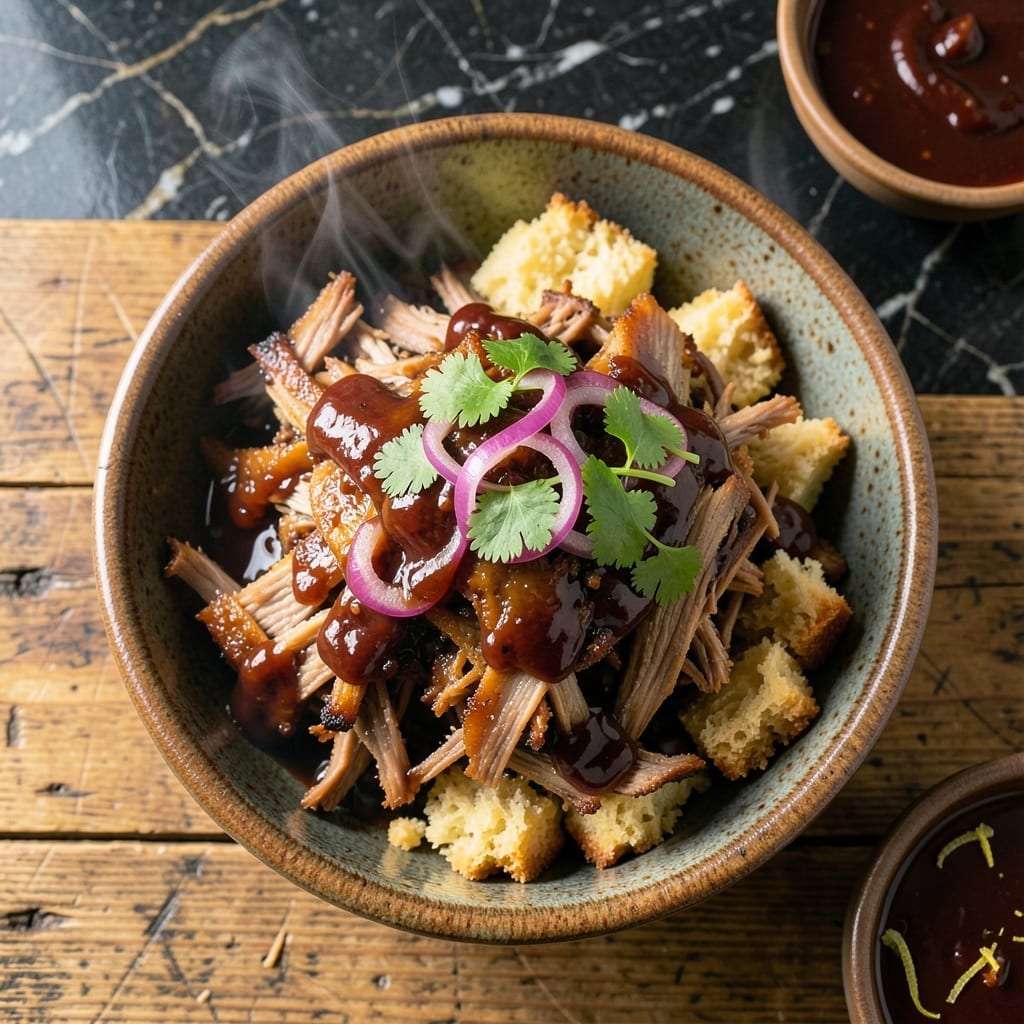
This slow-smoked pulled pork delivers the authentic Louisiana grill experience with applewood infusion. The secret lies in the perfect balance of smoke, spice, and time.
You’ll achieve fall-apart tender meat with a bark that’s richly seasoned and deeply flavored. It’s a testament to traditional pitmaster techniques.
Ingredients for Louisiana Grill Pulled Pork
Pantry staples meet slow-smoked perfection with these bold, balanced ingredients.
| Ingredient | Amount | Notes |
|---|---|---|
| Pork Shoulder 🐖 | 4 lb | Bone-in, skin-on preferred |
| Applewood Chips 🪵 | 3 cups | Soaked in water 1 hour |
| Brown Sugar 🍚 | ½ cup | Light or dark variety |
| Paprika 🌶️ | 2 tbsp | Sweet or smoked variety |
| Garlic Powder 🧄 | 1 ½ tbsp | Fresh ground preferred |
| Onion Powder 🧅 | 1 ½ tbsp | Fine grain texture |
| Kosher Salt 🧂 | 1 ½ tbsp | Diamond Crystal preferred |
| Black Pepper 🌶️ | 1 tbsp | Freshly ground coarse |
| Cayenne Pepper 🔥 | 1 tsp | Adjust for heat preference |
| Cider Vinegar 🍏 | ½ cup | Apple cider variety |
| Yellow Mustard 🟡 | ¼ cup | For binding rub |
| BBQ Sauce 🍖 | 2 cups | Louisiana-style preferred |
| Apple Juice 🍎 | 1 cup | For spritzing during cook |
[recipe_ingredient_scaler]
The pork shoulder is non-negotiable here. Look for bone-in, skin-on cuts—they retain moisture and develop that perfect bark. Costco or Sam’s Club are great for bulk buys, but your local butcher can hook you up with quality. Applewood chips are key for that Louisiana flavor; avoid mesquite (too strong) or hickory (too sweet). Soak them for at least an hour before smoking.
No applewood chips? Cherry or pecan wood work in a pinch. Swap brown sugar for turbinado or maple syrup if you want a different sweetness profile. Out of cider vinegar? White vinegar with a splash of apple juice mimics the tang. The BBQ sauce can be store-bought (Stubb’s Original is a solid choice), but homemade takes this to the next level.
Pork keeps beautifully—shred and store in the fridge for 4-5 days, or freeze for 3 months. The wood chips dry out fast, so keep them sealed in a cool, dark place. Leftovers make killer sandwiches, tacos, or loaded baked potatoes (don’t skip the pickles).
Why You’ll Love This Recipe
- Set and Forget: The Louisiana grill does all the work—just season the pork shoulder, add applewood chips, and let it smoke low and slow.
- Smoky Sweet Perfection: Brown sugar caramelizes with paprika and garlic powder for that sticky, finger-licking crust.
- Feeds a Hungry Crowd: I stretch one pork shoulder into tacos, sandwiches, and salads for the whole week.
- Budget-Friendly Feast: Pork shoulder is cheap, and this recipe turns it into something that tastes like a million bucks.
Step-by-Step Instructions for Applewood Infused Slow-Smoked Pulled Pork
Here’s the method that delivers tender, smoky perfection every single time.
Step 1: Prepare the Pork Shoulder with a Flavorful Rub
Pat the 4 lb Pork Shoulder dry with paper towels to ensure the rub adheres properly. In a bowl, combine the 0.5 cup Brown Sugar, 2 tbsp Paprika, 1.5 tbsp Garlic Powder, 1.5 tbsp Onion Powder, 1.5 tbsp Kosher Salt, 1 tbsp Black Pepper, and 1 tsp Cayenne Pepper.
Add the 0.25 cup Yellow Mustard and 0.5 cup Cider Vinegar to the dry rub, mixing until it forms a thick paste. I like to massage this paste all over the pork shoulder, making sure every crevice is coated. Let it sit at room temperature for 30 minutes while you prepare the smoker.
Step 2: Set Up the Smoker with Applewood Chips
Soak the 3 cups Applewood Chips in water for at least 1 hour before use—this prevents them from burning too quickly and ensures a steady smoke. Preheat your smoker to 225°F using indirect heat.
Once the smoker reaches temperature, add the soaked applewood chips to the firebox or smoker box. You want a consistent stream of thin, blue smoke, not thick white smoke. Place a water pan in the smoker to maintain moisture during the long cook.
Step 3: Smoke the Pork to Perfection
Place the pork shoulder directly on the smoker grates, fat-side up. Smoke undisturbed for 6-8 hours until the internal temperature reaches 165-170°F. This is when the stall typically begins, so don’t be alarmed if the temperature plateaus.
Every 45-60 minutes, spritz the pork with the 1 cup Apple Juice to keep it moist. This step is crucial for developing that signature bark while preventing the meat from drying out. You’ll know it’s ready for the next step when the outside forms a dark, crusty layer.
Step 4: Wrap and Finish the Cook
Once the pork hits 170°F, wrap it tightly in pink butcher paper or aluminum foil. This helps push through the stall while keeping the meat tender. Return it to the smoker and continue cooking until the internal temperature reaches 200-203°F.
This usually takes another 2-3 hours, but trust the probe test over the thermometer. When a meat probe slides in like butter with no resistance, the pork is ready. Transfer it to a cooler or insulated container and let it rest for at least 1 hour—this keeps it hot while the juices redistribute.
Step 5: Shred and Sauce the Pulled Pork
Unwrap the pork and place it on a large cutting board. Using two forks, shred the meat into your desired consistency. Discard any large fat chunks or connective tissue.
Transfer the shredded pork to a large bowl and mix in 1 cup of the 2 cups BBQ Sauce, reserving the rest for serving. Toss until the pork is evenly coated. Serve immediately on buns with additional BBQ sauce, or keep it warm in a slow cooker for serving later. The meat should be tender, juicy, and packed with smoky applewood flavor.
Pro Tips For Making Louisiana Grill Pulled Pork
- Use Low and Slow: I learned this the hard way—keep your Louisiana grill between 225-250°F for at least 8 hours. Anything higher and the pork shoulder dries out before it gets that fall-apart texture.
- Soak the Wood Chips: Applewood chips burn fast if dry; soak them in water for 30 minutes before adding to the grill. Sounds tedious, but it gives you that steady, smoky flavor without bitter flare-ups.
- Don’t Skip the Rub: Mix the brown sugar, paprika, and garlic powder into the pork shoulder the night before. I was skeptical until I tried it—way more flavor penetration than a last-minute dusting.
- Rest Before Shredding: After pulling the pork off the grill, let it rest wrapped in foil for 20-30 minutes. This isn’t just tradition—it lets the juices redistribute so every bite is moist, not dry.
Essential Equipment for louisiana grill pulled pork
Quality Smoker
A reliable pellet smoker is key—I use my Louisiana Grills LG900 for its precise temperature control and large capacity. The digital interface makes maintaining that perfect 225°F effortless. Invest in quality; you’ll taste the difference in every bite. 🔥
Essential Thermometers
You need two thermometers: one for the smoker and one for the meat. I swear by ThermoWorks Smoke for its dual probes and Bluetooth connectivity. Never guess temperatures—accuracy is everything when smoking for 10+ hours.
Water Pan
A simple stainless steel pan filled with water maintains humidity in your smoker. This prevents the pork from drying out during the long cook. I use a 9×13-inch hotel pan—it fits perfectly in most smokers.
Heat-Resistant Gloves
Handling hot pork and smoker grates requires protection. My Ove Glove gloves allow me to adjust wood chips or move meat without burning my hands. They’re rated to 540°F and provide excellent dexterity.
Spritz Bottle
A 16-ounce spray bottle is perfect for misting your pork with apple juice every hour. I prefer glass bottles—they don’t absorb odors like plastic. The fine mist helps build that beautiful bark.
Butcher Paper
For wrapping your pork during the final cook phase, pink butcher paper is my go-to. Unlike foil, it allows the meat to breathe while still protecting it. You’ll find it at restaurant supply stores or online. 💡
Nutrition Facts
Frequently Asked Questions
What temperature should I maintain while smoking?
Keep your smoker at a steady 225°F throughout the cook. This low and slow approach ensures tender meat without drying it out.
How do I know when the pork is done?
Use a meat probe to check for 200-203°F internally. The real test is when the probe slides in like butter with no resistance. This usually takes 8-10 hours total.
Can I use a different type of wood?
Applewood gives the best flavor, but cherry or pecan work well too. Avoid strong woods like mesquite—they can overpower the pork. Soak chips for 1 hour before use.
Why does the temperature stall at 165°F?
This is called “the stall” and is normal. Wrap the pork in butcher paper at this point to push through. It happens as moisture evaporates from the meat’s surface.

Trained in classic French technique but raised on slow-cooked ribs and spicy rubs, she blends culinary skill with smoke and soul.
- Recipe for Boneless Pork Chops in Cast Iron Skillet: Sear and Baste to Juicy Perfection - October 3, 2026
- Recipe for Boneless Cross Rib Roast: Slow-Roasted Beef with Herb Crust - October 3, 2026
- Hamburgers in Sauce Recipe Crock Pot: Slow-Cooked Savory Delight - October 3, 2026