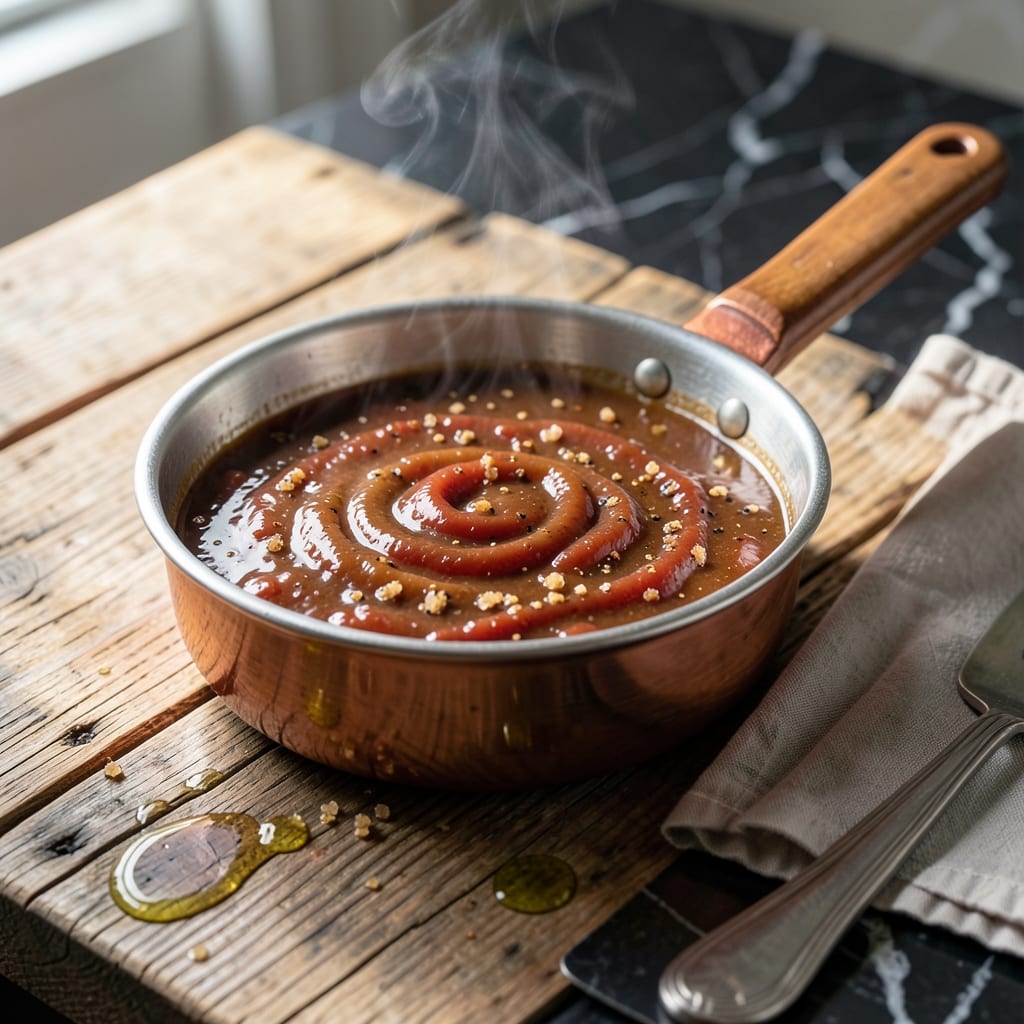
This sauce brings the bold flavors of Louisiana straight to your kitchen with a perfect balance of sweet and spicy notes. The combination of tangy vinegar, rich brown sugar, and Cajun spices creates a versatile condiment that elevates any dish.
I developed this recipe to capture the essence of traditional Cajun cooking while keeping it simple enough for home cooks. The sauce comes together in 15 minutes and requires no special equipment—just a saucepan and a whisk.
What you’ll get is a glossy, thick sauce that clings to meats, drizzles over vegetables, or serves as a dipping base. Its complex flavor profile improves with time, making it even more delicious after a day in the fridge.
Use it on ribs, chicken, or even as a sandwich spread. Here’s how to make it.
Ingredients for Louisiana Lickers Sauce
Nine simple ingredients for that bold Cajun sweet heat you crave.
| Ingredient | Amount | Notes |
|---|---|---|
| Apple Cider Vinegar 🍏 | 1 cup | Tangy base for sauce |
| Light Brown Sugar 🍚 | ¾ cup | Packed for sweetness |
| Ketchup 🍅 | ½ cup | For thickness and color |
| Prepared Horseradish 🌶️ | 2 tbsp | Adds sharp heat |
| Cajun Seasoning 🌶️ | 1 tbsp | Essential for spice blend |
| Worcestershire Sauce 🍶 | 1 tbsp | Umami depth booster |
| Hot Sauce 🔥 | 1 tbsp | Adjust for heat level |
| Garlic Powder 🧄 | 1 tsp | Savory base note |
| Onion Powder 🧅 | 1 tsp | Aromatic foundation |
| Black Pepper 🌶️ | ½ tsp | Freshly ground preferred |
[recipe_ingredient_scaler]
The vinegar is key here—apple cider vinegar gives that classic tang. Light brown sugar works best (pack it down for accurate measuring). I grab my Cajun seasoning from Zatarain’s—it’s widely available and consistent. For the horseradish, Bubbies is my go-to brand, but any prepared kind works. The ketchup should be basic—no fancy organic stuff needed here (trust me, the flavors get lost).
No Cajun seasoning? Mix paprika, garlic powder, onion powder, cayenne, and oregano at equal parts. Swap horseradish for extra hot sauce at half the amount. Brown sugar can be white in a pinch, but you’ll lose some molasses depth. Heinz ketchup is the standard here—its balance of sweet and tang is what we’re building on. Need it smoother? Blend the finished sauce briefly.
This keeps in the fridge for up to 2 weeks in a sealed jar. The flavors meld and deepen over time—it’ll taste even better after 24 hours. Freezes well too for 3 months, though it might separate slightly (just stir it up).
Why You’ll Love This Recipe
- 5-Minute Whisk: I dump everything in one bowl—vinegar, brown sugar, ketchup, horseradish, Cajun spice—and it’s ready before the grill heats up.
- Sweet Heat Kick: That first hit of brown sugar sweetness followed by horseradish’s sharp sting? Honestly, it’s the reason I make a double batch every time.
- Slathers on Everything: I’ve brushed it on ribs, stirred it into beans, even used it as a dip for fries—between us, it’s my secret for making leftovers disappear.
- Pantry Staples Only: No last-minute grocery runs. I always have these ingredients on hand, so this sauce saves me when dinner plans change.
Step-by-Step Instructions for Louisiana Lickers Sauce
This comes together quickly on the stovetop with no special equipment needed.
Step 1: Combine the Liquid Base
In a medium saucepan, whisk together the 1 cup Apple Cider Vinegar, 0.5 cup Ketchup, and 1 tbsp Worcestershire Sauce over medium heat. The vinegar will smell sharp at first, but it mellows beautifully as it cooks down.
Keep the heat steady so the mixture starts to bubble gently around the edges. This is when you know the flavors are beginning to meld. Stir occasionally to prevent any sticking at the bottom of the pan.
Step 2: Add Sweetness and Spice
Sprinkle in the 0.75 cup Light Brown Sugar while whisking constantly to dissolve it completely. I always use packed brown sugar for that deep molasses note. The mixture will turn a rich caramel color as the sugar incorporates.
Next, add the 2 tbsp Prepared Horseradish, 1 tbsp Cajun Seasoning, and 1 tbsp Hot Sauce. The horseradish will create tiny bubbles in the sauce—that’s its sharp heat activating. Stir well after each addition to distribute the flavors evenly.
Step 3: Build the Aromatic Foundation
Now stir in the 1 tsp Garlic Powder, 1 tsp Onion Powder, and 0.5 tsp Black Pepper. These dry spices bloom in the warm liquid, releasing their savory depth. You’ll notice the sauce starting to thicken slightly as the ketchup cooks down.
Let the sauce simmer for 8-10 minutes at this stage. The color will deepen to a beautiful mahogany, and the vinegar tang will balance perfectly with the sweetness. Keep the heat at a gentle simmer—you want small bubbles, not a rolling boil.
Step 4: Simmer to Perfection
Reduce the heat to low and let the sauce cook for an additional 5 minutes. This final simmer allows all the flavors to marry together. The sauce should coat the back of a spoon lightly when it’s ready.
Taste and adjust if needed, though I find the balance is usually perfect with these exact proportions. The horseradish will mellow slightly but still deliver that signature kick. The sauce will thicken a bit more as it cools to room temperature.
Transfer to a jar and let it cool completely before sealing. The flavors continue to develop over 24 hours, making it even better the next day.
Pro Tips For Making Louisiana Lickers Sauce
- Simmer, Don’t Boil: Keep the heat at a gentle simmer—too hot and the sugars in the brown sugar will burn, giving the sauce a bitter edge instead of that sweet-spicy balance.
- Bloom the Cajun: Toast the Cajun seasoning in the pot for 30 seconds before adding liquids; it wakes up the spices and deepens the flavor (I learned this the hard way after making bland batches).
- Balance the Horseradish: Start with half the prepared horseradish you think you need, then adjust—it gets spicier as the sauce sits, and you can’t take it out once it’s in.
- Rest the Sauce: Let it cool completely before tasting or bottling; the vinegar mellows and the flavors meld after 30 minutes, so your first taste test might mislead you.
Serving Suggestions for louisiana lickers sauce
Grilled Meats
Brush this sauce on pork ribs during the last 10 minutes of grilling for a sticky, caramelized finish. I also love it on grilled chicken thighs—the heat cuts through the richness perfectly. Apply it generously to smoked sausage links for a Cajun twist.
Seafood Pairings
Drizzle over blackened catfish or use as a dipping sauce for shrimp skewers. The tangy-sweet balance complements grilled salmon beautifully. I’ve even used it as a glaze for scallops—just brush lightly to avoid overpowering.
Sandwich Spread
Slather on pulled pork sandwiches for a bold flavor boost. It’s also fantastic on fried chicken sandwiches with pickles. I mix it with mayo for a spicy-sweet aioli that takes burgers to the next level. 🔥
Vegetable Drizzle
Toss with roasted Brussels sprouts or drizzle over grilled corn. The sauce adds depth to sweet potato fries too. For a lighter option, use it as a dressing for coleslaw—just thin with a little vinegar.
Dipping Sauce
Serve as a dip for fried pickles, onion rings, or mozzarella sticks. It’s my go-to for chicken tenders—kids and adults love it. The flavors shine when paired with crispy fries or hush puppies.
Breakfast Twist
Drizzle over biscuits and gravy for a Cajun kick. It’s also great with breakfast sausages or as a topping for scrambled eggs. I’ve even stirred it into grits for a savory-sweet bite. 💡
Nutrition Facts
Frequently Asked Questions
How long does homemade sauce last in the fridge?
Properly stored in an airtight container, it stays fresh for up to 2 weeks. For best results, let it cool completely before sealing. The flavors actually improve after 24 hours.
Can I adjust the heat level?
Reduce horseradish or hot sauce by half for milder flavor. For extra kick, add 1/2 tsp cayenne. Taste as you go to find your perfect balance.
Why did my sauce turn out thin?
It thickens as it cools. If still too thin, simmer 2-3 minutes longer. Using full-sugar ketchup (not reduced-sugar) helps achieve the right consistency.
Can I use white vinegar instead?
Not recommended. Apple cider vinegar adds crucial fruity depth that white vinegar lacks. In a pinch, add 1 tbsp lemon juice to white vinegar for better flavor.

Trained in classic French technique but raised on slow-cooked ribs and spicy rubs, she blends culinary skill with smoke and soul.
- Recipe for Boneless Pork Chops in Cast Iron Skillet: Sear and Baste to Juicy Perfection - October 3, 2026
- Recipe for Boneless Cross Rib Roast: Slow-Roasted Beef with Herb Crust - October 3, 2026
- Hamburgers in Sauce Recipe Crock Pot: Slow-Cooked Savory Delight - October 3, 2026