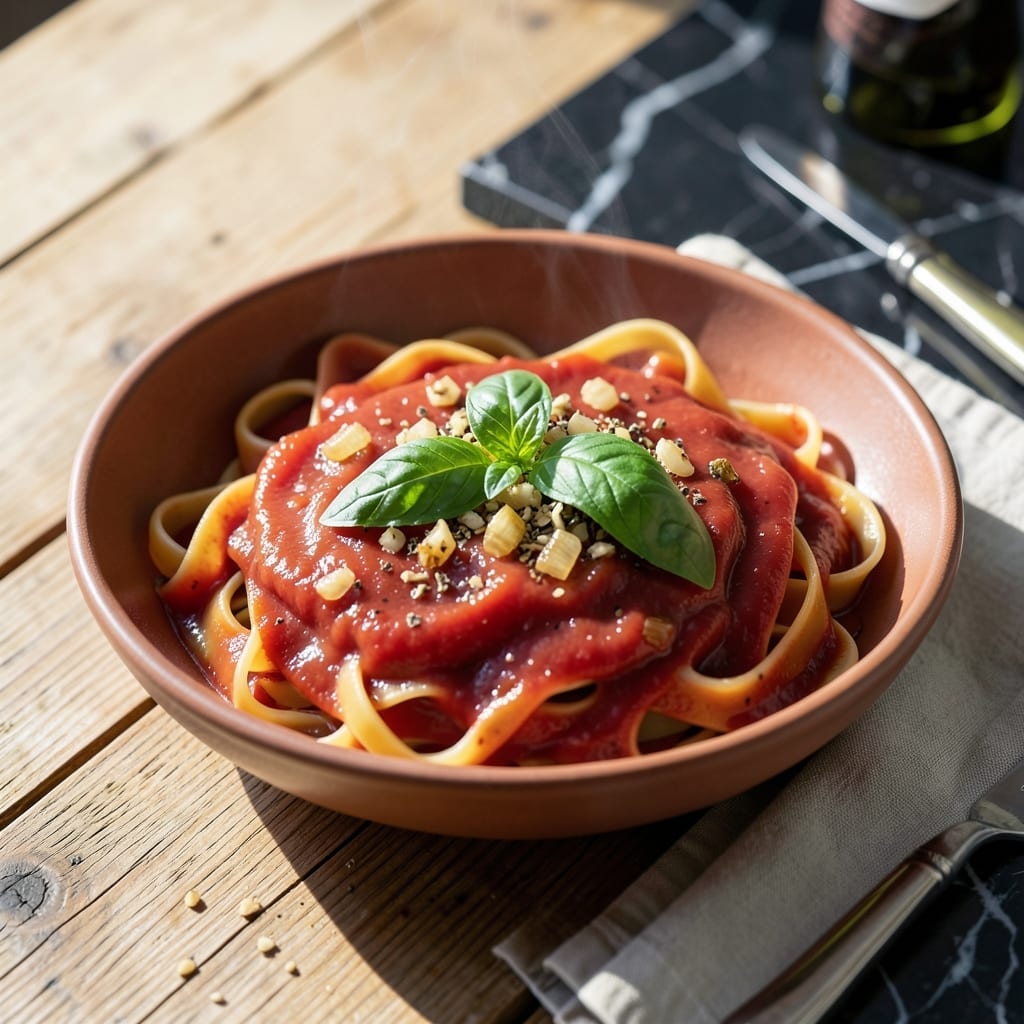
This tomato sauce delivers rich, deep flavor without the usual sharp acidity that can upset sensitive stomachs. A simple addition of baking soda neutralizes the acid while preserving the natural sweetness of ripe tomatoes.
The process is straightforward: simmer tomatoes with aromatics, then balance with a pinch of sugar and baking soda. This creates a velvety sauce that’s gentle on digestion yet full of authentic Italian taste.
Perfect for pasta, pizza, or as a base for other dishes, this sauce stores beautifully in the fridge for up to a week or can be frozen for longer use.
No special equipment needed—just a pot, patience, and a willingness to let the flavors develop slowly.
Ingredients for Low Acid Tomato Sauce
Simple pantry ingredients transform into a velvety, digestion-friendly tomato sauce with authentic flavor.
| Ingredient | Amount | Notes |
|---|---|---|
| Canned Crushed Tomatoes 🍅 | 28 oz | San Marzano preferred for sweetness |
| Extra-Virgin Olive Oil 🫒 | 2 tbsp | High quality, fruity finish |
| Yellow Onion 🧅 | ½ whole | Finely diced for aromatics |
| Garlic Cloves 🧄 | 4 cloves | Minced for depth of flavor |
| Fresh Basil Leaves 🌿 | ¼ cup | Torn, not chopped for texture |
| Dried Oregano 🍃 | 1 tsp | Mediterranean variety preferred |
| Granulated Sugar 💧 | 1 tsp | Balances natural tomato acidity |
| Baking Soda 🧂 | ¼ tsp | Neutralizes acid without altering taste |
| Sea Salt 🧂 | 1 tsp | Adjust to taste preference |
| Ground Black Pepper 🌶️ | ½ tsp | Freshly ground for best flavor |
[recipe_ingredient_scaler]
The tomatoes are everything here. San Marzano canned tomatoes offer the best balance of sweetness and low acidity—look for the DOP certification on the label. Whole Foods and Eataly carry them, but most supermarkets stock a decent alternative. The olive oil should be extra-virgin with a fruity finish; avoid anything labeled “light” or “pure.” Fresh basil adds brightness, but dried won’t work as a substitute in this recipe.
No San Marzano tomatoes? Regular crushed tomatoes work in a pinch, though you may need to simmer longer. Out of fresh basil? Spinach or parsley can add color but won’t replicate the flavor. The baking soda is non-negotiable for acid reduction—do not substitute baking powder. For a deeper flavor, add a pinch of red pepper flakes or a splash of vegan red wine while simmering.
This sauce keeps in the fridge for up to 1 week in an airtight container. For longer storage, freeze in 1-cup portions for up to 6 months. The flavors deepen after a day, so make it ahead if possible. Reheat gently to preserve the velvety texture.
Why You’ll Love This Recipe
- One Pot Wonder: I just dump everything in, simmer, and it’s done—no fancy steps, just crushed tomatoes, garlic, and basil doing their thing.
- Rich and Smooth: The slow-cooked onions and olive oil make it taste like it’s been simmering all day, but it’s ready in under an hour.
- Freezer Friendly: I double the batch and freeze half—perfect for lazy nights when I need pasta sauce or pizza topping in a pinch.
- Budget Stretch: Canned tomatoes and pantry staples keep it cheap, and it still tastes like a restaurant-quality sauce. Honestly, I make it weekly.
Step-by-Step Instructions for Low Acid Tomato Sauce
This method transforms natural tomato acidity into a smooth, digestible sauce with deep flavor.
Step 1: Sauté Aromatics in Olive Oil
Heat the 2 tbsp Extra-Virgin Olive Oil in a medium saucepan over medium heat until it shimmers but doesn’t smoke. Add the finely diced 0.5 whole Yellow Onion and cook for 5-6 minutes, stirring occasionally, until the pieces become translucent and just begin to caramelize around the edges.
Add the minced 4 cloves Garlic Cloves and cook for an additional 30-45 seconds until fragrant. Be careful not to let the garlic brown—this can introduce bitterness. The base should be soft and aromatic, with the onion sweetness starting to develop.
Step 2: Incorporate Tomatoes and Neutralize Acidity
Pour in the 28 oz Canned Crushed Tomatoes, the 1 tsp Granulated Sugar, and the 1 tsp Sea Salt. Stir well to combine. Bring the mixture to a gentle simmer over medium-high heat, then reduce to low heat to maintain a slow, steady bubble.
This is the critical step: sprinkle the 0.25 tsp Baking Soda evenly over the surface. It will foam vigorously as it reacts with the tomato acidity—this is normal. Stir gently until the foaming subsides, which should take 30-60 seconds. The sauce will noticeably mellow in flavor.
Step 3: Simmer and Infuse with Herbs
Add the 1 tsp Dried Oregano and 0.5 tsp Ground Black Pepper to the sauce. Stir to distribute the spices evenly. Let the sauce simmer uncovered for 25-30 minutes, stirring every 5 minutes to prevent sticking.
The sauce should reduce slightly and thicken, with the raw tomato flavor replaced by a deeper, more complex taste. The baking soda will have neutralized the harsh acidity while preserving the natural sweetness of the tomatoes. You’ll notice the color deepening to a rich, consistent red.
Step 4: Finish with Fresh Basil
Remove the sauce from heat and stir in the 0.25 cup Fresh Basil Leaves. The residual heat will wilt the basil slightly while preserving its vibrant color and aromatic qualities. Let the sauce rest for 5-10 minutes to allow the basil to infuse fully.
Taste and adjust seasoning if needed, though the initial measurements should yield a perfectly balanced sauce. The basil adds a bright, fresh note that complements the mellowed tomato base. The texture should be smooth with visible herb flecks, ready to complement any pasta dish or serve as a pizza base.
Pro Tips For Making Low Acid Tomato Sauce
- Simmer Low and Slow: Cook the sauce on the lowest heat for at least 30-40 minutes—this mellows the acidity naturally without scorching the onions or garlic.
- Ditch the Canned Acid: I learned this the hard way—always taste your crushed tomatoes first and avoid brands with added citric acid, which defeats the purpose.
- Skip the Tomato Paste: It’s tempting for depth, but even a spoonful can spike acidity; stick to just crushed tomatoes for the smoothest, mildest base.
- Add Carrots for Sweetness: Sounds weird, but it works: finely dice half a carrot with the onion—it dissolves into the sauce, balancing acidity without added sugar.
Pro Cooking Tips for low acid tomato sauce
Tomato Selection
I always start with San Marzano canned tomatoes—their natural sweetness means less sugar needed later. Look for DOP certification on the label for the best quality. I grab mine from Eataly when I’m foraging for wild herbs along the coast. 🌿
Baking Soda Timing
Add the 0.25 tsp Baking Soda only after the tomatoes start simmering. You’ll see it foam—that’s the acid neutralizing. Stir well and let it work for 5 minutes before tasting. This step is non-negotiable for gentle digestion.
Low and Slow Simmer
Maintain a gentle bubble at low heat for 30-40 minutes. Use a heavy-bottomed pot to prevent scorching. I ride my vintage motorcycle to clear my head while it cooks—patience rewards you with a velvety texture.
Basil Technique
Remove the sauce from heat before adding the 0.25 cup Fresh Basil Leaves. Tear them by hand—knives bruise the leaves and turn them bitter. The residual heat will wilt them perfectly in 5-10 minutes. 💡
Salt Adjustment
Taste before adding more Sea Salt. The baking soda and sugar can amplify perceptions of saltiness. I usually find the initial 1 tsp is just right, but trust your palate.
Equipment Matters
A wooden spoon lets me feel the sauce’s consistency better than metal. For even heat distribution, I swear by my All-Clad stainless steel pot—worth every penny for sauces like this.
Nutrition Facts
Frequently Asked Questions
Can I use fresh tomatoes instead of canned?
Yes, but choose naturally sweet varieties like Roma or San Marzano. Fresh tomatoes may need extra simmering time to reduce acidity fully.
Why does the baking soda foam?
It reacts with natural tomato acids, creating carbon dioxide bubbles. This subsides quickly and signals the acid is being neutralized.
How long does this sauce keep in the fridge?
Store in an airtight container for up to 1 week. For longer storage, freeze for up to 6 months.
Can I skip the sugar?
The 1 tsp sugar balances flavors but isn’t mandatory. Taste first—you may find the tomatoes are sweet enough.

Trained in classic French technique but raised on slow-cooked ribs and spicy rubs, she blends culinary skill with smoke and soul.
- Recipe for Boneless Pork Chops in Cast Iron Skillet: Sear and Baste to Juicy Perfection - October 3, 2026
- Recipe for Boneless Cross Rib Roast: Slow-Roasted Beef with Herb Crust - October 3, 2026
- Hamburgers in Sauce Recipe Crock Pot: Slow-Cooked Savory Delight - October 3, 2026