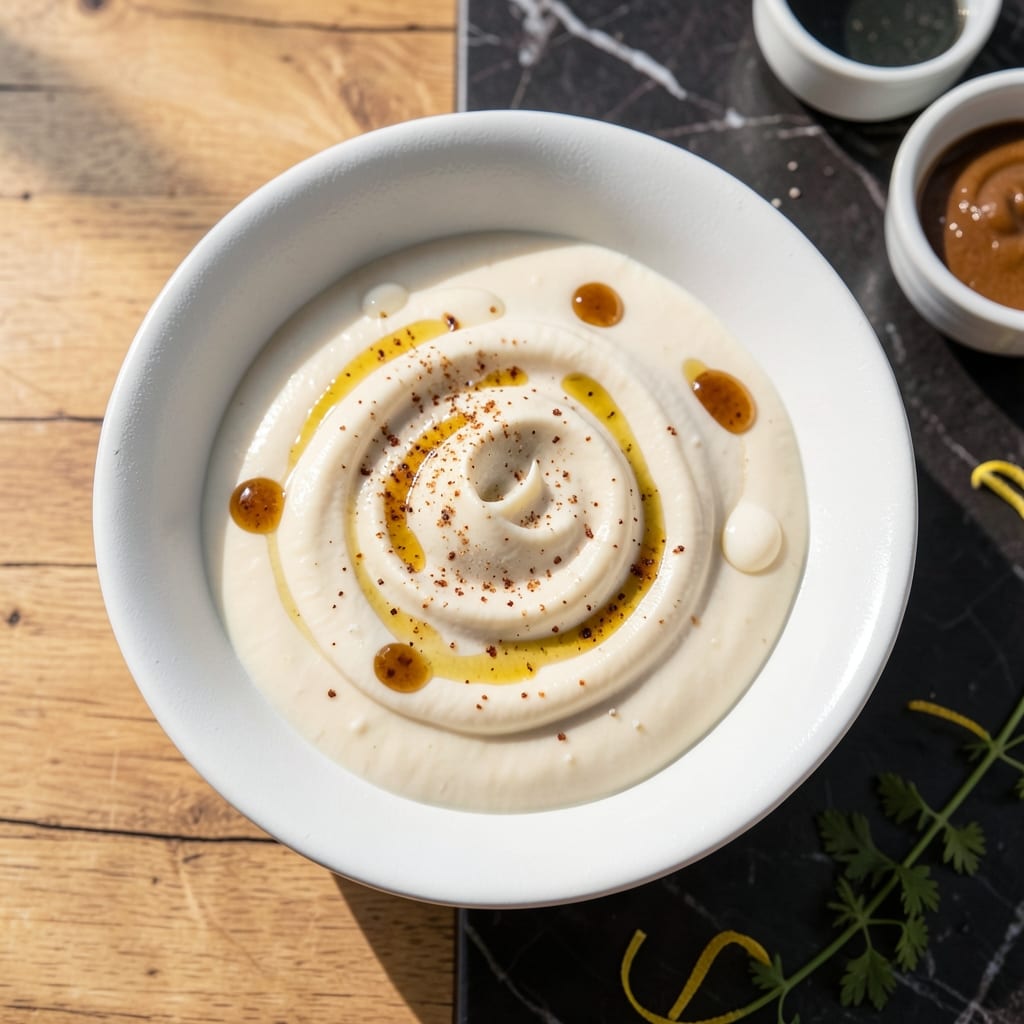
This lightened mayonnaise delivers all the creamy satisfaction of traditional versions with a fraction of the fat. I developed this recipe after realizing most store-bought low-fat options sacrifice texture for calories.
The secret lies in using Greek yogurt as a base, which provides natural tang and thickness without heavy cream. A touch of Dijon mustard enhances the flavor, while a slow drizzle of oil creates the perfect emulsified consistency.
What you get is a smooth, spreadable condiment that holds up in sandwiches, salads, and sauces. It maintains the rich mouthfeel of classic mayo while cutting calories significantly.
Make a batch and keep it in your fridge for up to a week. This version proves you don’t need excess fat for great flavor.
Ingredients for Low Fat Mayo
Eight simple ingredients transform into a creamy, tangy spread that rivals full-fat versions.
| Ingredient | Amount | Notes |
|---|---|---|
| Non-Fat Greek Yogurt 🥛 | ¾ cup | Plain, unsweetened variety |
| Dijon Mustard 🟡 | 1 tbsp | Smooth, not whole grain |
| Neutral-Flavored Oil 🫒 | ¼ cup | Avocado or light olive oil |
| White Wine Vinegar 🍷 | 1 tbsp | Or apple cider vinegar |
| Lemon Juice 🍋 | 1 tbsp | Freshly squeezed preferred |
| Garlic Powder 🧄 | ¼ tsp | Optional for depth of flavor |
| Salt 🧂 | ¼ tsp | Fine sea salt preferred |
| White Pepper 🌶️ | 0.125 tsp | For subtle heat without color |
[recipe_ingredient_scaler]
The Greek yogurt is non-negotiable here—Fage or Chobani make the thickest, creamiest options (the kind that could stand a spoon up). Avoid any sweetened varieties—plain only. The oil needs to be neutral, so save your extra-virgin for dressings. Trader Joe’s avocado oil is a great budget pick. If you can’t find non-fat yogurt, 2% works in a pinch but textures may vary slightly.
No Dijon? Regular yellow mustard at half the amount works, though the flavor will be milder. Swap white wine vinegar for rice vinegar or lemon juice if needed. The garlic powder is optional but adds a nice depth—fresh minced garlic (about half a clove) can substitute. If your mayo seems thin, let it sit for 10-15 minutes to thicken before adjusting.
Keeps beautifully in an airtight container for up to 1 week in the fridge. The flavors meld and deepen after a day, so make it ahead if possible. Give it a quick stir before using, as some separation is natural. Not suitable for freezing—it’ll break and get watery.
Why You’ll Love This Recipe
- 5-Minute Mix: I just dump everything in a bowl, whisk, and it’s ready—no cooking, no waiting.
- Tangy Brightness: The lemon and vinegar give it that zing, while the Dijon adds just the right kick.
- Meal Prep Hero: I slather it on sandwiches, mix it into dressings, and even use it as a dip for veggies.
- Fridge Staple: It keeps for a week, so I always have a healthier mayo on hand without the store-bought guilt.
Step-by-Step Instructions for Low Fat Mayo
This method blends creamy tang with perfect consistency every single time.
Step 1: Whisk the Acidic Base Components
In a medium bowl, combine the 1 tbsp White Wine Vinegar, 1 tbsp Lemon Juice, 1 tbsp Dijon Mustard, 0.25 tsp Garlic Powder, 0.25 tsp Salt, and 0.125 tsp White Pepper. Whisk vigorously until the mixture emulsifies slightly and the mustard fully incorporates.
You’ll notice the mustard begins to thicken the liquid base immediately. This acid-mustard combination is crucial—it creates the foundation for your mayo’s signature tang while the mustard acts as a natural emulsifier. The mixture should look pale yellow and slightly frothy.
Step 2: Incorporate the Greek Yogurt Foundation
Add the 0.75 cup Non-Fat Greek Yogurt to your acid-mustard mixture. Switch to a silicone spatula and fold gently but thoroughly for 30-45 seconds until completely smooth. The yogurt’s thickness will transform the liquid into a creamy base instantly.
Here’s the thing—Greek yogurt can separate if overmixed, so use a folding motion rather than vigorous whisking. You want a uniform, velvety texture with no visible streaks of yogurt. The mixture should resemble thick buttermilk at this stage, with a slight sheen from the mustard’s oils.
Step 3: Slowly Emulsify with Neutral Oil
With the bowl positioned at a slight angle, begin adding the 0.25 cup Neutral-Flavored Oil in a very thin, steady stream while whisking constantly. I pour from the spout of my measuring cup for better control. The mixture will begin to thicken and lighten in color as the oil incorporates.
This is the moment that matters: if you add the oil too quickly, the emulsion will break and you’ll end up with a separated mess. After adding about half the oil, you’ll notice the mixture becoming noticeably thicker—this is your cue to slow the oil stream even more. The finished product should coat the back of a spoon with a smooth, mayonnaise-like consistency.
Step 4: Adjust and Rest for Optimal Texture
Once all the oil is incorporated, give the mixture one final gentle stir with your spatula. You’ll see it has transformed into a glossy, creamy spread. At this point, taste and adjust the seasoning if needed—though I find the initial measurements hit the perfect balance.
Transfer to a clean jar and let it rest at room temperature for 10-15 minutes before refrigerating. This brief rest allows the flavors to meld completely. The mayo will thicken slightly as it chills, reaching its ideal spreadable consistency after 1 hour in the refrigerator.
Pro Tips For Making Low Fat Mayo
- Slowly Drizzle Oil: Add the neutral-flavored oil in a thin, steady stream while whisking—this creates a stable emulsion that prevents separation.
- Strain the Yogurt: Drain the non-fat Greek yogurt in a fine-mesh strainer for 10 minutes to thicken it, so your mayo doesn’t end up watery.
- Temperature Matters: Make sure all ingredients are room temperature before mixing, or the oil won’t incorporate properly.
- Acid Last: Add the white wine vinegar and lemon juice at the end, after the base emulsion forms—adding them too early can break it.
Regional Styles of This Dish
American Light Style
In the US, we often use non-fat Greek yogurt as the primary base, which creates that signature creamy texture without excess fat. I prefer Fage or Chobani for their thickness. The addition of Dijon mustard gives it that classic American tang. 💛
Mediterranean Variation
Mediterranean versions often incorporate extra virgin olive oil for a richer flavor profile. I use light olive oil to keep it low-fat while maintaining that distinctive taste. A pinch of dried oregano can add an authentic touch.
Asian-Inspired Twist
For an Asian flair, swap the white wine vinegar for rice vinegar and add ½ tsp sesame oil to the neutral oil. This creates a lighter, slightly nutty version perfect for sushi or spring rolls. I love this with a hint of ginger.
British Low-Fat
British styles often use fromage frais instead of Greek yogurt, which has a milder flavor. I find adding ½ tsp English mustard powder helps achieve that traditional British mayo taste. The texture is slightly lighter but still spreadable.
Latin American Version
In Latin America, they might add lime juice instead of lemon for a brighter citrus note. I sometimes mix in ¼ tsp smoked paprika for a subtle depth. This pairs wonderfully with arepas and empanadas. 🌟
Storage Tip
Regardless of regional style, always store your creation in an airtight container in the fridge. It keeps for up to 1 week, though I find the flavors peak after 24-48 hours. Give it a quick stir before each use.
Nutrition Facts
Frequently Asked Questions
Can I use regular yogurt instead of Greek?
Regular yogurt will work but produces a thinner result. Strain it through a cheesecloth for 10-15 minutes first to thicken. The final texture won’t be as rich as with Greek yogurt.
Why did my mayo turn out too thin?
This usually happens if the oil was added too quickly. Start over and drizzle the oil very slowly while whisking constantly. A brief rest in the fridge can also help thicken it.
Can I make this without oil?
Yes, but it will lack the classic mayo richness. Omit the oil entirely and add an extra 2 tbsp Greek yogurt for creaminess. The flavor will be tangier and less smooth.

Trained in classic French technique but raised on slow-cooked ribs and spicy rubs, she blends culinary skill with smoke and soul.
- Recipe for Boneless Pork Chops in Cast Iron Skillet: Sear and Baste to Juicy Perfection - October 3, 2026
- Recipe for Boneless Cross Rib Roast: Slow-Roasted Beef with Herb Crust - October 3, 2026
- Hamburgers in Sauce Recipe Crock Pot: Slow-Cooked Savory Delight - October 3, 2026