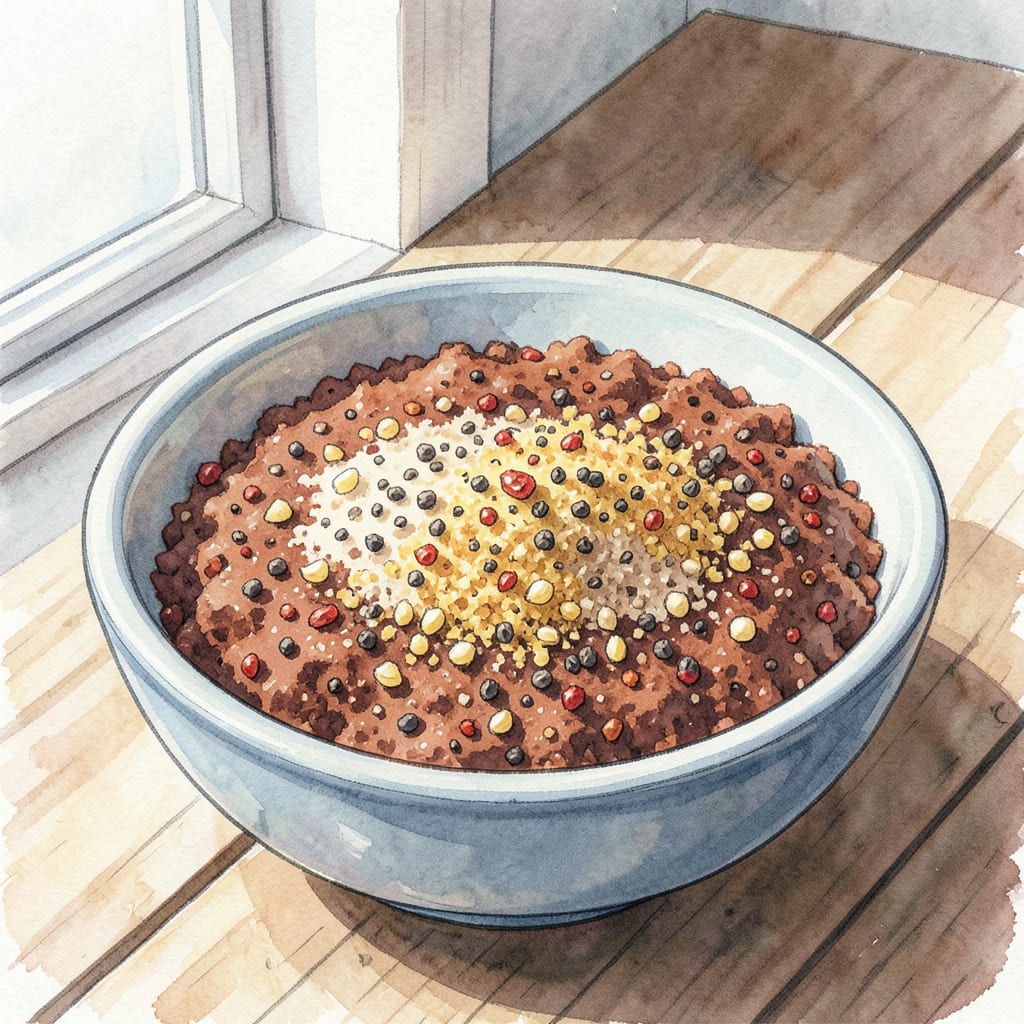
As a pitmaster, I’ve spent years perfecting my BBQ rub recipe. This low-sodium version maintains that same depth of flavor without the salt. By combining carefully selected spices, we create a complex blend that elevates any grilled meat.
The secret lies in balancing smoky, sweet, and spicy elements. With just a few ingredients, you’ll achieve that authentic BBQ flavor without compromising on health considerations. Store this dry rub in an airtight container for up to 6 months.
Ingredients for Low Sodium Bbq Rub
Simple, quality spices come together to create this complex BBQ rub blend.
| Ingredient | Amount | Notes |
|---|---|---|
| Smoked Paprika 🌶️ | 2 tbsp | Sweet or hot variety |
| Garlic Powder 🧄 | 1 ½ tbsp | Not garlic salt |
| Onion Powder 🧅 | 1 ½ tbsp | Dehydrated onion flavor |
| Brown Sugar 🍮 | 1 tbsp | Dark or light brown |
| Black Pepper 🌶️ | 2 tsp | Freshly ground preferred |
| Cayenne Pepper 🔥 | 1 tsp | Adjust for heat preference |
| Chili Powder 🌶️ | 1 tsp | Mild or hot chili powder |
| Dried Oregano 🌿 | ½ tsp | Mexican oregano preferred |
[recipe_ingredient_scaler]
The smoked paprika brings that authentic smoky flavor. Look for high-quality smoked paprika from reputable sources like Penzeys or specialty spice stores. Freshness matters, so check the packaging date if available. Garlic powder and onion powder should be made from pure dehydrated garlic and onion—avoid mixes that contain salt or anti-caking agents.
No cayenne? Use red pepper flakes at about half the amount. For a different flavor profile, try adding 1 teaspoon of ground cumin. The brown sugar helps balance out the heat and adds depth. If you’re watching sugar intake, you can reduce it to 0.5 tablespoon or substitute with coconut sugar.
Store this rub in an airtight container for up to 6 months. Glass jars with tight-fitting lids work best. Label with date and contents. If you make a large batch, consider portioning into smaller containers for gift-giving or future use.
Step-by-Step Instructions for Low Sodium BBQ Rub
Creating this flavorful rub is straightforward and quick—let’s get started!
Step 1: Measure Ingredients Accurately
To begin, measure out all the ingredients precisely. You’ll need 2 tbsp of Smoked Paprika, 1.5 tbsp of Garlic Powder, and 1.5 tbsp of Onion Powder. I like to use a digital scale for this—it’s more accurate than traditional measuring spoons. Make sure you’re using the sweet or hot variety of Smoked Paprika as specified.
Next, measure out 1 tbsp of Brown Sugar. I prefer dark brown sugar for its deeper flavor, but you can use either light or dark brown sugar according to your preference. The key is to ensure it’s measured accurately to maintain the balance of flavors in the rub.
Step 2: Combine Spices and Sugar
In a small bowl, combine the measured Smoked Paprika, Garlic Powder, Onion Powder, and Brown Sugar. Use a whisk or fork to mix these ingredients until they’re evenly distributed. You’ll notice the mixture starts to take on a uniform color and aroma as you mix. This step is crucial for ensuring that every pinch of the rub tastes the same.
At this stage, you can smell the aromatic spices melding together. The mixture should have a deep, earthy aroma from the Smoked Paprika and a slight sweetness from the Brown Sugar. If you notice any lumps, continue mixing until they’re broken down.
Step 3: Add Pepper and Other Spices
Now, add 2 tsp of freshly ground Black Pepper, 1 tsp of Cayenne Pepper, 1 tsp of Chili Powder, and 0.5 tsp of Dried Oregano to the bowl. The Black Pepper adds a sharpness, while the Cayenne Pepper introduces a touch of heat. The Chili Powder contributes a complex, slightly smoky flavor, and the Dried Oregano adds a hint of earthiness.
Mix these spices into the initial mixture until everything is well combined. The final blend should have a uniform texture and a vibrant color. Taste a small amount to ensure the flavors are balanced to your liking. If needed, you can adjust the seasoning, but the given proportions should result in a well-rounded flavor profile.
Step 4: Store the Rub
Transfer the mixed Low Sodium BBQ Rub to an airtight container. I recommend using a glass jar with a tight-fitting lid to preserve the flavors and aromas. Store the jar in a cool, dry place away from direct sunlight. Properly stored, this rub will retain its potency for several months.
Before each use, give the jar a quick shake to remix the ingredients, as they may settle over time. This rub is versatile and can be used on various meats, vegetables, or tofu, making it a great addition to your spice collection.
Troubleshooting Great low sodium bbq rub
Common Issues with Low Sodium BBQ Rub
One of the most common problems with homemade rubs is inconsistent flavor. This often happens when ingredients aren’t measured accurately or when the mixture isn’t blended thoroughly. To avoid this, I always use a digital scale for precise measurements.
Clumping Problems
Clumping can occur when moisture gets into your spice blend. To prevent this, store your rub in an airtight container with a tight-fitting lid. I prefer glass jars with rubber seals. If you notice clumping, simply sift the rub through a fine-mesh sieve to break up the lumps before using.
Flavor Imbalance
If your rub tastes too salty despite being low-sodium, check your ingredient sources. Some garlic powders or chili powders may contain added salt. Consider switching to salt-free versions or different brands. For too little flavor, try adjusting the cayenne pepper or adding other spices like ground cumin.
Storage Issues
Improper storage can cause your rub to lose potency. Keep it away from direct sunlight and heat sources. If you won’t be using it for a while, consider portioning into smaller containers to minimize exposure. Label containers with contents and date.
Using the Rub Effectively
To get the most out of your rub, apply it evenly to your meat or vegetables. For meats, I recommend letting it sit for at least 30 minutes before cooking to allow flavors to penetrate. For grilling, you can apply a light coating just before cooking. The key is even distribution—use your fingers or a spice shaker for consistent coverage.
Customizing Your Rub
Don’t be afraid to experiment with this basic recipe. For a different flavor profile, try adding 1 teaspoon of smoked salt-free seasoning or adjusting the chili powder to Ancho chili powder. You can also customize heat levels by increasing or decreasing the cayenne pepper. The beauty of homemade rubs is that you can tailor them to your taste preferences.

Trained in classic French technique but raised on slow-cooked ribs and spicy rubs, she blends culinary skill with smoke and soul.
- Recipe for Boneless Pork Chops in Cast Iron Skillet: Sear and Baste to Juicy Perfection - October 3, 2026
- Recipe for Boneless Cross Rib Roast: Slow-Roasted Beef with Herb Crust - October 3, 2026
- Hamburgers in Sauce Recipe Crock Pot: Slow-Cooked Savory Delight - October 3, 2026