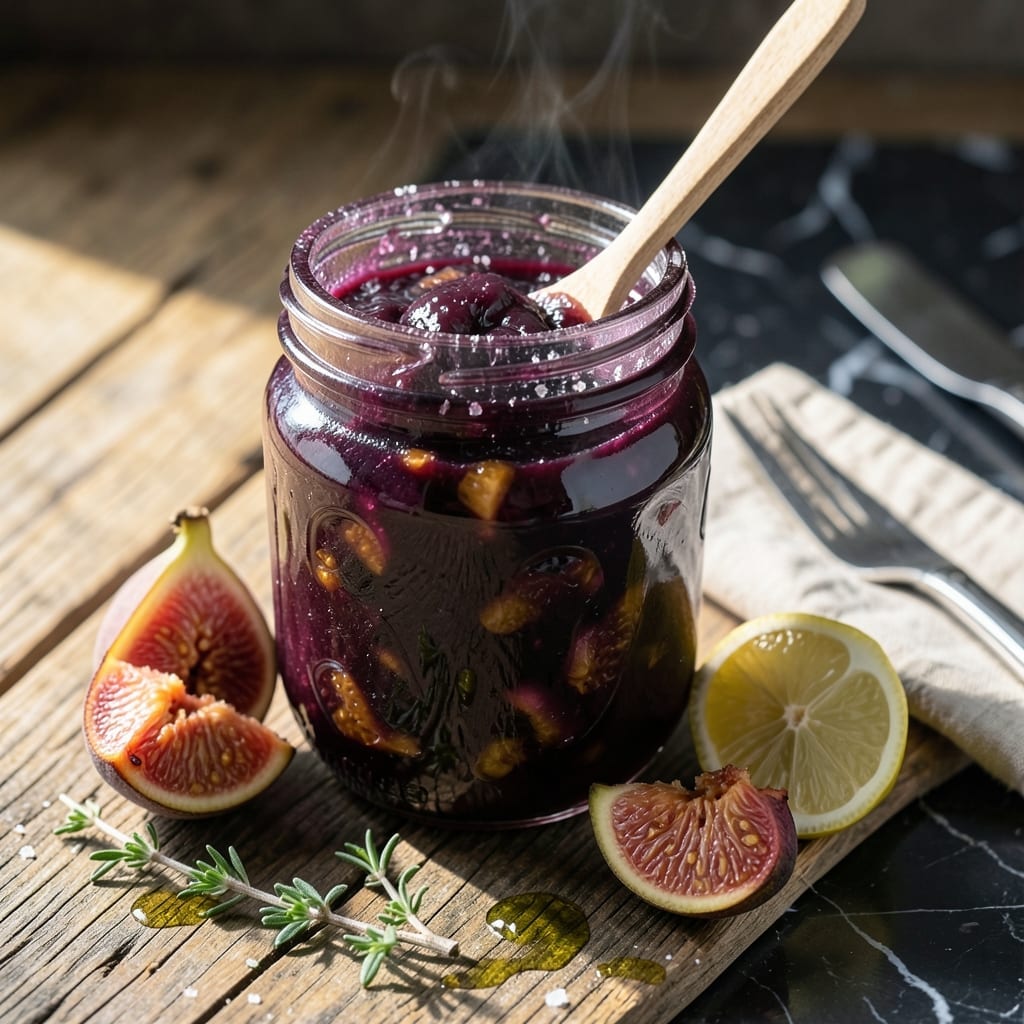
Preserving figs at their peak ripeness doesn’t require excess sugar to create a delicious spread. This method focuses on natural sweetness and proper canning techniques to ensure safety and flavor.
With a few simple ingredients and attention to detail, you’ll produce a low sugar jam that captures the rich, fruity essence of fresh figs. The process maintains texture and taste while meeting dietary preferences.
Ingredients for Low Sugar Fig Jam Recipe for Canning
Eight natural ingredients create a perfectly balanced spread with vibrant fig flavor and minimal added sugar.
| Ingredient | Amount | Notes |
|---|---|---|
| Fresh Fig Fruit 🍇 | 4 lbs | Ripe, stemmed, quartered |
| Granulated Cane Sugar 🍚 | 1 cup | Reduced quantity for low-sugar |
| Lemon Juice 🍋 | ½ cup | Freshly squeezed, bottled works |
| Water 💧 | ½ cup | For thinning if needed |
| Pomona Universal Pectin 🧪 | 2 tsp | Low-sugar pectin activator |
| Calcium Water 💧 | 2 tsp | Included with Pomona pectin |
| Vanilla Bean 🌿 | 1 whole | Split and scraped |
| Ground Cinnamon 🌶️ | ½ tsp | Optional, for warmth |
[recipe_ingredient_scaler]
The figs are everything here. Farmers market or homegrown yield the best flavor—look for deep purple varieties (Brown Turkey, Black Mission) that are soft but not mushy. Pomona Universal Pectin is essential for low-sugar jams; find it at Whole Foods or order online. Vanilla bean adds depth, but pure vanilla extract (1 tsp) works if that’s what’s on hand.
Out of fresh figs? Frozen figs work surprisingly well—thaw and drain excess liquid first. No Pomona? Regular pectin with extra lemon juice can substitute, but expect slightly softer set. The sugar can be reduced further to 3/4 cup, but texture may differ. For a spiced variation, a pinch of ground cloves or allspice pairs beautifully with the cinnamon.
Processed jam keeps at room temperature for 1 year when properly canned. Once opened, refrigerate and use within 3 weeks. Pectin loses effectiveness over time, so check expiration dates before starting. Always sterilize jars and lids thoroughly for safe preservation.
Why You’ll Love This Recipe
- One Pot Magic: I toss everything in a single pot and let the Pomona pectin do the work—no fancy steps.
- Pure Fig Goodness: The low sugar lets the ripe figs shine, with just a hint of lemon to brighten it up.
- Gift Jar Ready: I can these in cute jars for hostess gifts or breakfast treats. Honestly, everyone asks for the recipe.
- Pantry Staple: It keeps for months, so I always have a sweet spread for toast or cheese boards.
Step-by-Step Instructions for Low Sugar Fig Jam for Canning
This method ensures a perfectly set jam with vibrant fig flavor and minimal added sugar.
Step 1: Prepare the Fruit and Activate the Pectin
Begin by stemming and quartering all 4 lbs Fresh Fig Fruit. The fruit should be ripe but firm—overly soft figs can make your jam too thin. I use a sharp paring knife for precision, and I always check for any hidden stems that might have been missed.
In a separate small bowl, combine the 2 tsp Pomona Universal Pectin with the 1 cup Granulated Cane Sugar. This low-sugar pectin requires mixing with sugar before use to prevent clumping. Set this mixture aside while you prepare the fruit.
Step 2: Cook the Figs with Calcium Water
In a large, heavy-bottomed pot, combine the prepared figs with the 0.5 cup Lemon Juice, 0.5 cup Water, and 2 tsp Calcium Water. The calcium water is essential—it reacts with the pectin to create the gel structure. Stir well to distribute the calcium water evenly.
Bring the mixture to a boil over medium-high heat, stirring frequently to prevent sticking. Once boiling, reduce the heat to medium and cook for 5 minutes, stirring occasionally. The figs will begin to soften and release their juices, creating a thick, fruity base.
Step 3: Add Sweetener and Flavorings
After the figs have softened, stir in the pectin-sugar mixture you prepared earlier. Use a whisk to ensure it dissolves completely into the hot fruit. Add the seeds from the 1 whole Vanilla Bean and the 0.5 tsp Ground Cinnamon for warmth and depth of flavor.
Return the mixture to a full boil, stirring constantly. This step is critical—you need a vigorous boil that cannot be stirred down for the pectin to activate properly. Boil hard for 1-2 minutes, then remove from heat. The jam should look slightly thickened, though it will continue to set as it cools.
Step 4: Test for Doneness and Adjust
To check if the jam is ready, perform a gel test: place a small spoonful on a chilled plate and return it to the freezer for 1 minute. If the jam wrinkles when pushed with a finger, it’s set. If it’s still too thin, return the pot to the heat and boil for another 1-2 minutes, then test again.
If the mixture appears too thick, stir in a small amount of additional water, 1 tablespoon at a time, until it reaches the desired consistency. The final jam should be glossy and slightly syrupy, with visible fruit pieces suspended throughout.
Step 5: Jar and Process for Canning
Ladle the hot jam into sterilized canning jars, leaving ¼-inch headspace at the top. Wipe the rims with a clean, damp cloth to ensure a proper seal. Apply the lids and rings, then process in a water bath canner for 10 minutes to preserve shelf stability.
After processing, remove the jars and place them on a towel-lined countertop to cool. You’ll hear the satisfying “ping” of the lids sealing as they cool. Once completely cool, check the seals, label the jars, and store in a cool, dark place. The jam will continue to thicken as it cools and will reach its final set within 24 hours.
Pro Tips For Making Low Sugar Fig Jam Recipe For Canning
- Test for Set: I learned this the hard way—after adding pectin, cook the jam for 1-2 minutes at a full rolling boil, then do the plate test: spoon a bit onto a chilled plate and check if it wrinkles when pushed with a finger.
- Chop Figs Evenly: Cut your fresh figs into uniform 1/4-inch pieces so they cook down at the same rate—no one wants a jar with half mushy figs and half stubborn chunks.
- Activate Pectin Properly: Mix Pomona pectin with sugar first, not the liquid, or you’ll get clumps that won’t dissolve, even after 20 minutes of stirring and cursing.
- Use a Wide Pot: After burning my first batch, I switched to a wide, heavy-bottomed pot—it boils evenly and reduces faster, so the jam cooks down in 15-20 minutes instead of 30.
Regional Styles of This low sugar fig jam recipe for canning
Mediterranean Style
In the Mediterranean, fig jam often takes on a rustic charm with minimal added sugar. Here, the focus is on slow-cooked figs enhanced with honey or a touch of balsamic vinegar for depth. Spices like cinnamon, star anise, or orange zest are common, giving the jam a warm, aromatic profile. Traditionally, this style is cooked in copper pots to achieve a rich, caramelized texture. It’s often paired with cheeses like goat or pecorino or spread on crusty bread.
Southern U.S. Style
In the American South, low-sugar fig jam leans into spiced, tangy flavors. Cooks often incorporate lemon juice and a hint of vanilla to balance the natural sweetness of the figs. Some recipes call for bourbon or brandy to add a boozy depth, a nod to the region’s love of spirited preserves. This style is typically cooked in small batches to maintain a chunky, fruit-forward texture, perfect for biscuits or glaze for meats like ham.
Middle Eastern Style
Middle Eastern fig jam, or marmalade, often skips refined sugar entirely, relying on figs’ natural pectin and date syrup or molasses for sweetness. Cardamom, rose water, or pomegranate molasses may be added for a floral, complex flavor. This version is usually simmered slowly until thick and glossy, making it ideal for drizzling over yogurt, pastries, or savory dishes like lamb.
French Style
The French approach to low-sugar fig jam is all about elegant simplicity. Figs are gently cooked with a splash of water or apple juice and a vanilla bean or bay leaf for subtle sophistication. The result is a smooth, spreadable jam with a deep, fruity taste, often enjoyed with fresh baguettes or soft cheeses. This style highlights the fig’s natural richness without overpowering it.
Nutrition Facts

Trained in classic French technique but raised on slow-cooked ribs and spicy rubs, she blends culinary skill with smoke and soul.
- Recipe for Boneless Pork Chops in Cast Iron Skillet: Sear and Baste to Juicy Perfection - October 3, 2026
- Recipe for Boneless Cross Rib Roast: Slow-Roasted Beef with Herb Crust - October 3, 2026
- Hamburgers in Sauce Recipe Crock Pot: Slow-Cooked Savory Delight - October 3, 2026