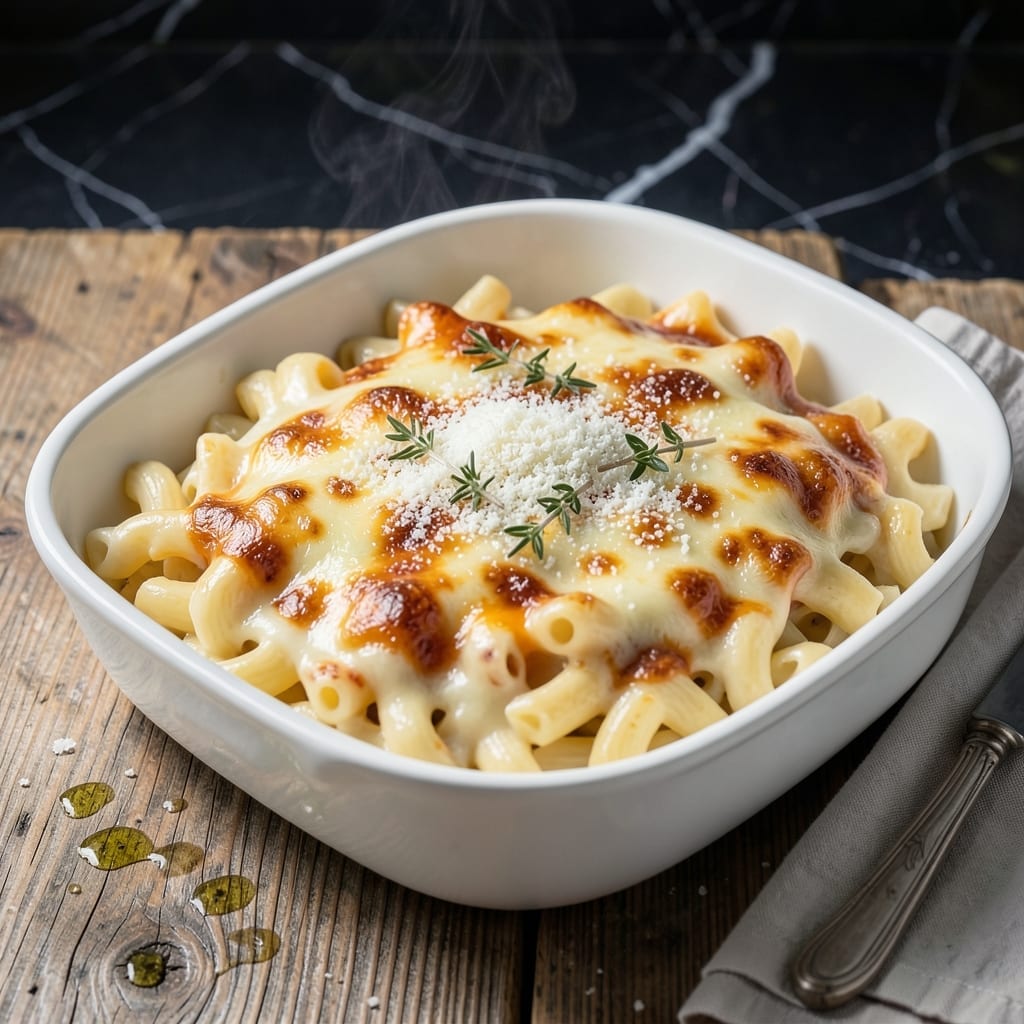
This mac and cheese elevates comfort food with the rich nutty depth of Gruyère. The cheese melts into a velvety sauce that clings to every noodle.
A simple roux base ensures a smooth creamy texture without graininess. The result is a dish that’s both sophisticated and deeply satisfying.
Ingredients for Mac and Cheese Recipe with Gruyere Cheese
Rich cheeses and a velvety roux create sophisticated comfort in this elevated dish.
| Ingredient | Amount | Notes |
|---|---|---|
| Elbow Macaroni 🍝 | 12 oz | Al dente, salted water |
| Gruyère Cheese 🧀 | 8 oz | Freshly grated, aged 6-12 months |
| Sharp Cheddar Cheese 🧀 | 4 oz | Freshly grated for meltability |
| Whole Milk 🥛 | 2 cups | Full-fat for creaminess |
| Unsalted Butter 🧈 | ½ cup | Divided for roux and topping |
| All-Purpose Flour 🌾 | ¼ cup | For roux base |
| Dijon Mustard 🟡 | 1 tbsp | Enhances cheese depth |
| Worcestershire Sauce 🫒 | 1 tsp | Vegetarian version required |
| Garlic Powder 🧄 | ½ tsp | Not garlic salt |
| Dry Mustard 🟡 | ½ tsp | Boosts cheese flavor |
| Salt 🧂 | 1 tsp | Diamond Crystal preferred |
| Ground Black Pepper 🌶️ | ½ tsp | Freshly ground |
| Panko Breadcrumbs 🍞 | ½ cup | For crunchy topping |
| Nutmeg 🌰 | 0.125 tsp | Freshly grated preferred |
[recipe_ingredient_scaler]
The Gruyère is non-negotiable for that signature nutty depth. Whole Foods or Murray’s Cheese carry excellent aged varieties—look for wheels labeled 6-12 months. Avoid pre-shredded; it’s coated in anti-caking agents that prevent smooth melting. The sharp cheddar should be a high-quality block, like Cabot or Tillamook, for optimal melt and flavor balance.
No Gruyère? Comté or Emmental offer similar nutty profiles. For the milk, whole is essential—lower-fat versions won’t create the same luxurious texture. Vegetarian Worcestershire can be found at Whole Foods or online. If you’re out of Dijon, whole-grain mustard at half the quantity works in a pinch. The panko can be swapped for fresh breadcrumbs if preferred.
The sauce can be made 2 days ahead—store covered in the fridge. Bake just before serving. Leftovers keep 3-4 days refrigerated or freeze for 2 months. Reheat gently with a splash of milk to restore creaminess. Always grate cheese fresh; pre-shredded melts poorly and can create a grainy texture.
Why You’ll Love This Recipe
- One-Pot Wonder: I melt the butter, whisk in the milk, and stir in the cheese—all in the same pot I boiled the pasta in.
- Gruyère Magic: The nutty depth of Gruyère paired with sharp cheddar makes every bite complex but still comfort-food familiar.
- Crowd Pleaser: From picky kids to dinner parties, this dish disappears fast. I’ll be real: even my cheese-snob brother asks for seconds.
- Leftovers? Yes Please: It reheats beautifully, and I love sneaking a bowl straight from the fridge at midnight.
Step-by-Step Instructions for Mac and Cheese
Master the technique for creamy, velvety macaroni with a golden breadcrumb topping.
Step 1: Cook the Elbow Macaroni to Al Dente
Bring a large pot of salted water to a rolling boil. Add the 12 oz Elbow Macaroni and cook according to package directions minus 1 minute for al dente texture. You want the pasta slightly underdone so it finishes cooking in the sauce.
Stir occasionally to prevent sticking. Drain the pasta in a colander but do not rinse—you need the starch to help the cheese sauce cling. Transfer the macaroni to a large bowl and set aside while you prepare the sauce.
Step 2: Create a Smooth Roux Base
In a heavy saucepan, melt 0.25 cup Unsalted Butter over medium heat until foaming subsides. Add the 0.25 cup All-Purpose Flour and whisk constantly for 2 minutes until the mixture turns a light golden color and smells nutty.
This roux is the foundation of your sauce. Cooking it to this stage removes the raw flour taste and ensures a smooth, lump-free base. The mixture should bubble gently but not brown—if it darkens too much, reduce the heat.
Step 3: Build the Cheese Sauce with Depth of Flavor
Gradually whisk in the 2 cups Whole Milk, 1 tablespoon at a time at first, to prevent lumps. Once smooth, add the remaining milk in a steady stream while whisking. Cook for 3-4 minutes until the sauce thickens enough to coat the back of a spoon.
Reduce heat to low and stir in the 1 tablespoon Dijon Mustard, 1 teaspoon Worcestershire Sauce, 0.5 teaspoon Garlic Powder, 0.5 teaspoon Dry Mustard, 1 teaspoon Salt, 0.5 teaspoon Ground Black Pepper, and 0.125 teaspoon Nutmeg. These seasonings enhance the cheese without overpowering it.
Add the 8 oz Gruyère Cheese and 4 oz Sharp Cheddar Cheese gradually, stirring until each addition is fully melted before adding more. The sauce should be glossy and velvety with no visible cheese strands.
Step 4: Combine Pasta and Sauce
Pour the cheese sauce over the cooked macaroni in the large bowl. Stir gently but thoroughly to ensure every piece of pasta is coated. The sauce will thicken slightly as it cools—this is normal and desired.
Taste and adjust seasoning if needed. The combination of Gruyère and Sharp Cheddar should provide a rich, nutty depth with a subtle tang from the mustards. Transfer the macaroni and cheese to a buttered baking dish.
Step 5: Add the Crunchy Topping and Bake
Melt the remaining 0.25 cup Unsalted Butter and toss it with the 0.5 cup Panko Breadcrumbs until evenly coated. Sprinkle this mixture over the macaroni and cheese in an even layer.
Bake in a preheated 375°F oven for 15-20 minutes until the topping is golden brown and the edges are bubbling. Let it rest for 5 minutes before serving to allow the sauce to set slightly.
Pro Tips For Making Mac And Cheese Recipe With Gruyere Cheese
- Grate Cheese Fresh: Pre-shredded cheese has anti-caking agents that make the sauce grainy—grate the Gruyère and cheddar yourself right before melting, about 2 cups of each for a standard batch.
- Undercook the Pasta: Pull the elbow macaroni 1-2 minutes early from boiling; it’ll finish cooking in the oven and won’t turn mushy under the cheese sauce.
- Warm the Milk: I learned this the hard way—cold milk can cause the cheese to clump, so heat it gently in the microwave for 45 seconds before adding to the roux.
- Add Mustard Powder: Sounds weird, but it works: a teaspoon of dry mustard in the cheese sauce balances the richness and makes the Gruyère’s nutty flavor pop.
Pro Cooking Tips for This Recipe
Roux Perfection
Cook your roux over medium heat for exactly 2 minutes until it turns light golden. This removes the raw flour taste and prevents graininess. I use a heavy-bottomed saucepan for even heat distribution. 🌡️
Cheese Melting Magic
Always grate cheese fresh—pre-shredded contains anti-caking agents that make the sauce grainy. Add cheese gradually, stirring until fully melted before adding more. This ensures a smooth velvety texture that clings perfectly to noodles.
Sauce Consistency
Your sauce should coat the back of a spoon but still flow freely. If too thick, whisk in 1-2 tbsp hot milk. If too thin, simmer for 1-2 extra minutes. The sauce will thicken slightly as it cools.
Pasta Timing
Cook pasta 1 minute less than package directions for al dente. It’ll finish cooking in the sauce. Drain but don’t rinse—starch helps the sauce cling. I use Barilla elbow macaroni for consistent texture.
Baking the Topping
For extra-crispy panko, broil for the last 1-2 minutes watching closely. Combine panko with melted butter and a pinch of garlic powder for flavor. Bake at 375°F for 15-20 minutes until golden. 🔥
Resting Matters
Let the dish rest for 5 minutes after baking. This allows the sauce to set slightly, making serving easier. The flavors meld during this time, enhancing the nutty depth of the Gruyère.
Nutrition Facts
Frequently Asked Questions
Why use Gruyère instead of regular cheddar?
Gruyère adds a sophisticated nutty depth that cheddar alone can’t achieve. Its complex flavor elevates the dish beyond basic mac and cheese. The melting properties also create a silkier sauce.
Can I make this ahead of time?
Yes! Prepare the dish up to baking, cover, and refrigerate for 2 days. Add 5 minutes to baking time if cold. For best results, add panko topping just before baking.
What if my sauce turns out grainy?
Graininess usually comes from pre-shredded cheese or overheating. Always use freshly grated cheese and cook the sauce on low heat. Stir constantly while adding cheese to prevent separation.
Can I substitute another cheese for Gruyère?
Comté or Emmental work well as they share Gruyère’s nutty profile. Avoid mild cheeses—they won’t provide the same depth. For a sharper taste, add extra aged cheddar.

Trained in classic French technique but raised on slow-cooked ribs and spicy rubs, she blends culinary skill with smoke and soul.
- Recipe for Boneless Pork Chops in Cast Iron Skillet: Sear and Baste to Juicy Perfection - October 3, 2026
- Recipe for Boneless Cross Rib Roast: Slow-Roasted Beef with Herb Crust - October 3, 2026
- Hamburgers in Sauce Recipe Crock Pot: Slow-Cooked Savory Delight - October 3, 2026