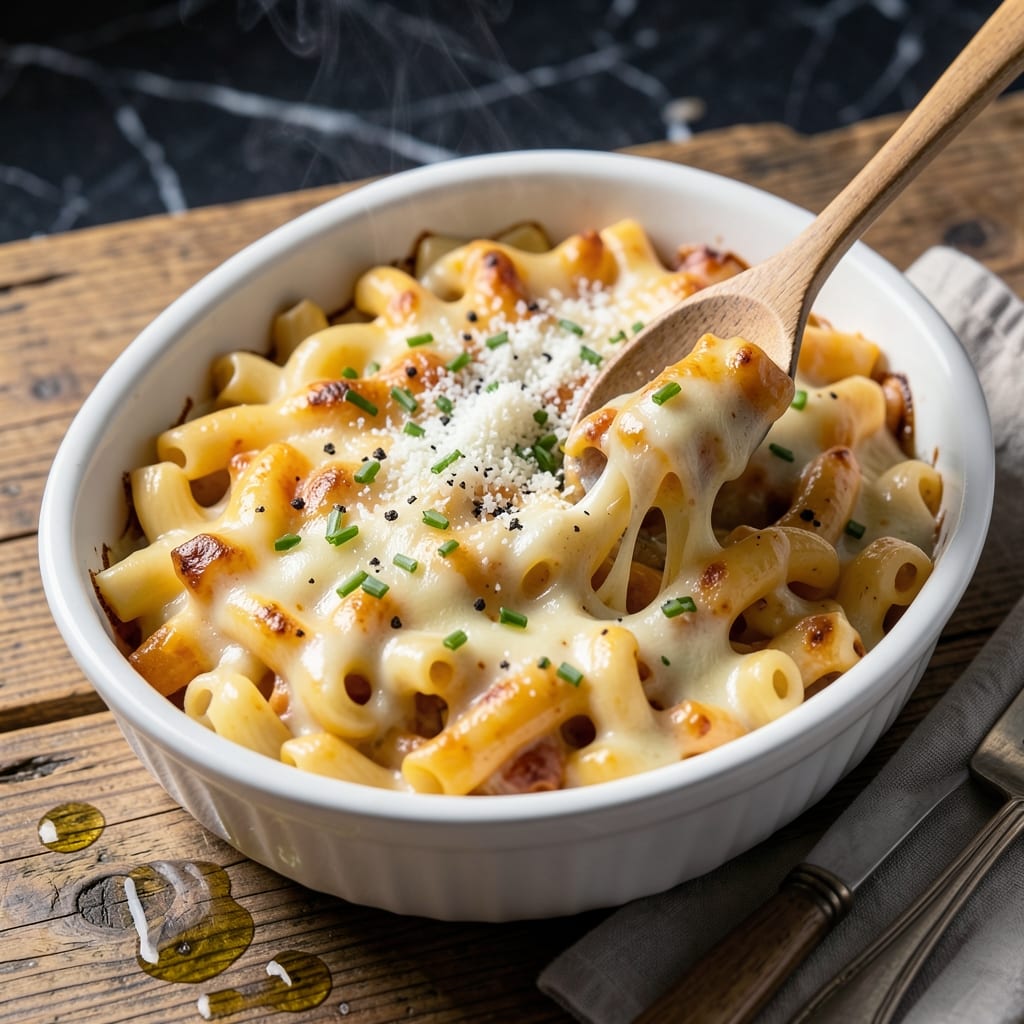
There’s a reason this stovetop mac and cheese has become my go-to comfort dish. It delivers ultra creamy results every time without a single oven step.
I developed this method after years of testing ratios, temperatures, and cheese blends. The key is a velvety roux-based sauce that coats every noodle perfectly.
You’ll get restaurant-quality texture with just a pot, a whisk, and 20 minutes of hands-on time. The cheese melts into a smooth, luscious sauce that clings beautifully to al dente pasta.
This version proves that vegetarian meals can be just as indulgent as their meaty counterparts. The result is always worth the effort.
Ingredients for Mac and Cheese Recipe with Measurements
Pantry staples plus a few good cheeses. Nothing fancy here, just creamy perfection.
| Ingredient | Amount | Notes |
|---|---|---|
| Elbow Macaroni 🍝 | 12 oz | Al dente texture preferred |
| Unsalted Butter 🧈 | ½ cup | For roux base |
| All-Purpose Flour 🌾 | ⅓ cup | Sifted for smooth sauce |
| Whole Milk 🥛 | 3 cups | Warm for better incorporation |
| Sharp Cheddar Cheese 🧀 | 8 oz | Freshly grated, block preferred |
| Gruyère Cheese 🧀 | 4 oz | Freshly grated for depth |
| Parmesan Cheese 🧀 | 2 oz | Freshly grated for umami |
| Dijon Mustard 🟡 | 1 tsp | For tangy complexity |
| Garlic Powder 🧄 | ½ tsp | Enhances cheese flavor |
| Onion Powder 🧅 | ½ tsp | Adds savory depth |
| Salt 🧂 | 1 tsp | Diamond Crystal preferred |
| Ground Black Pepper 🌶️ | ½ tsp | Freshly ground for best flavor |
| Nutmeg 🌰 | 0.125 tsp | Freshly grated for warmth |
[recipe_ingredient_scaler]
The cheese blend is everything here. Cabot or Tillamook sharp cheddar for tang, Gruyère for that melty depth (look for it at Whole Foods or Trader Joe’s), and Parmigiano-Reggiano for the salty finish. Always grate from a block—pre-shredded has anti-caking agents that make the sauce grainy (the good stuff, not the pre-shredded kind). The milk should be whole for maximum creaminess.
No Gruyère? Fontina or Monterey Jack melt beautifully. Swap Dijon for yellow mustard at half the amount if that’s what you’ve got. The nutmeg might seem small, but it’s doing big work—don’t skip it. Making this for a crowd? Double the roux (butter and flour) to handle extra milk. The pasta can be any short shape—cavatappi holds sauce best though.
Sauce thickens as it cools, so serve immediately for that ultra-creamy texture. Leftovers keep 3-4 days in the fridge (reheat with a splash of milk). Doesn’t freeze well—the cheese separates. But honestly? There won’t be leftovers.
Why You’ll Love This Recipe
- One Pot Wonder: I love that I only need a saucepan and a wooden spoon—no fancy equipment, just melt butter, whisk in flour, and let the milk and cheddar do their magic.
- That Sharp Bite: The sharp cheddar gives it a bold, tangy kick that’s so much better than the mild stuff. Honestly, it’s the only cheese I use now.
- Feeds a Crowd: Between us, this recipe scales perfectly for potlucks or lazy Sundays with the family. Even picky eaters go back for seconds.
- Budget Stretcher: Elbow macaroni and basic pantry staples keep it cheap, and leftovers taste just as good the next day. Took me three tries to get the ratios right, but now it’s foolproof.
Step-by-Step Instructions for Mac and Cheese
Here’s the method I use for ultra creamy results every single time.
Step 1: Cook the Elbow Macaroni to Al Dente Perfection
Bring a large pot of salted water to a rolling boil. Add the 12 oz Elbow Macaroni and cook according to package instructions until it’s just al dente—about 1 minute less than the suggested time. You want the pasta slightly underdone because it’ll continue cooking in the sauce.
Stir occasionally to prevent sticking, and taste test a piece to check for that perfect firmness with a slight resistance in the center. Drain the pasta immediately in a colander but don’t rinse it. The surface starch helps the cheese sauce cling beautifully to each piece.
Step 2: Create a Smooth Roux Base for the Cheese Sauce
In a large pot or Dutch oven, melt the 0.5 cup Unsalted Butter over medium heat. Once melted, whisk in the 0.33 cup All-Purpose Flour to form a smooth paste. This is your roux, the foundation of the sauce.
Cook the roux for 2-3 minutes, whisking constantly, until it turns a light golden color and emits a nutty aroma. This step removes the raw flour taste and ensures your sauce won’t have a pasty texture. Be careful not to let it brown too much—you’re aiming for a light, creamy sauce, not a dark one.
Step 3: Build the Ultra Creamy Cheese Sauce
Gradually pour in the 3 cups Whole Milk, whisking constantly to prevent lumps from forming. Start with small additions, about ½ cup at a time, ensuring each addition is fully incorporated before adding more. This creates a smooth, velvety base for your cheese sauce.
Once all the milk is incorporated, add the 1 tsp Dijon Mustard, 0.5 tsp Garlic Powder, 0.5 tsp Onion Powder, 1 tsp Salt, 0.5 tsp Ground Black Pepper, and 0.125 tsp Nutmeg. Stir well to combine. Bring the mixture to a gentle simmer and cook for 3-4 minutes until it thickens enough to coat the back of a spoon.
Step 4: Incorporate the Cheeses for Maximum Creaminess
Reduce the heat to low and begin adding the cheeses. Start with the 8 oz Sharp Cheddar Cheese and 4 oz Gruyère Cheese, stirring constantly until they’re fully melted and smooth. These two cheeses create the perfect balance of sharpness and depth.
Finally, stir in the 2 oz Parmesan Cheese. The Parmesan adds a wonderful umami note that takes this dish to the next level. Taste and adjust seasoning if needed, but remember that the cheeses add their own saltiness, so go easy on additional salt.
Step 5: Combine Pasta and Sauce for the Final Touch
Add the cooked and drained Elbow Macaroni to the cheese sauce, stirring to coat every piece evenly. If the sauce seems too thick, add a splash of the pasta cooking water to loosen it to your desired consistency.
Let the mixture sit for 2-3 minutes off the heat to allow the pasta to absorb some of the sauce and the flavors to meld together. The result should be a luscious, creamy mac and cheese with a perfect balance of flavors and a texture that’s rich without being heavy. Serve immediately while hot and at its creamiest.
Pro Tips For Making Mac And Cheese Recipe With Measurements
- Cook Pasta Al Dente: Boil the elbow macaroni for 1 minute less than the package says—I learned this the hard way after ending up with mushy mac and cheese more times than I’d like to admit.
- Grate Your Own Cheese: Skip the pre-shredded stuff and grate the sharp cheddar yourself; the anti-caking agents in bagged cheese make the sauce grainy, and fresh grated melts like a dream.
- Temper the Milk: Warm the whole milk slightly before adding it to the roux, about 1 minute in the microwave. Cold milk can make the sauce clump, and nobody wants lumpy mac and cheese.
- Salt the Water Well: Use at least 1 tablespoon of salt in the pasta water—more than you think, especially since you’re using unsalted butter. The pasta needs seasoning, or the dish will taste flat.
Perfect Pairings for This mac and cheese recipe with measurements
Side Dish Pairings
A simple green salad with a light vinaigrette balances the richness perfectly. I love baby spinach with cherry tomatoes, cucumber slices, and a tangy balsamic dressing to cut through the creaminess. It’s a refreshing contrast that cleanses your palate. 🥗
Protein Additions
For a heartier meal, add crispy bacon or grilled chicken. I often toss in ½ cup crumbled bacon right before serving—it adds a smoky crunch. If you prefer chicken, 1 cup diced grilled chicken breast works beautifully without overpowering the dish.
Vegetable Sides
Roasted broccoli or steamed green beans add a pop of color and texture. Toss 2 cups broccoli florets with 1 tbsp olive oil and roast at 400°F for 15 minutes until crispy. The charred edges complement the creamy pasta wonderfully.
Bread Options
A slice of garlic bread or crusty sourdough is perfect for soaking up any extra cheese sauce. I make mine with New Seasons Market sourdough, toasted and rubbed with a garlic clove. It’s a Portland favorite in our house! 💛
Wine Pairings
A crisp Sauvignon Blanc or Pinot Noir pairs beautifully. The acidity in a New Zealand Sauvignon Blanc cuts through the richness, while a light Oregon Pinot Noir adds earthy notes that complement the cheeses. Both are local favorites here.
Beer Pairings
For beer lovers, a light lager or wheat beer works well. I reach for a Portland IPA with citrus notes to balance the dish. Avoid heavy stouts—they can overpower the delicate cheese flavors.
Nutrition Facts
Frequently Asked Questions
Can I use pre-shredded cheese to save time?
Not recommended. Pre-shredded cheese contains anti-caking agents that prevent smooth melting. Always grate from a block for that ultra-creamy texture.
Why does my sauce turn out grainy?
Graininess usually means the cheese wasn’t melted slowly enough or the heat was too high. Reduce to low heat and stir constantly when adding cheese.
How do I make it ahead for a party?
Prepare the sauce and pasta separately, then combine and reheat with a splash of milk. The sauce thickens as it cools. Serve within 2 hours for best texture.

Trained in classic French technique but raised on slow-cooked ribs and spicy rubs, she blends culinary skill with smoke and soul.
- Recipe for Boneless Pork Chops in Cast Iron Skillet: Sear and Baste to Juicy Perfection - October 3, 2026
- Recipe for Boneless Cross Rib Roast: Slow-Roasted Beef with Herb Crust - October 3, 2026
- Hamburgers in Sauce Recipe Crock Pot: Slow-Cooked Savory Delight - October 3, 2026