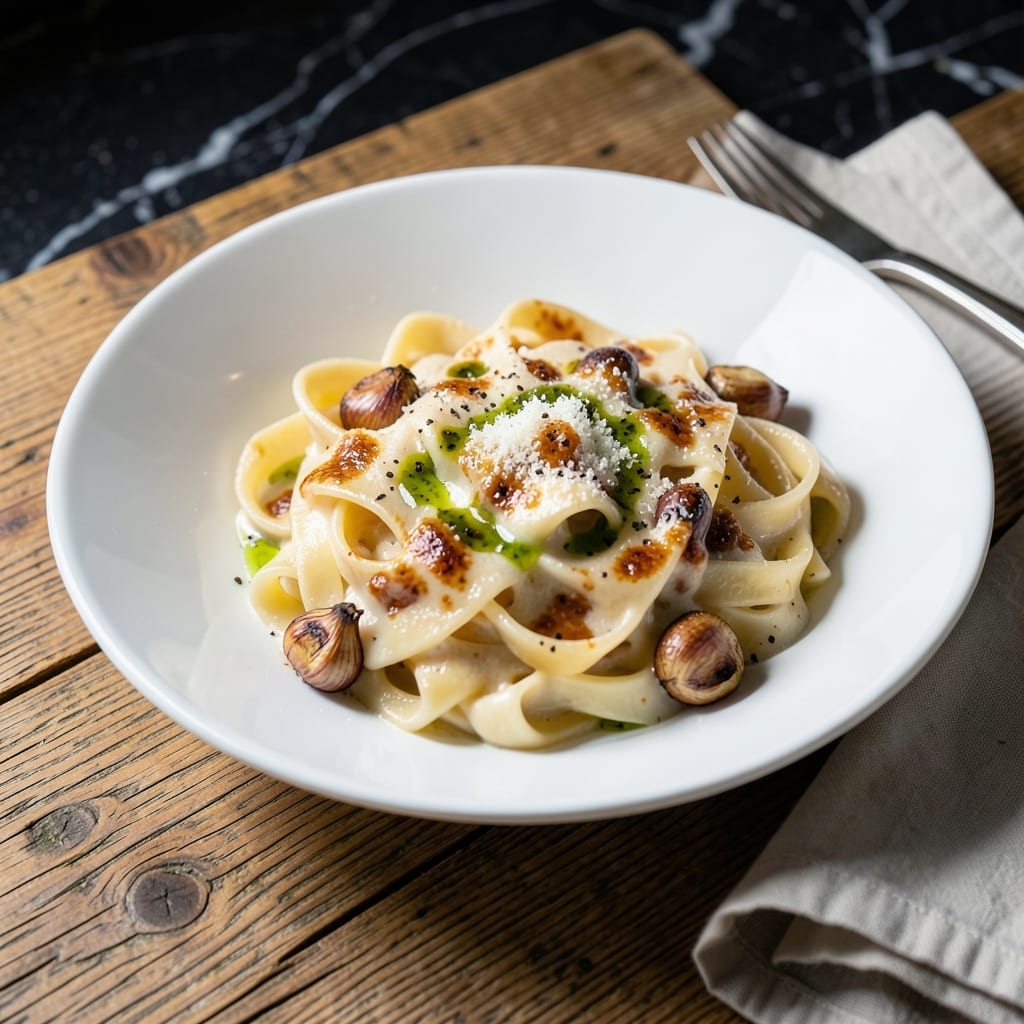
This restaurant-quality sauce brings that signature Macaroni Grill richness to your home kitchen. The secret lies in slowly roasted garlic that melts into a velvety cream base.
I’ve perfected this copycat version through careful testing to match the original’s depth and smooth texture. It’s surprisingly simple to make with basic pantry staples.
Ingredients for Macaroni Grill Roasted Garlic Cream Sauce
Basic pantry staples transform into that iconic creamy, garlicky restaurant sauce you crave.
| Ingredient | Amount | Notes |
|---|---|---|
| Garlic Heads 🧄 | 2 whole | Roasted until caramelized |
| Heavy Cream 🥛 | 2 cups | Full-fat for richness |
| Unsalted Butter 🧈 | ½ cup | Room temperature preferred |
| Parmesan Cheese 🧀 | ¾ cup | Freshly grated for best texture |
| Olive Oil 🫒 | 2 tbsp | Extra-virgin for roasting |
| All-Purpose Flour 🌾 | 2 tbsp | For thickening the sauce |
| Whole Milk 🥛 | ½ cup | Adjusts sauce consistency |
| Salt 🧂 | 1 tsp | Sea salt or kosher preferred |
| Black Pepper 🌶️ | ½ tsp | Freshly ground for best flavor |
| Nutmeg 🌰 | ¼ tsp | Freshly grated if possible |
[recipe_ingredient_scaler]
The garlic is non-negotiable here. Grab whole heads with plump, firm cloves—avoid any with sprouting. Trader Joe’s and Whole Foods always have great quality. Roast them low and slow until they’re golden and buttery soft. The Parmesan needs to be the real deal—Parmigiano-Reggiano if you can find it. Pre-grated just doesn’t melt the same way.
No heavy cream? Half-and-half plus a tbsp of butter gets you close. Out of Parmesan? Pecorino Romano works but it’s saltier, so ease up on the salt. The nutmeg might seem odd but it adds depth—freshly grated is worth the effort. If you’re avoiding dairy entirely, coconut cream can stand in, though the flavor will shift slightly.
Sauce thickens as it cools. Store in an airtight container in the fridge for up to 5 days. Freeze for 3 months if you want to make a big batch. Reheat gently on the stove—microwaving can cause separation.
Why You’ll Love This Recipe
- One Pan Wonder: I just toss whole garlic heads in the oven, no chopping—just roast, squeeze, and blend into the cream.
- Rich Garlic Depth: That slow-roasted garlic turns mellow and sweet, then melts into the heavy cream for a sauce so smooth it coats every noodle.
- Weeknight Hero: Between us, I’ve served this over pasta, chicken, and even as a dip for crusty bread.
- Budget Luxury: Parmesan and butter stretch this into a restaurant-worthy sauce for pennies compared to eating out.
Step-by-Step Instructions for Roasted Garlic Cream Sauce
Here’s the method I use to recreate that signature restaurant richness at home.
Step 1: Roast the Garlic to Caramelized Perfection
Preheat your oven to 400°F. Slice the top third off the 2 whole Garlic Heads, exposing the cloves inside. Drizzle each with 1 tablespoon Olive Oil (using half of the total), ensuring every clove gets a light coating.
Wrap each head tightly in aluminum foil and place directly on the oven rack. Roast for 40-45 minutes until the cloves are deep golden brown and soft enough to spread like butter. This slow roast transforms pungent garlic into sweet, nutty paste that forms the sauce’s foundation.
Step 2: Create the Roux Base for Creamy Texture
In a medium saucepan over medium heat, melt the 0.5 cup Unsalted Butter. Once foaming subsides, whisk in the 2 tbsp All-Purpose Flour to form a smooth paste. Cook this roux for 2-3 minutes, stirring constantly, until it turns a pale golden color and develops a nutty aroma.
This step is crucial—it thickens the sauce and prevents the flour taste from lingering. The butter should be fully melted but not browned when you add the flour. If it browns, start over; burnt butter makes the sauce bitter.
Step 3: Build the Cream Sauce with Roasted Garlic
Slowly pour in the 2 cups Heavy Cream, whisking constantly to prevent lumps. Then, squeeze the roasted garlic cloves from their skins directly into the sauce—you should get about 2 tablespoons of paste from the 2 whole Garlic Heads. Add the 0.5 cup Whole Milk and whisk until smooth.
Bring the mixture to a gentle simmer over medium-low heat. Cook for 3-4 minutes, stirring frequently, until the sauce thickens enough to coat the back of a spoon. Watch for small bubbles at the edges—this indicates the right temperature.
Step 4: Finish with Cheese and Seasonings
Reduce heat to low and stir in the 0.75 cup Parmesan Cheese until fully melted and smooth. Then add the 1 tsp Salt, 0.5 tsp Black Pepper, and 0.25 tsp Nutmeg. The nutmeg adds a subtle warmth that balances the richness.
Taste and adjust seasoning if needed, but remember the Parmesan is already salty. The sauce should be velvety smooth with a glossy sheen. If it’s too thick, whisk in a splash more Whole Milk to reach your desired consistency.
Pro Tips For Making Macaroni Grill Roasted Garlic Cream Sauce
- Roast Garlic Low and Slow: I learned this the hard way—400°F for 30-40 minutes is the sweet spot for caramelized, not burnt, garlic. Drizzle with olive oil and wrap tightly in foil to trap the steam.
- Warm Your Cream First: Cold cream can cause the sauce to break. Heat it gently in a saucepan before adding to the butter and garlic—about 2 minutes on medium-low.
- Skip Pre-Shredded Parmesan: The anti-caking agents in pre-shredded cheese make the sauce grainy. Grate a block of Parmesan yourself, and use about 1 cup for the right thickness.
- Strain the Garlic: After roasting, squeeze the cloves out and mash them into a paste. This ensures a smooth sauce without stringy bits—sounds weird, but it works.
Troubleshooting This Dish
Sauce Too Thin
If your sauce isn’t thickening, cook it longer at a gentle simmer. The roux needs 3-4 minutes to develop properly. If it’s still thin, mix 1 tsp cornstarch with 1 tbsp cold water and whisk in. Cook for 2 more minutes to activate the starch. 💡
Sauce Too Thick
Whisk in ¼ cup Whole Milk at a time until it reaches your desired consistency. I often find the sauce thickens as it cools, so let it sit for 5 minutes before adding more liquid. Heat gently while adjusting.
Lumpy Sauce
Prevent lumps by whisking constantly when adding Heavy Cream to the roux. If lumps form, strain through a fine-mesh sieve or blend with an immersion blender. For stubborn lumps, press through the sieve with a spatula. Smooth texture is key.
Garlic Bitter
Bitterness means the garlic over-roasted or burnt. Next time, check at 35 minutes and pull it if it’s golden. If it’s already bitter, balance with 1 tsp honey or ½ tsp sugar. The sweetness will counteract the harshness.
Sauce Separating
If the sauce breaks or looks greasy, it overheated. Remove from heat and whisk vigorously to re-emulsify. If that fails, slowly whisk in 1 tbsp cold milk to bring it back together. Keep heat at low moving forward.
Cheese Not Melting
Pre-shredded cheese often contains anti-caking agents that prevent smooth melting. Always use freshly grated Parmesan for best results. If clumping occurs, switch to medium heat and stir constantly until smooth.
Nutrition Facts
Frequently Asked Questions
Can I use pre-minced garlic instead of roasting whole cloves?
No, pre-minced lacks the sweet, caramelized depth that roasting provides. It will taste harsh and raw. Stick with 2 whole heads roasted for 40-45 minutes at 400°F for best results.
How do I store leftover sauce?
Transfer to an airtight container and refrigerate for up to 5 days. For longer storage, freeze for 3 months. Reheat gently on the stove to prevent separation.
Why does my sauce turn grainy?
This happens if the cheese overheats or isn’t finely grated. Use freshly grated Parmesan and keep heat at low when adding it. Stir constantly until melted.
Can I make this dairy-free?
Yes, substitute coconut cream for heavy cream and use dairy-free butter. Skip the Parmesan or use a vegan alternative. Note that the flavor will differ slightly.

Trained in classic French technique but raised on slow-cooked ribs and spicy rubs, she blends culinary skill with smoke and soul.
- Recipe for Boneless Pork Chops in Cast Iron Skillet: Sear and Baste to Juicy Perfection - October 3, 2026
- Recipe for Boneless Cross Rib Roast: Slow-Roasted Beef with Herb Crust - October 3, 2026
- Hamburgers in Sauce Recipe Crock Pot: Slow-Cooked Savory Delight - October 3, 2026