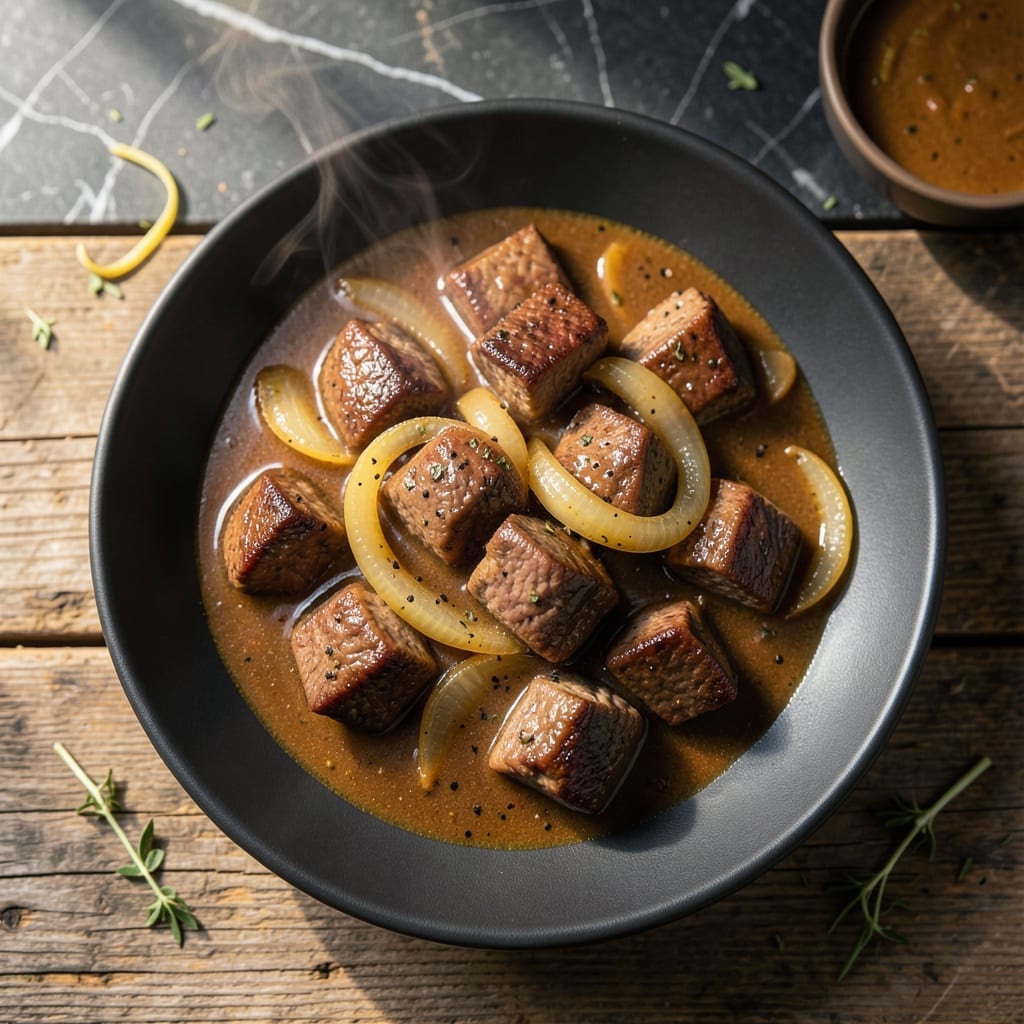
There’s a reason slow-simmered beef stew remains a timeless comfort dish—it transforms simple ingredients into something extraordinary. This version delivers rich, hearty flavor with a Southern-inspired touch that feels like home.
The secret lies in the low-and-slow cooking method, which turns tough cuts of beef into fall-apart tender perfection. Aromatic vegetables and herbs build depth, creating a broth so flavorful it deserves to be savored on its own.
By the time it finishes, you’ll have a bowl of stew that’s warm, satisfying, and packed with layers of taste. The beef melts in your mouth, while the vegetables soak up every bit of that savory broth.
Perfect for chilly evenings or when you need a meal that feels like a hug. This is comfort food at its finest.
Ingredients for Magnolia Beef Stew
Pantry staples plus a well-chosen cut of beef. Nothing complicated, just hearty Southern flavor.
| Ingredient | Amount | Notes |
|---|---|---|
| Beef Chuck Roast 🥩 | 2 lb | Cut into 1-inch cubes, well-marbled |
| All-Purpose Flour 🌾 | ¼ cup | For dredging beef cubes |
| Kosher Salt 🧂 | 1 ½ tsp | Divided for seasoning |
| Black Pepper 🌶️ | 1 tsp | Freshly ground preferred |
| Olive Oil 🫒 | 2 tbsp | Divided for browning |
| Yellow Onion 🧅 | 1 whole | Large, diced |
| Garlic Cloves 🧄 | 4 cloves | Minced finely |
| Carrots 🥕 | 3 whole | Peeled, cut into chunks |
| Celery Stalks 🌿 | 2 whole | Cut into chunks |
| Russet Potatoes 🥔 | 2 whole | Peeled, cubed into 1-inch pieces |
| Low-Sodium Beef Broth 💧 | 4 cups | Divided for deglazing and simmering |
| Tomato Paste 🍅 | 2 tbsp | For depth of flavor |
| Dried Thyme 🍃 | 1 tsp | Southern staple herb |
| Bay Leaves 🌿 | 2 whole | For aromatic infusion |
| Worcestershire Sauce 💧 | 1 tbsp | Adds umami richness |
[recipe_ingredient_scaler]
The beef is everything here. Chuck roast is non-negotiable—it’s the marbling that gives you that melt-in-your-mouth texture after hours of simmering. Look for pieces with visible fat streaks (the good stuff, not the pre-cubed kind). I grab mine from Whole Foods or Costco when it’s on sale. If you’re at a butcher, ask for a well-marbled cut from the shoulder.
No chuck? Brisket or short ribs work in a pinch, but they’ll need even longer to break down. Out of tomato paste? One tablespoon ketchup plus a pinch of sugar gets you close. The Worcestershire adds that Southern tang—Annie’s or Lea & Perrins are solid. Vegetable broth with a splash of soy sauce can sub for beef broth if needed (don’t skip this part).
Stew tastes even better the next day. Stores 4-5 days in the fridge, freezes for 3 months. I portion leftovers into quart containers—perfect for a cozy dinner anytime. (frozen works in a pinch)
Why You’ll Love This Recipe
- One Pot Wonder: I just brown the beef chuck in olive oil, dust it with flour, and let the slow cooker do the rest. Honestly, cleanup is a breeze.
- Deep Savory Flavor: The flour crust on the beef locks in juices, and the salt and pepper create that rich, hearty taste I crave on chilly evenings.
- Feeds a Crowd: Between us, this stew stretches easily—perfect for Sunday supper or meal prepping lunches for the week.
- Budget Friendly: Chuck roast is affordable, and a little goes a long way. I’ll be real: it’s my secret for a filling meal that doesn’t break the bank.
Step-by-Step Instructions for Slow-Simmered Beef Stew
This method builds layers of flavor while keeping the beef incredibly tender and the vegetables perfectly cooked.
Step 1: Sear the Beef for Deep Flavor
Pat the 2 lb Beef Chuck Roast cubes dry with paper towels, then season with 1 tsp Kosher Salt and 1 tsp Black Pepper. Toss the beef in the 0.25 cup All-Purpose Flour until evenly coated, shaking off any excess.
Heat 1 tbsp Olive Oil in a large Dutch oven over medium-high heat. When the oil shimmers, add the floured beef in batches, being careful not to crowd the pan. Sear for 3-4 minutes per side until deeply browned on all sides. Transfer the seared beef to a plate and set aside.
Step 2: Build the Aromatic Base
In the same Dutch oven, add the remaining 1 tbsp Olive Oil if needed. Add the diced Yellow Onion, Carrots, and Celery Stalks. Cook for 5-6 minutes, stirring occasionally, until the vegetables begin to soften and the onion turns translucent.
Stir in the minced 4 cloves Garlic Cloves and 2 tbsp Tomato Paste, cooking for 1 minute until the garlic is fragrant and the tomato paste darkens slightly. This step intensifies the umami depth that defines a rich, slow-cooked stew.
Step 3: Deglaze and Simmer
Pour in 1 cup Low-Sodium Beef Broth to deglaze the pan, scraping up all the browned bits from the bottom with a wooden spoon. Add the remaining 3 cups Low-Sodium Beef Broth, 1 tbsp Worcestershire Sauce, 1 tsp Dried Thyme, and 2 whole Bay Leaves.
Return the seared beef to the pot, along with any accumulated juices. Stir well to combine, then bring the mixture to a boil. Reduce the heat to low, cover, and let it simmer gently for 1.5 hours.
Step 4: Add Potatoes and Finish Cooking
After 1.5 hours, add the cubed Russet Potatoes to the pot, stirring to ensure they’re submerged in the liquid. Continue simmering, covered, for another 30-45 minutes until the beef is fork-tender and the potatoes are soft.
Taste and adjust seasoning with the remaining 0.5 tsp Kosher Salt if needed. The stew should have a rich, velvety sauce that coats the back of a spoon. Discard the bay leaves before serving.
Pro Tips For Making Magnolia Beef Stew
- Sear in Batches: Don’t crowd the pot when browning the chuck roast—2-3 pieces at a time max, or they’ll steam instead of sear. I learned this the hard way after ending up with gray, sad beef instead of that deep crust.
- Flour the Beef: Toss the chuck roast in flour just before searing, shaking off the excess. This creates a thicker, richer gravy as it cooks down—sounds simple, but it actually changes the outcome.
- Skip the Cold Oil: Heat the olive oil in the pot until it shimmers before adding the beef. Cold oil makes the meat absorb grease instead of forming a crisp crust, and nobody wants a soggy stew base.
- Wait to Season: Hold off on heavy salting until after the beef is seared. Kosher salt draws out moisture, and seasoning too early can prevent proper browning—my grandmother swore by this, and she was right.
Essential Equipment for magnolia beef stew
Dutch Oven Essentials
A heavy 5-6 quart Dutch oven is non-negotiable for this recipe. I swear by my Lodge enameled cast iron—it distributes heat evenly and retains it perfectly for those long simmers. The tight-fitting lid traps steam, which keeps the beef moist during the 2+ hour cook time. 🔥
Quality Knives Matter
You’ll be doing a lot of chopping, so a sharp 8-inch chef’s knife is your best friend. I use a Wüsthof Classic for all my prep work. A good paring knife helps with peeling carrots and potatoes efficiently.
Wooden Spoons
For deglazing and stirring, a wooden spoon won’t scratch your Dutch oven’s surface. I keep a 12-inch one handy for reaching all corners. The flat edge is perfect for scraping up those flavorful browned bits.
Measuring Tools
Accurate measurements make a difference in stew. I use OXO Good Grips measuring cups and spoons—they’re durable and easy to read. A 1 tbsp measure is essential for the tomato paste and Worcestershire sauce.
Cutting Board
A large 12×18-inch cutting board gives you space to prep all vegetables at once. I prefer bamboo for its knife-friendly surface. The grooves around the edge catch any juices from the beef.
Instant-Read Thermometer
While not strictly necessary, a ThermoWorks Instant Read helps verify your beef reaches the perfect tenderness. I check the internal temp after 1.5 hours to gauge progress before adding potatoes.
Nutrition Facts
Frequently Asked Questions
Can I use a slow cooker instead of a Dutch oven?
Yes! Brown the beef first, then transfer everything to your slow cooker. Cook on low for 7-8 hours or high for 4-5 hours.
Why do I need to sear the beef first?
Searing creates a flavorful crust and deepens the overall taste. It also helps thicken the stew naturally. Skip this step and you’ll miss out on rich, complex flavors.
What if my stew is too thin?
Remove the lid and simmer uncovered for 10-15 minutes to thicken. Alternatively, mix 1 tbsp cornstarch with 1 tbsp water and stir in.
Can I add other vegetables?
Try parsnips, mushrooms, or peas. Add hearty veggies with the carrots, and delicate ones like peas near the end.

Trained in classic French technique but raised on slow-cooked ribs and spicy rubs, she blends culinary skill with smoke and soul.
- Recipe for Curried Lamb Chops: Spice-Rubbed and Pan-Seared to Succulence - October 3, 2026
- Recipe for Boneless Leg of Lamb Roast in the Oven: Herb-Crusted and Rosy Pink Inside - October 3, 2026
- Meat Loaf Recipe With Beef And Pork: Homestyle Blend With Rich Gravy - October 3, 2026