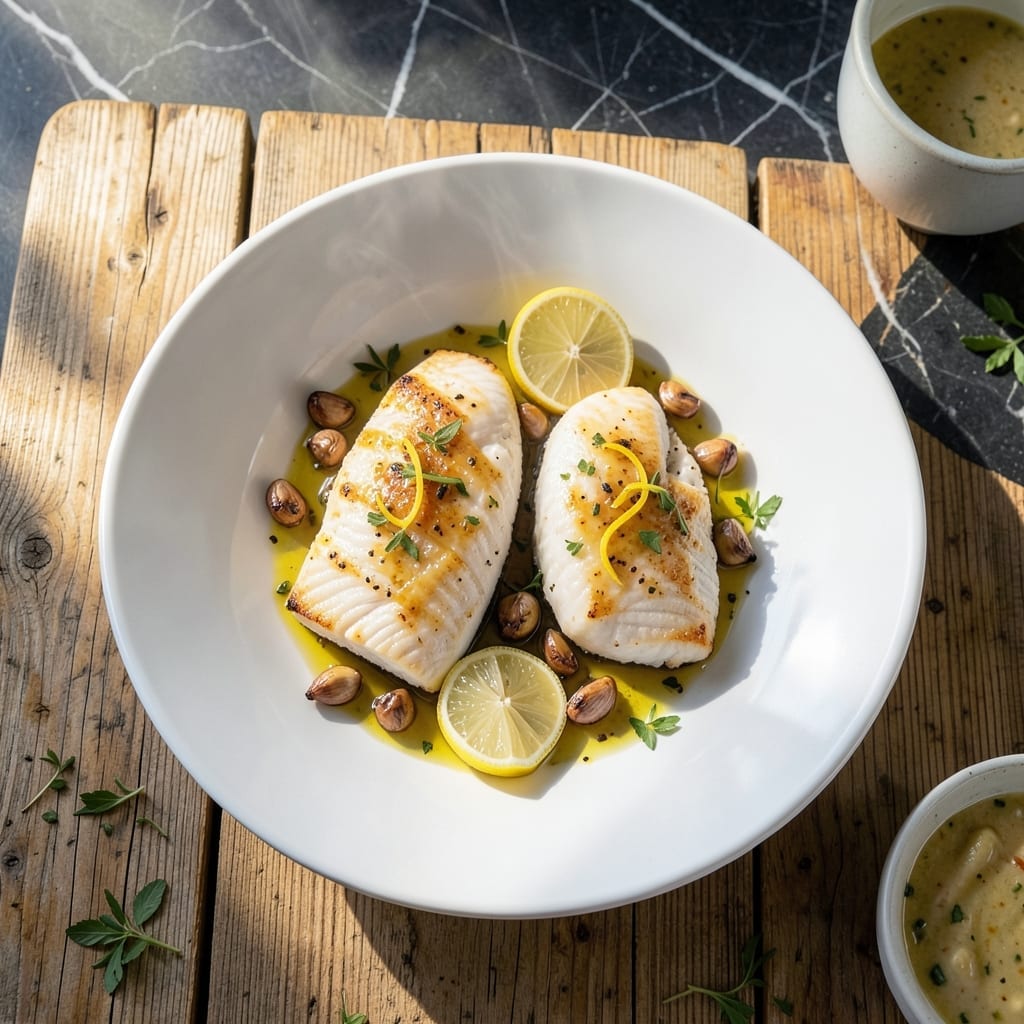
This baked mahi mahi recipe delivers perfectly flaky fillets every time with minimal effort. The secret is a simple lemon-garlic marinade that enhances the fish’s natural sweetness without overpowering it.
With just 20 minutes in the oven, you’ll achieve tender, moist fish with a light golden crust. The citrus brightens each bite while the garlic adds depth to this elegant yet approachable dish.
Ingredients for Mahi Mahi Fish Recipe Baked
Fresh mahi mahi fillets and a citrus-garlic marinade create this elegant baked dish with minimal effort.
| Ingredient | Amount | Notes |
|---|---|---|
| Mahi Mahi Fillets 🐟 | 1 ½ lb | Skinless, about 1-inch thick |
| Extra-Virgin Olive Oil 🫒 | 3 tbsp | Divided for marinade and baking |
| Fresh Lemon Juice 🍋 | ¼ cup | About 2-3 lemons |
| Lemon Zest 🍋 | 1 tbsp | From 1-2 lemons |
| Garlic Cloves 🧄 | 4 cloves | Minced finely |
| Dijon Mustard 🟡 | 1 tbsp | Smooth variety preferred |
| Honey 🍯 | 1 tbsp | Or sub maple syrup |
| Fresh Parsley 🌿 | ¼ cup | Chopped, for garnish |
| Dried Oregano 🍃 | 1 tsp | Crushed between fingers |
| Salt 🧂 | 1 tsp | Kosher or sea salt |
| Black Pepper 🌶️ | ½ tsp | Freshly ground |
| Paprika 🌶️ | ½ tsp | Sweet or smoked variety |
| Fresh Thyme Sprigs 🌿 | 4 pieces | Leaves stripped, optional |
[recipe_ingredient_scaler]
The mahi mahi quality is non-negotiable for flaky results. Wild-caught from Whole Foods or Costco ensures freshness—avoid previously frozen unless thawed properly. The fillets should be uniform in thickness (about 1-inch) for even cooking. For the olive oil, California Olive Ranch or Cobram Estate deliver the clean finish this dish requires. The lemon zest, often overlooked, provides the aromatic backbone that elevates the fish’s natural sweetness.
Out of fresh lemons? Bottled lemon juice at half the quantity works in a pinch, though fresh is superior. No honey? Maple syrup or agave substitute seamlessly. Dijon can be swapped with regular mustard (add a pinch of white wine vinegar for depth). For herb variations, fresh dill or tarragon complement the citrus beautifully. The paprika adds subtle color—skip it if you prefer a cleaner presentation.
Marinate the fish for no more than 30 minutes (acidic ingredients break down the flesh). Baked fillets keep in the fridge for 2-3 days—reheat gently to avoid drying. The marinade can be prepped 24 hours ahead, but add the lemon juice last to preserve its brightness. Always bring fish to room temperature before baking for even cooking.
Why You’ll Love This Recipe
- One Pan Wonder: I toss the fillets with olive oil, lemon, and garlic, pop it in the oven, and that’s it—no stove-top babysitting required.
- Zesty Perfection: The lemon zest and juice make the mahi mahi taste bright and fresh, like a beachside meal without leaving my kitchen.
- Weeknight Hero: Honestly, it’s my go-to for busy nights when I need something healthy and fast that still feels special.
- Leftovers Rock: The flavors actually deepen overnight, so I love packing the extras for lunch the next day—cold or reheated, it’s still ridiculously good.
Step-by-Step Instructions for Mahi Mahi Fish Baked
Master this technique for perfectly flaky, moist fillets with bright citrus notes every time.
Step 1: Prepare the Lemon-Garlic Marinade
In a medium bowl, whisk together 3 tbsp Extra-Virgin Olive Oil, 0.25 cup Fresh Lemon Juice, 1 tbsp Lemon Zest, and 4 cloves Garlic Cloves minced finely. The acidity of the citrus begins tenderizing the fish immediately while the garlic infuses the oil with aromatic depth.
Add 1 tbsp Dijon Mustard, 1 tbsp Honey, 1 tsp Dried Oregano, 1 tsp Salt, 0.5 tsp Black Pepper, and 0.5 tsp Paprika. Whisk vigorously until the honey dissolves completely and the marinade emulsifies. This balance of sweet, tangy, and spicy elements creates the signature flavor profile.
Step 2: Marinate the Mahi Mahi Fillets
Pat the 1.5 lb Mahi Mahi Fillets completely dry with paper towels to ensure maximum marinade absorption. Place the fillets in a shallow dish or resealable bag and pour the marinade over them, turning to coat evenly.
Let the fillets marinate at room temperature for 15-20 minutes. This short marinating time is crucial—mahi mahi’s delicate texture can turn mushy if exposed to acidic ingredients for too long. The surface should glisten with marinade but not appear soggy.
Step 3: Bake to Flaky Perfection
Preheat your oven to 400°F. Arrange the marinated fillets on a parchment-lined baking sheet, reserving any excess marinade. Discard the 4 pieces Fresh Thyme Sprigs if used in marinade, as their flavor has already infused.
Bake for 12-15 minutes until the fish flakes easily with a fork and reaches an internal temperature of 145°F. The edges should appear opaque and the center should still glisten slightly when done. Avoid overbaking—mahi mahi dries out quickly beyond this point.
Step 4: Garnish and Serve Immediately
Transfer the baked fillets to a serving platter. Drizzle with any reserved marinade from the baking sheet and sprinkle with 0.25 cup Fresh Parsley chopped. The parsley adds a fresh, bright contrast to the rich, caramelized marinade.
Serve immediately while hot. The fillets should separate into clean, moist flakes with a subtle golden hue from the paprika. Each bite will deliver the perfect balance of citrus brightness, garlic depth, and the natural sweetness of perfectly cooked mahi mahi.
Pro Tips For Making Mahi Mahi Fish Recipe Baked
- Preheat the Pan: I learned this the hard way—start with a screaming hot oven at 425°F to get that golden crust on the mahi mahi without drying it out.
- Dry the Fillets: Pat the mahi mahi completely dry with paper towels before seasoning—this guarantees a good sear and prevents the fish from steaming in its own juices.
- Skip Overcrowding: Give each fillet at least an inch of space on the baking sheet, or they’ll steam instead of roast, leaving you with soggy fish instead of crisp edges.
- Zest First: Grate the lemon zest before juicing the fruit—it’s a pain to wash the grater after, and you’ll actually use both the zest and juice like the recipe intends.
Perfect Pairings for These Flavors
Side Dish Ideas
This dish pairs beautifully with a simple quinoa pilaf—toss 1 cup cooked quinoa with 1 tbsp olive oil, lemon zest, and fresh parsley. The nutty flavor complements the fish’s sweetness. I also love roasted asparagus spears with a squeeze of lemon.
Wine Pairings
A crisp Sauvignon Blanc from New Zealand brings citrus notes that echo the marinade. For red wine lovers, try a light Pinot Noir from Oregon—its earthy undertones won’t overpower the fish. Both options balance the dish’s brightness. 🍷
Bread Options
Warm crusty bread soaks up the delicious marinade. I recommend a baguette or sourdough from your local bakery. For a lighter option, try grilled pita with a garlic rub.
Vegetable Pairings
Steamed green beans tossed with sliced almonds add texture and crunch. Alternatively, a fresh cucumber-tomato salad with red onion and feta provides a refreshing contrast. Both keep the meal light and balanced.
Starch Suggestions
Buttery jasmine rice or roasted baby potatoes with rosemary make hearty bases. For a low-carb option, cauliflower rice sautéed with garlic works surprisingly well. 💛
Nutrition Facts
Frequently Asked Questions
What temperature should I bake mahi mahi at?
Bake at 400°F for best results. This high heat ensures a quick cook that keeps the fillets moist while developing a light golden crust.
How long does it take to bake?
Plan for 12-15 minutes total. The fish is done when it flakes easily and reaches 145°F internally. Check at 12 minutes to prevent overcooking.
Can I use frozen fillets?
Yes, but thaw completely in the fridge first. Pat very dry before marinating to avoid a watery texture. Never bake from frozen.
Why did my fish turn out dry?
Overbaking is the most common cause. Mahi mahi cooks fast—pull it as soon as it hits 145°F. Also, avoid marinating longer than 30 minutes.

Trained in classic French technique but raised on slow-cooked ribs and spicy rubs, she blends culinary skill with smoke and soul.
- Recipe for Boneless Pork Chops in Cast Iron Skillet: Sear and Baste to Juicy Perfection - October 3, 2026
- Recipe for Boneless Cross Rib Roast: Slow-Roasted Beef with Herb Crust - October 3, 2026
- Hamburgers in Sauce Recipe Crock Pot: Slow-Cooked Savory Delight - October 3, 2026