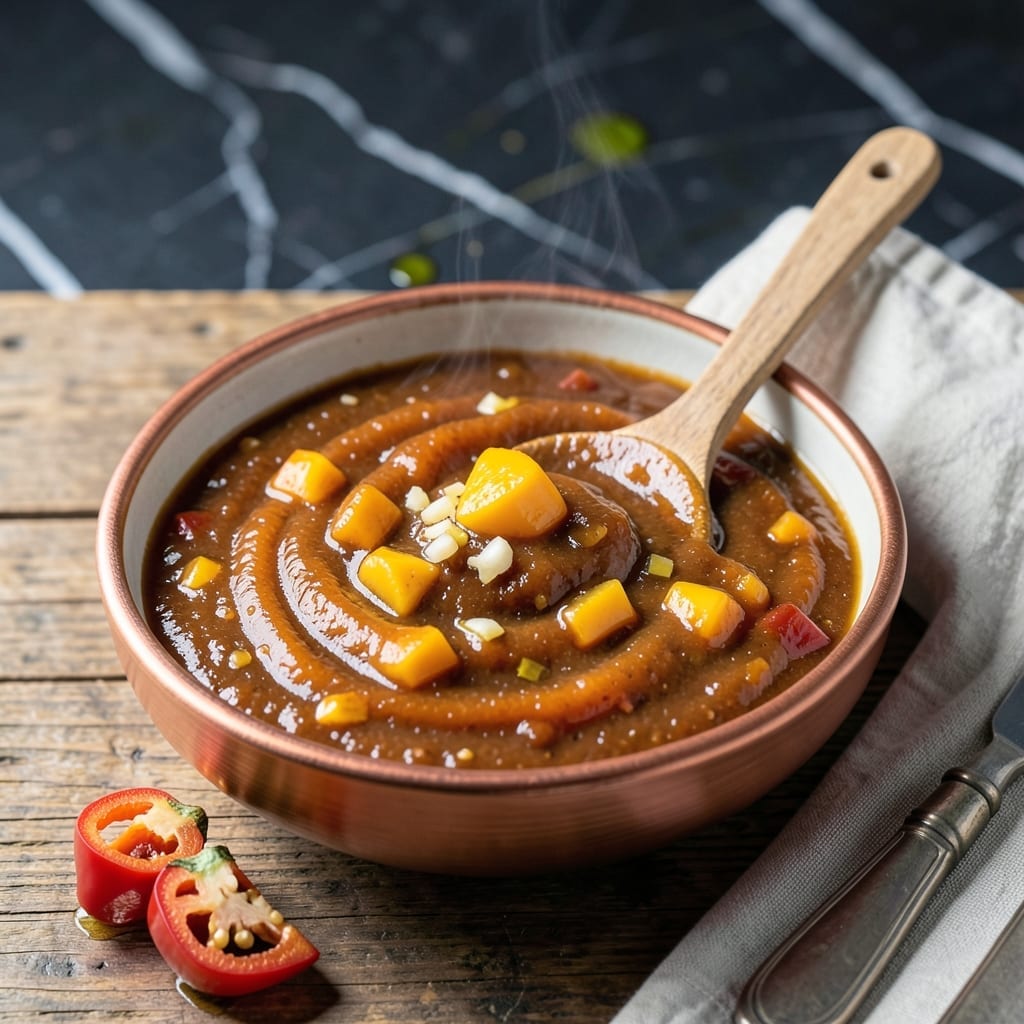
This sauce delivers the perfect balance of tropical sweetness and smoky habanero heat. I developed it to elevate grilled dishes without overpowering them.
With simple ingredients and a quick simmer, you’ll create a versatile condiment that works on ribs, chicken, or as a dipping sauce. The natural fruit sweetness tempers the habanero’s fiery kick.
Ingredients for Mango Habanero Barbecue Sauce
Ten simple ingredients create this bold, sweet, and smoky tropical sauce.
| Ingredient | Amount | Notes |
|---|---|---|
| Ripe Mango 🥭 | 2 cups | Peeled, pitted, and diced |
| Habanero Pepper 🌶️ | 1 whole | Seeds removed for less heat |
| Yellow Onion 🧅 | ½ whole | Finely diced for smooth texture |
| Garlic Cloves 🧄 | 3 cloves | Minced for depth of flavor |
| Apple Cider Vinegar 🍏 | ½ cup | Balances sweetness and heat |
| Tomato Paste 🍅 | 2 tbsp | Adds umami richness |
| Brown Sugar 🍚 | ¼ cup | Packed, for sweetness |
| Molasses 🍯 | 1 tbsp | Deepens flavor complexity |
| Smoked Paprika 🌶️ | 1 tsp | Enhances smoky undertones |
| Sea Salt 🧂 | 1 tsp | Fine grain preferred |
[recipe_ingredient_scaler]
The mango is non-negotiable—ripe, fragrant Ataulfo or Keitt varieties from Whole Foods or your local Latin market work best. Habanero heat varies wildly, so taste a sliver before committing (one pepper usually does the trick). Fresh garlic and onion build the base, and yes, mincing matters for even flavor distribution. Tomato paste in a tube (from Trader Joe’s) saves you from opening a whole can.
Out of mango? Peaches or pineapple work in a pinch (drain well if canned). No habanero? Jalapeño or serrano at double the amount for milder heat. Swap apple cider vinegar for rice vinegar or lime juice—just keep the tang. Brown sugar can be coconut sugar for a deeper caramel note. Smoked paprika is the secret weapon here—don’t skip it.
Sauce keeps 10 days in the fridge (the flavors meld and mellow). Freeze for 3 months in airtight containers—portion into ice cube trays for easy single-use servings. Always let it cool completely before storing (hot sauce = sad, soggy lids).
Why You’ll Love This Recipe
- One Blender Wonder: I toss everything in at once and let the blender do the work—no fancy techniques, just ripe mango, habanero, and garlic blending into magic.
- Sweet Heat Balance: The mango’s sweetness tames the habanero’s kick while the apple cider vinegar keeps it tangy. Honestly, it’s the only sauce I reach for now.
- Grill Season MVP: Slather it on chicken, ribs, or even grilled veggies—it’s my go-to for summer cookouts and weeknight dinners alike.
- Makes a Mason Jar: I double the batch and store it in the fridge for up to two weeks. Between us, it tastes even better the next day.
Step-by-Step Instructions for Mango Habanero Barbecue Sauce
This method transforms fresh ingredients into a perfectly balanced sauce with tropical sweetness and smoky heat.
Step 1: Prepare and Sauté the Aromatics
Dice the 2 cups Ripe Mango and finely chop the 0.5 whole Yellow Onion and 1 whole Habanero Pepper (seeds removed for milder heat). Mince the 3 cloves Garlic Cloves.
Heat a medium saucepan over medium heat. Add the diced onion and cook for 3-4 minutes until translucent and soft. Stir in the minced habanero and garlic, cooking for 1 minute until fragrant—this builds the flavor foundation. Be cautious; the habanero’s oils can be potent.
Step 2: Incorporate Liquids and Sweeteners
Add the diced 2 cups Ripe Mango, 0.5 cup Apple Cider Vinegar, 2 tbsp Tomato Paste, 0.25 cup Brown Sugar, 1 tbsp Molasses, 1 tsp Smoked Paprika, and 1 tsp Sea Salt to the saucepan. Stir thoroughly to combine all ingredients.
Bring the mixture to a gentle boil, then reduce the heat to low. You should see small bubbles breaking the surface consistently. This ensures the sugars dissolve completely and the flavors begin to meld.
Step 3: Simmer to Thicken the Sauce
Let the mixture simmer uncovered for 20-25 minutes, stirring occasionally to prevent sticking. As it cooks, the liquid will reduce by about half, and the mango will break down into a chunky puree.
Watch for the sauce to thicken enough to coat the back of a spoon. The color will deepen to a rich, glossy amber, and the aroma will shift from sharp vinegar to a balanced, fruity-spiced scent. If it thickens too quickly, add a splash of water.
Step 4: Blend for Smooth Consistency
Remove the saucepan from heat and let it cool for 5 minutes. Transfer the mixture to a blender or use an immersion blender directly in the pot. Pulse until smooth and uniform in texture.
If you prefer a chunkier sauce, blend only half and stir it back into the remaining mixture. Taste and adjust seasoning if needed—though the initial measurements should yield perfect balance.
Step 5: Cool and Store the Finished Sauce
Allow the sauce to cool completely at room temperature, which takes about 1 hour. The flavors will continue to develop as it cools, and the consistency will thicken slightly.
Transfer to a clean jar or airtight container. The sauce will keep in the refrigerator for up to 2 weeks or can be frozen for 3 months. For best results, let it sit for 24 hours before using to allow the flavors to fully marry.
Pro Tips For Making Mango Habanero Barbecue Sauce
- Simmer Low and Slow: I learned this the hard way—boiling the sauce too hot makes the mango pulp separate and turns the habanero bitter. Keep it at a gentle simmer for 20-25 minutes to meld the flavors without breaking the texture.
- Seed and Rib the Habanero: Sounds obvious, but I used to leave some seeds in for extra heat until I ended up with a sauce so fiery it overpowered the mango. Remove all seeds and white ribs for balanced heat that doesn’t ruin the batch.
- Char the Onions: After burning three batches, I finally figured out that lightly charring the yellow onions before blending adds a deep, smoky base that complements the habanero. Just 2-3 minutes in a dry pan does the trick.
- Strain for Smoothness: My grandmother swore by this, and she was right: pressing the blended sauce through a fine-mesh strainer removes the fibrous mango bits and garlic skins, giving you that restaurant-quality silky texture. Yes, it’s an extra step, but it’s worth it.
Essential Equipment for Perfect Results
Saucepan Selection
I always reach for my 3-quart stainless steel saucepan from All-Clad—its heavy bottom prevents scorching when simmering the mango mixture. The straight sides make it easier to monitor reduction. A light-colored interior helps you spot when the sauce starts to caramelize.
Blending Tools
An immersion blender like my Cuisinart SmartStick is my go-to for this recipe. It lets me puree directly in the pot, minimizing cleanup. If you prefer a traditional blender, a Vitamix handles the thick mixture beautifully—just work in batches.
Precision Measuring
Accurate measurements matter with habanero heat. I use OXO Good Grips measuring cups and spoons—the magnetic set stays organized in my drawer. For the vinegar, a Pyrex liquid measuring cup gives me exact ½ cup every time.
Protective Gear
Habanero oils can irritate skin, so I always wear nitrile gloves when handling peppers. Keep a bowl of ice water nearby too—dipping fingers in it neutralizes any lingering capsaicin. Safety first when working with serious heat.
Storage Containers
For fridge storage, I love Le Parfait Super jars—their airtight seal keeps the sauce fresh for the full 2 weeks. For freezing, silicone ice cube trays let me portion the sauce perfectly for single servings. 💡
Cleanup Essential
A bench scraper is my secret weapon for getting every last bit of sauce from the pot. The flexible edge conforms to curves, and it’s heat-resistant up to 600°F. I also keep baking soda nearby to neutralize any lingering habanero residue.
Nutrition Facts
Frequently Asked Questions
How long does the sauce need to simmer?
Simmer uncovered for 20-25 minutes until it thickens and coats a spoon. Stir occasionally to prevent sticking as the liquid reduces by half.
Can I make it less spicy?
Remove all habanero seeds and membranes before cooking. For milder heat, substitute with 1-2 jalapeños instead. The fruit sweetness naturally balances the spice.
What’s the best way to store leftover sauce?
Cool completely, then transfer to an airtight container. It keeps 2 weeks in the fridge or 3 months frozen. Portion into ice cube trays for easy servings.
Can I use canned mango instead of fresh?
Yes, but drain well and use 1 1/2 cups to account for added liquid. Fresh mango gives the best flavor, but canned works in a pinch.

Trained in classic French technique but raised on slow-cooked ribs and spicy rubs, she blends culinary skill with smoke and soul.
- Recipe for Boneless Cross Rib Roast: Slow-Roasted Beef with Herb Crust - October 3, 2026
- Hamburgers in Sauce Recipe Crock Pot: Slow-Cooked Savory Delight - October 3, 2026
- Sanjeev Kapoor Egg Biryani Recipe: Fragrant Spiced Rice With Boiled Eggs - October 3, 2026