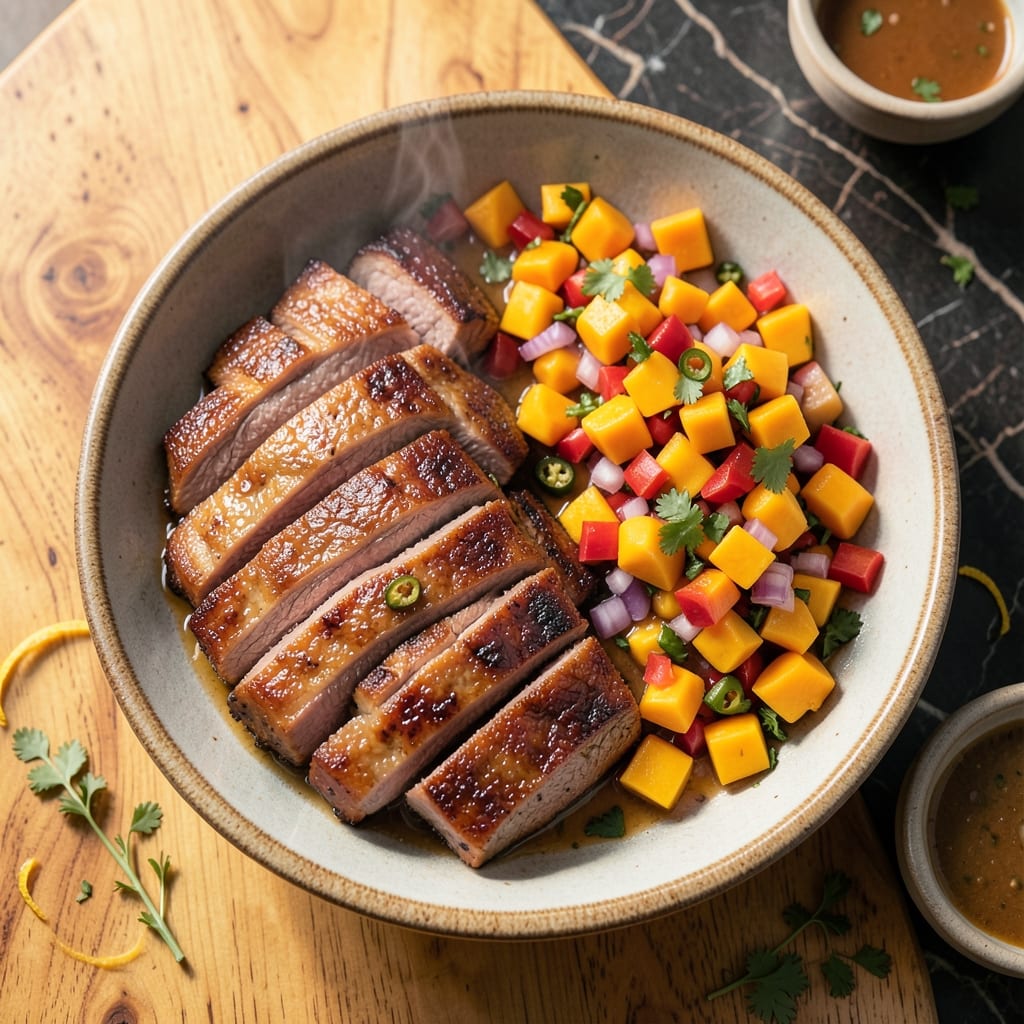
This dish pairs tender pork with bright tropical flavors that elevate a simple weeknight dinner. I developed this combination after testing multiple fruit salsas, and mango proved the perfect match for pork’s richness.
The salsa balances sweet, tangy, and slightly spicy elements, creating a contrast that makes each bite exciting. A quick sear and 20-minute oven finish ensures the pork stays juicy while developing a golden crust.
What emerges is a restaurant-worthy meal with minimal effort. The mango salsa adds freshness that cuts through the pork’s savory notes, while the tender meat practically melts on your tongue.
Serve with rice or grilled vegetables for a complete meal. This combination works equally well for casual dinners or entertaining.
Ingredients for Mango Salsa Recipe for Pork Tenderloin
Fresh, vibrant ingredients that bring tropical flair to tender pork.
| Ingredient | Amount | Notes |
|---|---|---|
| Pork Tenderloin 🥩 | 1 ½ lb | Trimmed of excess fat |
| Ripe Mango 🥭 | 2 whole | Diced into small cubes |
| Red Bell Pepper 🌶️ | ½ whole | Finely diced for crunch |
| Red Onion 🧅 | ¼ whole | Finely minced for flavor |
| Fresh Cilantro 🌿 | ¼ cup | Chopped, stems removed |
| Jalapeño Pepper 🌶️ | 1 whole | Seeds removed, finely diced |
| Lime Juice 🍋 | 2 tbsp | Freshly squeezed for brightness |
| Olive Oil 🫒 | 2 tbsp | Divided for cooking and salsa |
| Salt 🧂 | 1 tsp | Kosher or sea salt preferred |
| Black Pepper 🌶️ | ½ tsp | Freshly ground for best flavor |
| Ground Cumin 🌿 | ½ tsp | Toasted for warmth in salsa |
| Garlic Clove 🧄 | 1 clove | Minced for depth |
| Honey 🍯 | 1 tbsp | Optional for salsa sweetness |
[recipe_ingredient_scaler]
The pork tenderloin is the star—look for 1.5 lb pieces at Whole Foods or your local butcher. Make sure it’s trimmed (silver skin off) so the seasoning sticks. For the mango, Ataulfo or Keitt varieties work best (sweeter, less fibrous). Grab them at Trader Joe’s or any grocery with good produce turnover. The jalapeño should be firm and bright green—no wrinkles.
No mango? Peaches or pineapple give a similar sweet-tangy vibe. Skip the jalapeño if you want milder heat, or swap in poblano for a gentler kick. Fresh cilantro is ideal, but flat-leaf parsley works in a pinch. The honey can be agave or maple syrup (vegan swap). If you’re out of lime, lemon juice at half the amount does the trick.
Pork cooks best the day you buy it—use within 2 days or freeze for 3 months. The mango salsa keeps 2-3 days in the fridge but is best fresh. Make the salsa first so flavors meld while the pork cooks.
Why You’ll Love This Recipe
- Minimal Chopping: I just dice the mango, bell pepper, and onion—no fancy knife skills needed, and the cilantro is a quick snip.
- Sweet & Tangy Kick: The ripe mango and red onion balance each other perfectly, and that fresh cilantro? Honestly, it ties the whole salsa together.
- Weeknight Hero: I serve this over pork tenderloin for a quick dinner, but it’s also my go-to for summer barbecues and meal prep lunches.
- Leftovers? Yes Please: The salsa tastes even better the next day, and the pork reheats like a dream—I pack it for lunch and still get compliments.
Step-by-Step Instructions for Mango Salsa With Pork Tenderloin
Here’s the method I use to get perfectly tender pork every time with a bright, fresh salsa.
Step 1: Prepare the Mango Salsa
In a medium bowl, combine the 2 whole diced ripe mango, 0.5 whole finely diced red bell pepper, 0.25 whole finely minced red onion, and 1 whole finely diced jalapeño pepper. The mango should be in small cubes so each bite has a good balance of flavors.
Add the 0.25 cup chopped fresh cilantro, 2 tbsp lime juice, 1 clove minced garlic clove, 0.5 tsp ground cumin, 1 tbsp honey, and a pinch of the 1 tsp salt. Stir gently to combine. Taste and adjust seasoning if needed. The salsa should be bright, slightly sweet, with a hint of spice from the jalapeño.
Step 2: Season and Sear the Pork Tenderloin
Pat the 1.5 lb pork tenderloin dry with paper towels to ensure a good sear. Season all over with the remaining 1 tsp salt and 0.5 tsp black pepper. I like to press the seasoning into the meat so it adheres well during cooking.
Heat 1 tbsp olive oil in a large oven-safe skillet over medium-high heat until it shimmers. Add the pork tenderloin and sear for 3-4 minutes per side until golden brown all over. This creates a flavorful crust that locks in the juices. Don’t move the pork around too much—let it develop that beautiful brown color before flipping.
Step 3: Finish Cooking the Pork Tenderloin
Once the pork tenderloin is browned on all sides, reduce the heat to medium. Add the remaining 1 tbsp olive oil to the pan, then transfer the skillet to a preheated 400°F oven. Roast for 15-20 minutes until the internal temperature reaches 145°F.
You’ll know it’s done when the pork feels firm but still slightly springy to the touch. If you don’t have a thermometer, the thickest part should be just barely pink in the center. Remove the pork from the oven and let it rest on a cutting board for 5-10 minutes before slicing.
Step 4: Slice and Serve with Mango Salsa
Slice the pork tenderloin into ½-inch thick medallions. The resting period ensures the juices redistribute throughout the meat, so every bite is tender and flavorful. Arrange the slices on a serving platter or individual plates.
Spoon the mango salsa generously over the top of the pork or serve it on the side. The sweetness of the mango and the brightness of the lime juice pair perfectly with the savory pork. Garnish with extra cilantro if desired, and serve immediately while warm.
Pro Tips For Making Mango Salsa Recipe For Pork Tenderloin
- Sear High, Rest Long: Hit the pork tenderloin with a screaming hot pan—400°F in the oven or a rip-roaring sear on the stovetop. Then give it a solid 10-minute rest under foil; I learned this the hard way after slicing into a juicy cut that turned dry because I rushed it.
- Dice Mango Last: Prep all your other salsa ingredients first, then cut the mango. Sounds weird, but it works: mango starts releasing juice the second it’s cut, and you want those crisp red bell pepper and onion pieces to soak up that sweetness, not sit in a puddle.
- Skip Raw Onion: Soak the finely diced red onion in cold water for 10 minutes before mixing it into the salsa. This takes the harsh bite out without losing the crunch—I was skeptical until I tried it, and now my salsa doesn’t overpower the pork.
- Use Lime Zest Too: After juicing the lime for the salsa, grate in the zest as well. It adds a bright pop that makes a real difference, especially against the rich pork—about 1 teaspoon does the trick.
Regional Styles of This Recipe
Mexican Yucatán Style
In the Yucatán, they use habanero peppers instead of jalapeños for a fierier kick. I add 1 tbsp orange juice to the salsa for a citrus twist that’s popular in this region. The pork is often marinated in achiote paste before cooking, which gives it a distinct red color and earthy flavor. 🌶️
Caribbean Jerk Fusion
For a Caribbean twist, I mix 1 tsp allspice and ½ tsp thyme into the pork rub. The salsa gets a splash of dark rum and 1 tbsp diced pineapple alongside the mango. This combination creates a sweet and smoky profile that reminds me of island vacations.
Thai-Inspired Version
Replace the cilantro with ¼ cup fresh mint and basil. Add 1 tbsp fish sauce and 1 tsp grated ginger to the salsa for umami depth. For the pork, I brush it with a mix of 1 tbsp soy sauce and 1 tsp brown sugar while searing. The result is a perfect balance of sweet, salty, and herbaceous flavors.
Southwestern Style
This version incorporates 1 diced avocado into the salsa for creaminess. I also add ½ tsp smoked paprika to the pork seasoning and serve with warm corn tortillas. This approach leans into the Tex-Mex flavors I grew to love while living in Boston’s diverse culinary scene.
Hawaiian Luau Style
For a tropical twist, I use 1 cup diced pineapple alongside the mango in the salsa. The pork gets a glaze of 2 tbsp teriyaki sauce during the last 5 minutes of cooking. Serve with steamed jasmine rice and grilled pineapple rings. 🥭
Nutrition Facts
Frequently Asked Questions
Can I make the salsa ahead of time?
Yes! The salsa tastes best after 1-2 hours in the fridge to let flavors meld. Store in an airtight container for up to 3 days. Stir before serving.
What if my pork is still pink inside?
Pork is safe at 145°F internal temperature, even if slightly pink. Use a meat thermometer for accuracy. Overcooking dries it out—rest for 5-10 minutes before slicing.
Can I grill instead of oven-roasting?
Sear pork on medium-high heat for 3-4 minutes per side, then move to indirect heat. Cook until 145°F internally. Grilling adds smoky depth.
What’s a good substitute for mango?
Try peaches or pineapple for similar sweetness. Peaches add a softer texture, while pineapple brings tangy brightness. Adjust lime juice to taste.

Trained in classic French technique but raised on slow-cooked ribs and spicy rubs, she blends culinary skill with smoke and soul.
- Recipe for Boneless Pork Chops in Cast Iron Skillet: Sear and Baste to Juicy Perfection - October 3, 2026
- Recipe for Boneless Cross Rib Roast: Slow-Roasted Beef with Herb Crust - October 3, 2026
- Hamburgers in Sauce Recipe Crock Pot: Slow-Cooked Savory Delight - October 3, 2026