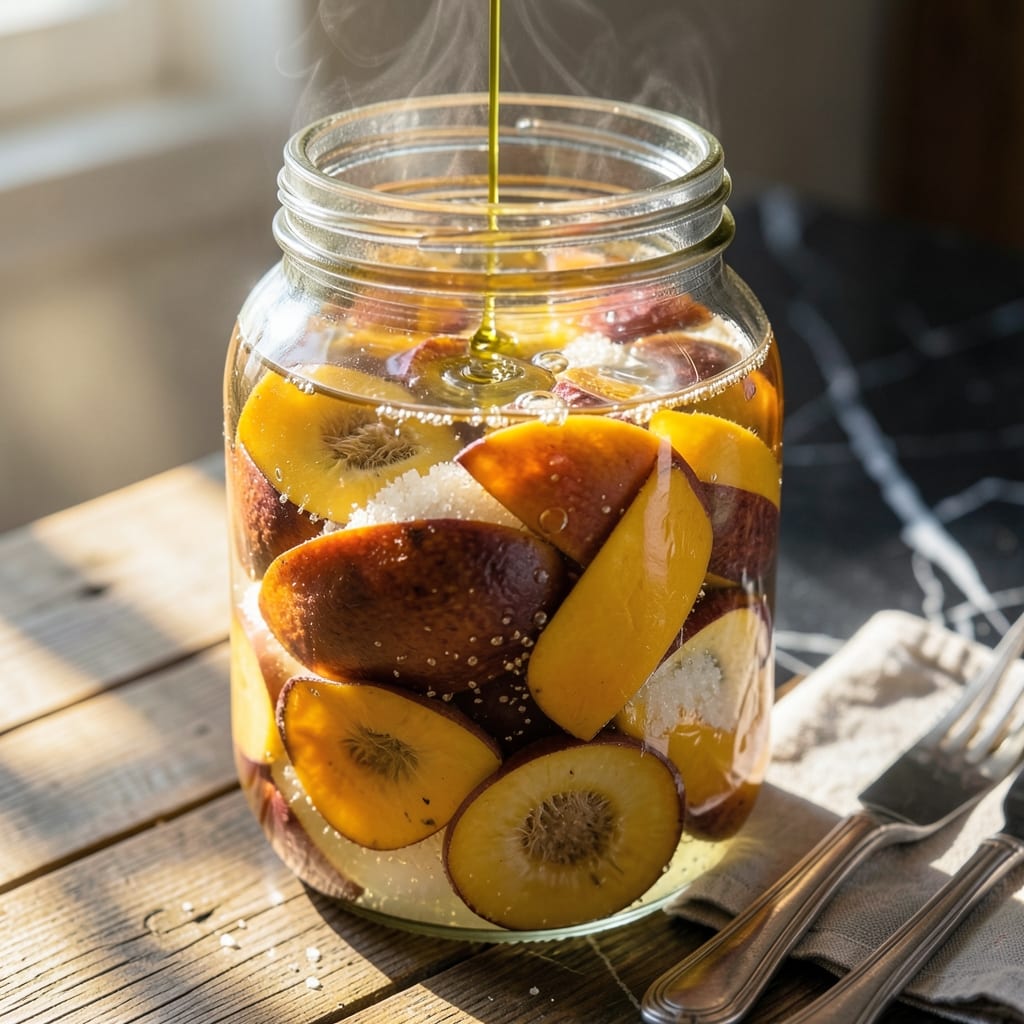
Fermented fruit vinegars add a unique depth to dressings and marinades, and this tropical version is no exception.
I developed this method after discovering how mango peels and cores—often discarded—contain enough natural sugars and acids to transform into a bright, tangy vinegar. The process requires patience, as the mixture ferments for 3-4 weeks, allowing natural yeasts to work their magic.
What emerges is a golden liquid with a perfect balance of fruity sweetness and sharp acidity. It elevates everything from simple green salads to grilled meats, adding a layer of complexity that store-bought vinegars can’t match.
This recipe makes about 2 cups and keeps well for up to a year when stored properly.
Ingredients for Mango Vinegar
Transform mango scraps into golden, tangy vinegar with just eight simple components.
| Ingredient | Amount | Notes |
|---|---|---|
| Mango Peels 🥭 | 4 cups | From ripe mangoes, thoroughly washed |
| Mango Cores 🥭 | 4 whole | Pits removed, roughly chopped |
| Filtered Water 💧 | 4 cups | Non-chlorinated for fermentation |
| Granulated Sugar 🍚 | ¼ cup | Organic preferred for clean fermentation |
| Apple Cider Vinegar 🍏 | ½ cup | Raw, unfiltered with mother |
| White Wine Vinegar 🍷 | ½ cup | Starter for acidity balance |
| Lemon Juice 🍋 | 2 tbsp | Freshly squeezed for brightness |
| Salt 🧂 | 1 tsp | Non-iodized for fermentation |
[recipe_ingredient_scaler]
The mango peels and cores are the foundation—use ripe, organic mangoes to avoid pesticide residue interfering with fermentation. Whole Foods or local farmers markets often have these at peak ripeness. The sugar accelerates fermentation; organic ensures no additives that could hinder the process. Apple cider vinegar with the mother provides natural yeasts and bacteria crucial for proper fermentation.
No organic mangoes? Conventional works, but wash peels thoroughly with baking soda solution. Short on apple cider vinegar? Substitute white vinegar in a pinch, though the flavor will be less complex. If you lack white wine vinegar, rice vinegar can stand in. The lemon juice brightens the final product—skip only if absolutely necessary.
Store the finished vinegar in a glass jar away from direct light. It will keep for up to 1 year at room temperature. The flavor deepens over time, so taste periodically and adjust usage accordingly. Always use a clean, dry spoon to prevent contamination.
Why You’ll Love This Recipe
- No Waste Wonder: I love that this turns mango peels and cores into something useful instead of tossing them.
- Tropical Zing: The sweet-tart balance from the mango and apple cider vinegar is ridiculously good on salads and marinades.
- Endless Uses: I drizzle it on fruit, mix it into dressings, or even splash it in cocktails—so versatile.
Step-by-Step Instructions for Mango Vinegar
This fermentation process transforms mango scraps into a vibrant vinegar with precise technique.
Step 1: Combine Mango Scraps with Sugar
In a large glass jar or ceramic crock, combine the 4 cups Mango Peels and 4 whole Mango Cores with the 0.25 cup Granulated Sugar. The sugar provides the necessary food for fermentation to begin, jumpstarting the conversion of natural mango sugars into acid.
Press the mixture down gently with a clean spoon to eliminate air pockets. You should see the sugar beginning to dissolve into the natural juices released by the mango peels and cores. This initial contact ensures even distribution of the sugar throughout the mixture.
Step 2: Add Liquids and Season
Pour the 4 cups Filtered Water, 0.5 cup Apple Cider Vinegar, and 0.5 cup White Wine Vinegar over the mango mixture. The filtered water ensures no chlorine interference, while the vinegars provide the necessary acidity to kickstart fermentation.
Add the 2 tbsp Lemon Juice and 1 tsp Salt, then stir thoroughly with a wooden or silicone spoon. The lemon juice brightens the flavor profile, while the salt helps control undesirable bacteria during fermentation. Ensure all ingredients are fully submerged in the liquid.
Step 3: Initiate Fermentation
Cover the jar loosely with a clean cloth or paper towel secured with a rubber band. This allows airflow while keeping out contaminants. Store the jar in a dark, warm place—ideal fermentation occurs at 70-75°F.
Within 24-48 hours, you should see bubbles forming at the surface, signaling active fermentation. Stir the mixture daily with a clean utensil to prevent mold growth and ensure even fermentation. The mango peels and cores will rise to the top, so press them back down as needed.
Step 4: Monitor and Adjust
After 3-4 days, taste the liquid. It should be tangy but still slightly sweet. If the mixture smells overly pungent or you notice any discoloration, skim off any surface scum immediately with a clean spoon.
Continue fermenting for 2-3 weeks, stirring daily. The flavor will deepen as the natural sugars convert to acid. The vinegar is ready when it has developed a sharp, bright tang with no remaining sweetness. The mango peels and cores will become pale and soft.
Step 5: Strain and Store
Once fermentation is complete, strain the vinegar through a fine-mesh sieve lined with cheesecloth into a clean glass bottle or jar. Discard the spent mango peels and cores—they have contributed all their flavor and acidity to the liquid.
Seal the bottle and store at room temperature in a dark place. The vinegar will continue to develop complexity over time. For best quality, use within 6 months, though properly fermented vinegar can last indefinitely. The finished product should have a bright, tropical aroma with a sharp, clean acidity.
Pro Tips For Making Mango Vinegar
- Use ripe mango peels: I learned this the hard way—only use peels from fully ripe mangoes, as underripe ones lack the natural sugars needed for proper fermentation.
- Sterilize your jar: Sounds obvious, but I ruined two batches before realizing a quick boil of the jar and lid prevents mold from ruining your vinegar.
- Skip metal utensils: After my first batch turned metallic, I switched to glass or wooden spoons—apple cider vinegar reacts with metal and alters the flavor.
- Strain after 2 weeks: I used to wait too long, but straining the liquid from the peels and cores at the 14-day mark gives the cleanest, most balanced flavor.
Regional Styles of mango vinegar
Philippine Style
In the Philippines, mango vinegar often incorporates green mangoes for a sharper, more astringent flavor. I’ve found adding 1 tbsp grated ginger and 2 crushed garlic cloves to the fermentation jar enhances complexity. This version is perfect for adobo dishes or as a dipping sauce. 🗺️
Mexican Variation
Mexican cooks often add 1-2 sliced jalapeños or serrano peppers to their mango vinegar for a spicy kick. The heat balances the sweetness beautifully. This style works wonderfully in salsas or as a marinade for grilled meats.
Thai-Inspired
For a Thai twist, I add 1 stalk lemongrass (bruised) and 3 kaffir lime leaves during fermentation. The citrusy notes complement the mango perfectly. Use this in salad dressings or as a base for Thai dipping sauces.
Caribbean Approach
Caribbean versions often include 1 cinnamon stick and 3 cloves for warmth. I also add 1 tbsp brown sugar instead of white for deeper caramel notes. This vinegar shines in jerk marinades or tropical cocktails.
Indian Fusion
In India, mango vinegar often features 1 tsp cumin seeds and 1 tsp mustard seeds for earthy depth. I toast these spices lightly before adding to the jar. This version pairs beautifully with samosas or chaat. ✨
American Adaptation
For a simpler approach, many American home cooks add 1 sprig fresh rosemary or thyme to their mango vinegar. This creates a more familiar flavor profile that works well in vinaigrettes or for pickling vegetables.
Nutrition Facts
Frequently Asked Questions
How long does the fermentation process take?
Fermentation typically takes 3-4 weeks for full flavor development. You’ll see bubbles in 24-48 hours, but the tangy depth builds over time. Stir daily and taste after 2 weeks to check progress.
Can I use unripe mangoes for this?
Ripe mangoes work best due to their natural sugars, but green mangoes can be used for a sharper, more astringent flavor. If using green, add an extra 2 tbsp sugar to aid fermentation.
What if mold appears on the surface?
Skimming off mold immediately with a clean spoon is safe if the liquid below smells fresh. To prevent it, ensure all mango pieces stay submerged and stir daily. Discard if the smell is off.
How should I store the finished vinegar?
Store in a clean glass jar in a dark, cool place. It keeps for up to 1 year at room temperature. The flavor deepens over time, so taste periodically.

Trained in classic French technique but raised on slow-cooked ribs and spicy rubs, she blends culinary skill with smoke and soul.
- Recipe for Boneless Pork Chops in Cast Iron Skillet: Sear and Baste to Juicy Perfection - October 3, 2026
- Recipe for Boneless Cross Rib Roast: Slow-Roasted Beef with Herb Crust - October 3, 2026
- Hamburgers in Sauce Recipe Crock Pot: Slow-Cooked Savory Delight - October 3, 2026