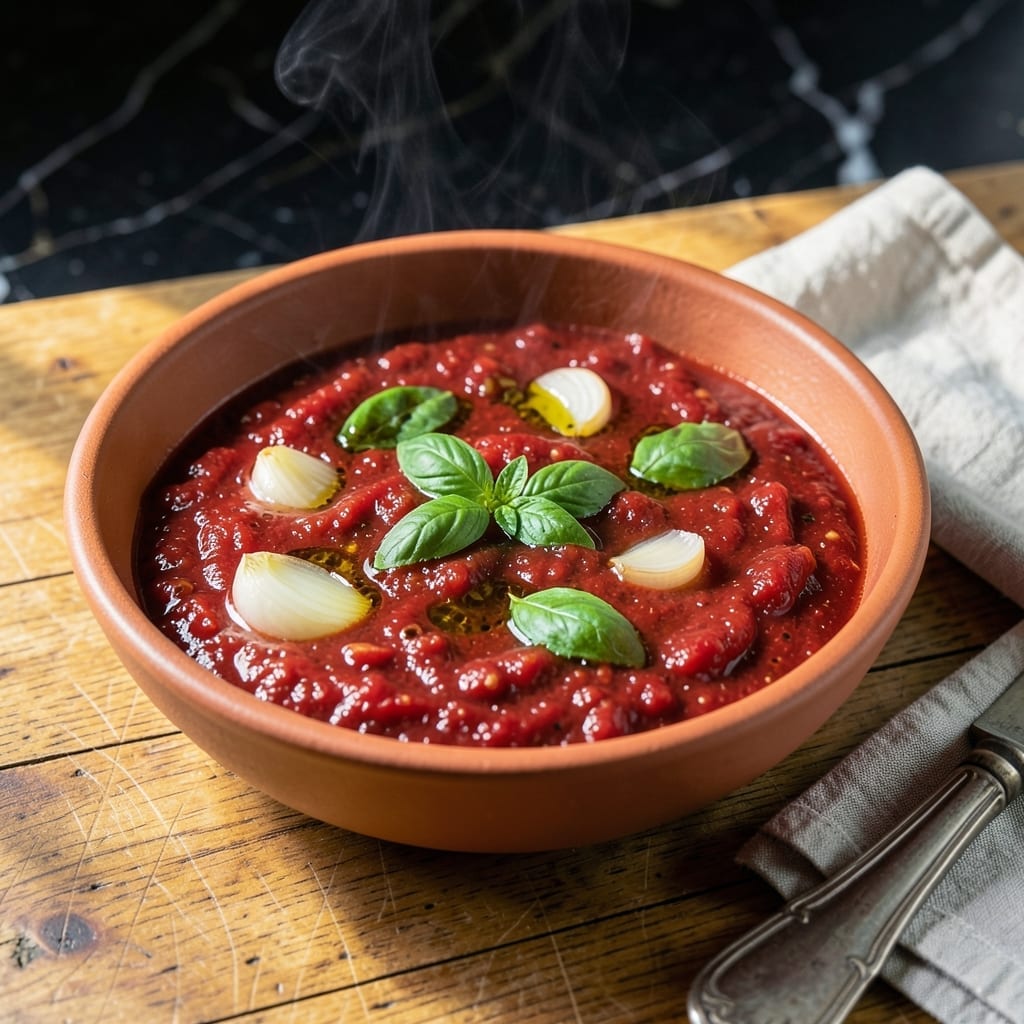
There’s nothing like the vibrant, fresh flavor of a homemade marinara sauce to elevate your Italian dishes. This simple yet restaurant-quality sauce comes together with just a few ingredients and minimal effort.
Using ripe tomatoes and fresh basil, this sauce delivers a bright, rich base perfect for pasta, pizza, or dipping. The slow simmer allows the flavors to meld beautifully, creating a versatile sauce you’ll want to keep on hand.
Ingredients for Marinara Sauce Recipe from Scratch
Nine ingredients for a bright, rich sauce with restaurant-quality flavor at home.
| Ingredient | Amount | Notes |
|---|---|---|
| San Marzano Tomatoes 🍅 | 28 oz | Whole, peeled, canned |
| Fresh Basil Leaves 🌿 | 1 cup | Packed, stems removed |
| Extra-Virgin Olive Oil 🫒 | ¼ cup | High quality, fruity |
| Garlic Cloves 🧄 | 6 cloves | Peeled, minced |
| Yellow Onion 🧅 | 1 whole | Medium, finely diced |
| Sea Salt 🧂 | 1 ½ tsp | Fine grain preferred |
| Black Pepper 🌶️ | ½ tsp | Freshly ground |
| Red Pepper Flakes 🌶️ | ½ tsp | Adjust for heat preference |
| Tomato Paste 🍅 | 2 tbsp | For depth of flavor |
[recipe_ingredient_scaler]
The tomatoes are everything here. San Marzano cans from Italy are the gold standard—look for the DOP certification if you want to geek out. Any good grocery store carries them (Whole Foods and Trader Joe’s have solid options). The basil should be fresh (the good stuff, not the pre-chopped kind in plastic). If you’re growing your own, even better—just pick leaves as needed.
No San Marzano? Regular canned tomatoes work fine, but drain off some liquid first. Fresh tomatoes can go in too (about 8-10 ripe Roma), but canned saves time. Out of fresh basil? Dried basil at one-third the amount gets you close. Want more depth? Add a Parmesan rind while simmering (pull it out before serving—vegan versions work too).
Sauce keeps 5-7 days in the fridge, 6 months frozen. Portion into ice cube trays for easy single-serving use. The flavor actually improves after a day—worth the wait.
Why You’ll Love This Recipe
- Five Ingredients: I love that it only needs San Marzano tomatoes, fresh basil, olive oil, garlic, and onion—no fancy shopping.
- Unfussy Process: Honestly, it simmers mostly hands-off while I prep the rest of dinner.
- Pasta Night Hero: It’s my go-to for weeknight spaghetti, lasagna, or even pizza sauce.
- Keeps Like a Dream: Leftovers taste even better the next day and freeze beautifully for months.
Step-by-Step Instructions for Marinara Sauce From Scratch
Simple ingredients, perfect technique, and about 30 minutes are all you need.
Step 1: Sauté the Aromatics Until Fragrant
Heat the 0.25 cup Extra-Virgin Olive Oil in a large pot over medium heat. Add the 1 whole Yellow Onion and cook for 5-6 minutes, stirring occasionally, until soft and translucent. Don’t rush this step—you want the onion to fully soften without browning.
Add the 6 cloves Garlic Cloves and 0.5 tsp Red Pepper Flakes, then cook for 1 minute until the garlic is fragrant but not browned. Stir constantly to prevent burning. The garlic should release its aroma into the oil, creating the flavor foundation for your sauce.
Step 2: Build the Tomato Base
Stir in the 2 tbsp Tomato Paste and cook for 2-3 minutes, stirring frequently. This step deepens the tomato flavor and removes any raw taste from the paste. You’ll notice the color darken slightly—that’s how you know it’s ready.
Add the 28 oz San Marzano Tomatoes, crushing them by hand as they go into the pot. This breaks them down and releases their juices. Include all the liquid from the can—it’s packed with flavor. Stir well to combine everything, then bring the mixture to a gentle simmer.
Step 3: Simmer and Season
Reduce the heat to low and let the sauce simmer uncovered for 20-25 minutes. Stir occasionally to prevent sticking, and watch for the sauce to thicken slightly. The tomatoes will break down further, and the flavors will meld beautifully.
Season with 1.5 tsp Sea Salt and 0.5 tsp Black Pepper, stirring to distribute evenly. Taste and adjust the seasoning if needed, but remember the flavors will concentrate as the sauce simmers. If it tastes a bit flat, a pinch more salt usually does the trick.
Step 4: Finish with Fresh Basil
Remove the pot from heat and stir in the 1 cup Fresh Basil Leaves. The residual heat will wilt the basil gently, infusing the sauce with its bright, herbal aroma. Avoid chopping the basil beforehand—tearing the leaves by hand preserves more of their essential oils and flavor.
Let the sauce sit for 5-10 minutes before serving to allow the basil to fully infuse. This resting time also lets the sauce thicken slightly. The final texture should coat the back of a spoon but still be loose enough to toss with pasta.
Pro Tips For Making Marinara Sauce Recipe From Scratch
- Crush the Tomatoes: Hand-crush the San Marzano tomatoes instead of blending—the uneven chunks give the sauce a rustic texture and better body. I learned this the hard way after my first few batches turned out too smooth.
- Bloom the Garlic: Cook the garlic in olive oil on low heat until just golden, about 2-3 minutes—any darker and it turns bitter. After burning a few cloves early on, I now pull it off the heat the second it starts to color.
- Skip the Over-Salt: Hold off on heavy seasoning until the sauce has reduced, since the San Marzano tomatoes concentrate in flavor as they cook. I used to salt early and ended up with a sauce that tasted like the ocean.
- Add Basil Last: Stir in fresh basil leaves at the very end, just before serving, so they stay vibrant and aromatic. My grandmother swore by this, and she was right: cooked basil loses its brightness fast.
Storing and Reheating This Recipe
🍳 Refrigerator Storage
To keep your homemade marinara sauce fresh in the fridge, transfer it to an airtight container once it has cooled to room temperature. Properly stored, it will stay fresh for 3-4 days. This method works well if you plan to use the sauce soon for pasta, pizza, or dipping.
❄️ Freezer Storage
For longer storage, freezing is your best option. Portion the sauce into freezer-safe bags or containers, leaving some space for expansion. Label with the date and freeze for up to 2-3 months. For best results, use a vacuum sealer or wrap tightly to prevent freezer burn.
🔥 Reheating Methods
Reheat marinara sauce gently to preserve its flavor. On the stovetop, warm it over low to medium heat for 5-10 minutes, stirring occasionally. For the microwave, use 30-second intervals and stir between each to avoid hot spots. If using a smoker, keep the temperature at 180-200°F and reheat for 15-20 minutes.
💡 Quality Preservation
To maintain the best texture and taste, avoid overcooking during reheating. If the sauce thickens too much, add a splash of water or broth. When thawing frozen marinara, do it overnight in the fridge or use the defrost setting on your microwave for 1-2 minutes. This ensures even thawing and keeps the flavors vibrant.
Nutrition Facts

Trained in classic French technique but raised on slow-cooked ribs and spicy rubs, she blends culinary skill with smoke and soul.
- Recipe for Boneless Pork Chops in Cast Iron Skillet: Sear and Baste to Juicy Perfection - October 3, 2026
- Recipe for Boneless Cross Rib Roast: Slow-Roasted Beef with Herb Crust - October 3, 2026
- Hamburgers in Sauce Recipe Crock Pot: Slow-Cooked Savory Delight - October 3, 2026