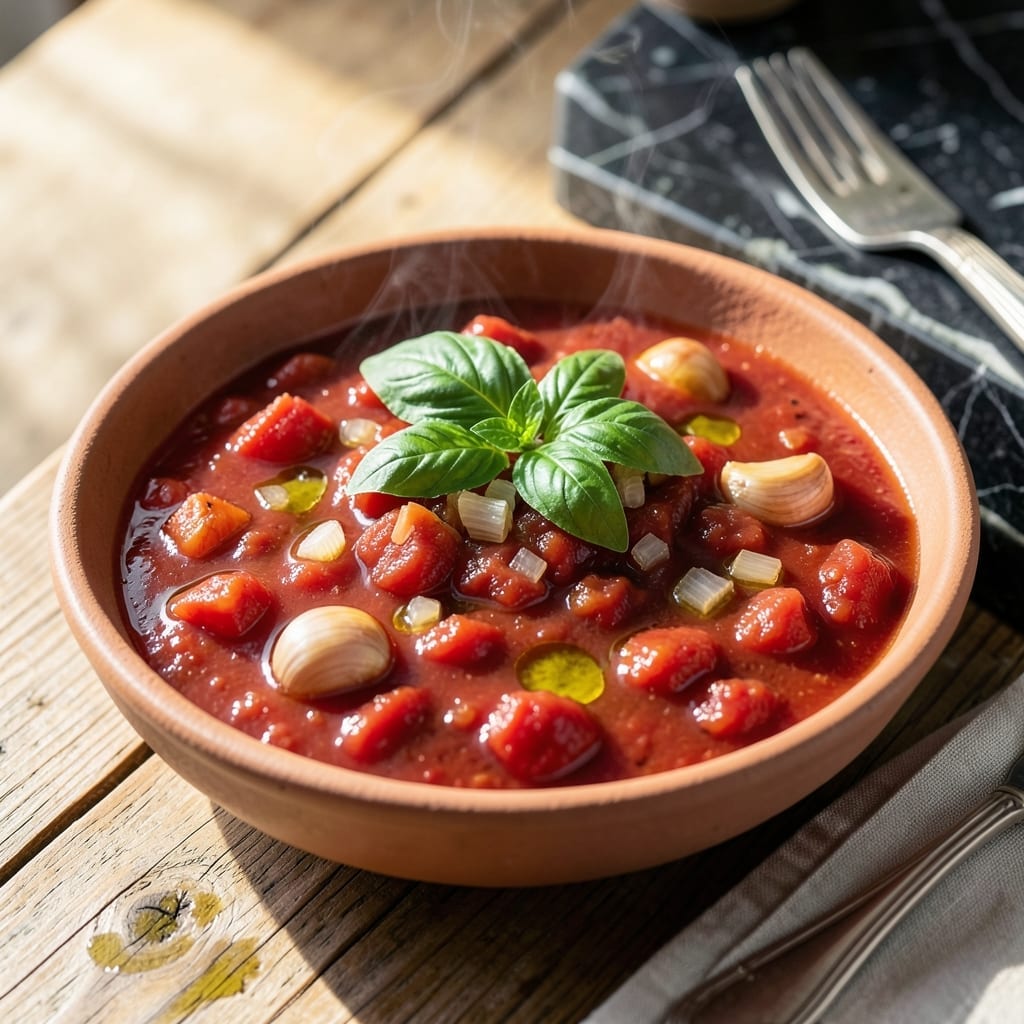
There’s nothing like the taste of authentic Italian marinara made right in your own kitchen. This isn’t just tomato sauce—it’s a vibrant, simple celebration of fresh ingredients and time-honored techniques.
With just a handful of pantry staples and about 30 minutes, you’ll create a sauce that’s rich, bright, and authentic enough to transport you straight to Nonna’s table.
Ingredients for Marinara Sauce Recipe Lidia Bastianich
Eight simple ingredients transform into vibrant, authentic Italian marinara with minimal effort.
| Ingredient | Amount | Notes |
|---|---|---|
| San Marzano Whole Peeled Tomatoes 🍅 | 28 oz | Canned, crushed by hand |
| Extra-Virgin Olive Oil 🫒 | ¼ cup | High-quality preferred |
| Garlic Cloves 🧄 | 4 cloves | Thinly sliced |
| Yellow Onion 🧅 | ½ whole | Finely diced |
| Fresh Basil Leaves 🌿 | ¼ cup | Torn by hand |
| Sea Salt 🧂 | 1 tsp | Diamond Crystal preferred |
| Crushed Red Pepper Flakes 🌶️ | ¼ tsp | Adjust to taste |
| Black Pepper 🌶️ | ¼ tsp | Freshly ground |
[recipe_ingredient_scaler]
Authentic starts with tomatoes—San Marzano canned are the gold standard (look for DOP certification if you’re serious). The olive oil should be high-quality extra-virgin; I grab mine from Eataly or Whole Foods. Fresh basil makes a difference, but don’t stress if your grocery store only has those sad little plastic containers—just use what’s available (the good stuff, not the pre-shredded kind).
No San Marzano? Regular canned tomatoes work—just get whole peeled and crush them yourself. Fresh out of basil? Dried oregano at half the amount gets you close. Want more depth? Add a Parmesan rind while simmering (remove before serving). The garlic can be minced instead of sliced, but don’t let it burn (worth the extra minute).
Sauce keeps 5 days in the fridge, 6 months frozen. Portion into jars for easy access—this reheats beautifully. The flavor actually improves overnight as everything melds together.
Why You’ll Love This Recipe
- Five Ingredients: I just dump San Marzano tomatoes, olive oil, garlic, onion, and basil into a pot—no fuss, no long grocery list.
- Pure Italian Flavor: The sweetness of those tomatoes with the garlic and basil? Honestly, it tastes like Nonna’s kitchen in my own home.
- Endless Meal Starter: I use it on pasta night, then again for pizza, soup, or even dipping bread the next day.
- Pantry Hero: Between us, I always have these canned tomatoes on hand, so this sauce saves me when I’m out of fresh ideas.
Step-by-Step Instructions for Marinara Sauce
Here’s the authentic method that transforms simple ingredients into a rich, vibrant sauce.
Step 1: Sauté the Aromatic Base
Heat the 0.25 cup Extra-Virgin Olive Oil in a heavy-bottomed pot over medium-low heat. Add the finely diced 0.5 whole Yellow Onion and cook for 5-6 minutes until translucent and just beginning to soften.
Add the thinly sliced 4 cloves Garlic Cloves and the 0.25 tsp Crushed Red Pepper Flakes. Cook for 30-45 seconds until the garlic turns fragrant but not browned. This builds the flavor foundation without bitterness.
Step 2: Add Tomatoes and Simmer
Pour in the 28 oz San Marzano Whole Peeled Tomatoes with their juices. Use your hands to gently crush them as they go into the pot—this releases their sweetness and creates a rustic texture.
Add the 1 tsp Sea Salt and 0.25 tsp Black Pepper. Stir well and bring to a gentle simmer. Reduce the heat to low and let it cook uncovered for 30-40 minutes.
Step 3: Incorporate Fresh Basil
As the sauce approaches the end of its simmering time, tear the 0.25 cup Fresh Basil Leaves by hand and add them to the pot. Stir to combine. The basil should infuse the sauce with its bright, aromatic flavor without turning muddy.
Continue simmering for another 5-10 minutes to allow the flavors to meld. The sauce is ready when it has thickened slightly and the oil has separated and pooled at the surface.
Step 4: Adjust and Finish
Taste and adjust the seasoning if needed. Remove from heat and let the sauce rest for 5 minutes before serving. This brief rest allows the flavors to settle and deepen.
Serve warm over pasta, or use as a base for pizzas or other Italian dishes. The sauce should have a vibrant red color, a balance of sweetness and acidity, and a rich, velvety texture.
Pro Tips For Making Marinara Sauce Recipe Lidia Bastianich
- Crush the Tomatoes: Use your hands to crush the San Marzano tomatoes into the pot—this breaks them down unevenly for a rustic texture that blends better than chopping. I learned this the hard way after ending up with chunky sauce from lazy knife work.
- Bloom the Garlic: Cook the garlic in olive oil on low heat until just fragrant, about 2 minutes—any longer and it turns bitter. After burning three batches, I finally figured out the sweet spot.
- Skip the Tomato Paste: Lidia’s method doesn’t need it, and adding it can make the sauce too thick or sweet. My grandmother swore by this, and she was right: the San Marzanos have enough depth on their own.
- Tear the Basil: Add fresh basil leaves at the end, torn by hand—not chopped—to release their oils without bruising. Sounds weird, but it works: the flavor stays brighter and more aromatic.
Wine and Beer Pairings for marinara sauce recipe lidia bastianich
Beer Pairings
Marinara sauce’s bright acidity and herbal notes pair wonderfully with beer styles that offer balance and contrast. A crisp Peroni Nastro Azzurro or Pilsner Urquell cuts through the richness while highlighting the tomato’s natural sweetness. For a darker option, try a Chianti Classico Riserva-inspired amber ale, which complements the sauce’s depth with caramel and toasty undertones.
Wine Pairings
Italian classics are a natural fit for Lidia Bastianich’s marinara. A light-bodied Pinot Grigio from Friuli brings citrusy brightness that mirrors the sauce’s acidity. For red lovers, a Sangiovese or Chianti offers earthy, cherry notes that harmonize with the tomatoes and basil. These wines enhance the dish without overpowering it.
Non-Alcoholic Options
Sparkling waters with a squeeze of lemon or lime add a refreshing contrast to the sauce’s richness. Herbal iced teas, like hibiscus or mint, also complement the marinara’s flavors beautifully. For a festive touch, try a San Pellegrino Aranciata—its citrusy sweetness pairs perfectly with the tomato base.
Nutrition Facts

Trained in classic French technique but raised on slow-cooked ribs and spicy rubs, she blends culinary skill with smoke and soul.
- Recipe for Boneless Pork Chops in Cast Iron Skillet: Sear and Baste to Juicy Perfection - October 3, 2026
- Recipe for Boneless Cross Rib Roast: Slow-Roasted Beef with Herb Crust - October 3, 2026
- Hamburgers in Sauce Recipe Crock Pot: Slow-Cooked Savory Delight - October 3, 2026