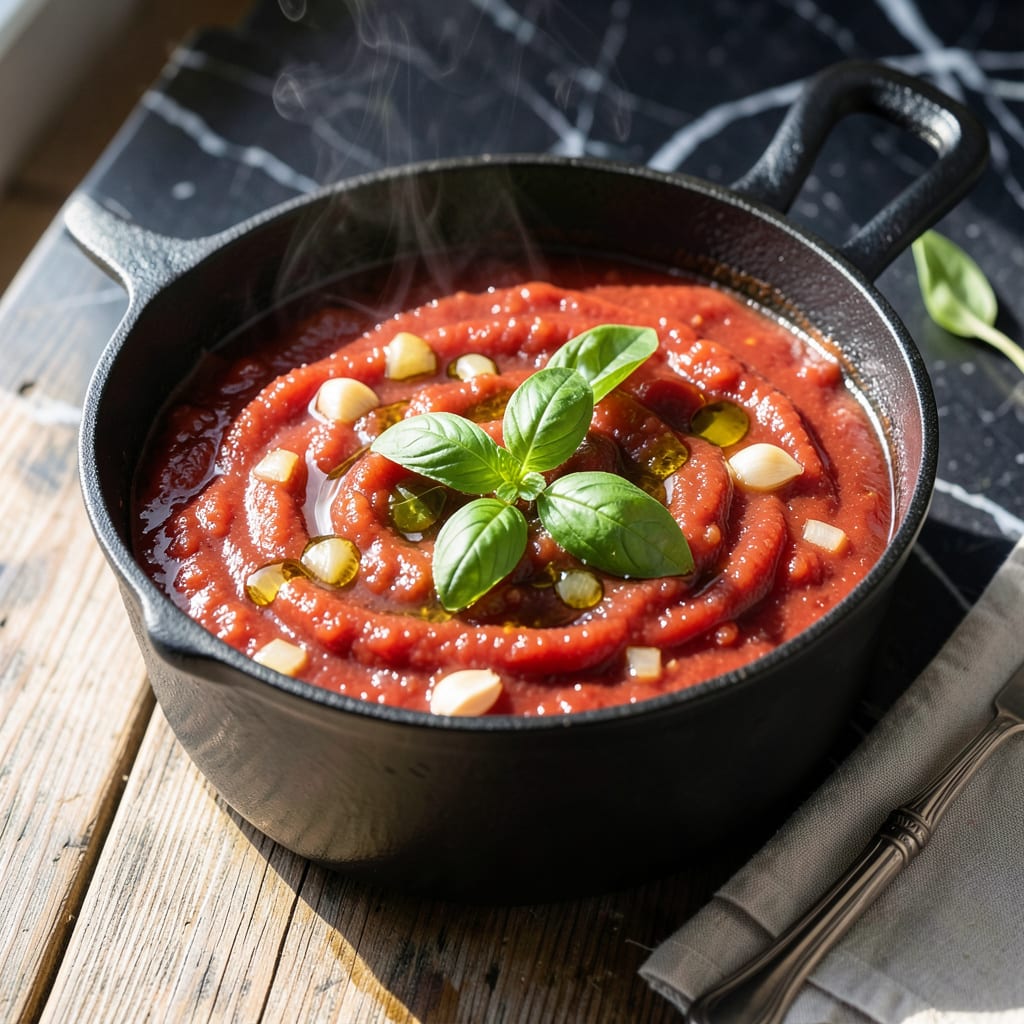
This authentic marinara captures the essence of Italian cooking with minimal effort. The tomato paste deepens the flavor, creating a rich, restaurant-quality sauce in just 20 minutes.
Simmered with fresh herbs and garlic, it delivers bold taste without hours on the stove. Use it for pasta, pizza, or dipping—this version stays true to tradition.
Ingredients for Marinara Sauce Recipe Tomato Paste
Ten simple ingredients deliver authentic Italian flavor in this quick, rich sauce.
| Ingredient | Amount | Notes |
|---|---|---|
| Canned San Marzano Tomatoes 🍅 | 28 oz | Whole, peeled, crushed by hand |
| Tomato Paste 🍅 | 2 tbsp | Double-concentrated preferred |
| Extra-Virgin Olive Oil 🫒 | ¼ cup | High-quality, fruity finish |
| Yellow Onion 🧅 | ½ whole | Finely diced, sweet variety |
| Garlic Cloves 🧄 | 4 cloves | Minced to fine paste |
| Fresh Basil Leaves 🌿 | ¼ cup | Torn by hand, not chopped |
| Dried Oregano 🍃 | 1 tsp | Mediterranean variety preferred |
| Red Pepper Flakes 🌶️ | ½ tsp | Adjust to heat preference |
| Sea Salt 🧂 | 1 tsp | Fine grain, Diamond Crystal brand |
| Black Pepper 🌶️ | ½ tsp | Freshly cracked for best flavor |
[recipeingredientscaler]
The tomatoes are everything here. San Marzano canned tomatoes—imported from Italy—deliver the sweet, low-acid base authentic marinara demands. Look for the DOP certification on the label at Whole Foods or Eataly. Tomato paste should be double-concentrated (the kind in the tube, not canned). The olive oil needs to be high-quality extra-virgin; California Olive Ranch is a reliable grocery store option.
No San Marzano tomatoes? Muir Glen organic are a decent substitute—just drain off excess liquid. Fresh tomatoes won’t work here; their water content dilutes the flavor. For the herbs, dried oregano can replace fresh basil at one-third the amount. If you’re out of tomato paste, reduce the sauce longer to concentrate flavors (but expect a slightly different profile).
This sauce keeps 5 days refrigerated in an airtight container, or freeze for up to 3 months. Portion into ice cube trays for easy single-serving use. The flavor deepens after a day, so make it ahead if possible (worth the extra minute).
Why You’ll Love This Recipe
- One Pot Wonder: I just dump the San Marzano tomatoes, paste, and aromatics in a pan and let it simmer—no fancy steps.
- Rich and Deep: The tomato paste caramelizes with the garlic and olive oil, giving it this bold, sweet complexity.
- Freezer Friendly: I double the batch and freeze half for those nights I need pasta sauce in a hurry.
- Pantry Power: Between us, it’s all canned tomatoes and paste—cheap staples that still taste like a fancy Italian joint.
Step-by-Step Instructions for Marinara Sauce
Authentic flavor develops through proper technique and timing. Here’s how to achieve it.
Step 1: Sauté the Aromatics in Olive Oil
Heat the 0.25 cup Extra-Virgin Olive Oil in a large, heavy-bottomed pot or Dutch oven over medium heat. The oil should shimmer but not smoke—this ensures the aromatics cook gently without burning.
Add the finely diced 0.5 whole Yellow Onion and cook for 5-6 minutes, stirring occasionally, until softened and translucent. The onion should have a sweet aroma, signaling it’s ready for the next step. Avoid browning; you want a gentle foundation of flavor, not a charred one.
Step 2: Incorporate Garlic and Tomato Paste
Add the minced 4 cloves Garlic Cloves to the pot and stir constantly for 30-45 seconds until fragrant. Garlic burns quickly, so keep it moving to prevent bitterness.
Immediately stir in the 2 tbsp Tomato Paste. Cook for 2-3 minutes, stirring frequently, until the paste deepens in color to a rich brick red. This step develops the umami base of your sauce. Watch for the paste to slightly caramelize around the edges of the pot.
Step 3: Add Tomatoes and Simmer
Pour in the 28 oz Canned San Marzano Tomatoes, crushing them by hand as you add them to the pot. This breaks down the whole tomatoes into smaller pieces, ensuring a consistent texture. Stir in the 1 tsp Sea Salt, 0.5 tsp Black Pepper, 1 tsp Dried Oregano, and 0.5 tsp Red Pepper Flakes.
Bring the mixture to a gentle simmer over medium-high heat, then reduce to low heat. Let it cook uncovered for 15-20 minutes, stirring occasionally. The sauce should reduce slightly and thicken, with small bubbles breaking the surface steadily.
Step 4: Finish with Fresh Basil
Remove the pot from the heat. Stir in the 0.25 cup Fresh Basil Leaves, tearing them by hand as you add them. This preserves their delicate flavor and aromatic oils. Taste and adjust seasoning if needed—the acidity of the tomatoes should balance with the sweetness of the onions and the warmth of the spices.
Let the sauce rest for 5-10 minutes before serving. This allows the flavors to meld fully. The final texture should be smooth but slightly rustic, with visible flecks of basil and a vibrant red color.
Pro Tips For Making Marinara Sauce Recipe Tomato Paste
- Brown the Paste: Cook the tomato paste for 2-3 minutes in the olive oil until it deepens in color—I learned this the hard way, and it kills the raw tinny taste.
- Crush by Hand: Use your hands to break up the San Marzano tomatoes as you add them; the uneven chunks make a thicker, more rustic sauce.
- Skip the Blender: Resist the urge to purée the sauce—simmering the crushed tomatoes with the onions and garlic naturally softens everything into a perfect texture.
- Simmer Low and Slow: Once it’s bubbling, drop the heat to low and let it go for at least 30 minutes; I was skeptical until I tried it, but the flavors meld completely.
Storing and Reheating marinara sauce recipe tomato paste
🍳 Refrigerator Storage
To keep your marinara sauce recipe tomato paste fresh in the fridge, transfer it to an airtight container once it has cooled to room temperature. Properly stored, it will stay flavorful for 3-4 days. Glass or BPA-free plastic containers work best to prevent odors from seeping in.
❄️ Freezer Storage
For longer storage, freezing is your best bet. Portion the sauce into freezer-safe bags or containers, leaving about an inch of space for expansion. Label with the date and use within 2-3 months for optimal taste. For easy thawing, lay flat in the freezer until solid, then stack to save space.
🔥 Reheating Methods
Reheat your sauce gently to preserve its texture. On the stovetop, warm over medium-low heat (160°F) for 5-10 minutes, stirring occasionally. For the microwave, use 30-second intervals on medium power, stirring between each. If using a smoker, set it to 225°F and reheat in a heatproof dish for 15-20 minutes.
💡 Quality Preservation
To maintain the sauce’s rich consistency, avoid overheating. If thawing from frozen, transfer it to the fridge overnight. For a quick thaw, submerge the sealed container in cold water. If the sauce appears thick after storage, stir in a splash of water or broth and simmer for a few minutes to restore its smoothness.
Nutrition Facts

Trained in classic French technique but raised on slow-cooked ribs and spicy rubs, she blends culinary skill with smoke and soul.
- Recipe For Fried Pork Chops In An Iron Skillet: Crispy Crust With Juicy Centers - October 3, 2026
- Recipe for Fully Cooked Spiral Ham: Sweet Glaze and Effortless Elegance - October 3, 2026
- Recipe for Cream of Rice: Silky Smooth Breakfast Comfort - October 3, 2026