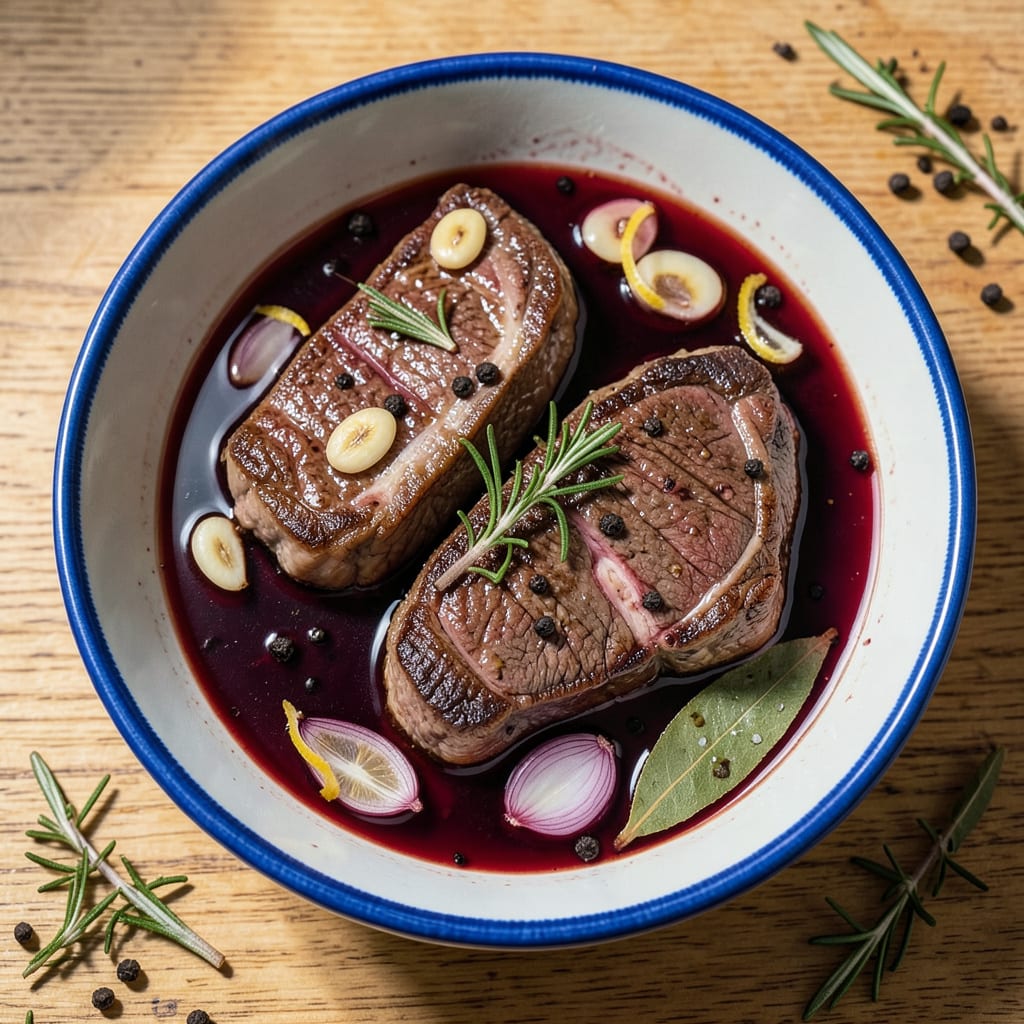
I’ll never forget the first time I tasted beef marinated in red wine—it was like discovering flavor I didn’t know existed. The wine doesn’t just add taste; it transforms tough cuts into something tender and complex. This overnight method is my go-to for steaks that taste like they came from a high-end steakhouse, but you make them in your own kitchen.
Here’s the thing—most people rush marinating, but giving it 8-12 hours lets the wine work magic. The acid breaks down fibers while the tannins create that deep, rich flavor you can’t get any other way. I always add garlic, rosemary, and a touch of olive oil to balance the wine’s boldness. It’s the kind of prep that makes the actual cooking feel effortless.
When you pull that beef from the marinade, you’ll see the difference immediately—the meat looks darker, richer, like it’s already halfway to being cooked. Grill it, sear it, or braise it—however you finish it, that wine marinade ensures every bite is packed with flavor. The aroma alone will have your neighbors asking what you’re cooking.
This isn’t just a recipe; it’s a technique that’ll change how you cook beef forever. The overnight wait is worth it when you’re biting into perfectly seasoned, fall-apart tender meat that tastes like it took all day to make. Fire up that grill—dinner’s about to get serious.
📚 In This Guide
- What You’ll Need
- Instructions
- Tips and Common Mistakes
What Youll Need
- ● Beef cuts: 1.5–2 lbs (680–900g) of ribeye, sirloin, or flank steak (½–¾ inch thick for best absorption) 🥩
- ● Red wine: 2 cups (480ml) of dry red wine (Cabernet Sauvignon, Merlot, or Pinot Noir work best—avoid “cooking wine”) 🍷
- ● Aromatics: 1 medium yellow onion, thinly sliced
- ● 4 garlic cloves, smashed
- ● 2 sprigs fresh rosemary (or 1 tsp dried)
- ● 3 sprigs fresh thyme (or ½ tsp dried)
- ● Seasonings: 2 tbsp olive oil (extra virgin preferred)
- ○ 1 tbsp balsamic vinegar (optional, for tang)
- ● 1 tsp black peppercorns, lightly crushed
- ● 1 tsp kosher salt (plus extra for pre-salting beef)
- ● 1 bay leaf
- ● Tools: 1 large resealable plastic bag (or glass/ceramic dish with lid)
- ● Tongs (for handling beef)
- ● Measuring cups/spoons
- ● Chef’s knife & cutting board 🔪
- ○ Optional boosts: 1 tsp Dijon mustard (for depth)
- ● ½ tsp red pepper flakes (for heat)
- ● 1 tbsp Worcestershire sauce (umami kick)
- ● Prerequisites: ⏰ 12–24 hours marinating time (fridge space required)
- ● Pat-dry beef before cooking (paper towels needed post-marinade)
Instructions
Here’s my foolproof method for infusing your beef with incredible depth of flavor overnight.
Select and Prepare the Beef
Start with the right cut of beef—this works beautifully with ribeye, New York strip, or flank steak. Choose pieces that are about 1 to 1½ inches thick for optimal marination. I prefer cuts with some marbling because the fat absorbs the wine flavors wonderfully.
Pat the beef completely dry with paper towels. This helps the marinade adhere better to the meat’s surface. Trim any excess fat if desired, but leave a thin layer—it adds richness to the final dish. Place the prepared beef in a large resealable plastic bag or a shallow glass dish.
Create the Red Wine Marinade
In a mixing bowl, combine dry red wine with olive oil, minced garlic, and fresh herbs like rosemary and thyme. I like to use a bold red wine like Cabernet Sauvignon or Malbec—their tannins help tenderize the meat while adding complex flavors.
Add coarse salt and freshly ground black pepper to taste, along with a splash of balsamic vinegar for brightness. Whisk everything together until the salt dissolves. The marinade should be fragrant and deeply colored, with visible herb specks throughout.
Marinate the Beef Overnight
Pour the marinade over the beef, making sure it’s completely submerged. If using a bag, seal it tightly and massage the marinade into the meat. For a dish, flip the beef several times to coat evenly. Refrigerate for at least 8 hours, but 12-24 hours is ideal for maximum flavor penetration.
During marination, the wine’s acidity gently breaks down the meat’s proteins, while the herbs and garlic infuse their aromas. You’ll notice the beef darkens slightly as it absorbs the marinade—that’s exactly what you want. Turn the beef occasionally if using a dish to ensure even exposure.
Remove and Prepare for Cooking
When ready to cook, remove the beef from the refrigerator and let it sit at room temperature for 30-45 minutes. This ensures even cooking. Take the beef out of the marinade and pat it dry with fresh paper towels—this is crucial for achieving a good sear.
Don’t rinse the beef; just remove excess marinade. The surface should feel slightly tacky but not wet. Discard the used marinade—it’s served its purpose and isn’t safe to reuse. Now your beef is ready for grilling, searing, or roasting to perfection.
Cook to Your Desired Doneness
Cook the marinated beef using your preferred method—grilling over medium-high heat works beautifully. The wine marinade creates a gorgeous crust when seared. For medium-rare, aim for an internal temperature of 130-135°F, remembering the temperature will rise slightly during resting.
Let the cooked beef rest for 5-10 minutes before slicing. This allows the juices to redistribute, ensuring every bite is tender and flavorful. You’ll taste the deep, rich wine notes complemented by the herbs—a perfect balance of robust and aromatic flavors.
Tips and Common Mistakes
Getting the most out of your overnight marinade comes down to a few key details. Here’s what I’ve learned from years of perfecting this technique.
Marination Timing: The 12-24 hour window in Step 3 isn’t just a suggestion—it’s when the magic happens. I’ve tested shorter marinates, and while 8 hours works in a pinch, you won’t get that deep wine penetration and tenderizing effect that makes this method special. The beef actually changes texture during this time as the wine’s tannins work on the proteins. Don’t rush it.
Wine Selection Matters: In Step 2, when choosing your dry red wine, avoid anything labeled “cooking wine.” I always use the same bold reds I’d drink—a good Cabernet Sauvignon or Malbec makes all the difference. The wine reduces as it marinates, concentrating those complex flavors into your beef. If you wouldn’t drink it, don’t marinate with it.
The Resting Secret: That 30-45 minutes at room temperature in Step 4 is crucial for even cooking. Cold meat straight from the fridge will sear unevenly, giving you a gradient of doneness instead of that perfect medium-rare throughout. I set a timer—no shortcuts here. You’ll notice the difference in how evenly your steak cooks when you give it this time to temper.
Searing Technique: When you get to Step 5, make sure your grill or pan is properly preheated to medium-high before adding the beef. The wine marinade creates sugars on the surface that caramelize beautifully when hit with the right heat. If your cooking surface isn’t hot enough, you’ll steam the meat instead of searing it, and lose that incredible crust we’re after.
Pro Tips for Marinate Beef In Red Wine Overnight
- Getting the most out of your overnight marinade comes down to a few key details. Here’s what I’ve learned from years …
- Marination Timing: The 12-24 hour window in Step 3 isn’t just a suggestion—it’s when the magic happens. I’ve tested s…
- Wine Selection Matters: In Step 2, when choosing your dry red wine, avoid anything labeled “cooking wine.” I always u…
Frequently Asked Questions
Can I marinate beef in red wine for longer than overnight?
Marinating for 12–24 hours is ideal for tenderizing and flavor. Beyond 24 hours, the wine’s acidity can start breaking down proteins too much, making the beef mushy. For tougher cuts (like chuck), 36 hours max is safe—just keep it refrigerated.
What’s the best red wine for marinating beef?
Choose a dry, bold red wine like Cabernet Sauvignon, Merlot, or Malbec. Avoid sweet wines (e.g., Zinfandel) or “cooking wine” (high in salt). A mid-priced bottle ($10–$20) works—no need for expensive vintages! White wine lacks the tannins for deep flavor, but you can substitute:
Bitterness comes from over-reducing the wine’s tannins or burning the marinade. Fix it by:
Is it safe to reuse the red wine marinade? Never reuse raw marinade that touched beef—it may contain harmful bacteria. If you want a sauce, boil the used marinade for 5+ minutes to kill pathogens, then reduce it. For safety, always set aside extra marinade before adding meat.Can I use white wine or another liquid instead?
Adjust marinating time—vinegar-based mixes need just 4–6 hours.
Why does my beef taste bitter after marinating?
Marinating beef in red wine overnight isn’t just a cooking step—it’s a game-changer for tender, flavor-packed steaks that’ll impress anyone at your table. 🍷✨ With minimal effort and the right technique, you’ll unlock deep, rich flavors that elevate even the simplest cuts. Now that you’ve got the know-how, why not put it to the test?
Grab a bottle of your favorite dry red, pick a cut like ribeye or flank steak, and let time work its magic. Tomorrow’s dinner just got a whole lot more exciting—fire up that grill or skillet and get ready to savor the results!

Trained in classic French technique but raised on slow-cooked ribs and spicy rubs, she blends culinary skill with smoke and soul.
- Recipe for Boneless Pork Chops in Cast Iron Skillet: Sear and Baste to Juicy Perfection - October 3, 2026
- Recipe for Boneless Cross Rib Roast: Slow-Roasted Beef with Herb Crust - October 3, 2026
- Hamburgers in Sauce Recipe Crock Pot: Slow-Cooked Savory Delight - October 3, 2026