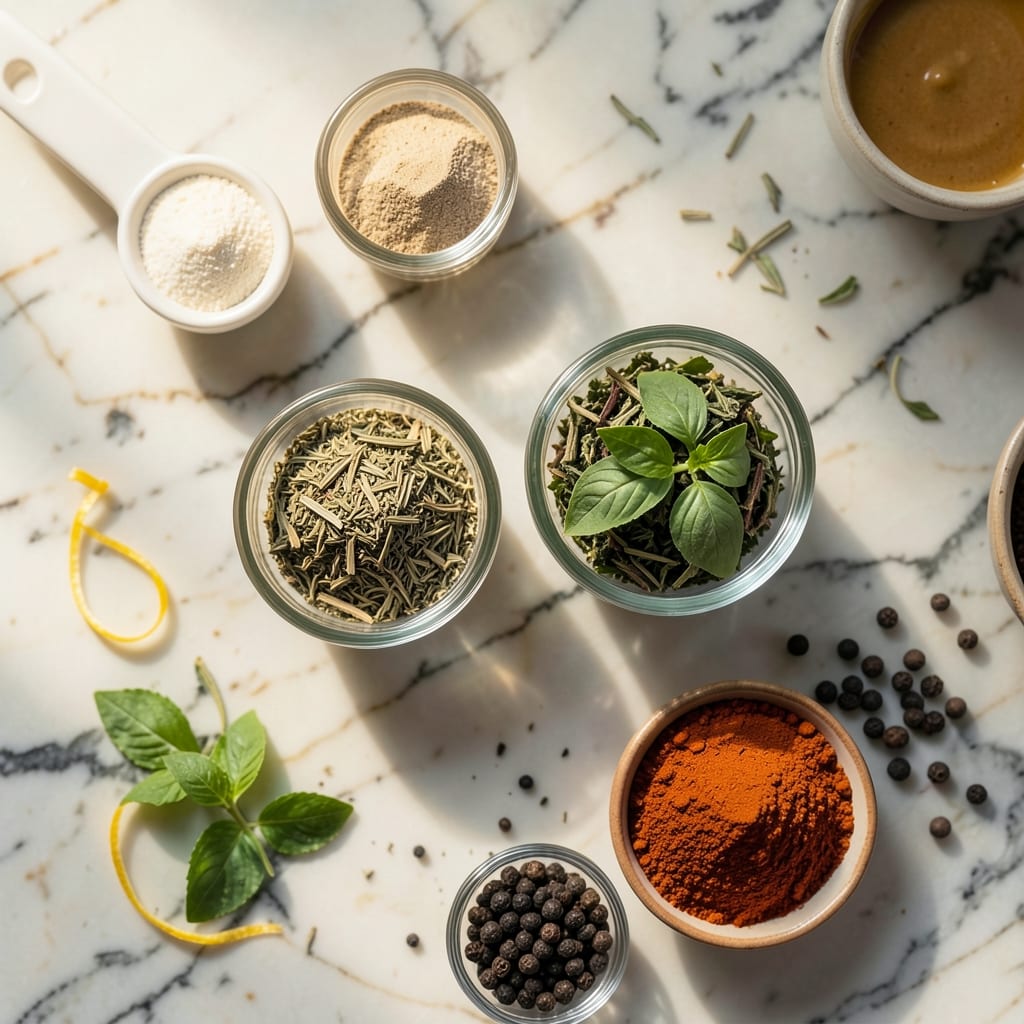
This recipe transforms chicken thighs with a herb-infused marinade and smoky grill char. The marinade uses fresh herbs for depth, while grilling creates a perfectly charred exterior.
What you get is juicy, flavorful chicken with a crispy skin that locks in moisture. The technique ensures restaurant-quality results every time, with minimal effort and maximum flavor impact.
Ingredients for Marinated Grilled Chicken Thighs
Transform chicken thighs with fresh herbs, citrus, and bold spices for smoky grilled perfection.
| Ingredient | Amount | Notes |
|---|---|---|
| Bone-in Chicken Thighs 🍗 | 2 lb | Skin-on for crispiness |
| Extra-Virgin Olive Oil 🫒 | ½ cup | Divided for marinade and brushing |
| Fresh Rosemary 🌿 | 3 tbsp | Finely chopped, stems discarded |
| Fresh Thyme 🍃 | 3 tbsp | Leaves stripped from stems |
| Garlic Cloves 🧄 | 6 cloves | Minced for maximum flavor infusion |
| Lemon Juice 🍋 | ¼ cup | Freshly squeezed preferred |
| Lemon Zest 🍋 | 1 tbsp | From 1 large lemon |
| Dijon Mustard 🟡 | 2 tbsp | Smooth variety for emulsification |
| Honey 🍯 | 3 tbsp | Balances acidity in marinade |
| Kosher Salt 🧂 | 1 ½ tsp | Diamond Crystal preferred |
| Black Pepper 🌶️ | 1 tsp | Freshly cracked for best flavor |
| Smoked Paprika 🌶️ | 1 tsp | Adds depth and smokiness |
| Red Pepper Flakes 🔥 | ½ tsp | Adjust for desired heat level |
[recipe_ingredient_scaler]
The chicken thighs are non-negotiable here—bone-in, skin-on ensures juiciness and crispiness. Whole Foods or Costco carry high-quality options with good fat marbling. For herbs, seek out vibrant green bunches at farmers markets or well-stocked produce sections. Avoid pre-cut herbs (the good stuff, not the sad plastic containers). The lemon should feel heavy for its size—more juice, better marinade.
No fresh rosemary or thyme? Dried herbs at one-third the amount work, but fresh delivers that bright, aromatic punch. Honey can be swapped for maple syrup or agave if needed. For a dairy-free option, olive oil replaces butter in the marinade. The Dijon mustard is key—whole-grain works too but may create a thicker texture. Red pepper flakes can be omitted for a milder dish.
Marinate the chicken for at least 4 hours, but overnight yields maximum flavor penetration. Store uncooked marinated chicken in the fridge for up to 24 hours. Leftovers keep 3-4 days refrigerated or freeze for 2 months. Always bring meat to room temperature before grilling for even cooking.
Why You’ll Love This Recipe
- Mix and Forget: I toss the thighs with olive oil, garlic, rosemary, and thyme in the morning—by dinnertime, the flavors have done all the work.
- Crispy, Juicy Perfection: The bone-in thighs stay moist while the skin gets that irresistible char from the grill, and the garlic-herb combo? Ridiculously good.
- Meal Prep Magic: I make a double batch on Sunday—great hot off the grill, but just as solid sliced cold over salads or stuffed in wraps.
- Budget Friendly Feast: Honestly, chicken thighs are my secret weapon for feeding a crowd without breaking the bank, and this marinade makes them taste fancy.
Step-by-Step Instructions for Marinated Grilled Chicken Thighs
This method delivers maximum flavor penetration and perfect char on every piece.
Step 1: Create the Herb-Infused Marinade
In a large bowl, whisk together the 0.5 cup extra-virgin olive oil, 0.25 cup lemon juice, 1 tbsp lemon zest, 2 tbsp Dijon mustard, 3 tbsp honey, 3 tbsp fresh rosemary, 3 tbsp fresh thyme, 6 cloves minced garlic, 1.5 tsp kosher salt, 1 tsp black pepper, 1 tsp smoked paprika, and 0.5 tsp red pepper flakes until fully emulsified.
The mustard acts as a natural emulsifier, binding the oil and acid together. I find that whisking for 30-45 seconds creates a stable emulsion that clings better to the chicken, ensuring even flavor distribution during marinating.
Step 2: Marinate the Chicken for Optimal Flavor
Add the 2 lb bone-in chicken thighs to the marinade, ensuring each piece is fully coated. I like to massage the marinade into the meat for better penetration, especially under the skin where it can infuse directly into the flesh.
Cover the bowl and refrigerate for at least 4 hours, though overnight yields the most pronounced flavor. The acid in the lemon juice begins breaking down surface proteins, allowing the herbs and spices to permeate deeply. Don’t exceed 24 hours or the texture may become mushy.
Step 3: Grill to Perfection over Direct Heat
Preheat your grill to medium-high heat (about 400°F). Remove the chicken from the marinade, shaking off excess, and place skin-side down on the grill grates. Close the lid and cook undisturbed for 6-8 minutes until the skin develops a deep golden-brown char.
The high heat renders the fat from the skin, creating those beautiful grill marks and smoky flavor. I resist the urge to move the pieces—this ensures proper searing. Flip the chicken and cook for another 6-8 minutes until the internal temperature reaches 165°F.
Step 4: Rest and Serve with Pan Juices
Transfer the grilled chicken to a clean plate and let it rest for 5-10 minutes. This crucial step allows the juices to redistribute throughout the meat, ensuring each bite remains moist and flavorful.
While resting, the internal temperature will rise to 170°F, completing the cooking process. I like to drizzle any accumulated juices from the plate over the chicken before serving to capture every bit of flavor.
Pro Tips For Making Marinated Grilled Chicken Thighs
- Score the Skin: Use a sharp knife to make 2-3 shallow cuts in the fatty side of each thigh—this helps the marinade penetrate deeper and gives you crispier skin when grilling.
- Smash the Garlic: Lightly crush the garlic cloves with the side of your knife before mincing, or just leave them whole and smashed in the marinade. It releases way more flavor than chopping alone.
- Don’t Rush the Marinade: I learned this the hard way—give the chicken at least 4 hours in the fridge with the olive oil, rosemary, thyme, and garlic. Overnight is even better for that deep, herby taste.
- Start Skin-Side Down: Place the thighs skin-side down first on medium-high heat, then reduce to medium. This renders the fat slowly and prevents flare-ups that burn the herbs.
Essential Equipment for This Dish
Grill Thermometer
A reliable instant-read thermometer is non-negotiable for perfect results. I trust my ThermoWorks MK4 for its 2-second read time and ±0.7°F accuracy. Check the thickest piece to ensure it reaches 165°F internally. 🌡️
Grill Setup
For consistent heat, I use a Weber Genesis EX-335 gas grill with three burners for zone cooking flexibility. Clean and oil the grates before cooking to prevent sticking and achieve those perfect char marks.
Mixing Bowls
Marinate in a large stainless steel bowl—I prefer 2-quart capacity to give the chicken room to move. A bowl with a lid simplifies refrigeration. For easy cleanup, avoid plastic, which absorbs odors from garlic and herbs.
Tongs
Use 12-inch locking tongs for safe handling and precise flipping. I recommend OXO Good Grips for their silicone heads that won’t scratch your grill. They provide the control needed to avoid piercing the skin.
Meat Mallet
For even cooking, lightly pound thicker thighs with a flat-head meat mallet. This breaks down connective tissue and ensures uniform thickness. I use a Norpro 8-ounce model for perfect results without tearing the skin.
Basting Brush
A silicone basting brush helps apply excess marinade during grilling for extra flavor layers. The heat-resistant silicone won’t melt and cleans easily. I keep one dedicated solely to raw meat to prevent cross-contamination. 💡
Nutrition Facts

Trained in classic French technique but raised on slow-cooked ribs and spicy rubs, she blends culinary skill with smoke and soul.
- Recipe for Boneless Pork Chops in Cast Iron Skillet: Sear and Baste to Juicy Perfection - October 3, 2026
- Recipe for Boneless Cross Rib Roast: Slow-Roasted Beef with Herb Crust - October 3, 2026
- Hamburgers in Sauce Recipe Crock Pot: Slow-Cooked Savory Delight - October 3, 2026