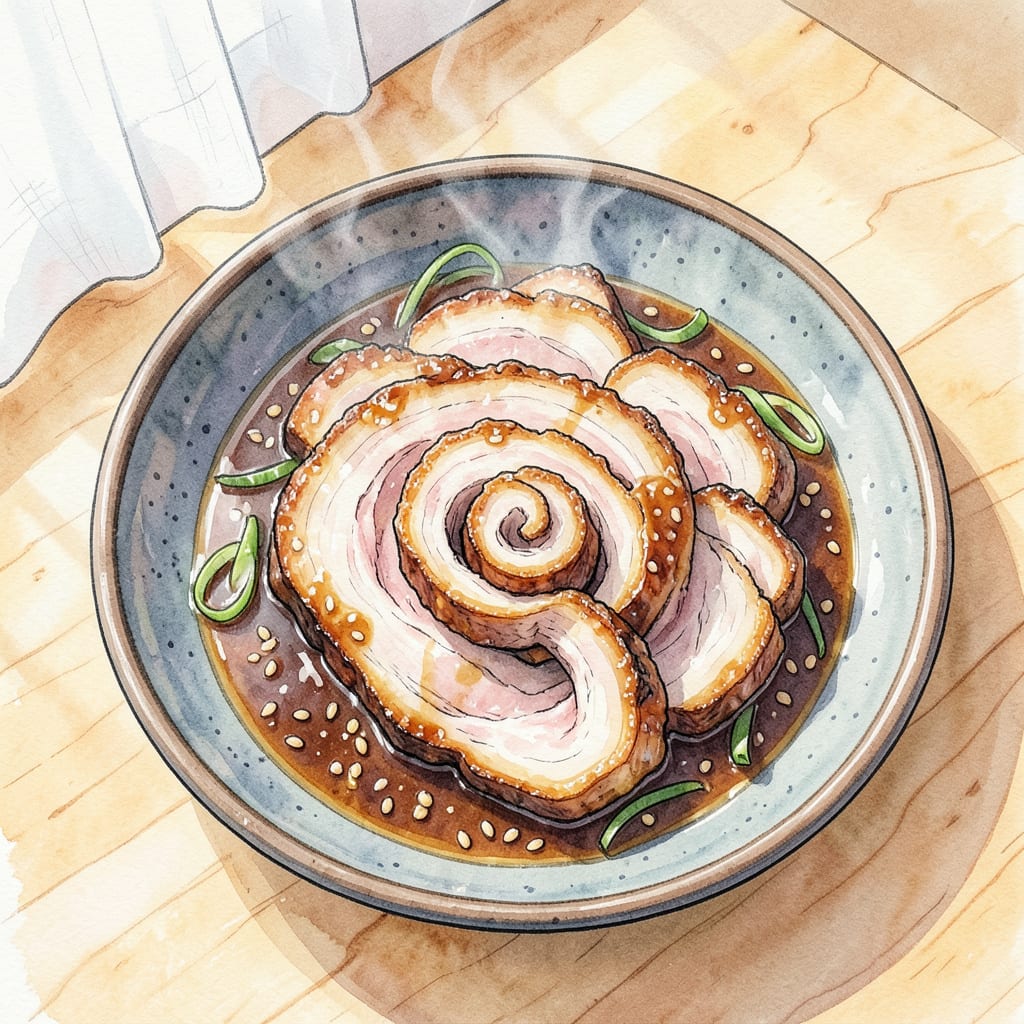
I’ll be real with you—pork belly is my secret weapon for turning ordinary meals into something unforgettable. That first bite of crispy skin giving way to layers of tender, marinated meat? It’s the kind of experience that makes people put their forks down and just stare at their plate for a second.
This isn’t your average pork recipe. We’re talking about meat that’s been bathed in a bold marinade until every fiber soaks up flavor, then cooked until the edges shatter like glass while the inside stays impossibly juicy. I’ve burned through more batches than I’d like to admit perfecting this balance, and let me tell you—it’s worth every minute.
Ingredients for Marinated Pork Belly
This is where rich, crispy pork belly gets its bold flavor—sweet, spicy, and deeply savory.
| Ingredient | Amount | Notes |
|---|---|---|
| Pork Belly 🥓 | 2 lb | Skin-on, cut into 1-inch strips |
| Soy Sauce 🫙 | ½ cup | Low-sodium preferred |
| Brown Sugar 🍚 | ⅓ cup | Packed for sweetness |
| Garlic Cloves 🧄 | 6 cloves | Minced for marinade |
| Fresh Ginger 🌿 | 1 tbsp | Grated or finely minced |
| Rice Vinegar 🍶 | 2 tbsp | Balances sweetness |
| Sesame Oil 🫒 | 1 tbsp | Toasted for depth |
| Gochujang 🌶️ | 1 tbsp | Korean chili paste |
| Black Pepper 🌶️ | 1 tsp | Freshly cracked preferred |
| Kosher Salt 🧂 | 1 tsp | Diamond Crystal preferred |
| Green Onions 🧅 | 4 whole | Thinly sliced for garnish |
| Sesame Seeds 🌾 | 1 tbsp | Toasted for garnish |
| Vegetable Oil 🫒 | 2 tbsp | For searing pork |
[recipe_ingredient_scaler]
The pork belly is everything here. Look for skin-on slabs with even fat marbling—this ensures those crispy edges and tender layers. I grab mine from Whole Foods or local Asian markets (they often have better quality). Ask the butcher to cut it into 1-inch strips if you’re not comfortable doing it yourself. For the soy sauce, Kikkoman low-sodium is my go-to, but any quality brand works. The brown sugar should be packed—this isn’t the time for light and fluffy (that’s for cookies).
No gochujang? Sriracha mixed with 1 tsp miso paste gets you close. Fresh ginger is ideal, but ground ginger at half the amount works in a pinch (just add it earlier to mellow). If you’re out of rice vinegar, apple cider vinegar is your backup. The sesame oil is non-negotiable though—it adds that nutty depth. For the garnish, toasted sesame seeds make a huge difference (just dry-toast in a pan for 2 minutes).
Marinate the pork belly for at least 4 hours, but overnight is magic. Cooked pork keeps 3-4 days in the fridge—reheat in a skillet to crisp the skin again. The marinade ingredients (minus meat) freeze well for 3 months if you want to make extra. I always double the marinade and keep half in the freezer for next time.
Step-by-Step Instructions for Marinated Pork Belly
Here’s the method I use to achieve that perfect balance of crispy edges and tender layers every time.
Step 1: Create the Flavor-Packed Marinade
In a large bowl, combine the 0.5 cup soy sauce, 0.33 cup brown sugar, 6 cloves minced garlic, 1 tbsp fresh ginger, 2 tbsp rice vinegar, 1 tbsp sesame oil, 1 tbsp gochujang, 1 tsp black pepper, and 1 tsp kosher salt. Whisk vigorously until the brown sugar completely dissolves and the mixture becomes smooth. I always taste the marinade at this point—it should be sweet with a spicy kick and umami depth from the soy sauce.
The gochujang adds that signature Korean heat, while the sesame oil brings nutty richness. Don’t skip whisking until the sugar dissolves completely, as undissolved sugar can burn during cooking and create bitter spots. This marinade will transform the pork belly into something extraordinary.
Step 2: Marinate the Pork Belly for Maximum Flavor
Place the 2 lb pork belly strips in a large resealable plastic bag or shallow dish. Pour the marinade over the pork, making sure each piece is fully coated. Massage the pork through the bag to ensure the marinade penetrates all the nooks and crannies. Seal the bag and refrigerate for at least 4 hours, or ideally overnight.
For best results, I flip the bag every few hours to redistribute the marinade. The longer you marinate, the deeper the flavors penetrate—the pork belly will absorb the sweet, salty, and spicy notes beautifully. When ready to cook, remove the pork from the fridge and let it sit at room temperature for 30 minutes before cooking. This ensures even cooking throughout.
Step 3: Sear the Pork Belly for Crispy Perfection
Heat the 2 tbsp vegetable oil in a large skillet over medium-high heat until it shimmers but doesn’t smoke. Remove the pork belly from the marinade (reserve the marinade) and pat it dry with paper towels. This drying step is crucial for achieving that coveted crispy exterior. Add the pork belly to the hot skillet, being careful not to overcrowd the pan.
Sear the pork belly for 4-5 minutes per side until deeply browned and crispy. You’ll know it’s ready to flip when the edges turn golden brown and the fat begins to render. Pour the reserved marinade into the skillet, reduce the heat to medium, and let it simmer for 3-4 minutes until the sauce thickens slightly and coats the pork beautifully.
Step 4: Garnish and Serve While Hot
Transfer the pork belly to a serving platter, arranging the pieces so the crispy sides face up. Immediately sprinkle with the 1 tbsp sesame seeds and thinly sliced green onions. The heat from the pork will toast the sesame seeds slightly, enhancing their nutty flavor, while the green onions add a fresh contrast to the rich pork.
Serve the pork belly while it’s still sizzling hot, with extra sauce spooned over the top. Each bite should deliver that perfect combination of crispy edges, melt-in-your-mouth layers, and the complex sweet-spicy-savory flavors from the marinade. The contrast between the caramelized exterior and tender interior is what makes this dish truly special.
Troubleshooting marinated pork belly
Skin Won’t Crisp
If your pork belly skin isn’t getting crispy, it’s usually because the surface wasn’t dry enough before searing. After marinating, I pat each piece completely dry with paper towels—press hard to remove all moisture. Then, let the pork sit uncovered in the fridge for 30 minutes before cooking to form a dry surface. This creates that perfect crispy crust when it hits the hot oil. 🔥
Another trick: don’t overcrowd the pan. Cook in batches if needed, giving each piece 1 inch of space so steam can escape. I use my cast iron skillet for this because it holds heat better than stainless steel.
Marinade Too Salty
If your marinade tastes overly salty, balance it by adding 1 tbsp honey or 1 tbsp brown sugar to counteract the saltiness. The sweetness will help mellow the soy sauce’s intensity. I learned this trick after accidentally using regular soy sauce instead of low-sodium once—it saved the dish!
For future batches, remember that low-sodium soy sauce gives you more control. I always keep Kikkoman low-sodium in my pantry for recipes like this where the marinade flavors concentrate during cooking.
Pork Belly Too Chewy
Chewy pork belly usually means it needs more cooking time. After searing, try reducing the heat to medium-low and covering the pan for 5-7 minutes to let the fat render slowly. The connective tissue needs time to break down properly. I check doneness by piercing with a fork—it should slide in with minimal resistance.
If you’re short on time, cut the pork belly into thinner strips (about ½-inch thick) before marinating. They’ll cook through faster while still getting that crispy exterior. Just watch them closely—they can go from perfect to overdone in 60 seconds.
Sauce Too Thin
When your marinade isn’t thickening into a glaze, create a slurry with 1 tsp cornstarch mixed with 1 tbsp cold water. Stir this into the simmering sauce and let it cook for 1-2 minutes until glossy. The cornstarch activates quickly and creates that perfect sticky coating without altering the flavor.
For a richer sauce, I sometimes add 1 tbsp butter at the end and swirl it into the pan sauce. This gives it a velvety finish that clings beautifully to the pork. Just remove the pan from heat first to prevent the butter from separating.
Burnt Sugar Flavor
That bitter, burnt taste means the brown sugar caramelized too quickly. Next time, reduce the heat to medium when adding the reserved marinade. The sugar in the marinade needs gentle heat to caramelize properly without burning. I stir constantly during this phase to control the browning.
If it’s already happened, transfer the pork to a clean pan with fresh oil and 1 tbsp honey to rebuild the glaze. The honey will add sweetness without the burnt undertones. This rescue method works surprisingly well—I’ve used it at competitions when things got too hot too fast.
Uneven Cooking
If some pieces are done while others are still raw, your pan temperature is fluctuating. Use a cast iron skillet or heavy stainless steel pan that maintains even heat. I check my pan temperature with an infrared thermometer—it should stay between 350-375°F during searing.
For consistent results, cut your pork belly into uniform 1-inch strips before marinating. This ensures even cooking time across all pieces. I use a ruler when cutting to keep sizes precise—it makes a noticeable difference in the final texture. ✨
Nutrition Facts

Trained in classic French technique but raised on slow-cooked ribs and spicy rubs, she blends culinary skill with smoke and soul.
- Meat and Potato Recipe Ideas: Savory Pairings for Hearty Meals - October 3, 2026
- Recipe for Fried Prawns Batter: Ultra-Crispy Golden Shell - October 3, 2026
- Indian Lamb Curry Recipe Pressure Cooker: Fragrant Spices in a Fraction of the Time - October 3, 2026